
Restoration Report
Museum-style conservation log for the Italian Vetterli M1870/87/15 rifle.
1. Object Identification
| Object Summary | |
|---|---|
| Object Type | Service Rifle – Conservation Project |
| Designation | Fucile Mod. 1870/87/15 (Vetterli 70/87/15 Conversion) |
| Country of Origin | Kingdom of Italy |
| Date of Manufacture | 1883 (original), WWI conversion (1915–1918) |
| Materials | Steel, blued and patinated; walnut stock; brass/steel fittings |
| Dimensions | Approx. 53 in / 134 cm overall |
| Artifact Profile | View full historical artifact page |
2. Photo Documentation – Before & After
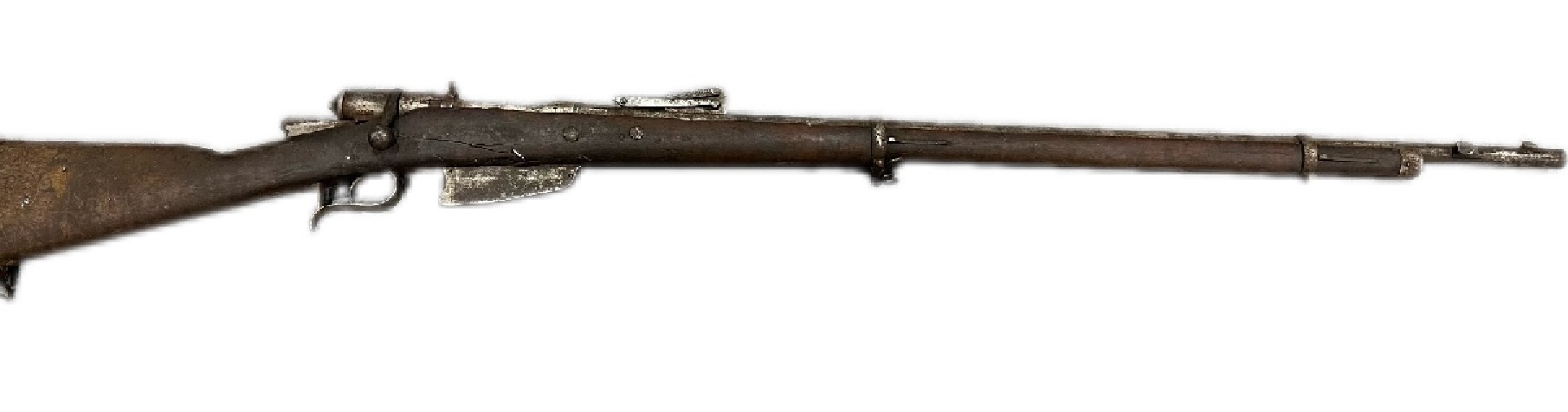
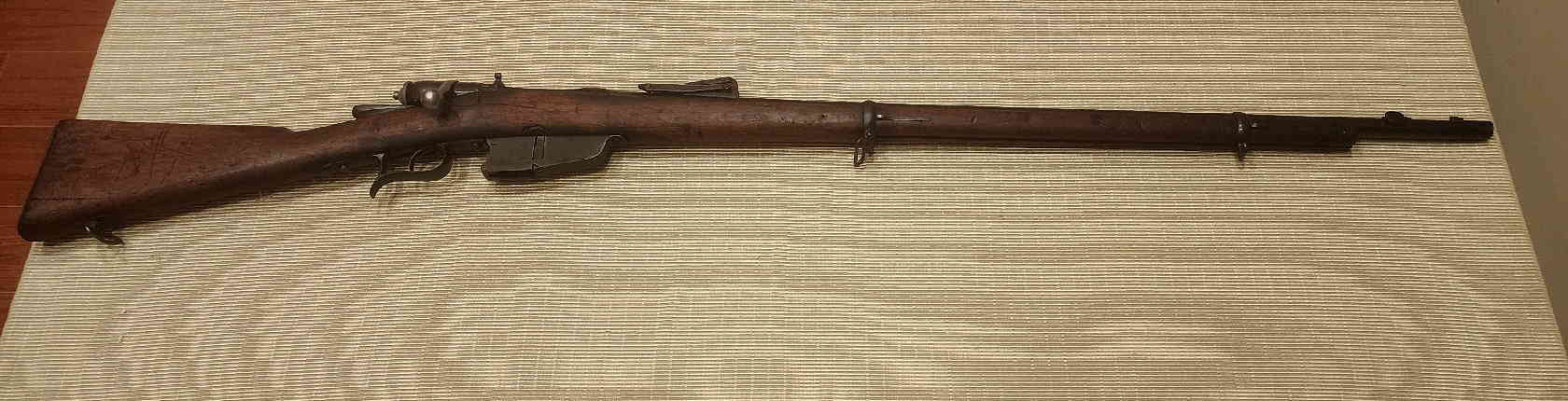
3. Condition Prior to Treatment
The rifle presented as a complete and mechanically functional example, retaining heavy service character and its original finishes. Its condition, while stable, showed the typical signs of age for a long-stored early-20th-century Italian conversion rifle. No modern restoration or refinishing was evident.
- Metal surfaces: Light, active red rust in select areas; general brown patina over exposed steel; grime around receiver, magazine housing, and bands.
- Stock: Dry surface, ground-in dirt from handling and storage; scattered dings and expected field marks; heavy cosmoline grease; old arsenal repair pin in buttstock.
- Markings: Turin arsenal stamps (TORINO), 1883 date, and serial number BI 6460 visible but obscured by grime prior to cleaning.
- Bore: Bright with fair rifling (verified separately); not part of this conservation phase.
4. Conservation Objectives
- Arrest active corrosion while preserving patina and finish.
- Improve legibility of markings and exposed surfaces without altering age character.
- Reduce accumulated dirt, oils, and storage grime from metal and wood.
- Strengthen and condition the dry walnut stock with period-appropriate methods.
5. Treatment Summary
Conservation work consisted of a full disassembly, stabilization of an old receiver-area crack, controlled cleaning of the walnut stock, and metalwork preservation including a period-appropriate cold-blue application. The rifle retains all of its original service wear, patina, and markings; no sanding, refinishing, or cosmetic alteration was performed. All steps were carried out with the goal of respecting the rifle’s 19th-century origins and its WWI conversion history.
6. Detailed Treatment Steps
- Initial Inspection & Documentation: Rifle examined in as-acquired condition; photos taken of markings, stock wear, conversion magazine, and the small receiver-area crack prior to any intervention.
- Full Disassembly: The rifle was completely stripped down: barrel, receiver, trigger group, magazine housing, bands, and bolt. All components were cleaned individually to remove accumulated grime and oil.
- Wood – Degreasing & Structural Stabilization: The walnut stock was gently cleaned with a mild Dawn-and-water solution, working small areas at a time and drying immediately. No sanding was performed. The receiver-area crack was reinforced internally using Titebond III Advanced Polymer glue, providing structural support without altering external appearance. The inletting around the magazine-box modification (from the WWI 6.5 mm conversion) was re-secured with heat-resistant epoxy to prevent future shifting.
- Wood – Finish Conservation: Stock surfaces were treated with Neutral Restor-A-Finish to even the oxidized linseed-oil reddish tone without removing patina. A very light coat of boiled linseed oil was hand-rubbed to fix the coloration and nourish the wood.
- Metal – Deep Cleaning & Mechanical Work: All steel components (receiver, barrel, trigger assembly, magazine, bands) were cleaned and lightly re-oiled. The bolt was fully disassembled and cleaned in mineral spirits, then brushed to restore its correct in-the-white service appearance.
- Barrel & Receiver – Controlled Cold Bluing: After thorough degreasing, the exterior surfaces were treated with Oxpho-Blue cream. The receiver was masked at the barrel shoulder to preserve the historic barrel-receiver joint line; the barrel was intentionally left a shade lighter to respect the surviving original under-wood coloration typical of arsenal conversions. The large rear ring was lightly blued to match period examples seen in surviving rifles.
- Final Metal Protection: After reassembly, all steel received a thin protective coat of oil, wiped nearly dry. An application of microcrystalline wax (Renaissance Wax) was applied to all metal surfaces, then examined by a gunsmith.
7. Results & Findings
- Active rust eliminated; stable patina preserved.
- Markings (TORINO, 1883, BI 6460) improved in clarity.
- Wood regained a healthier tone and surface protection while retaining all service wear.
- Rifle retains its historical authenticity and untouched appearance, with no polishing, sanding, or refinishing done.