
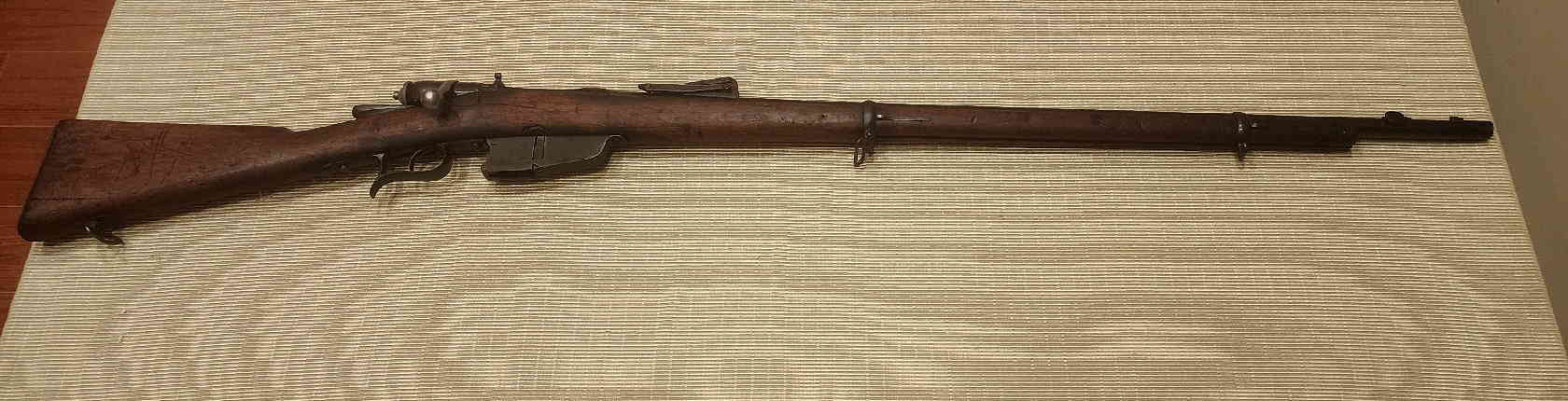
Vetterli M1870/87/15 Conversion Rifle
Italian Vetterli service rifle converted for 6.5×52mm Carcano with a 6-round en-bloc clip
Images
Specifications
| General Information | |
|---|---|
| Model | Fucile Mod. 1870/87/15 |
| Country | Kingdom of Italy |
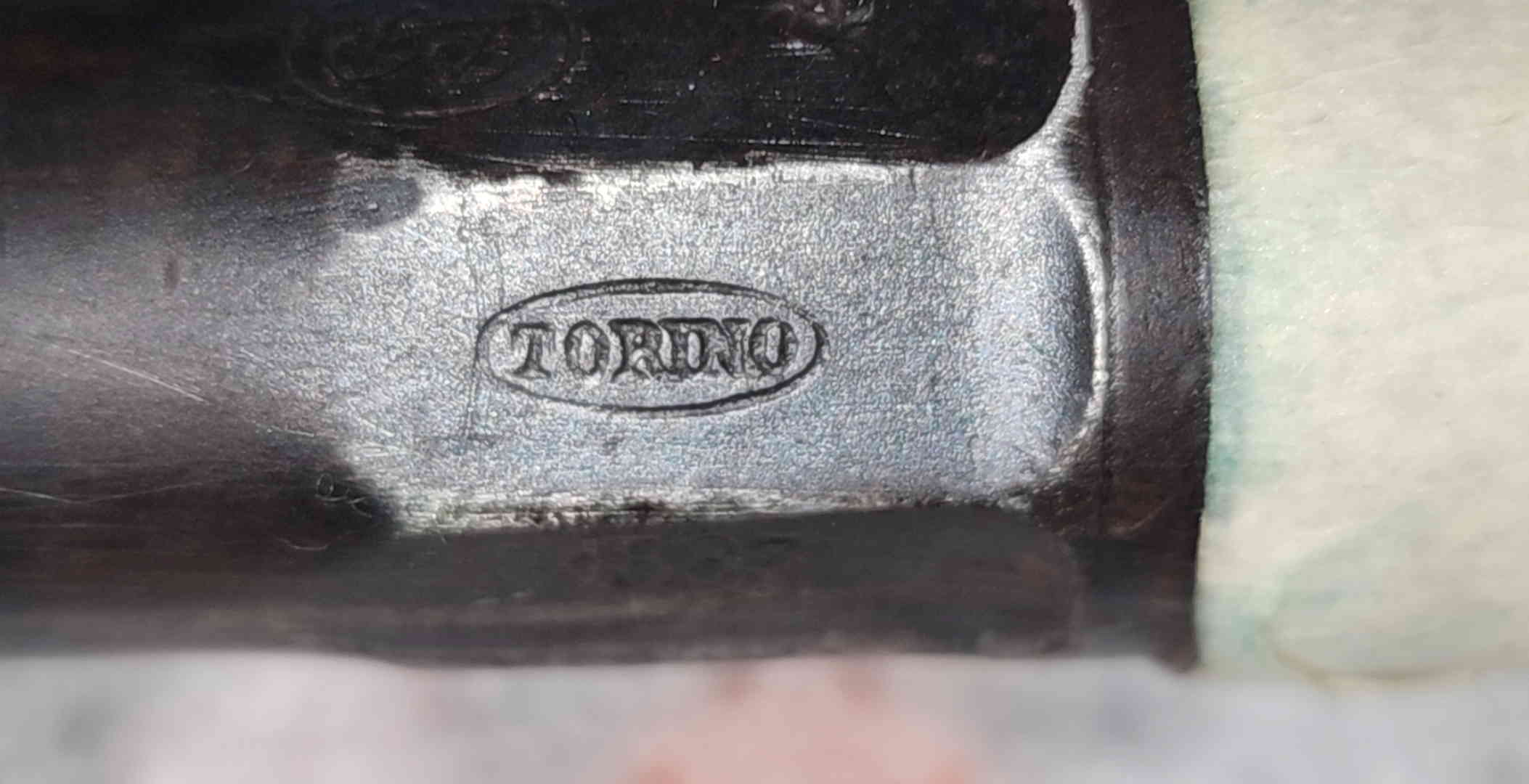
| Arsenal | Torino (Turin Royal Arsenal) |
| Year of Original Manufacture | 1883 |
| Original Pattern | M1870 single-shot → M1870/87 Vitali → WWI 6.5mm conversion |
| Caliber | 6.5×52mm Carcano (WWI conversion from 10.4mm Vetterli) |
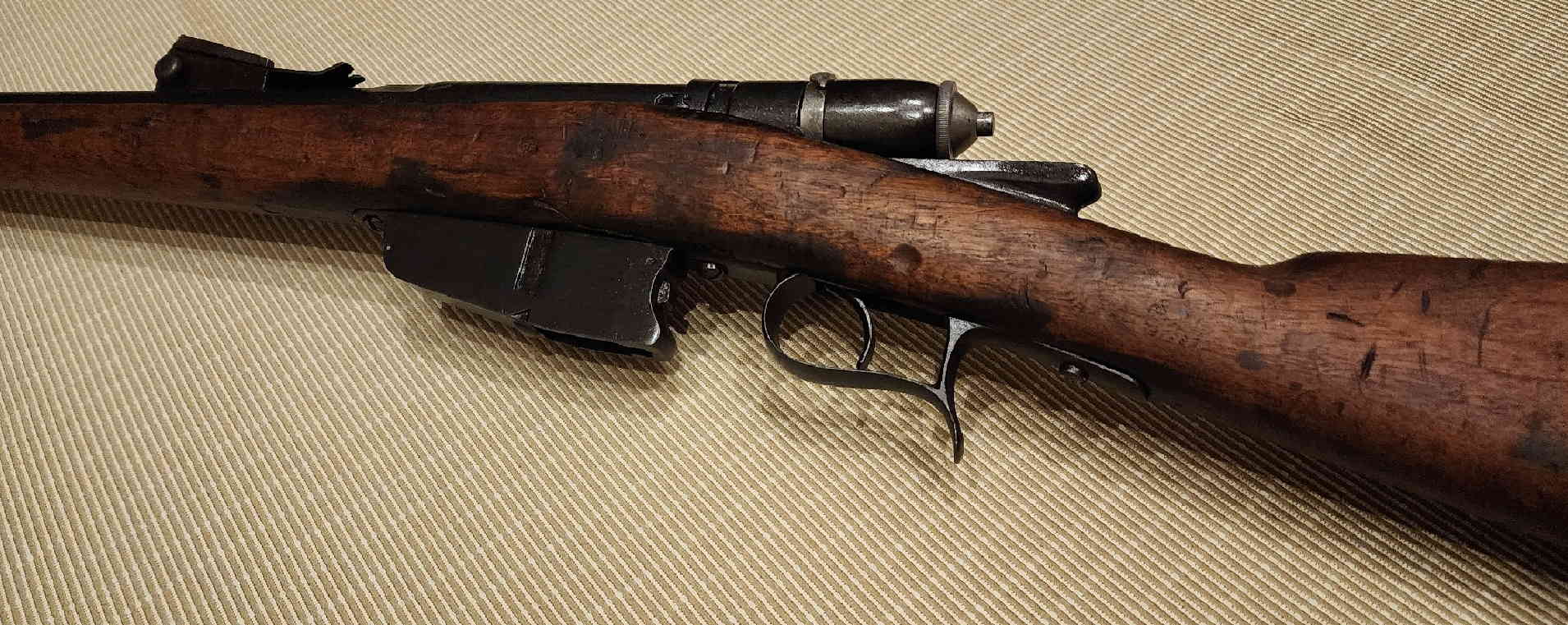
| Magazine System | Vitali box magazine modified for the 6-round Carcano en-bloc clip |
| Overall Length | Approx. 53 in / 134 cm |
| Barrel | Lined/sleeved conversion barrel (typical for 70/87/15 pattern) |
| Rear Sight | Re-scaled ladder sight marked 5–20 (500–2000 m) |
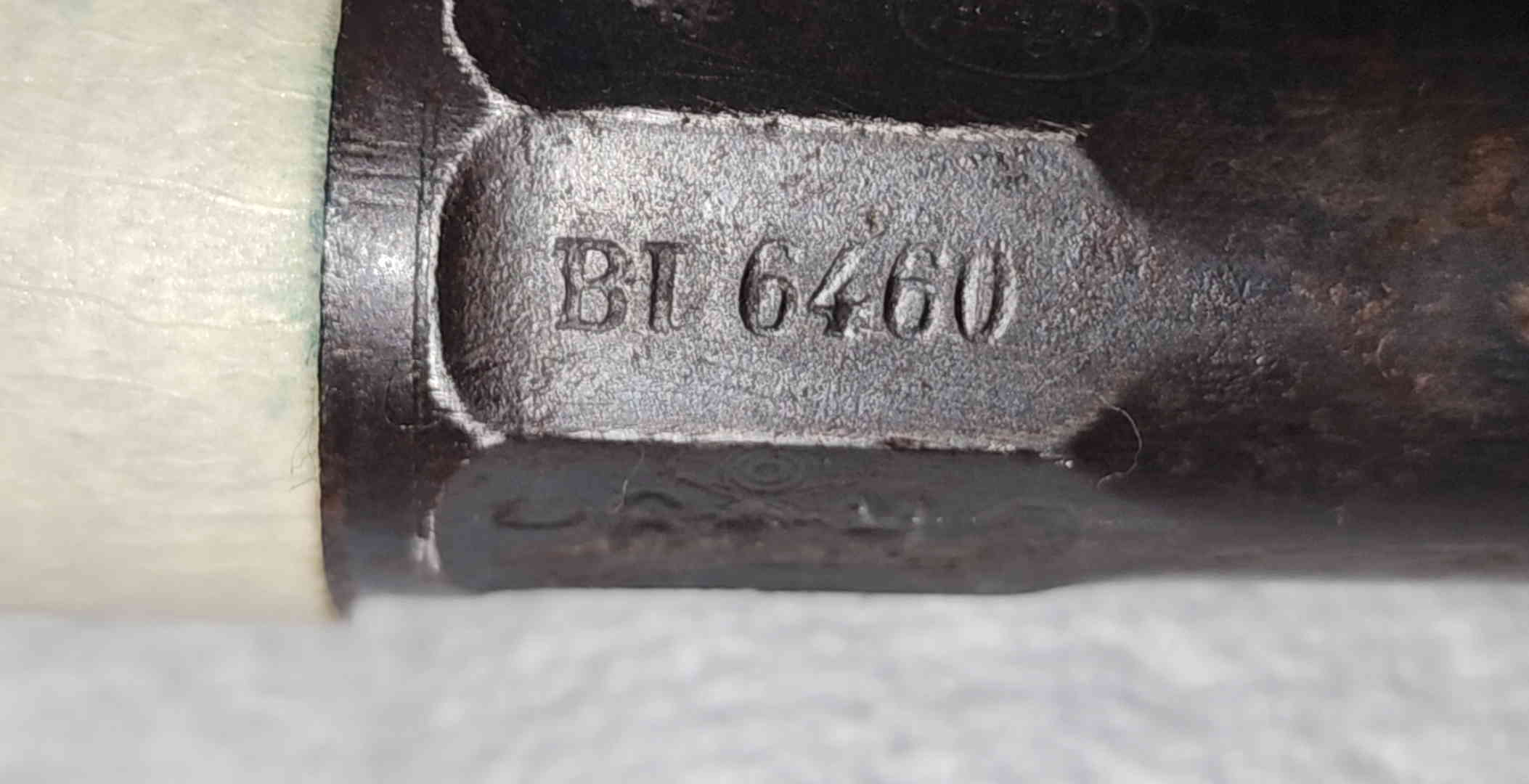
| Serial Number | BI 6460 (barrel shank and stock, partially worn) |
| Import Mark | None observed |
Historical Summary
This rifle began life at the Torino Royal Arsenal in 1883 as a single-shot Vetterli chambered in 10.4×47R. It was subsequently updated in 1887 with the Vitali four-round magazine system, creating the Mod. 1870/87 configuration. During the First World War, severe rifle shortages compelled Italy to convert large stocks of these older rifles to fire the modern 6.5×52mm Carcano cartridge.
These conversions, designated M1870/87/15, typically involved sleeving the original 10.4mm barrel, adapting the magazine to accept a 6-round en-bloc clip, and re-scaling the rear sight for the flatter 6.5mm trajectory. They were primarily issued to second-line, fortress, colonial, and rear-echelon troops, allowing newly produced Carcano rifles to be prioritized for front-line units.
This example reflects that full lineage: single-shot → Vitali magazine → WWI 6.5mm conversion, surviving in mechanically sound and complete form.
Configuration & Features
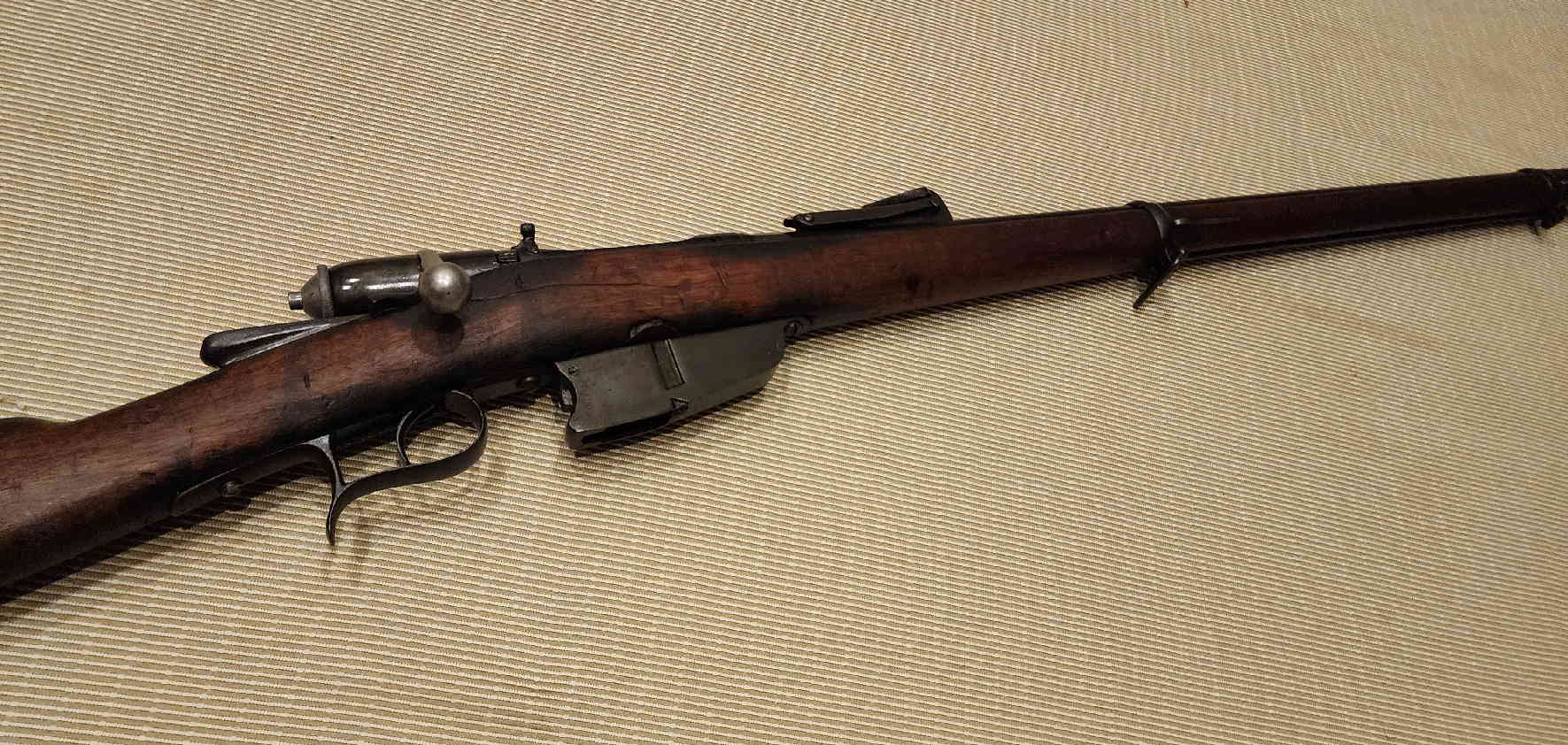
- Original Vetterli bolt and receiver mated to a WWI-era 6.5mm conversion barrel.
- Vitali magazine housing modified to accept 6-round Carcano en-bloc clips.
- Conversion-style lined barrel, consistent with M1870/87/15 practice.
- Re-scaled rear sight calibrated for the 6.5mm Carcano cartridge.
- M1870/87 pattern front band and bayonet bar configuration retained.
- Action cycles and feeds properly using dummy 6.5mm Carcano rounds in an en-bloc clip.
Observed Markings
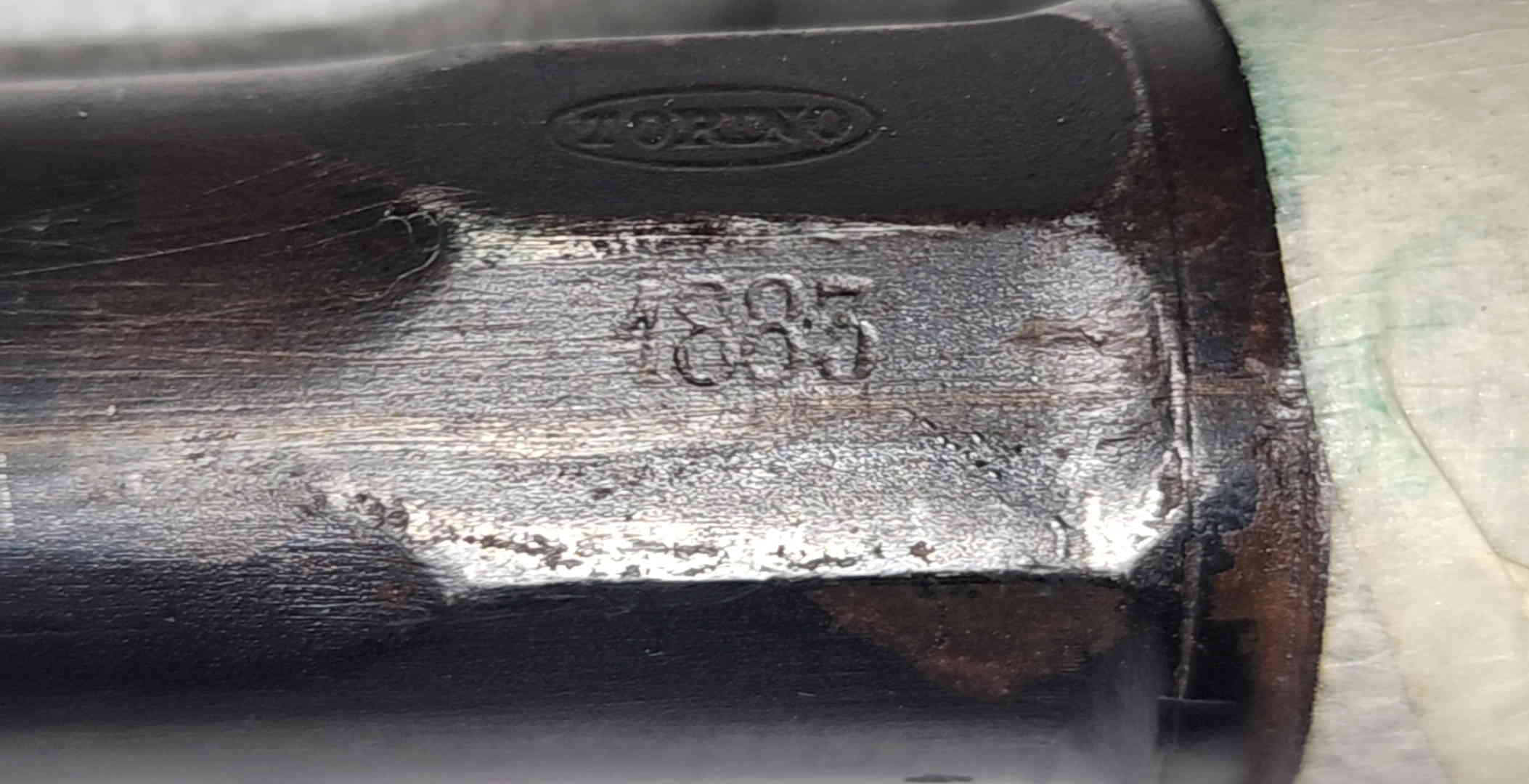
- Oval TORINO maker’s mark on the barrel shank.
- Date 1883 stamped on the barrel shank.
- Serial number BI 6460 on the barrel shank; matching number in the stock (partially worn).
- Inspector/acceptance monogram resembling “PG” in an oval.
- Small sunburst/star and stacked numerals such as 84 / 58 on the barrel flats.
- Various fitter’s/assembler’s marks around the rear sight base (including an “S” with overbar).
- No modern import mark present.
Condition & Restoration
The rifle was acquired in surplus condition and underwent a conservation-minded restoration, preserving its service character while stabilizing mechanical and structural issues.
- Bore: Bright with fair rifling; light pitting near the muzzle and crown.
- Stock: Retains service dings and handling marks; arsenal precautionary butt pin present.
- Receiver area: The crack was stabilized using heat-resistant epoxy and Titebond III, with care taken to maintain structural integrity.
- Wood treatment: Gentle degreasing followed by a Restor-A-Finish neutral blend and a final coat of boiled linseed oil.
- Metal finish: Fully disassembled and cleaned; cold blue was selectively applied and blended on the barrel and receiver, preserving the barrel tone.
- Bolt: Cleaned in mineral spirits and polished back toward its in-the-white appearance.
- Import marks: None observed, suggesting pre-1968 import.
Provenance & Identification Summary
- Model: Italian Vetterli M1870/87/15 WWI conversion rifle.
- Arsenal & Date: Torino, 1883 (original manufacture).
- Serial: BI 6460 (receiver/barrel and stock match, stock partially worn).
- Configuration: Vitali magazine adapted for 6-round Carcano en-bloc clips.
- Caliber: 6.5×52mm Carcano; successfully function-checked with dummy rounds.
- Bore: Bright and shootable, with visible rifling and typical service wear.
- Restoration: Stabilized and conserved rather than refinished; retains historical character.
- Import Mark: None observed.
This rifle serves as a representative and educational example of Italy’s emergency WWI-era Vetterli conversions, illustrating how older black-powder systems were adapted to meet modern cartridge and supply demands during total war.
Detailed restoration steps and conservation notes are documented separately in the Restoration Lab section of this archive.
Editorial Note
These pages are presented for historical and collector-reference purposes. Relics & Rifles does not sell firearms or facilitate transactions. Any discussion of configuration, markings, or accessories is descriptive and intended to preserve context for research.