
Restoration Report
Conservation focused assessment and troubleshooting record for a 1942 U.S. Army Signal Corps EE-8-A field telephone.
1. Photo Documentation
2. Object Identification
| Object Summary | |
|---|---|
| Object Type | Local battery field telephone |
| Model | Telephone EE-8-A |
| Country of Origin | United States |
| Manufacturer | Stromberg-Carlson Telephone Mfg. Co., Rochester, New York |
| Contract / Order | Order No. 2577-CHI-42 |
| Date of Manufacture | 1942 |
| Handset | TS-9 series handset (TS-9-H variant used with this set) |
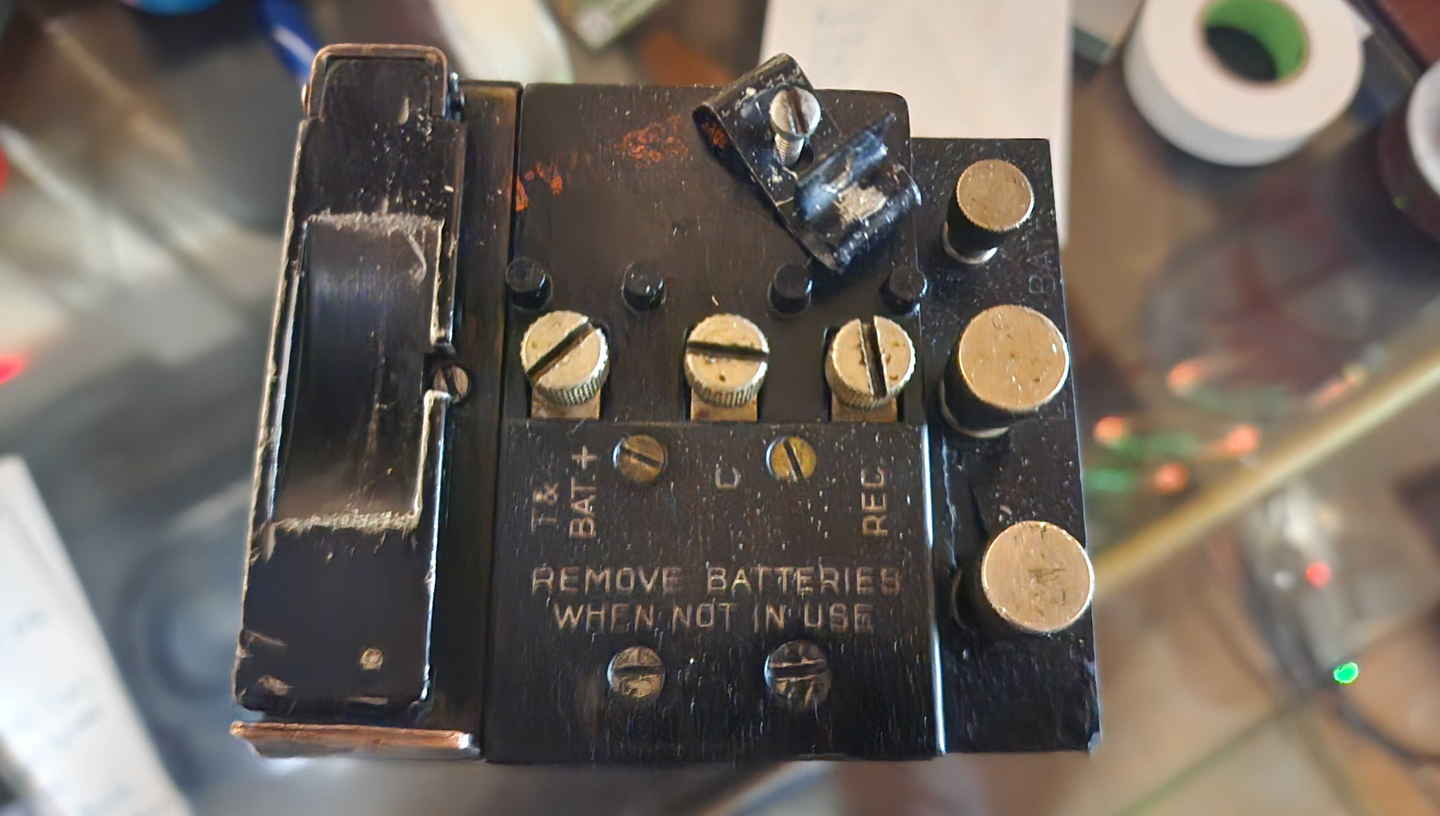
| Power | Two 1.5V D-cell batteries (BA-30 type) used in series (3V) |
| Signaling | Hand-crank magneto generator (GN-38) for ringing |
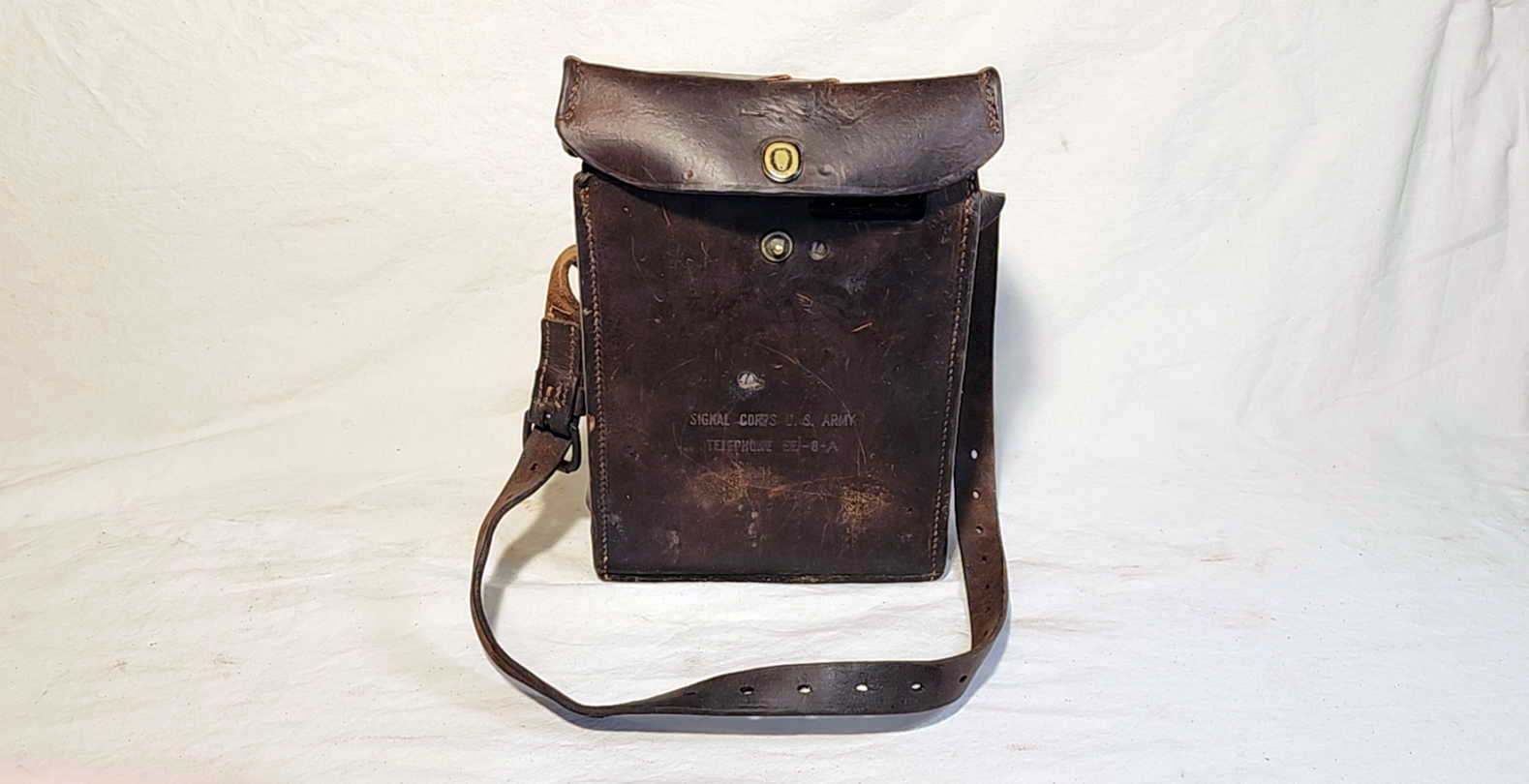
| Case | Early wartime brown leather carrying case |
| Artifact Profile | View main field gear page |
3. Condition Prior to Treatment
The set was complete and original, including its early wartime brown leather carrying case. The objective was dependable, field-correct operation while preserving original parts, finishes, and wiring wherever practical.
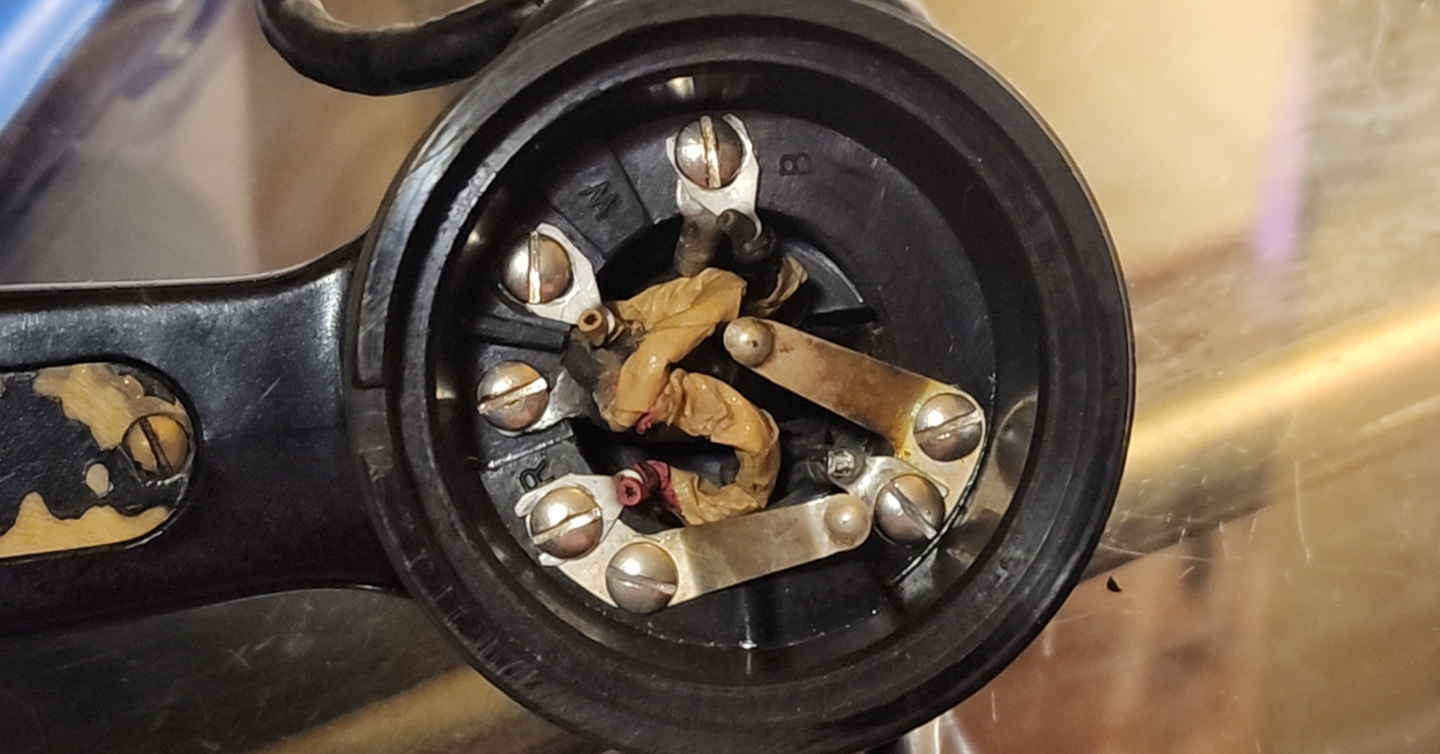
- Broken handset connector at the set.
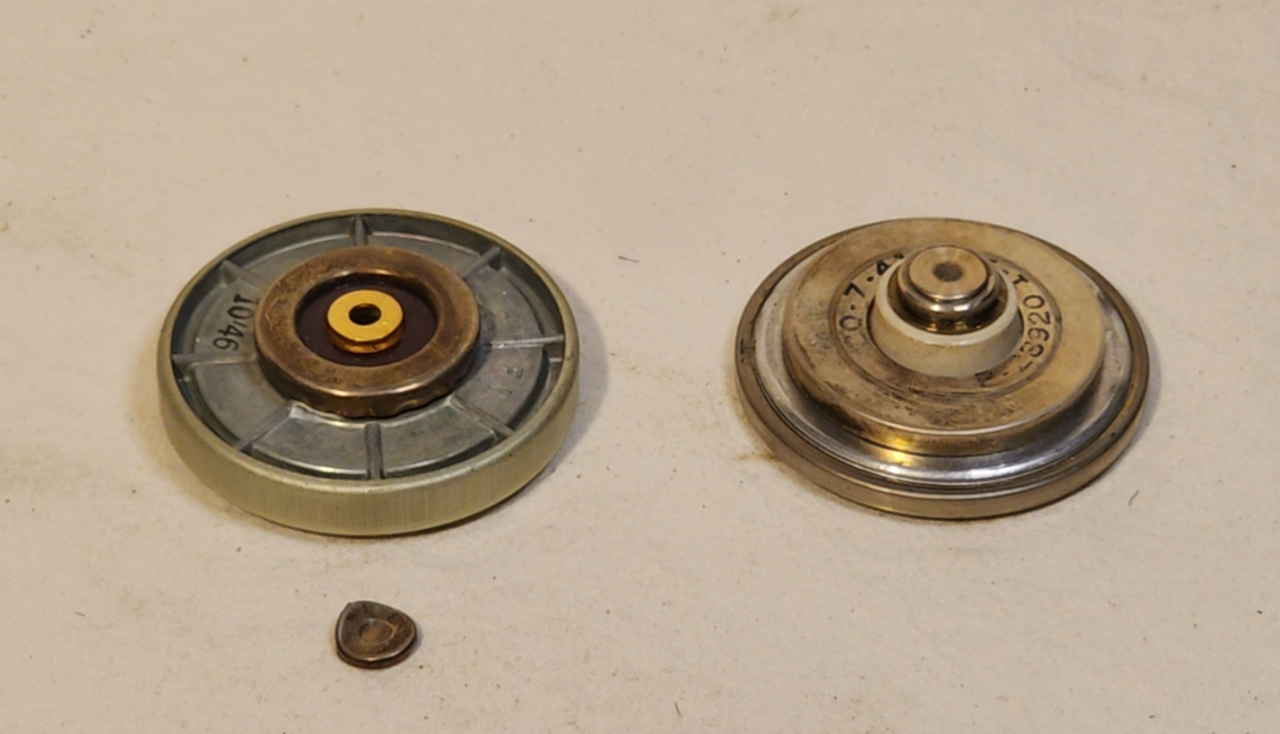
- Scratchy transmit audio traced to a degraded carbon microphone element in the TS-9 handset.
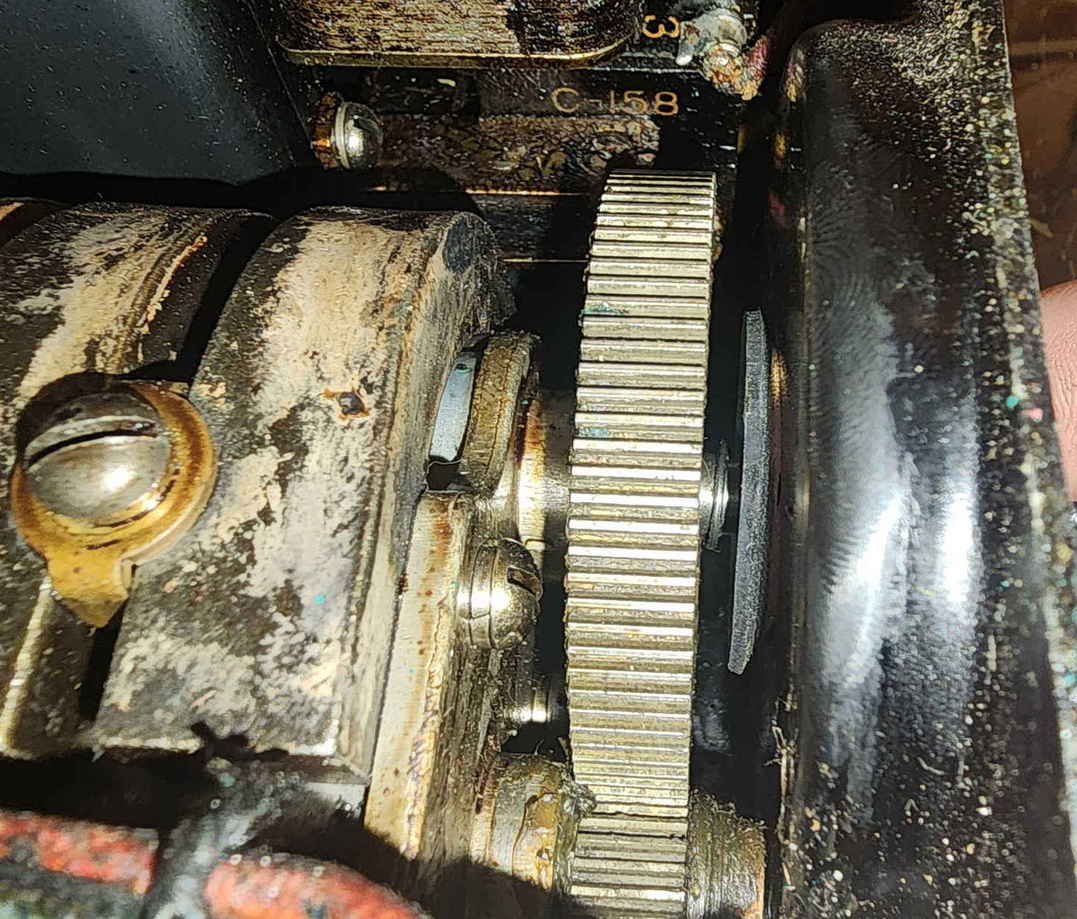
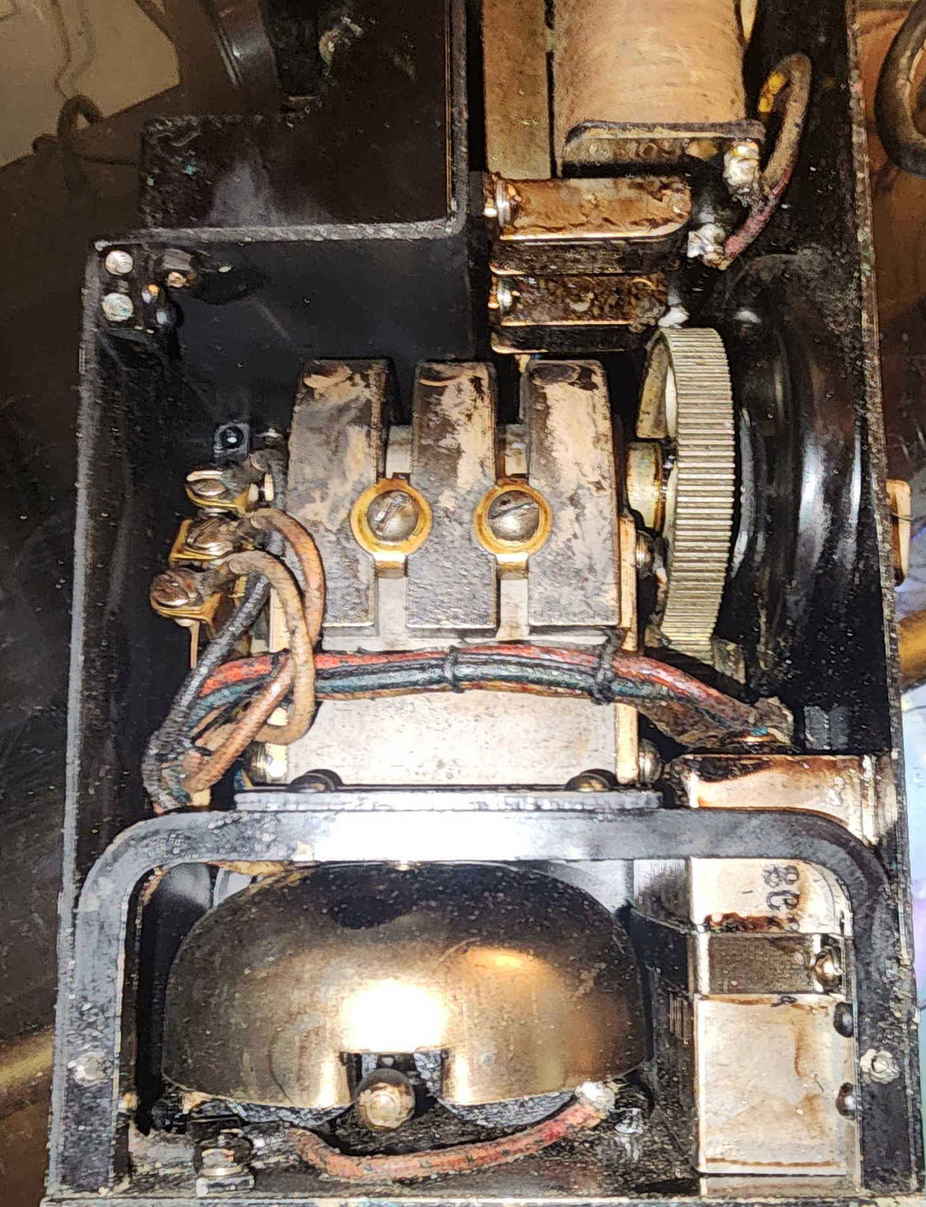
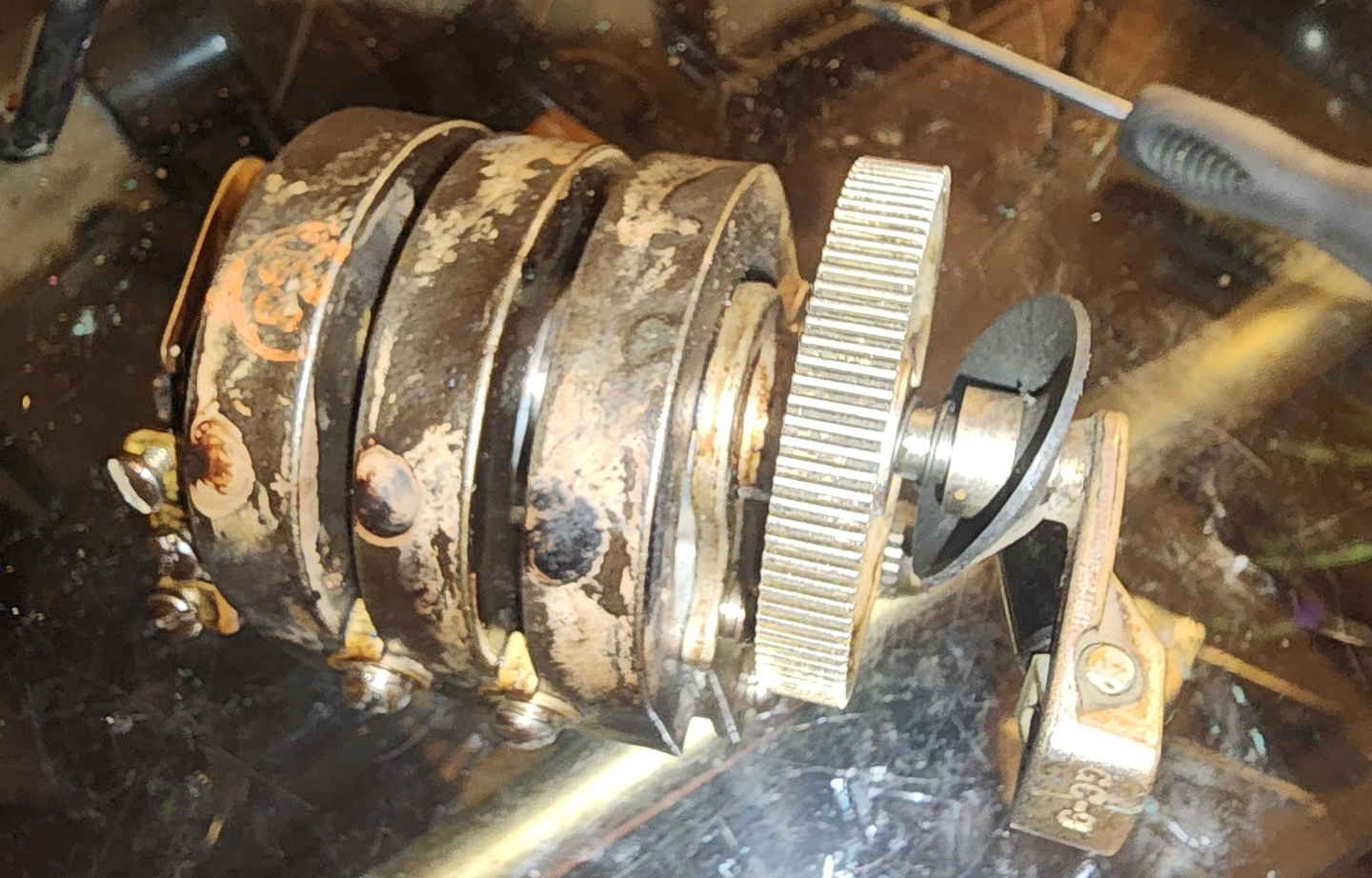
- Hand-crank magneto could spin without reliable engagement due to clutch slippage.
- Electrical contacts were serviceable but benefited from refresh and measurement.
4. Conservation Objectives
The following goals guided the restoration approach:
- Preserve original components, wiring, finishes, and service character wherever possible.
- Prioritize cleaning and mechanical service over replacement.
- Use period-correct parts when repairs required new material, and keep modifications reversible.
- Restore reliable local battery operation and magneto signaling without over-restoration.
5. Treatment Summary
Treatment included light exterior cleaning of the leather case, repair of a broken handset connector using period components, service of the hand-crank magneto clutch to restore engagement, conservative lubrication, contact cleaning with before and after resistance checks, and repair of the TS-9 handset microphone element by replacing degraded carbon granules with donor material. Final function was verified on fresh batteries and a test line.
6. Detailed Treatment Steps
- Initial cleaning (leather case): The exterior leather case was cleaned with a small amount of saddle soap to remove surface dirt while preserving the original patina.
- Handset connector repair: The damaged connector ends were replaced with NOS flat C-connectors from a 1940s parts stash. Connections were soldered and the repaired wiring was wrapped with low-adhesive colored tape to match the original wire colors. Original wiring remains intact beneath the tape to allow easy reversal if desired.
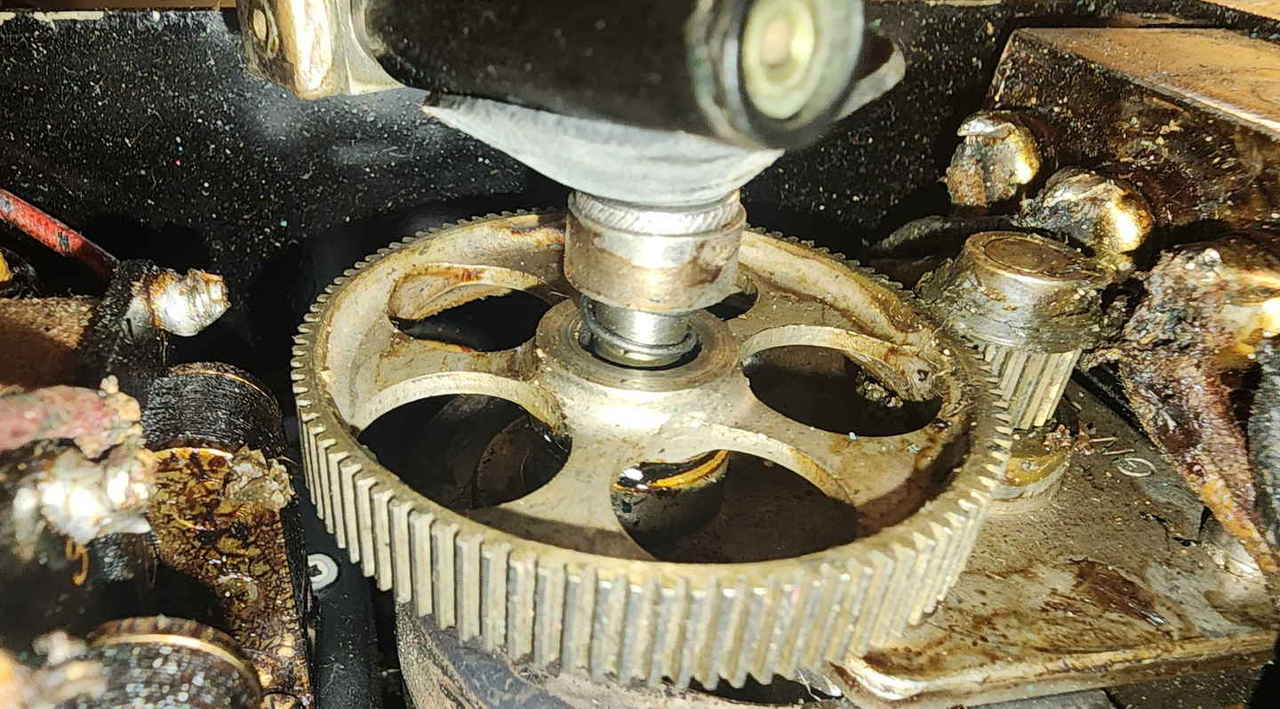
- Magneto clutch engagement fix: Slippage at the centrifugal clutch allowed the hand-crank to spin without consistently driving the generator. The mechanism was disassembled and the rod, gears, and surrounding areas were degreased using acetone applied with cotton swabs to remove grime and old lubricant. To restore grip, a very thin washer was fabricated by slicing the top flange from a plastic drywall anchor and notching it to fit around the shaft. This added friction without adding enough thickness to bind the mechanism.
- Lubrication and reassembly: After cleaning, CLP was applied sparingly to gears and shafts for smooth operation. Care was taken to keep lubricant away from electrical components, the clutch surfaces, and the rubber boot.
- Contact cleaning and measurement: Contacts were refreshed with non-abrasive electrical contact cleaner. Contact resistance measured about 3 ohms before cleaning and about 1 ohm after cleaning, indicating improved conductivity without aggressive abrasion.
- Microphone element repair (TS-9 handset): During testing, the carbon microphone produced scratchy audio. When the mouthpiece was opened, the pressed-on cap separated and the carbon granules spilled, with most reduced to residue. A donor 1940s civilian Western Electric F1 handset was sourced and opened. Granules were transferred with a small paper funnel, the cap was reattached with light crimping, and the rim was sealed with clear nail polish for stability.
- Final testing: The phone was tested using fresh D-cell batteries and roughly 300 feet of 20-gauge wire. Audio was clear and crisp, indicating strong performance on proper field wire at typical operating distances.
7. Results & Findings
After service, the EE-8-A returned to reliable operation with improved contact performance and corrected magneto engagement. Repairs preserved original character and avoided unnecessary replacement.
- Handset audio is clear after microphone element repair.
- Magneto engages correctly and generates ringing current as intended.
- Contact resistance improved (about 3 ohms to about 1 ohm) after conservative cleaning.
- Repairs were made to remain reversible where practical.