U.S. Army Signal Corps Field Telephone EE-8-A
U.S. Army Signal Corps Field Telephone EE-8-A
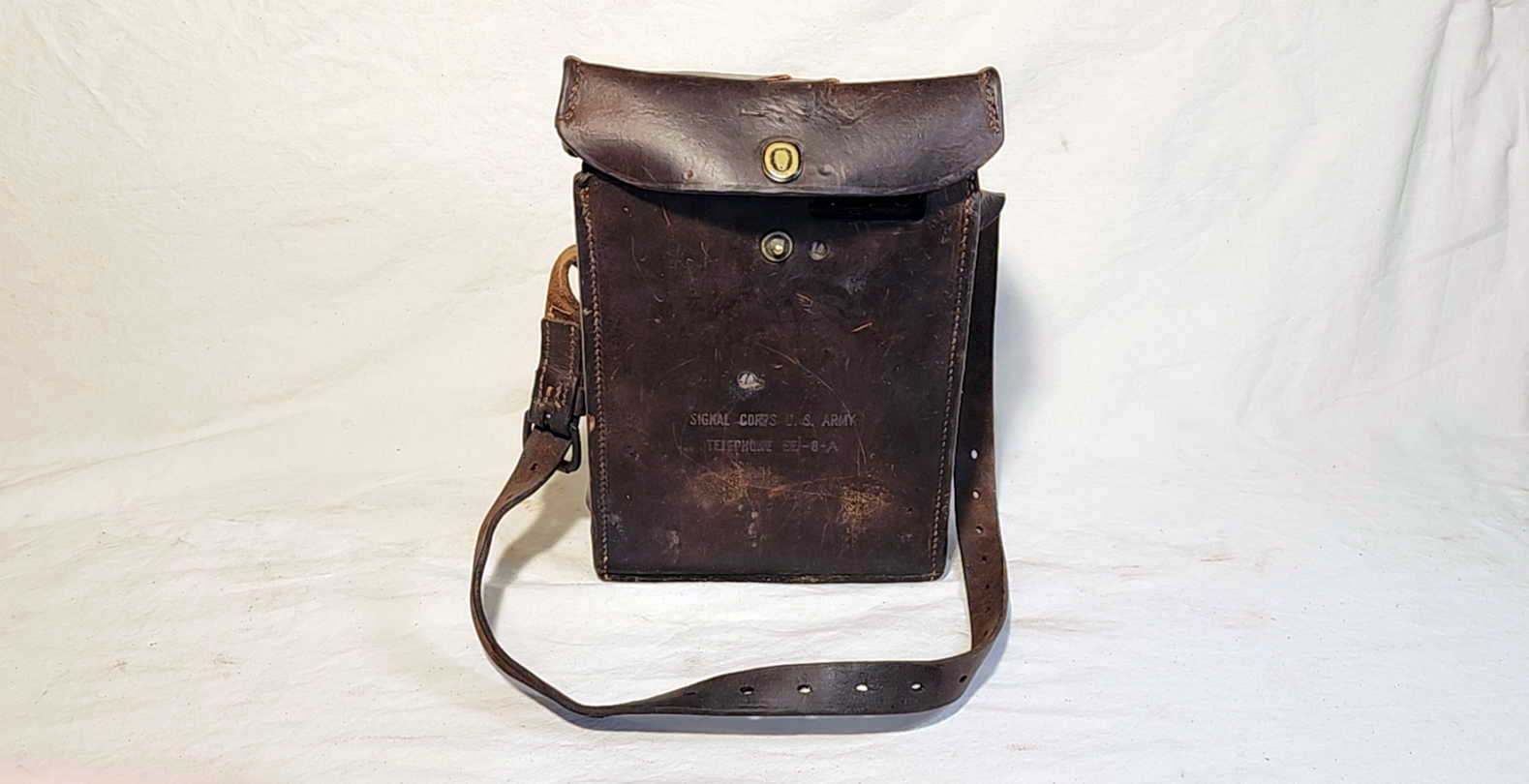
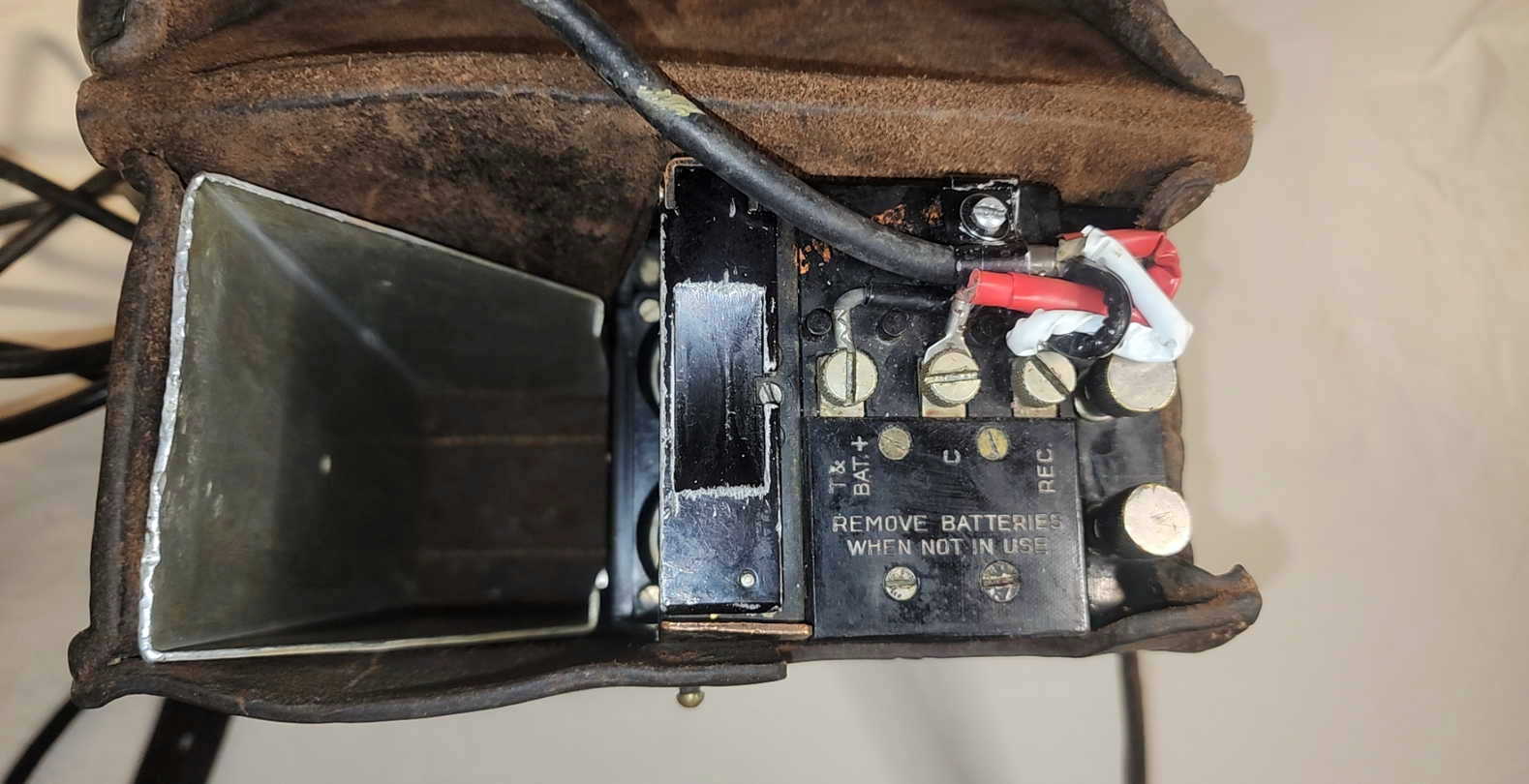
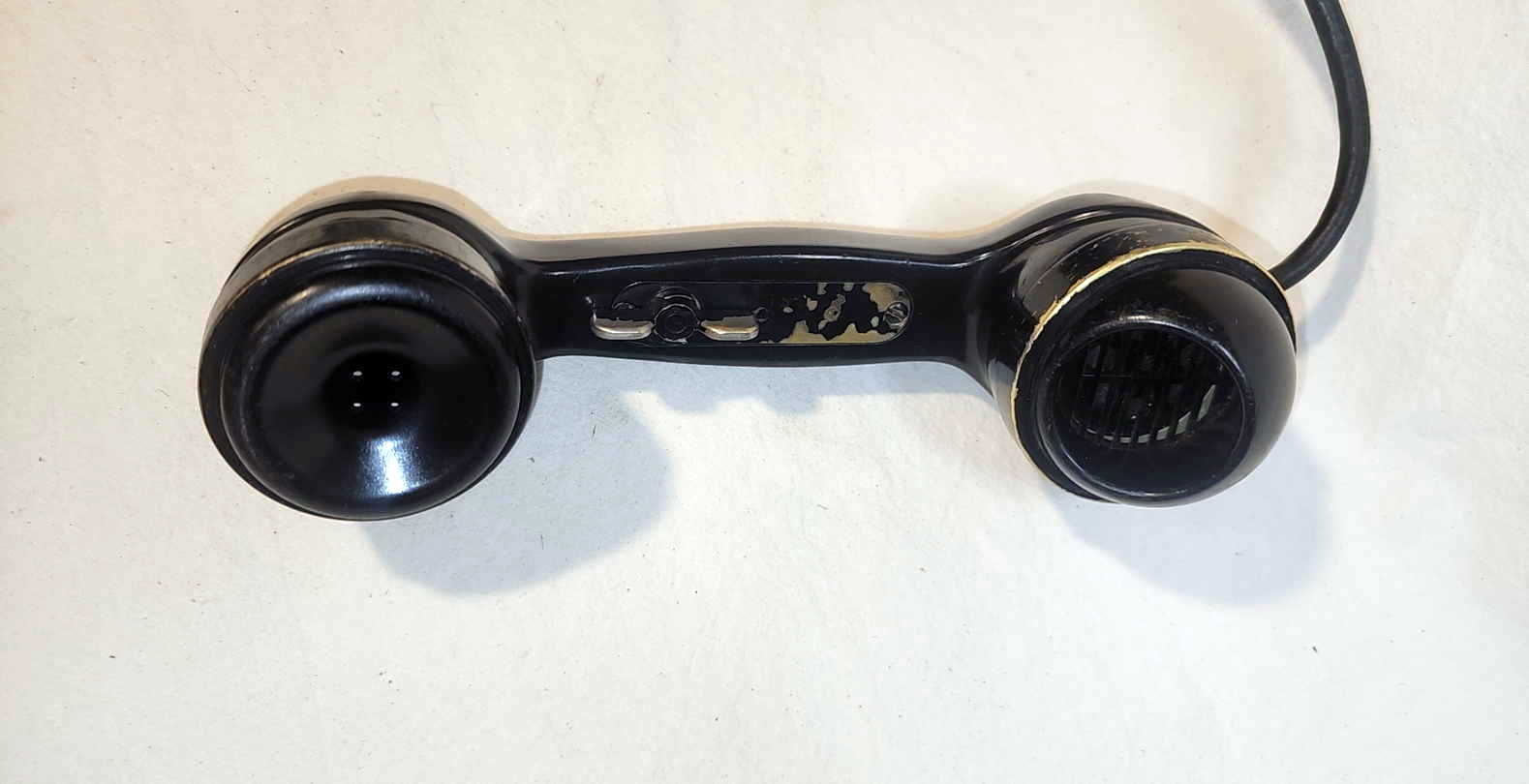
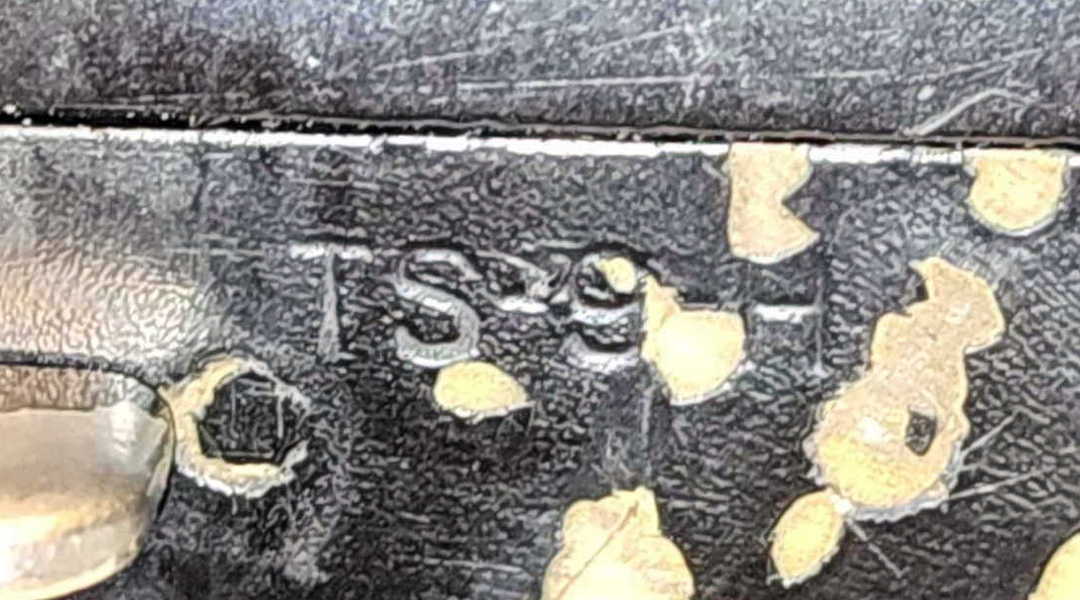
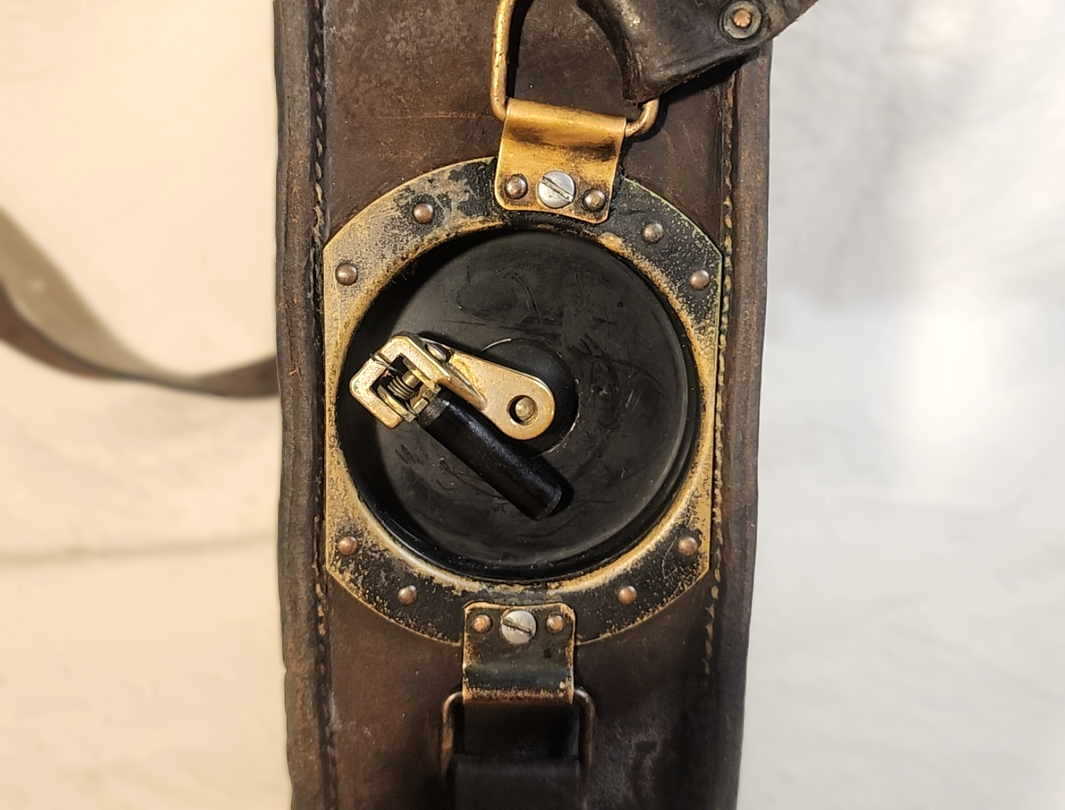
Stromberg-Carlson example (Order No. 2577-CHI-42), early-war leather case, TS-9-H handset, GN-38 hand-crank generator
Images
Specifications
| General Information | |
|---|---|
| Country | United States |
| Branch | U.S. Army Signal Corps |
| Item Type | Portable field telephone (local battery, two-wire) |
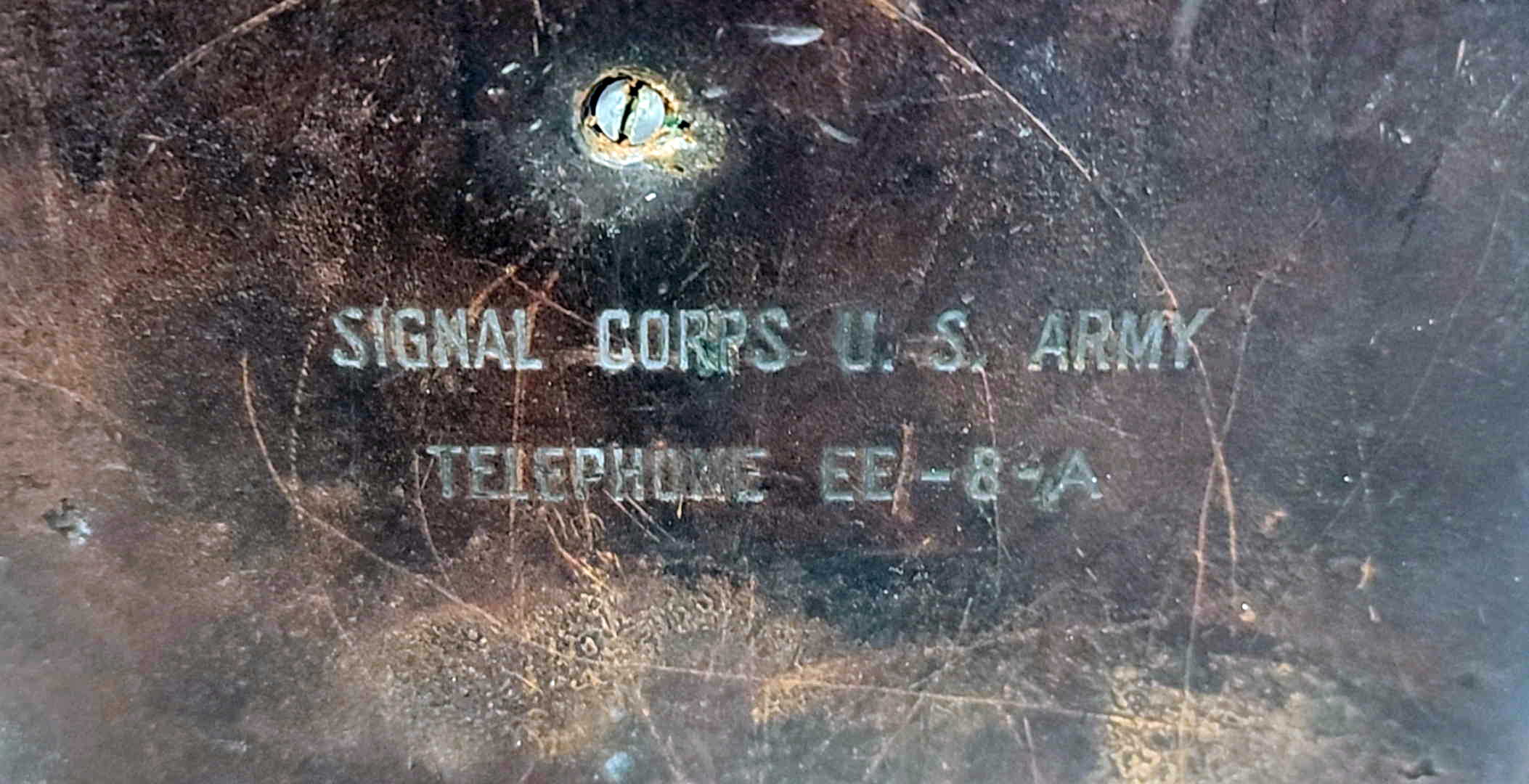
| Model / Designation | Telephone EE-8-A |
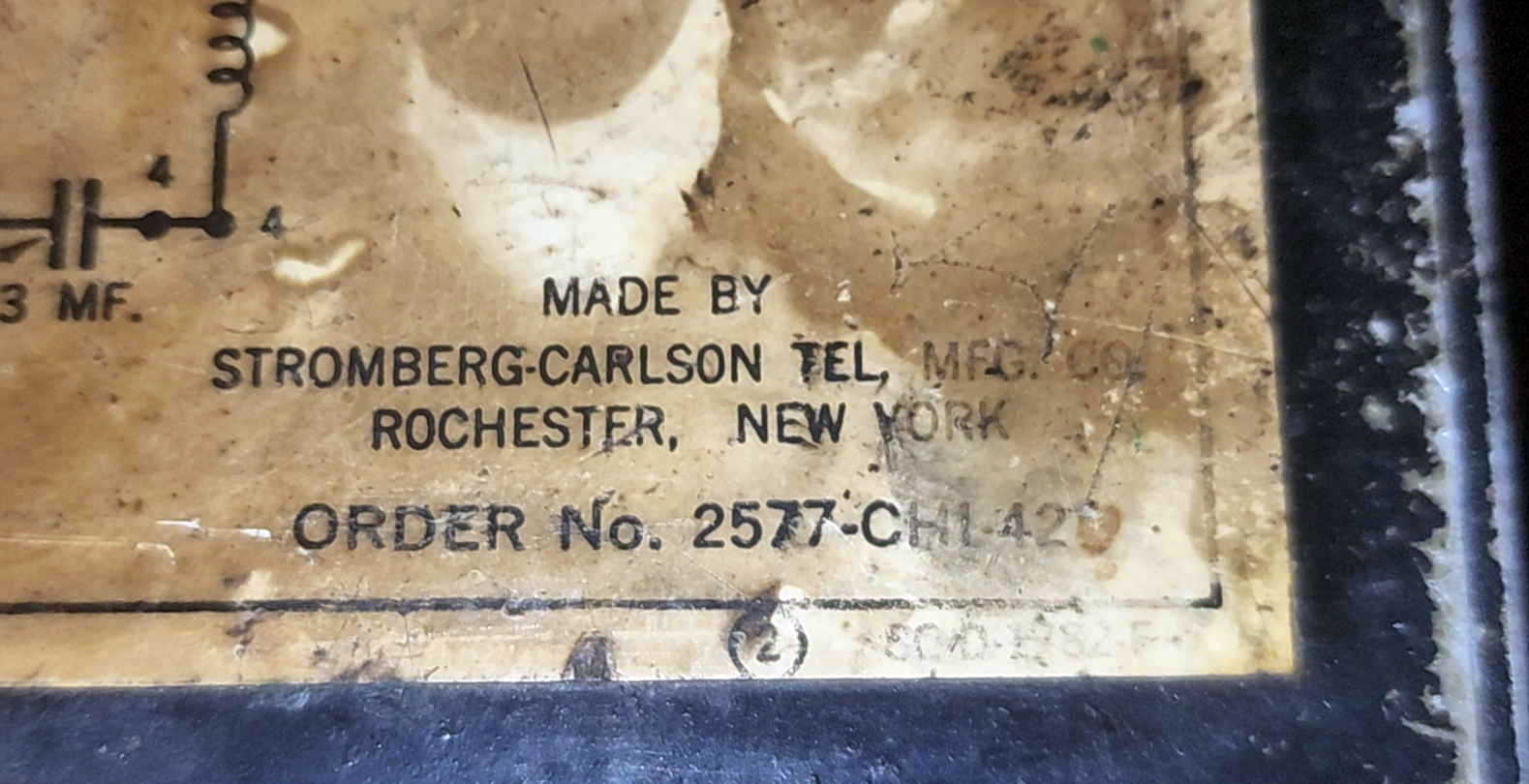
| Manufacturer | Stromberg-Carlson Telephone Mfg. Co., Rochester, New York |
| Contract / Order | Order No. 2577-CHI-42 (Signal Corps procurement, 1942) |
| Case | Brown leather carrying case with shoulder strap (early-war pattern) |
| Handset | TS-9 series handset (TS-9-H example shown) |
| Generator | GN-38 hand-crank magneto generator (ringing) |
| Typical Weight | About 8.5 lb (3.9 kg) with batteries installed |
| Technical Characteristics | |
| Power | 2 × 1.5V dry cells in series (3V local battery), with capability to operate on common battery systems via switchboard |
| Line | Two-wire field line, point-to-point or through field switchboards |
| Compatible Wire | Standard two-conductor field wire (examples include W-110 and later WD-1/TT) |
| Signaling | Hand-crank magneto ringing to alert remote phone or switchboard operator; internal bell rings on incoming signal |
| Range | Varies by wire and conditions; commonly cited at about 7 miles (11 km) on standard field wire, with longer distances possible on higher-grade lines |
| Service | WWII through later Cold War service, including Korea; field telephones remained useful well beyond 1945 |
Historical Context
The EE-8 field telephone was a portable, two-wire phone set that became a backbone of U.S. military communications during World War II. First standardized in the early 1930s, following service testing in 1937, it replaced earlier field phones such as the EE-5 with a lighter design, improved performance, and greater practical range. The U.S. Signal Corps began large-scale procurement by 1938, and by the time the United States entered the war in 1941, roughly 70,000 units had already been ordered. As American forces mobilized, production surged from tens per day to thousands per day, with multiple manufacturers producing the EE-8 family to meet wartime demand. This scale reflects the field telephone’s central role in battlefield coordination, providing reliable, secure communication between command posts, observation posts, and front-line units.
During World War II, field telephones like the EE-8-A were often considered more dependable than relatively new portable radios. Radios could suffer from interference, limited range, and battery drain, while wired field phones delivered clear communication as long as the line remained intact. Troops frequently preferred the EE-8 for many operations because it was more reliable than early portable sets such as the SCR-300 “Walkie-Talkie” and the handheld SCR-536 “Handy-Talkie.” Signal Corps wire crews ran communication lines across the battlefield, laying insulated wire between units or back to a switchboard at a command post to create a telephone network in the combat zone. Once in place, these lines enabled real-time coordination of infantry, artillery, and support units with reduced vulnerability to enemy jamming or interception compared with radio.
Laying wire in combat brought its own hazards. Crews risked enemy fire while stringing lines, and wires could be cut by bombardment, vehicle traffic, or simple wear. Even with those challenges, the EE-8 family proved indispensable across both European and Pacific theaters, from directing artillery fire to coordinating movement, logistics, and command decisions. The EE-8 variants remained in service well beyond World War II, seeing continued use through the Korean War and into later Cold War periods. Production totals and Lend-Lease figures vary by source, but the numbers are consistently substantial, underscoring how widely the EE-8 was issued and how long it remained useful. In the postwar years, surplus EE-8 sets even found civilian use, famously as simple intercom systems for farms, garages, and workshops.
Manufacturer Details – Stromberg-Carlson (1942)
The EE-8-A was not produced by a single company. The U.S. government contracted multiple firms to build this equipment, distributing production so output could scale quickly while maintaining supply. Stromberg-Carlson Telephone Manufacturing Co., based in Rochester, New York, was one of the major firms tasked with producing the EE-8 series during the war years. Founded in 1894 by Alfred Stromberg and Androv Carlson, Stromberg-Carlson grew into a leading American telecommunications equipment manufacturer known for durable telephone systems and components. By the 1940s it was among the major national suppliers, and during World War II it shifted capacity to military production, including field communications equipment.
This specific EE-8-A example is a 1942 Stromberg-Carlson production unit. Inside the case, the maker’s label identifies the company and lists the contract order number “2577-CHI-42.” The “CHI” designation is commonly interpreted as a Chicago procurement district reference, reflecting the wartime procurement system used by the Signal Corps. Contracts like these resulted in large production runs that moved quickly from factory lines to training depots and combat units. Stromberg-Carlson’s background in telephone engineering helped ensure that these sets met Army expectations for ruggedness and reliable field performance.
Stromberg-Carlson’s wartime contributions were not limited to field telephones. As an established telecom manufacturer, it produced other communications hardware and supported broader war production programs. The EE-8-A contracts are a clear example of the American industrial effort, where civilian firms adapted to deliver standardized military equipment in very large quantities. After the war, Stromberg-Carlson returned its focus to commercial products, but its wartime output remains visible today in surviving Signal Corps equipment that still functions when properly maintained.
Technical Specifications and Design
The EE-8-A is a portable local-battery telephone designed to work on either point-to-point lines or through a switchboard. It integrates a hardwired handset, an internal battery compartment, a hand-cranked generator, and a ringing mechanism inside a protective carrying case. Early EE-8 and EE-8-A sets were issued in leather cases, with canvas replacing leather in later variants due to field durability concerns, especially in humid environments.
Power Source: The phone is typically powered by two 1.5-volt dry cells installed in series to provide 3V for the transmitter circuit when operating in local battery mode. The EE-8-A can also be connected through field switchboards that provide common battery power, with local cells serving as backup when configured for those systems. Period instructions emphasized removing batteries when the phone was not in use to prevent corrosion.
Transmission Range: Practical range depends on wire type, insulation quality, ground conditions, and how the line is routed. Using standard two-conductor field wire such as W-110 or later WD-1/TT, commonly cited ranges for intelligible voice are on the order of several miles, with about 7 miles (11 km) frequently referenced for typical field conditions. Some sources note longer distances under good conditions using quality wire on dry ground, with figures such as 11 to 17 miles sometimes reported. In ideal circumstances, point-to-point connections over higher-grade copper lines can carry voice much farther, and very long test results are occasionally cited in the literature, but battlefield routing and damage risk generally kept practical tactical runs to a few miles, which was sufficient to link platoons and companies back to battalion or regimental headquarters.
Signaling (Ringing): To initiate a call, the operator uses a fold-out hand crank that drives a magneto generator (GN-38) mounted on the side of the case. Turning the crank produces a low-frequency AC ringing signal that can ring a remote field phone or alert a switchboard operator. Incoming calls are indicated by the internal bell mechanism when a ringing current is received from the other end.
Handset (TS-9 series): The handset is a combined transmitter and receiver unit, typically Bakelite, with a push-to-talk lever that activates the transmitter only while pressed. This conserves battery power and reduces background noise on the line. The TS-9-H example shown is one of multiple TS-9 variants used across the EE-8 family, with letter suffixes denoting minor revisions.
Operation and Use in the Field
In use, the EE-8-A is straightforward. The operator connects the line by binding the two field wires under the terminal screws, installs batteries if operating in local battery mode, and ensures the set is in the correct configuration for the line or switchboard. To place a call, the operator cranks the magneto generator to ring the far end. When the other party answers, both operators use their handsets and the push-to-talk lever to communicate over the line.
The EE-8-A’s circuitry supports both talking and ringing on the same pair of wires. The magneto provides the AC signal used to ring the distant bell, while the local batteries supply the DC power needed for the carbon transmitter circuit during speech. In practical field networks, phones could be connected point-to-point or routed through switchboards so an operator could connect calls much like a small telephone exchange. The handset and case design incorporate an on-hook condition so the circuit can be disconnected when the handset is stowed, and the system’s sidetone lets users hear some of their own voice, which helps control shouting in high-noise environments. A capacitor in the circuit allows AC ringing signals to pass while blocking the DC talk current, enabling both ringing and speech over the same line pair.
A practical advantage of the EE-8 system is controlled transmission in noisy environments. The push-to-talk feature helps limit background noise and extends battery life by powering the transmitter only during speech. The result is a communications tool that is mechanically simple, electrically conservative, and dependable under difficult conditions.
Legacy and Postwar Influence
Despite its mid-century appearance, the EE-8-A proved extremely effective. It was built to survive rough handling, mud, rain, and field abuse, and it could be serviced with basic tools. Collectors often find that EE-8 series sets still function decades later once they are correctly wired and supplied with fresh batteries. The core concept of the local-battery, two-wire field telephone carried forward into later U.S. Army sets, where the same basic approach remained attractive because it was simple, reliable, and supported rapid field repair. Postwar field telephones improved weatherproofing and ergonomics, but the EE-8 family remains a clear benchmark for wartime communications engineering where ruggedness and serviceability were prioritized.
Collector Notes
Field telephones are sometimes overlooked next to radios, but the EE-8 series represents the practical backbone of tactical communications across much of the 20th century. The leather-case EE-8-A is especially representative of early-war production and the realities of equipment adaptation, where combat experience drove changes such as the later shift to canvas cases for improved durability.
This Stromberg-Carlson example is notable for clearly legible markings and contract labeling, along with a complete TS-9-H handset and intact GN-38 generator assembly. Together, these features make it a strong reference example for collectors and researchers studying WWII Signal Corps communications equipment.
For related conservation work and restoration documentation in this archive, visit the Restoration Lab.
Provenance
- U.S. Army Signal Corps field telephone, model EE-8-A
- Manufacturer label: Stromberg-Carlson Telephone Mfg. Co., Rochester, NY
- Signal Corps contract marking: Order No. 2577-CHI-42 (1942)
- Early-war brown leather carrying case with shoulder strap, consistent with wartime issue patterns
- Preserved and documented as part of the Relics & Rifles research archive
Sources
- fieldphones.org – U.S. Signal Corps Field Telephones Timeline
- The National WWII Museum – The EE-8 Field Telephone
- RadioNerds – EE-8
- Commemorative Air Force Minnesota Wing – EE-8 Field Telephone
- U.S. Militaria Forum – WW2 EE-8 Field Telephone discussion
- Stromberg-Carlson (background)
- Library of Congress – War Production Drive award photo (Stromberg-Carlson)
- Paratrooper.be – Working EE-8 field phones for reenactment
Editorial Note
These pages are presented for historical and collector-reference purposes. Relics & Rifles does not sell artifacts or facilitate transactions. Any discussion of configuration, markings, or accessories is descriptive and intended to preserve context for research.