
Italian M1870 Vetterli Sword Bayonet (Full-Length)
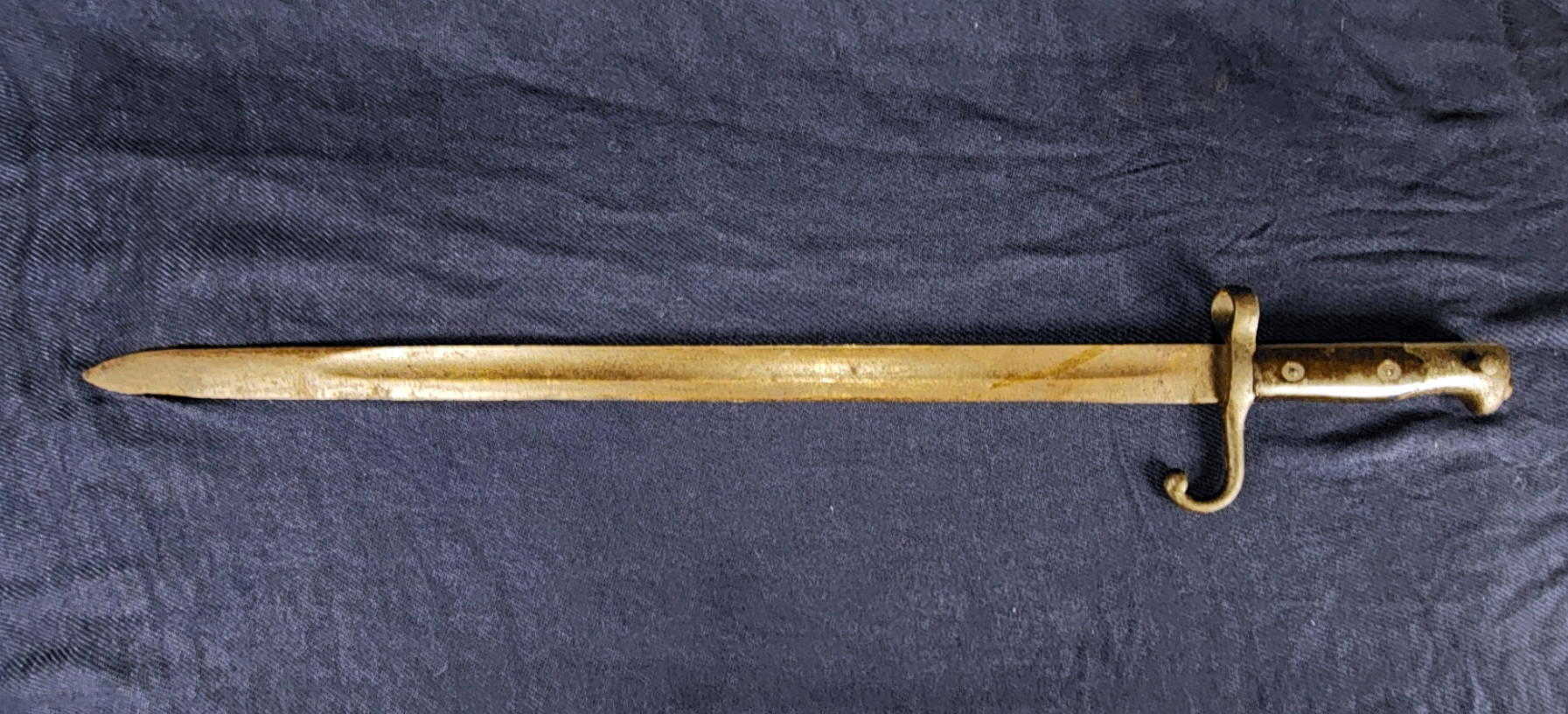
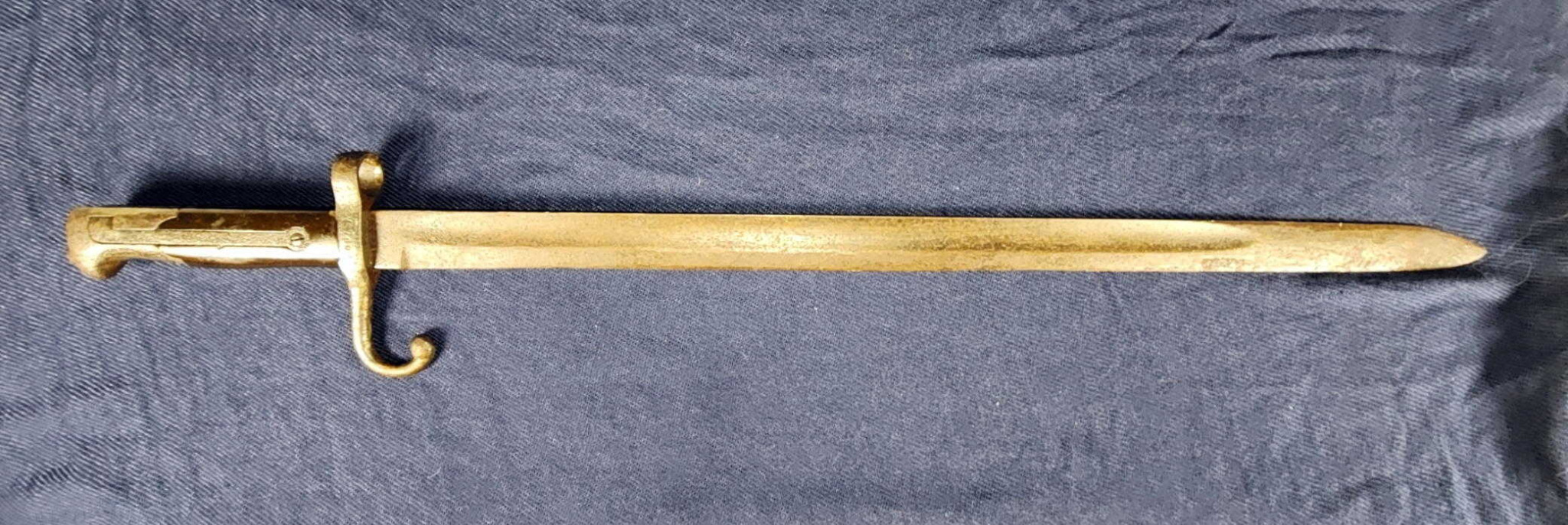
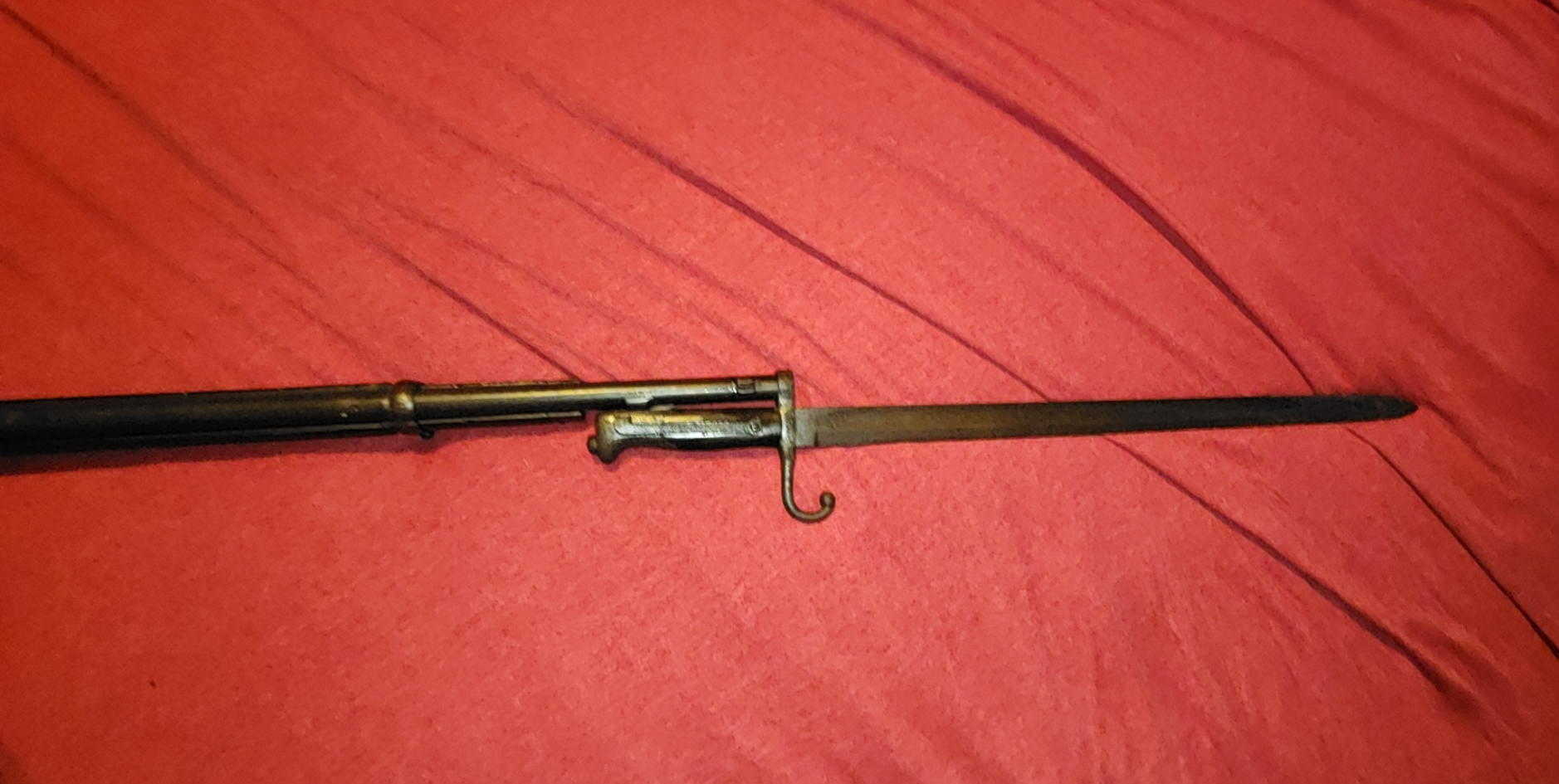
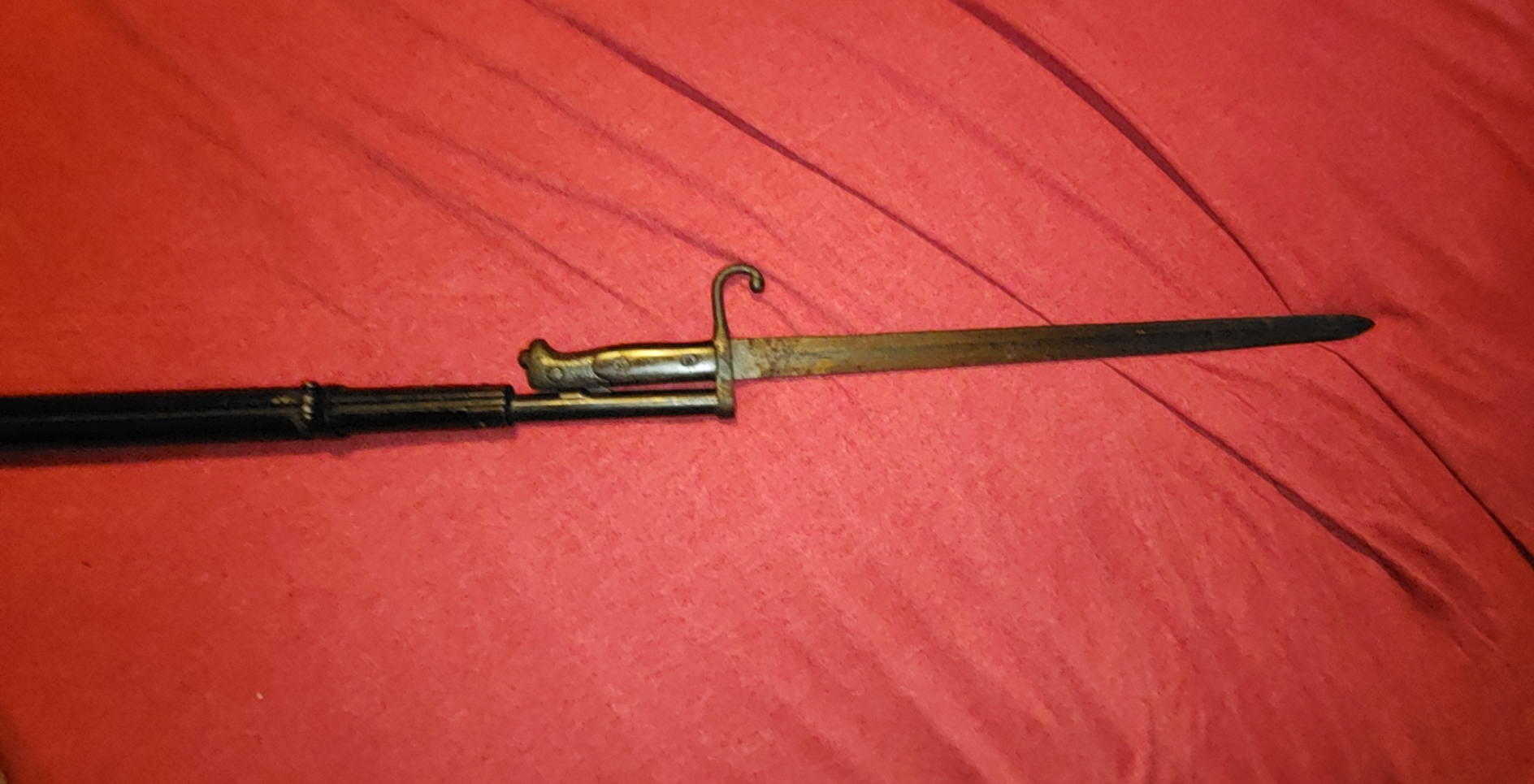
Long-spring configuration with brown composition grips and an intact hooked quillon
Images
Specifications
| General Information | |
|---|---|
| Model | Italian M1870 Vetterli sword bayonet, full-length configuration |
| Country | Kingdom of Italy |
| Type | Detachable sword bayonet for the Italian Vetterli rifle family |
| Period | Late 19th-century pattern; exact manufacture date of this example unconfirmed |
| Configuration | Long external catch spring, brown composition grip scales and intact hooked quillon |
| Blade Length | Approx. 514–515 mm (20.25 in), typical full-length pattern dimensions |
| Overall Length | Approx. 640–645 mm (25.2–25.4 in), typical full-length pattern dimensions |
| Blade | Straight, single-edged blade with a fuller on each face and a spear-like point |
| Hilt & Attachment | Steel crossguard with muzzle ring; steel pommel with mounting slot and spring catch |
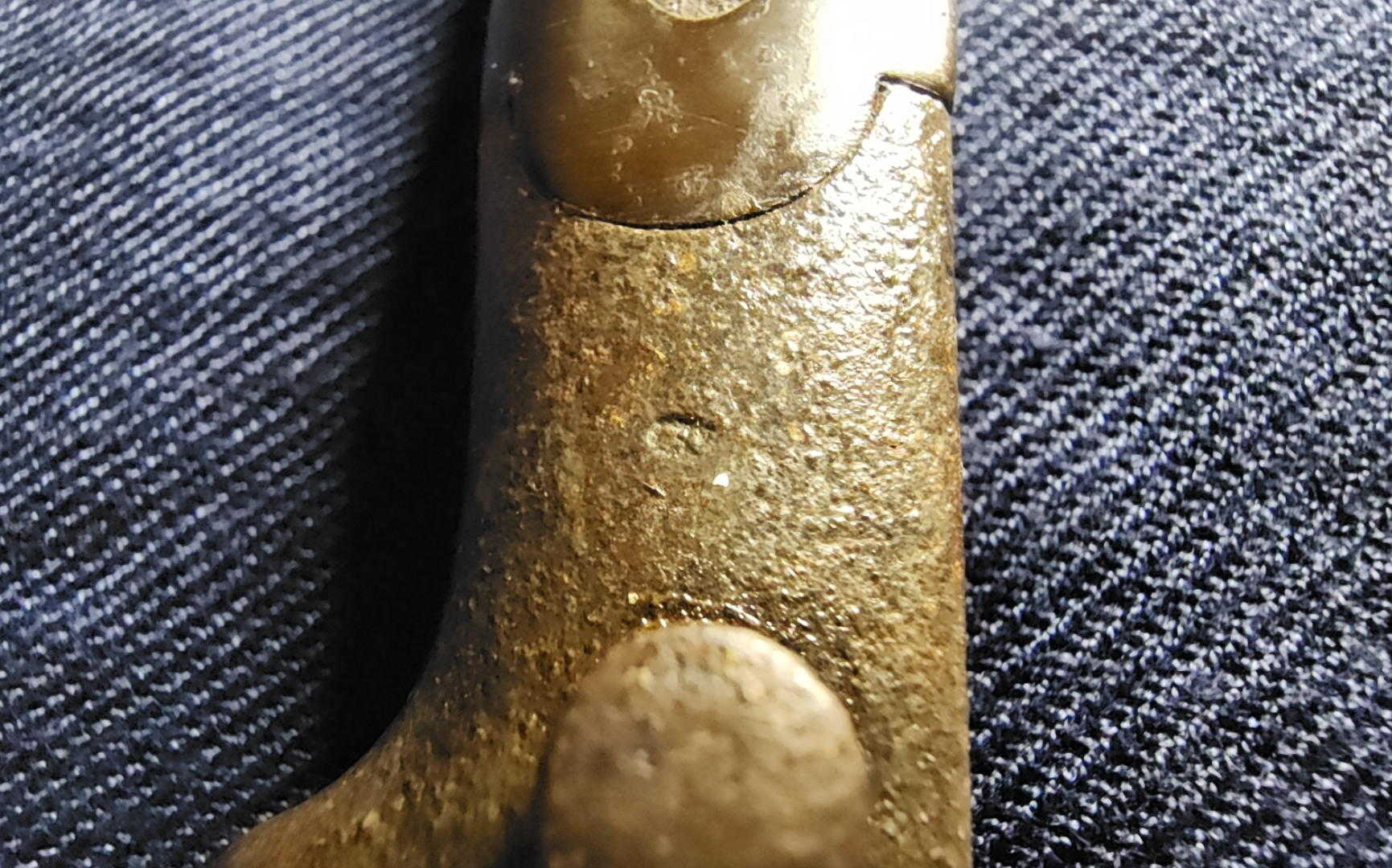
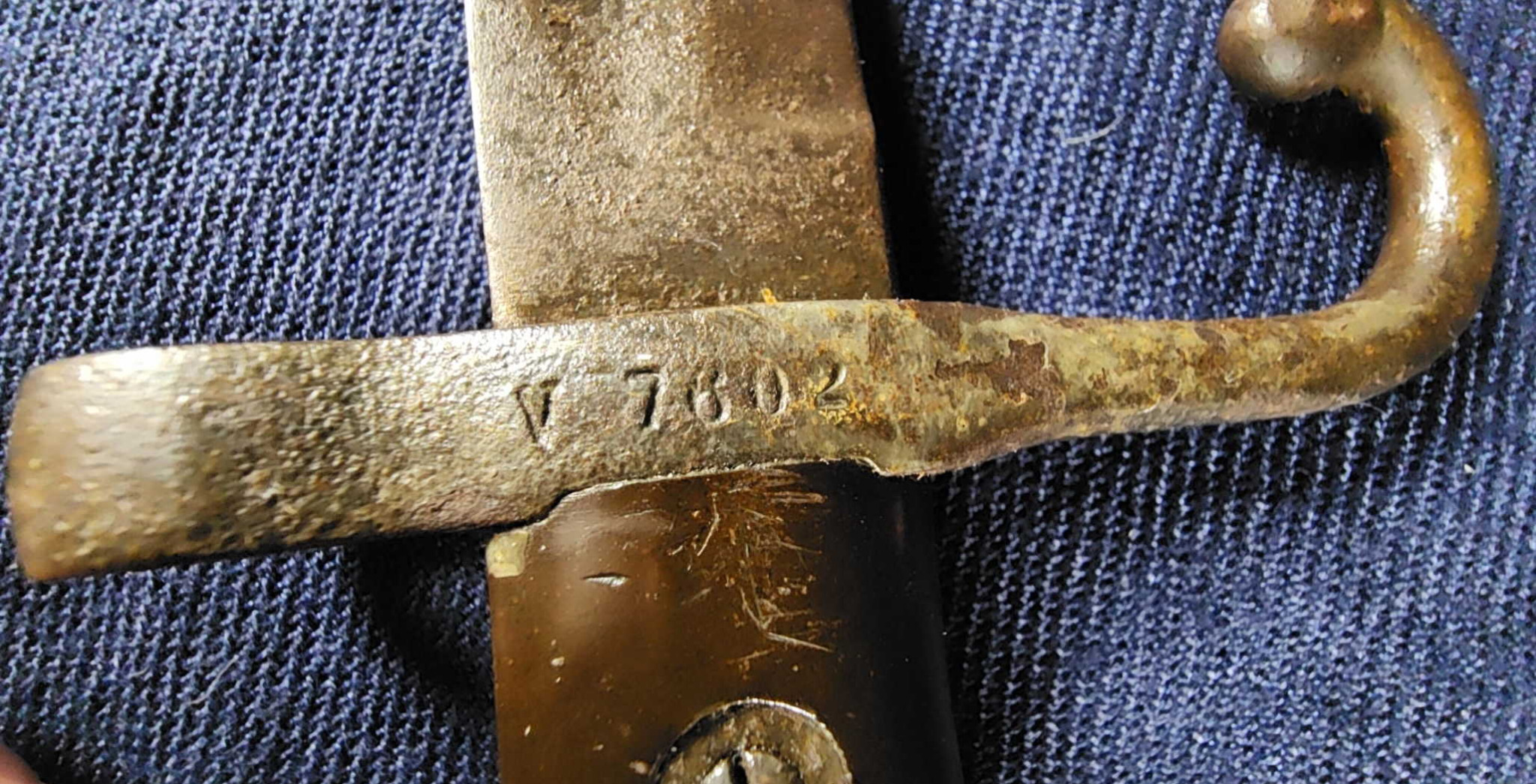
| Markings | V-prefix crossguard serial,V 7602; small worn hilt stamp beside the release button |
| Maker | Not identified |
| Scabbard | Not present with this example; the pattern used a leather scabbard with metal fittings |
| Associated Rifle | Vetterli M1870/87/15 Conversion Rifle, shown with the bayonet mounted in photographs 5 and 6 |
Identification & Construction
This example belongs to the Italian M1870 Vetterli sword-bayonet family. Its long, straight blade, broad fullers, hooked crossguard and steel pommel give it the appearance of a short sword. The muzzle ring and spring-operated mounting catch identify its intended role as a rifle bayonet.
The brown grip scales show scratches and edge wear, with the long external leaf spring visible on the opposite side of the hilt. Their appearance is consistent with the composition grips associated with this pattern. The Verona museum catalogue identifies ebonite on its comparable example.
References use several names for related versions, including M1870, M1870/87 and tipo regolamentare. They also differ in the dates assigned to particular changes. This page uses M1870 as the family designation and describes the visible long-spring configuration without assigning an unsupported production year.
Markings on This Example
The crossguard carries a V-prefix serial number V 7602
A small, worn stamp is located on the hilt near the grip, beside the release button. Its details are not clear enough to identify a particular arsenal or inspector. No legible arsenal name or manufacture date has been established.
The Vetterli Connection
Italy adopted its single-shot Vetterli rifle in 1870, chambered for the 10.35×47 mmR cartridge, commonly described as 10.4 mm. The 1887 Vitali conversion added a four-round magazine. During the First World War, further conversions adapted existing rifles to 6.5×52 mm Carcano ammunition and the Carcano-style clip system.
The sword bayonet was associated with the M1870 and M1870/87 rifles. The mounting arrangement also permits full-length examples to fit compatible Vetterli-Carcano conversions. Photographs 5 and 6 show this bayonet mounted on the collection's M1870/87/15 conversion rifle. These photographs document the present pairing; the bayonet's original issue rifle is unknown.
Full-Length Blade & Later Alterations
Many M1870 bayonets were subsequently shortened, and some also lost their hooked quillons. The full-length pattern has a blade of roughly 20¼ inches, giving it a markedly different outline from the shortened versions associated with later Vetterli service. This example retains the long blade and curved quillon visible in the overall photographs.
The distinction is useful when comparing surviving examples. A later rifle conversion does not, by itself, establish that every bayonet paired with it was shortened. The mounted photographs preserve a record of this full-length bayonet alongside the collection rifle.
Condition & Collection Notes
The blade and hilt show discoloration, scattered pitting and handling wear. The brown grips retain visible scratches and small losses along their edges. The hooked quillon remains in place, and the long external spring is visible in the second overall view. No scabbard accompanies the bayonet.
Full-length M1870 Vetterli bayonets retaining their hooked quillons are particularly desirable to collectors. Many examples were subsequently shortened, had the quillon removed, or received both alterations. This example preserves the long sword blade, hooked guard, brown composition grips and long external spring, giving it the distinctive proportions often lost through later modifications. The long-spring variant also has an interesting identification history. The version without a cutout in the lower muzzle ring was once attributed to an 1875 introduction. World Bayonets identifies it as the M1870/87 Tipo Regolamentare, or regulation type, associated with the 1887 Vetterli-Vitali rifle. That rifle eliminated the guide that had required the earlier ring cutout. Spring length, muzzle-ring configuration and retained blade length are therefore useful details for collectors comparing variations within the Vetterli bayonet family.
Sources & Research Notes
- Museo del Risorgimento, Verona: inventory 10127, M1870 Vetterli bayonet. Museum description of a long-spring example, ebonite grips and 64.5 cm overall length.
- World Bayonets: Bayonets of Italy, M1870 entry. Comparative dimensions, long-spring terminology, rifle compatibility and later alterations.
- Military Rifles in the Age of Transition: Mod. 1870 Italian Vetterli, bayonet section. Full-length blade dimensions and later shortening.
- Marco Cornuda & Pat Glynn, “An Interesting Bayonet,” NZAHAA E-Gazette Mk II, No. 26, February 2013, p. 3. Comparison of long and shortened bayonets and context for the Vetterli rifle conversions.
Photographs and specimen observations: Relics & Rifles collection. Reference examples establish pattern characteristics; their individual makers, numbers and service histories are not transferred to this specimen.