U.S. T56-6 Combat Vehicle Crewman Helmet
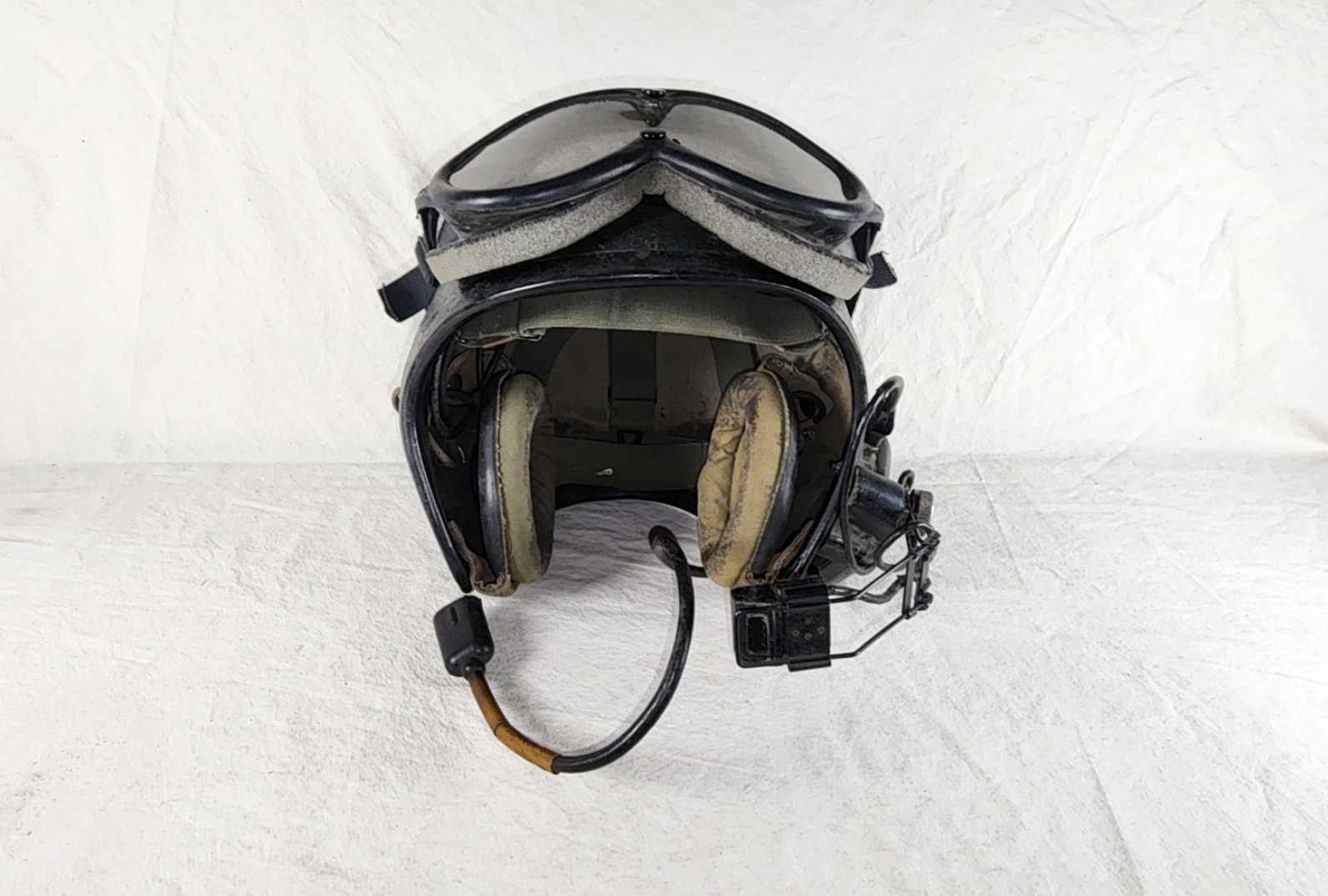
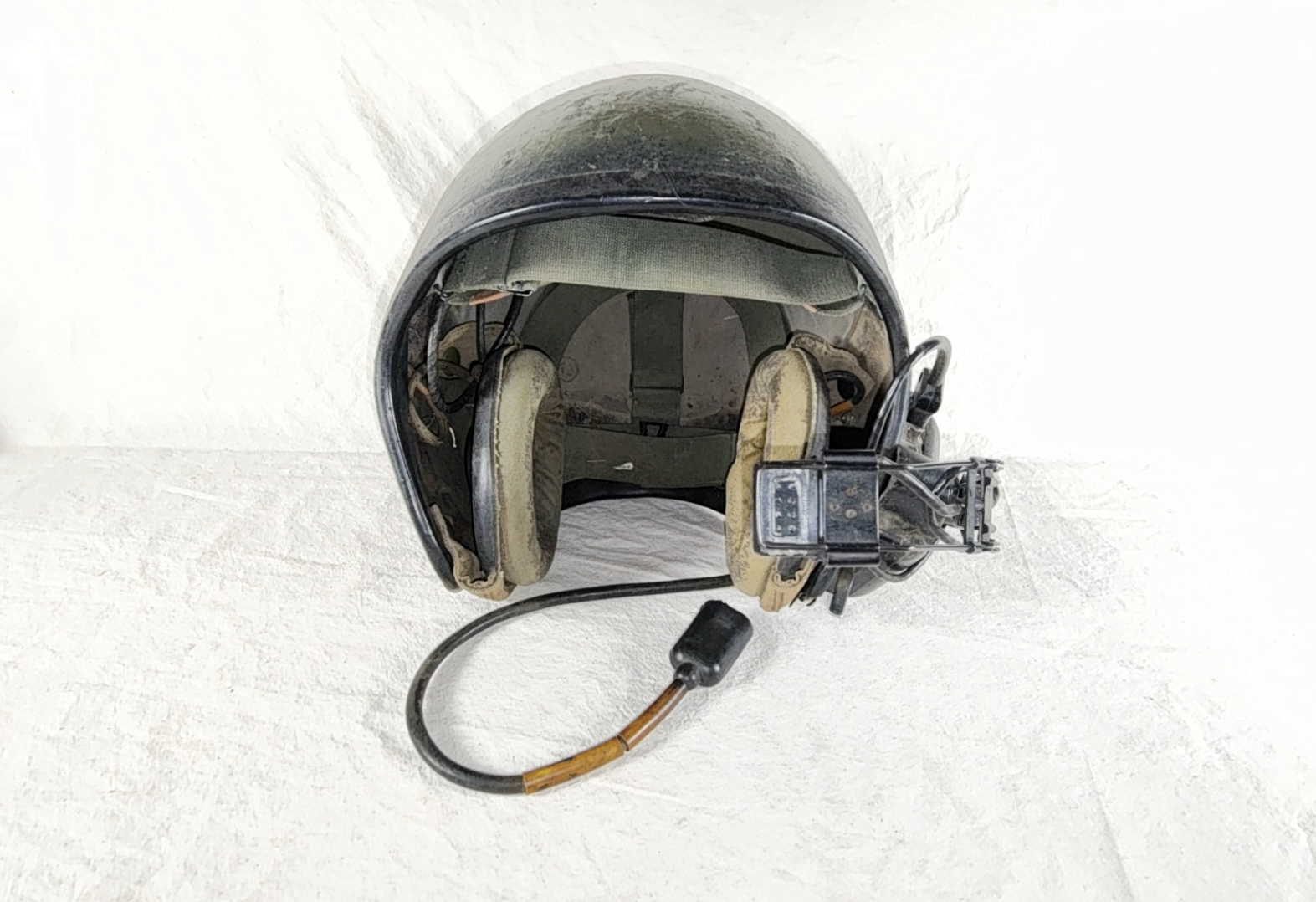
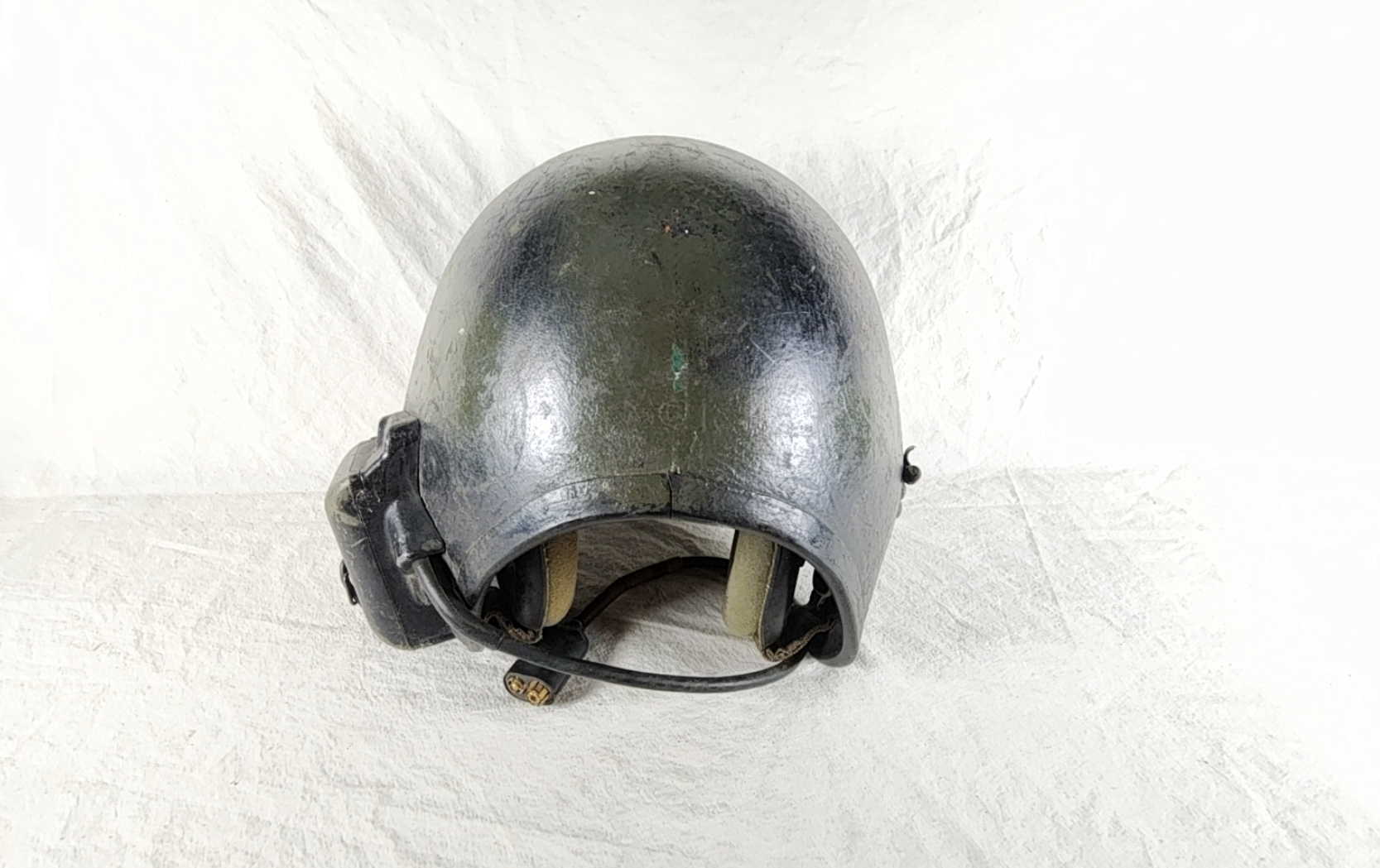
Vietnam-era tanker helmet with green-and-black camouflage, Roanwell SA-1552/G switching equipment, a Telephonics M-6A/UR microphone, matching H-269/G earphones and accompanying 1974 goggles.
Images
Specifications
| General Information | |
|---|---|
| Model | T56-6 Combat Vehicle Crewman (CVC) helmet, commonly called a tanker helmet |
| Country | United States |
| Period Attribution | Vietnam War / Cold War, approximately the 1960s to early 1970s |
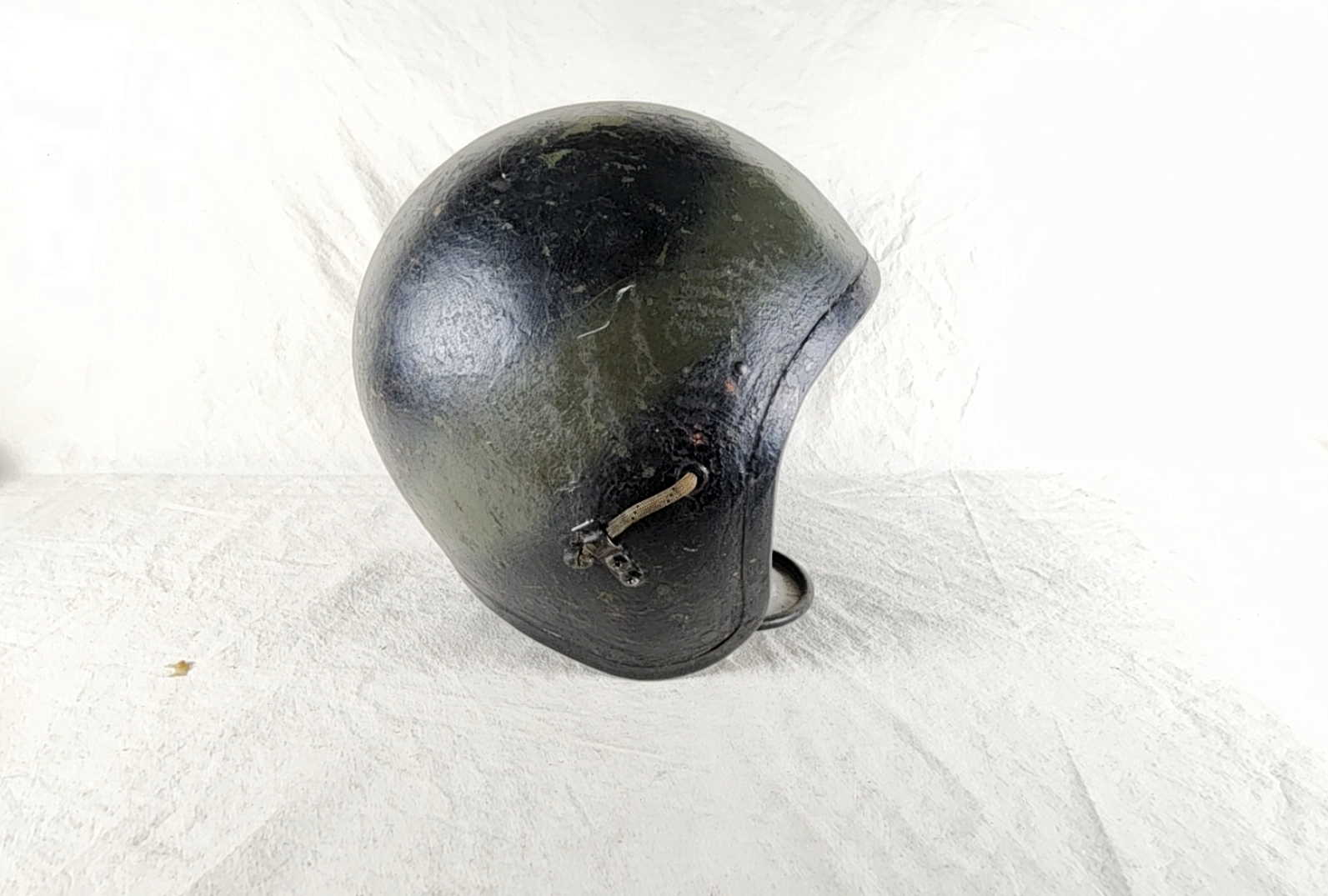
| Shell and Finish | Deep molded shell with black edge trim and aged green-and-black camouflage, service-applied |
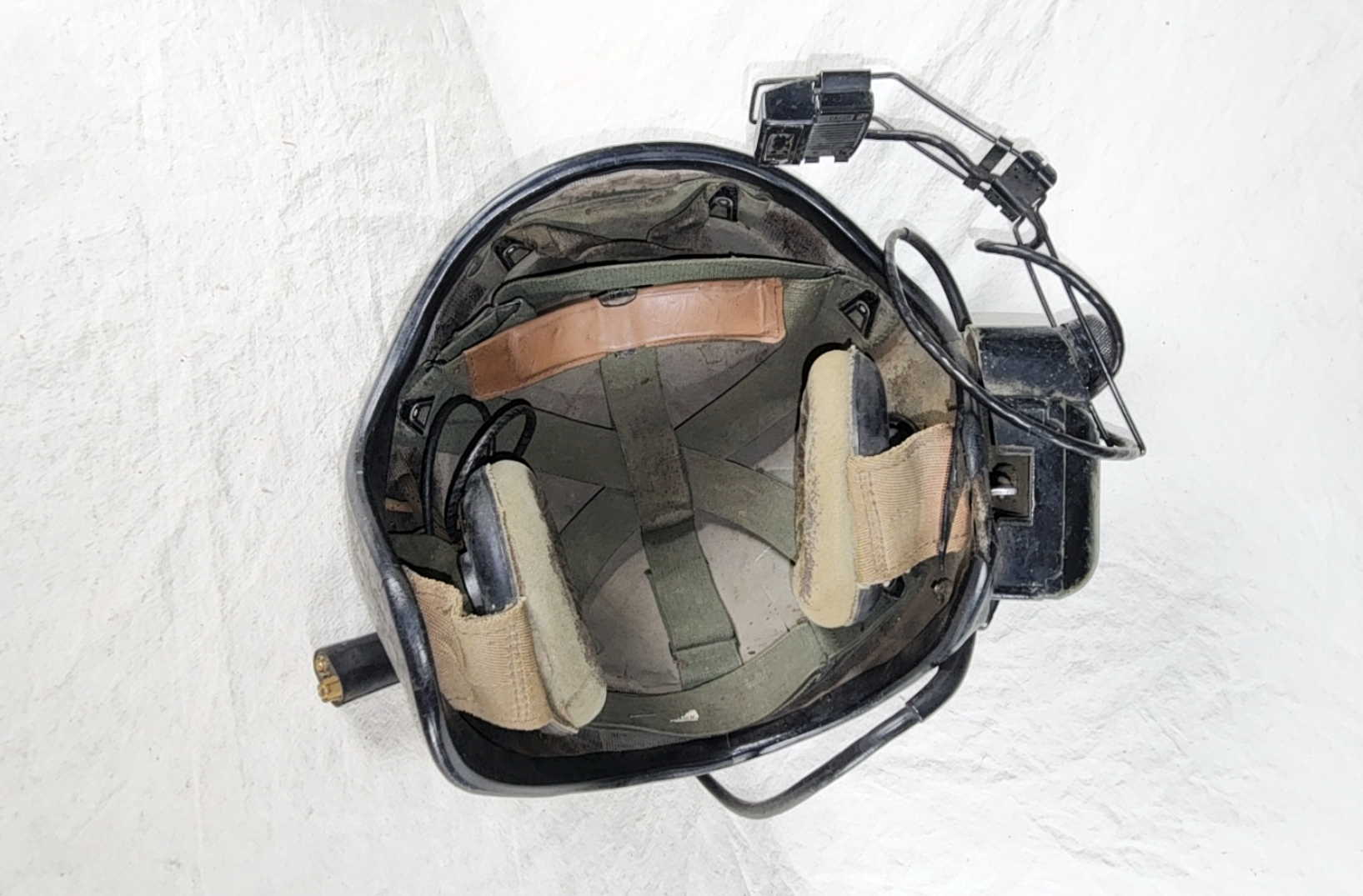
| Suspension | Olive web cradle, leather brow pad and fabric-supported cushioned earphones |
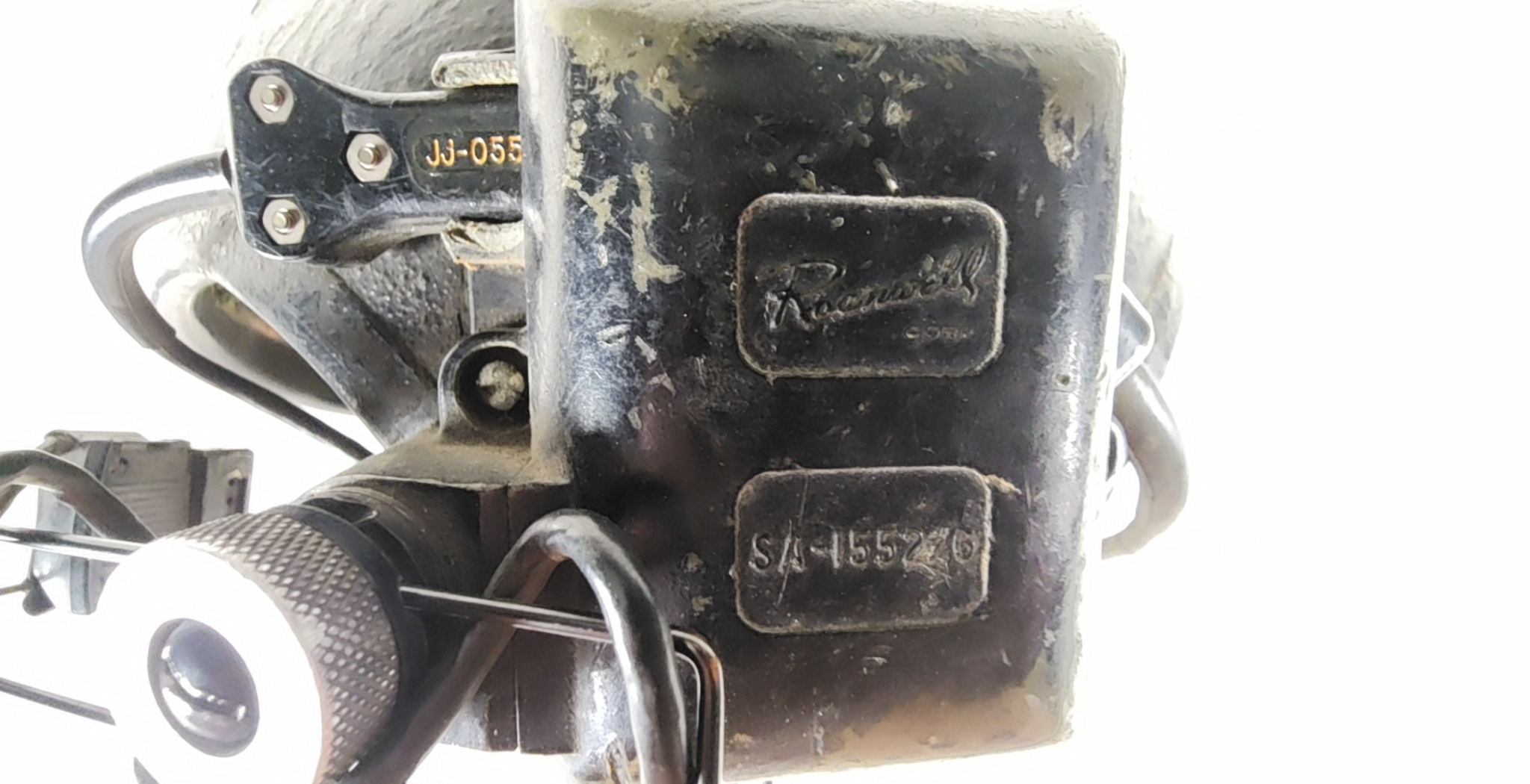
| Communications Housing | Roanwell Corporation, SA-1552/G switch housing assembly, fitted to the wearer’s left side |
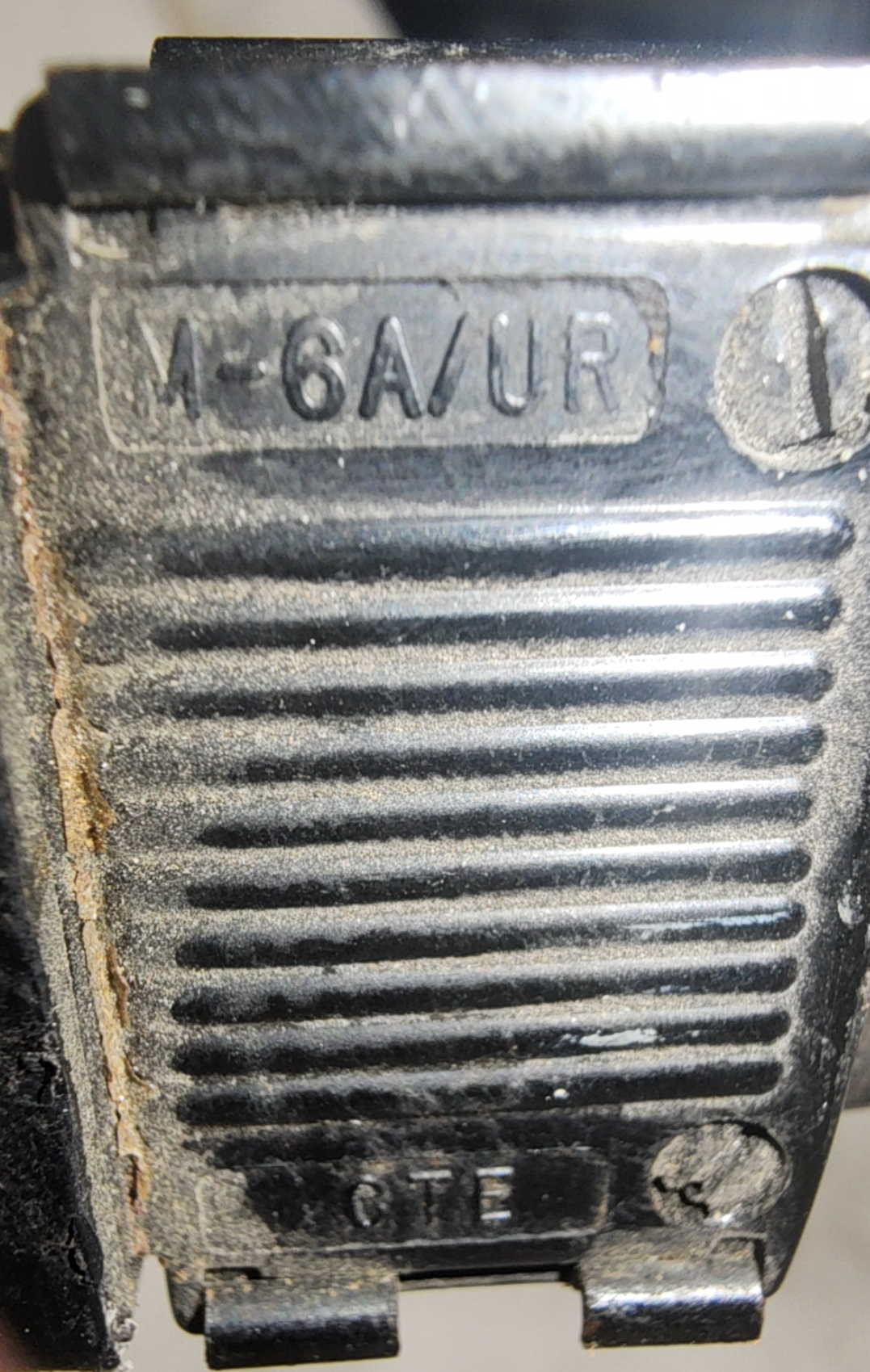
| Microphone | Telephonics M-6A/UR, rectangular carbon, close-talking, noise-canceling type; molded CTE maker code |
| Microphone Plug | JJ-055, yellow marking at the microphone connection |
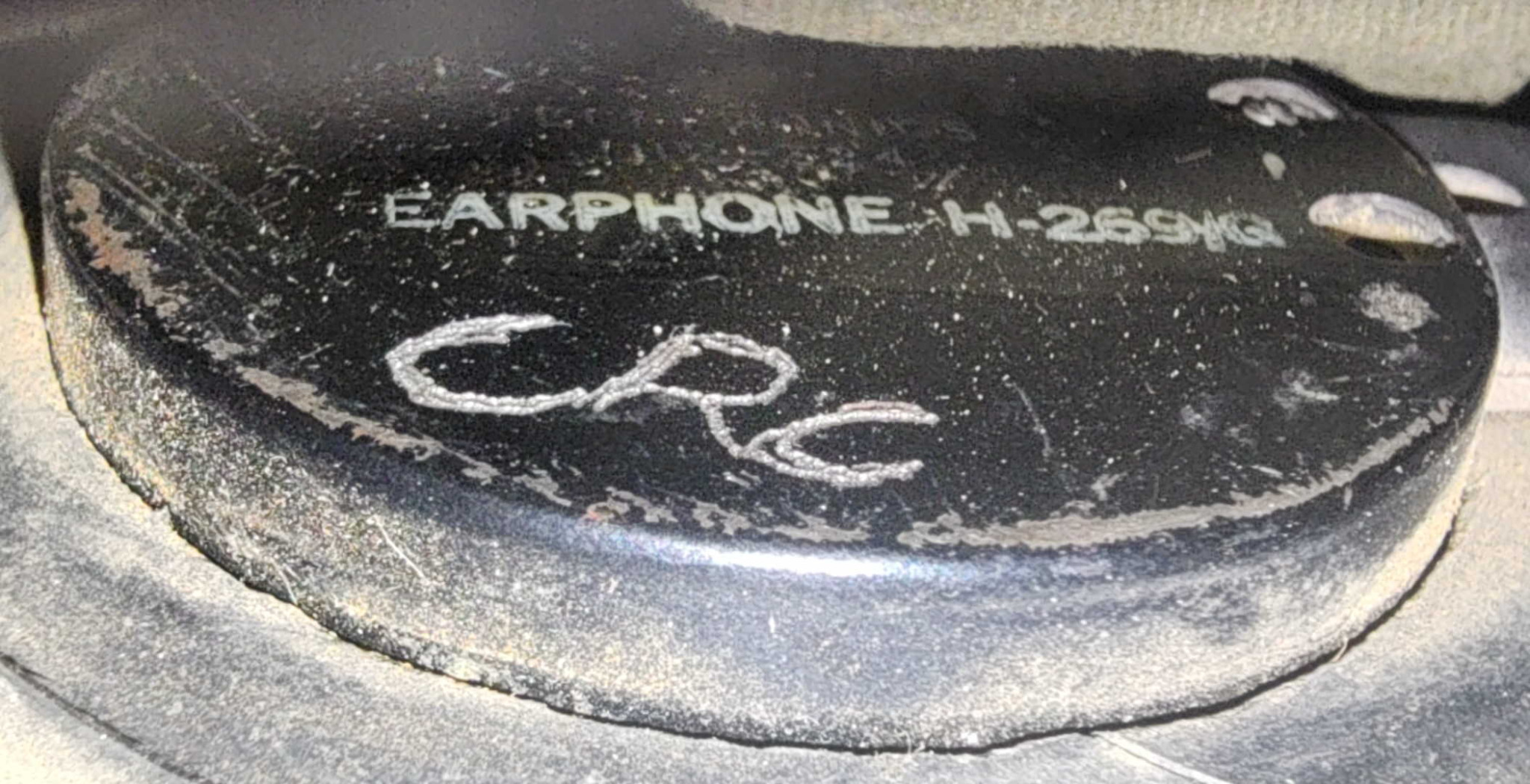
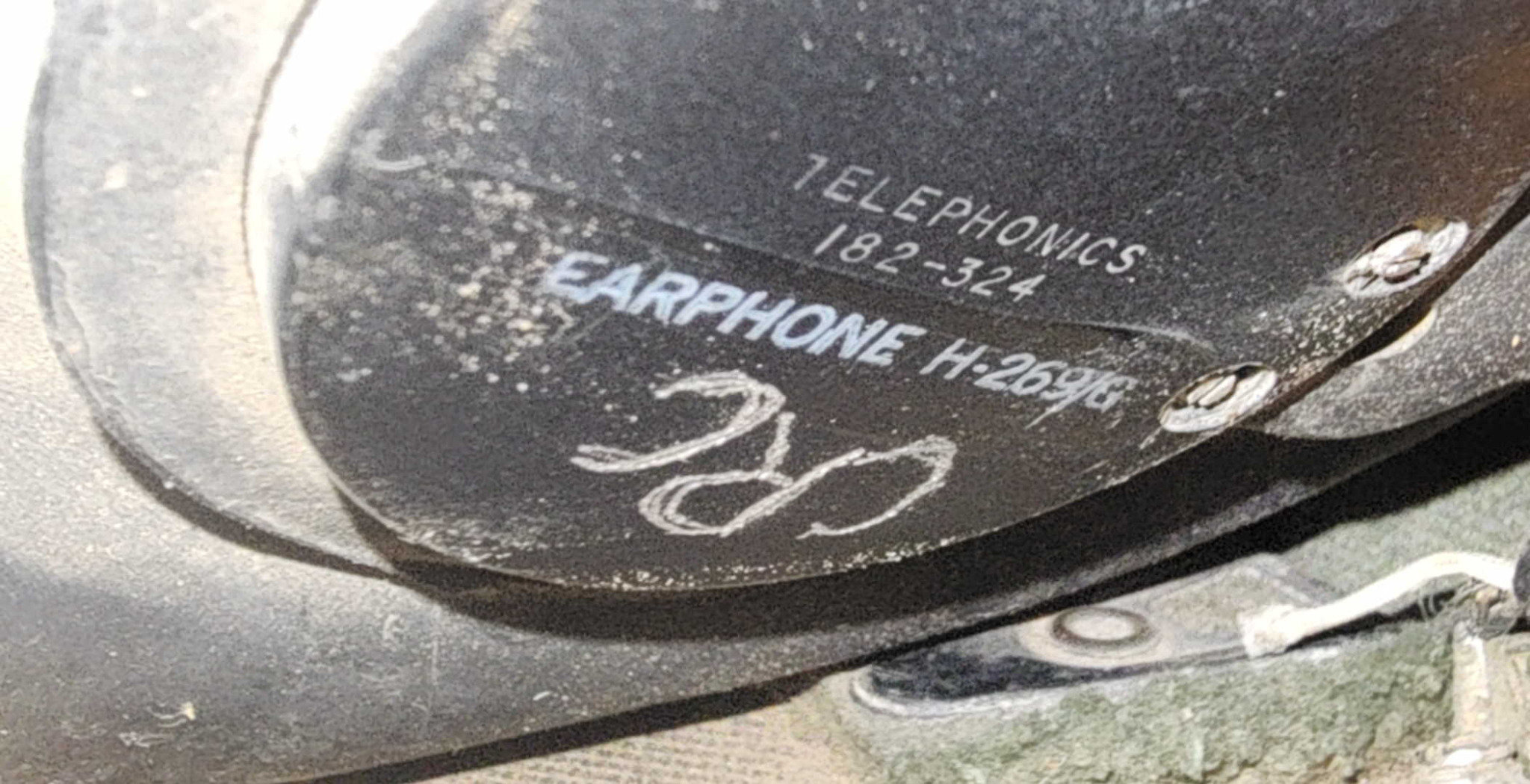
| Earphones | Two Telephonics H-269/G dynamic earphone elements, both marked 182-324 |
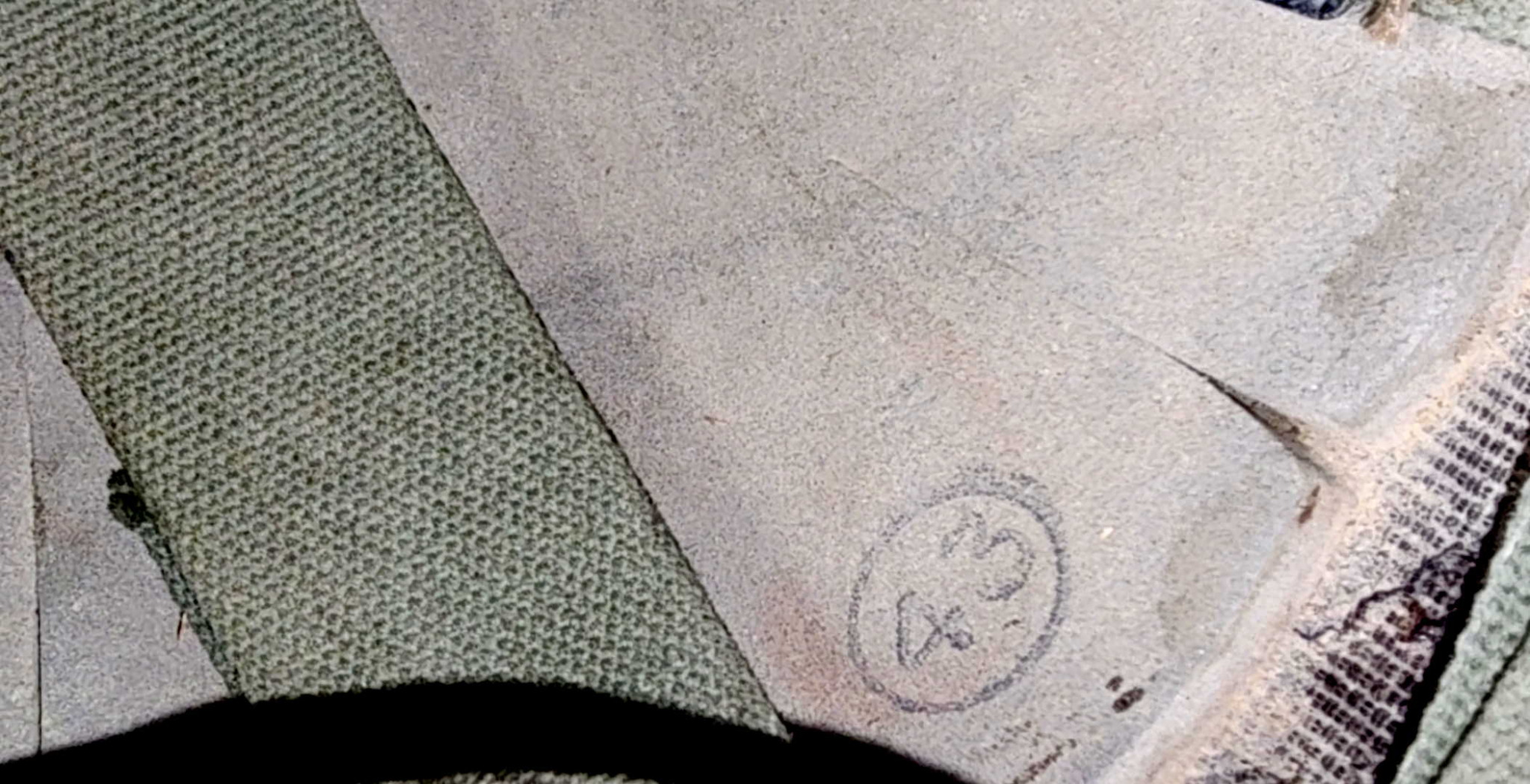
| Interior Stamp | Circled marking apparently reading “43,” interpreted as an inspection or manufacturing-control stamp |
| Goggles | Goggles, Sun, Wind and Dust, frame dated 1974 |
| Collection | Relics & Rifles collection |
Identification and Historical Summary
This is a U.S. T56-6 Combat Vehicle Crewman helmet from the Vietnam War and Cold War generation of armored-vehicle equipment. Its deep shell, shell-mounted web suspension, fabric-supported earphone cushions and external communications housing are characteristic features of the type. The helmet is attributed to approximately the 1960s to early 1970s.
The T56-6 combined protective headgear with the audio equipment needed by a vehicle crew. Cushioned earphones carried received speech, while an adjustable boom kept the microphone close to the mouth. Helmet-mounted switching equipment connected the wearer to the vehicle’s intercom and radio systems. Army communications manuals illustrate the T56-6 in this role, and Vanderbilt Special Collections catalogs a surviving example at circa 1970.
Shell, Suspension and Camouflage
The helmet retains its black edge trim, olive web suspension, leather forehead pad and two cushioned earphone assemblies. The web cradle supports the head within the shell, and the fabric earphone supports hold the padded receivers against the ears. The ear cushions and supporting fabric show substantial use and age, while the suspension remains assembled.
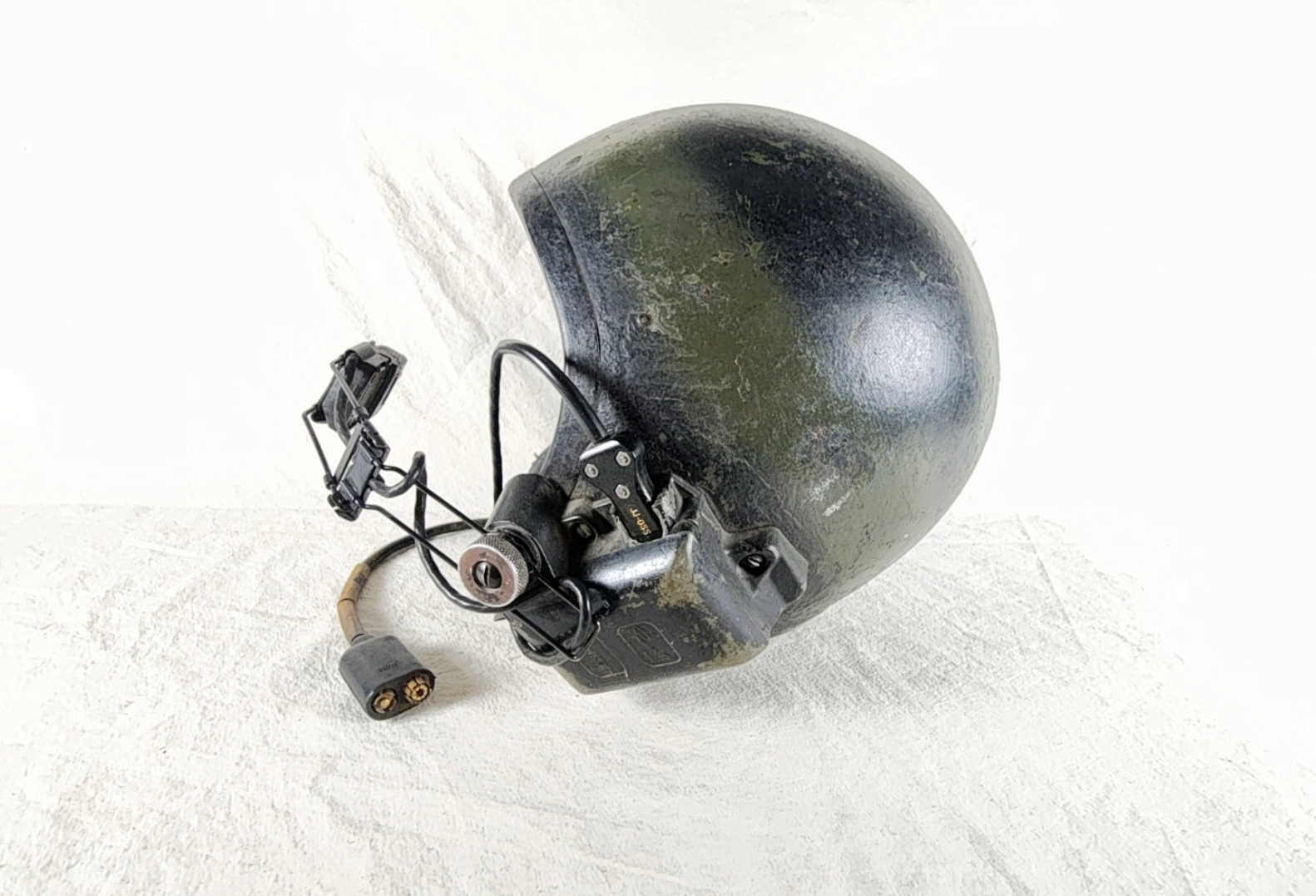
The shell carries an aged green-and-black camouflage finish, applied during service. Scuffing, scratches and worn areas extend across the exterior, with rubbing on the trim and communications housing. The broad dark areas and green base give this example its distinctive appearance.
A small circled stamp inside the shell reads “43.” Its form and placement are consistent with an inspection or manufacturing-control mark; its exact significance remains unrecorded.
Roanwell SA-1552/G Communications Housing
The housing on the wearer’s left side is marked Roanwell Corp. and SA-1552/G. Roanwell Corporation is therefore the identified maker of this component. SA-1552/G is the military designation for the switch housing assembly, which provides switching and electrical connections for the crewman’s audio equipment.
Army manuals associate the T56-6 with the MK-1039/G headset-microphone system. The SA-1552/G housing and paired H-269/G earphones are documented components of that system. This helmet retains those components together with the individually identified M-6A/UR microphone described below. The short communications lead and its connector also remain with the helmet.
Telephonics M-6A/UR Microphone
The rectangular boom-mounted microphone is marked M-6A/UR and CTE. CTE is the established manufacturer code for Telephonics, identifying the maker of the microphone. The molded model designation, ribbed face and maker code provide a clear identification of the installed unit.
The M-6A/UR is a carbon, close-talking, noise-canceling microphone. A carbon element converts speech into an electrical signal by varying its resistance. Its close-talking design emphasizes speech delivered near the mouthpiece while reducing the pickup of surrounding noise, a useful feature in the confined, noisy environment of an armored vehicle.
The 1966 Army audio-equipment handbook lists the M-6A/UR with a nominal operating current of 60 milliamperes, an impedance range of 40 to 100 ohms and a frequency range of 300 to 4,000 cycles per second, or hertz. These are the published specifications for the microphone type.
The microphone remains fitted to its adjustable boom and retaining cradle. The yellow JJ-055 marking beside the housing identifies the microphone plug connection. Together, the microphone markings and plug designation document the fitted assembly in considerably more detail than its shape alone.
Telephonics H-269/G Earphones
Both earphones are Telephonics H-269/G dynamic earphone elements. Each carries the markings EARPHONE H-269/G, TELEPHONICS and 182-324. The manufacturer’s name and number are clearer on one element in the close-up views; both sets of markings are legible on the helmet itself.
H-269/G is the military type designation, while 182-324 is the Telephonics part number marked on the elements. The pair provides received audio to both ears through the padded cushions. Matching hand-applied white identification marks are also present on the earphone backs.
1974 Sun, Wind and Dust Goggles
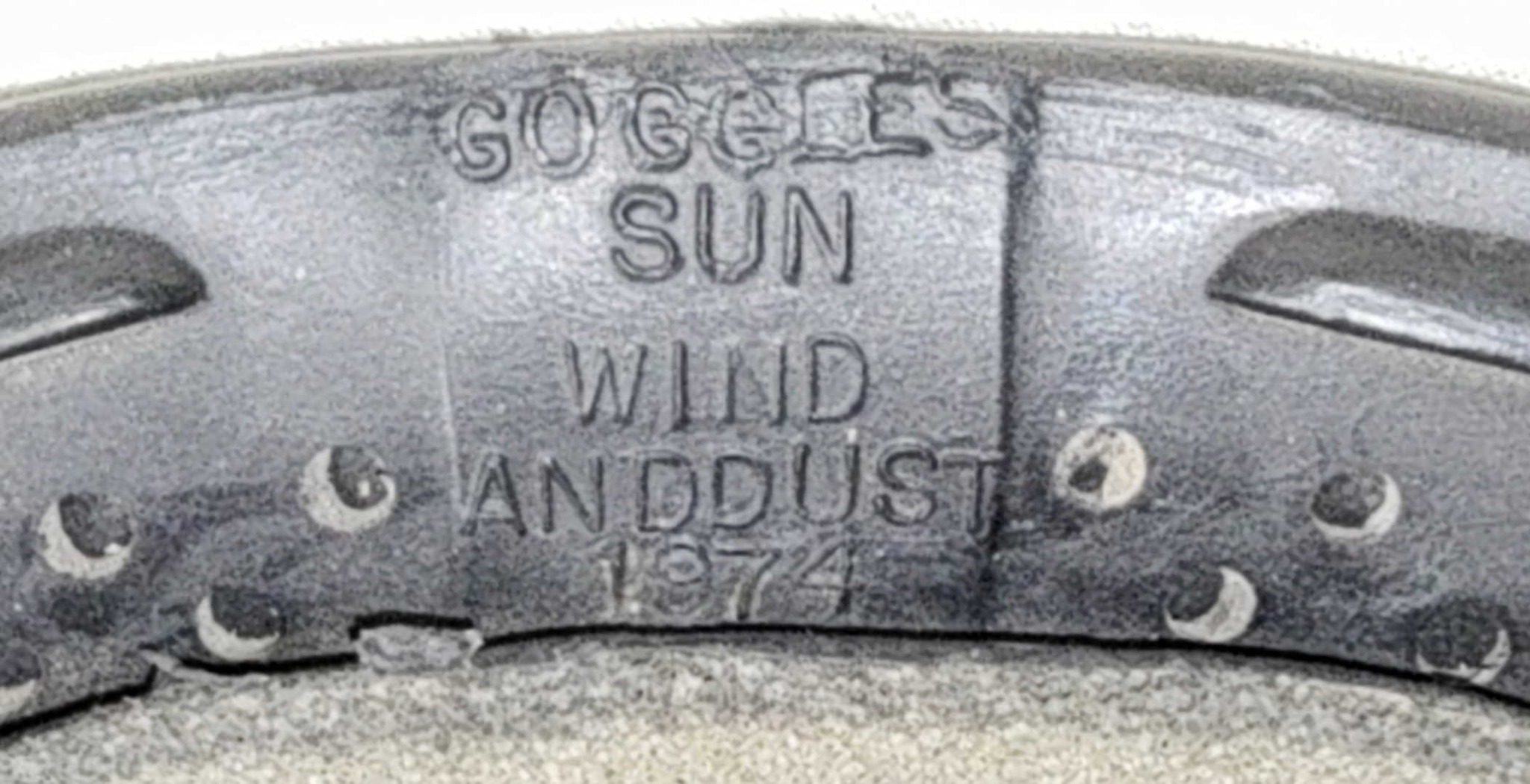
The accompanying goggles have a molded frame marking reading GOGGLES / SUN / WIND / AND DUST / 1974. They provide eye protection from glare, wind and airborne dust and are an appropriate accessory for a 1970s crewman display.
The clearly visible 1974 date records the date on the goggles. The helmet’s period attribution rests on its T56-6 construction and installed equipment, with the goggles documented as an accompanying accessory.
Collector Notes
This example brings together a distinctive camouflage finish, well-used suspension, marked Roanwell switching equipment and identifiable Telephonics audio components. The M-6A/UR microphone, JJ-055 plug marking and matching H-269/G earphones are particularly useful details for comparison with other surviving T56-6 helmets.
The component markings allow the communications equipment to be recorded individually. The shell, finish, suspension and dated goggles complete the record of this helmet as preserved in the Relics & Rifles collection.
Sources & Research Notes
- Relics & Rifles collection and direct examination. Helmet construction, finish, interior stamp, communications markings and accompanying goggles. Both earphones have matching Telephonics 182-324 markings, confirmed by examination of the objects. The twelve collection images illustrate the features discussed above.
- Department of the Army, MIL-HDBK-173 / TM 11-487M, Audio Equipment, 24 June 1966. M-6A/UR entry, printed pages 8.3.1–8.3.2: carbon element, close-talking noise-canceling design and published electrical specifications. Read the handbook (PDF).
- Department of the Army, TM 11-5820-498-12. Paragraph 6-10 and figure 6-3 document the T56-6 and its vehicle radio/intercom role. The linked reprint includes later change pages, which are identified within the manual. Read the manual (PDF).
- Department of Defense, MIL-DTL-55535A, 28 February 2007. Paragraphs 1.2 and 3.1 identify SA-1552/G as a switch housing assembly and H-269/G as the dynamic earphone elements in the MK-1039/G system. This later specification is used for component nomenclature; the installed microphone is identified from its own M-6A/UR marking. Read the specification (PDF).
- U.S. Navy, Instruction Book for Navy Model MAB, Table 7, printed page 33. Manufacturer designations identify CTE as Telephonics. Read the manufacturer-code table (PDF).
- Department of the Army, TM 11-5965-286-14, 22 January 1974, with changes. Paragraph 1-8(b) supplies the JJ-055 microphone-plug nomenclature. Read the manual (PDF).
- Vanderbilt University Special Collections, Richard Neitz Vietnam War Collection. T56-6 Combat Vehicle Crewman Helmet cataloged circa 1970, used as a period comparison. View the collection record.