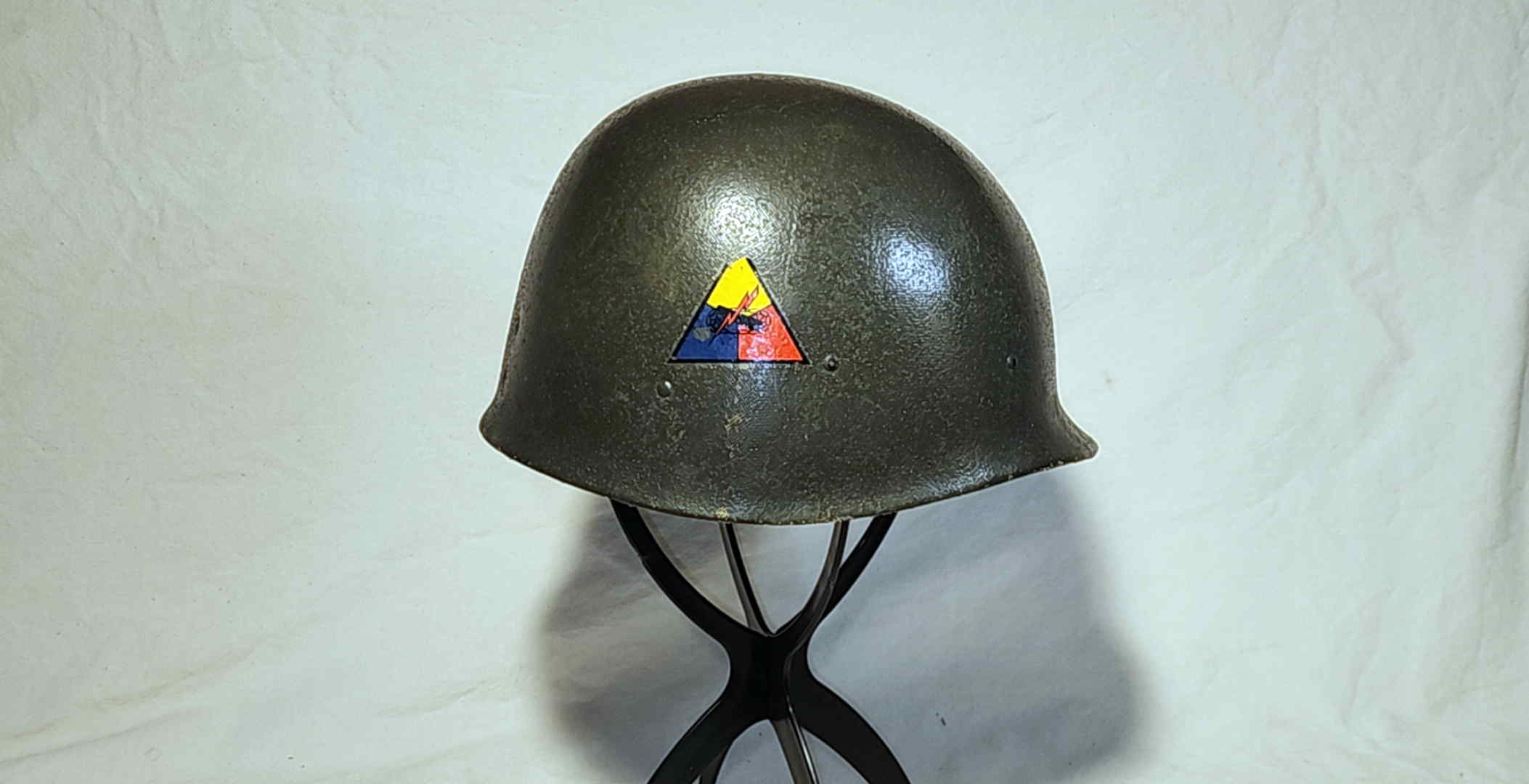
U.S. M1 Steel Helmet “Model 1943” and M1964 Liner
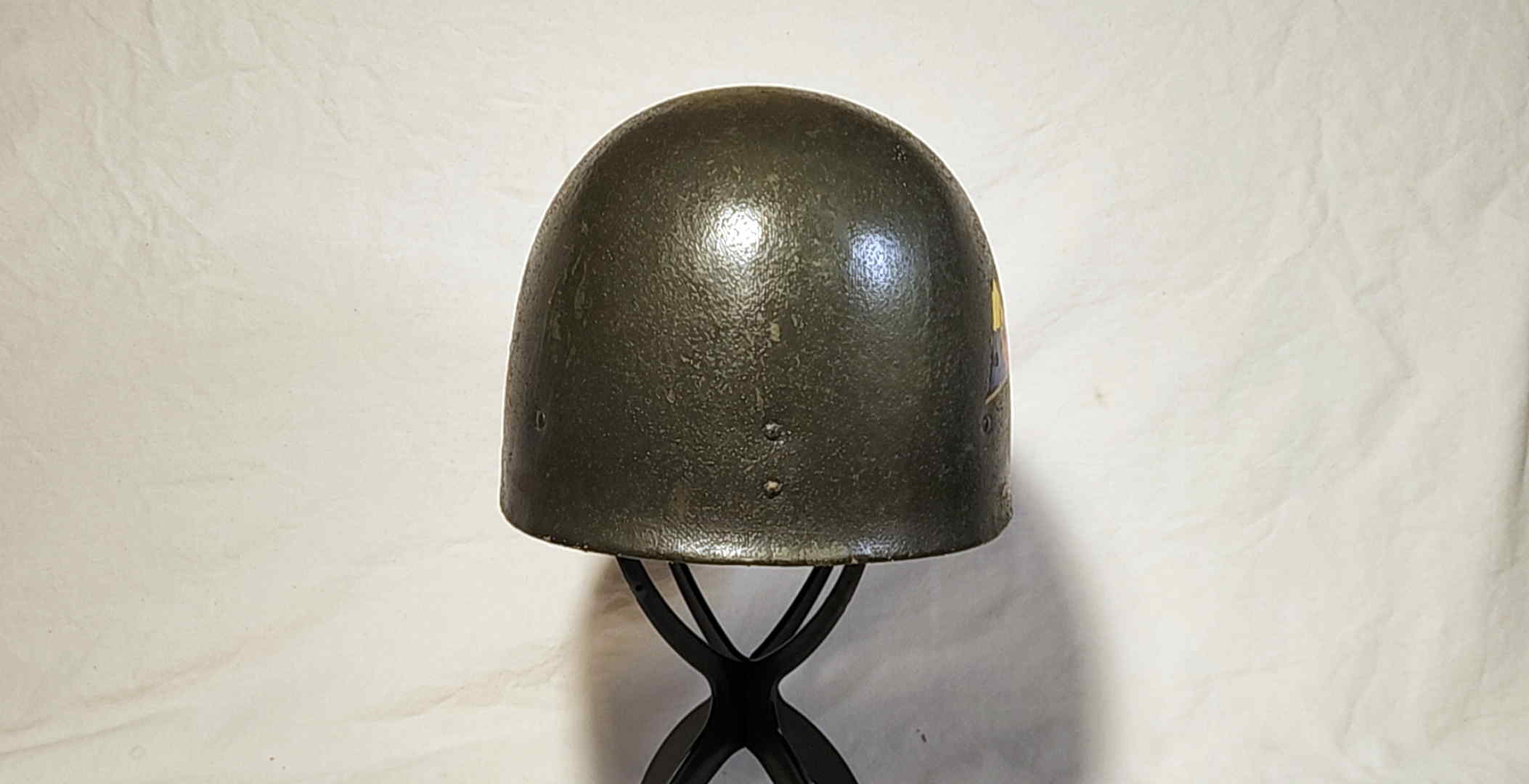
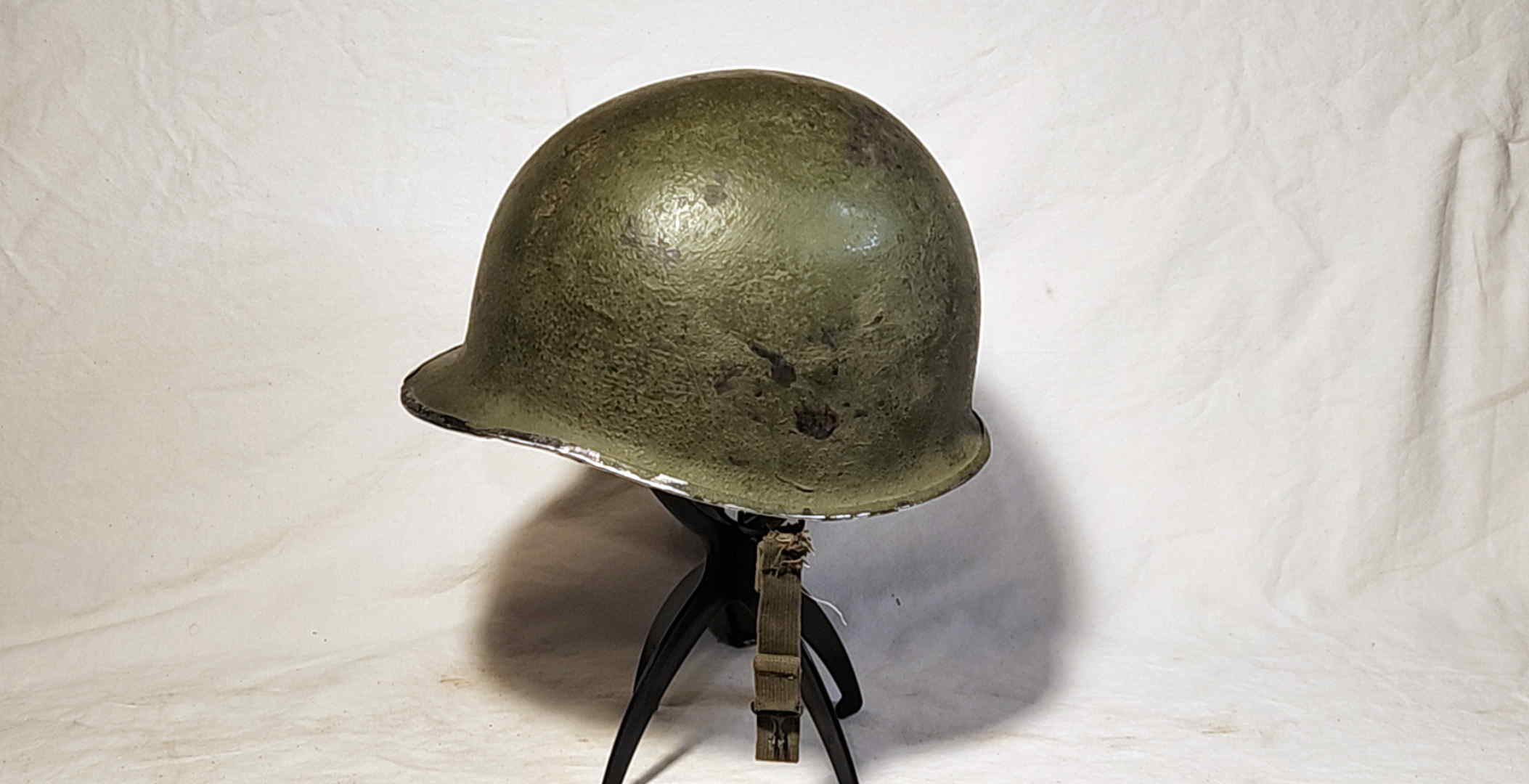
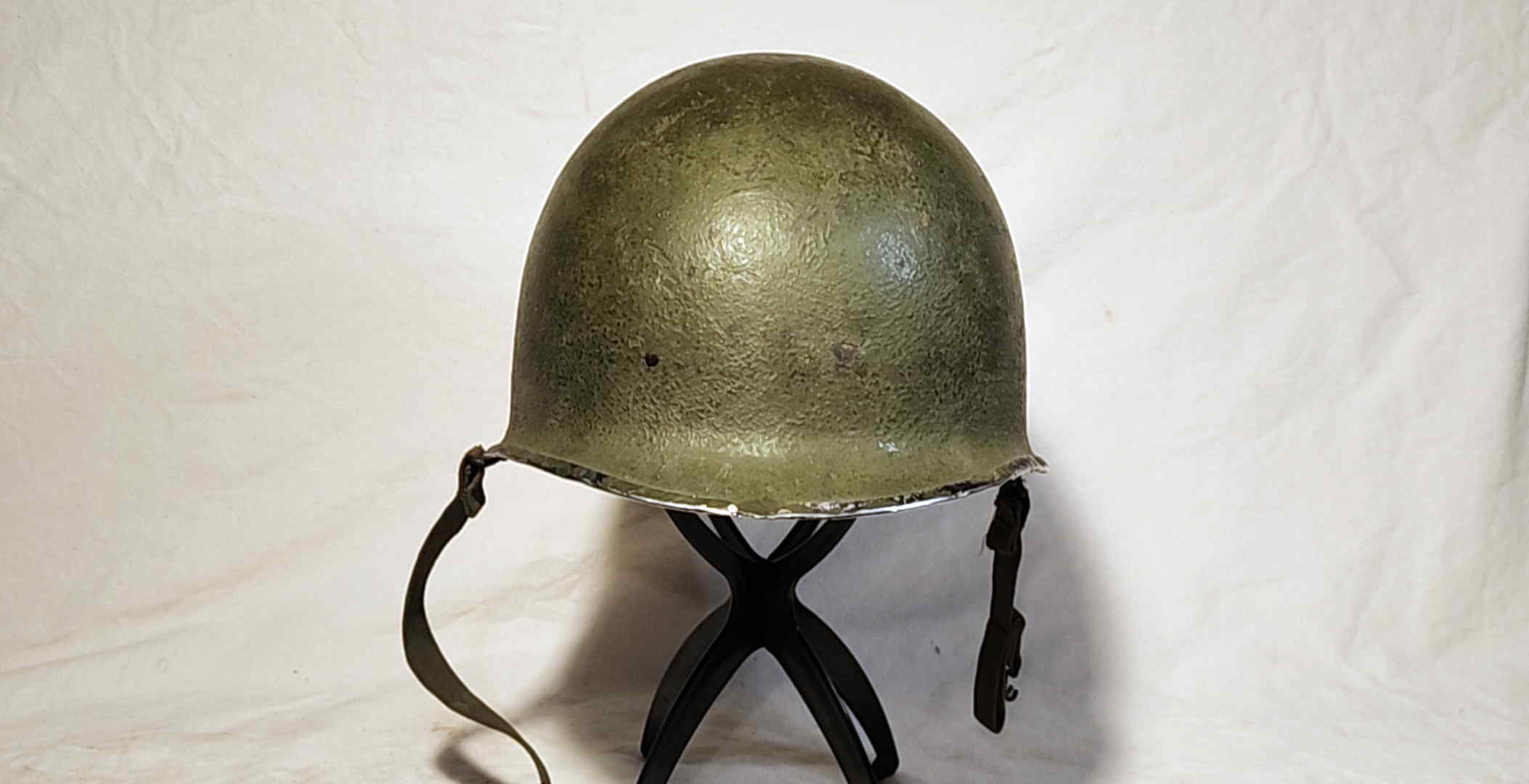
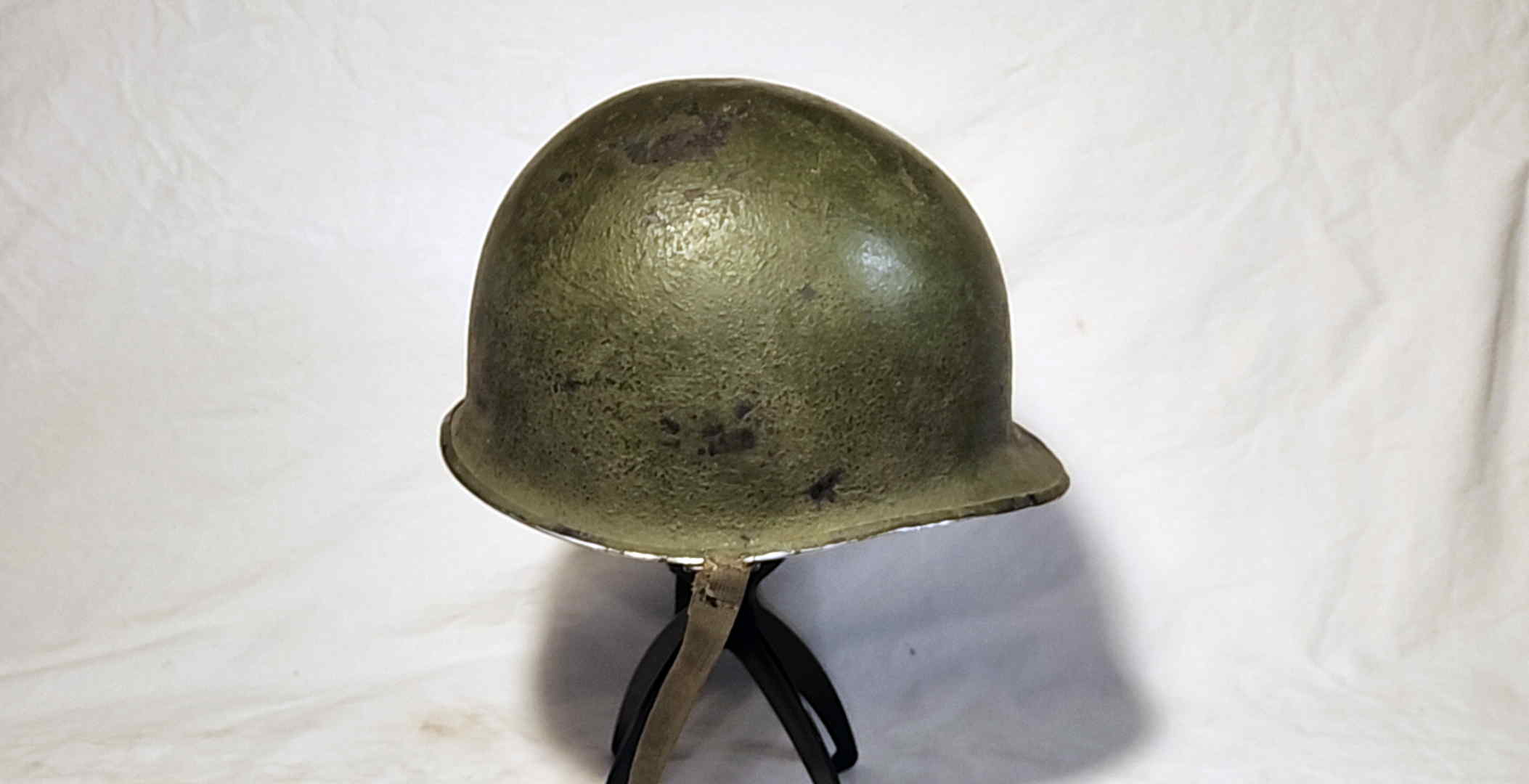
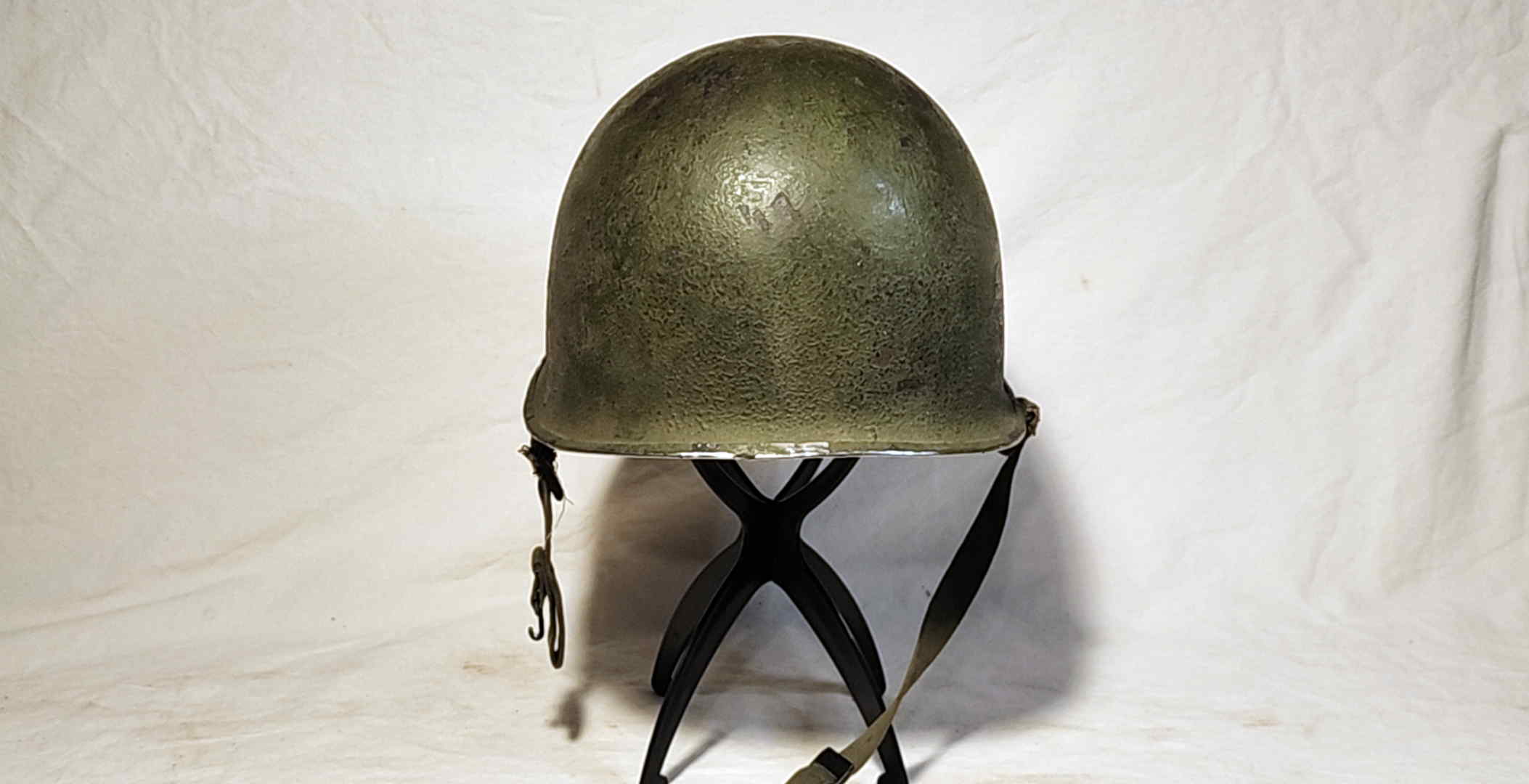
U.S. M1 steel helmet in the referenced “Model 1943” configuration with front seam and swivel bales, paired with a Vietnam-era M1964 style liner dated 27 Sept 1967. Liner retains an Armor tri-color waterslide decal, and the set includes Vietnam-era style helmet covers and a field-expedient inner-tube helmet band.
Images
Specifications
| General Information | |
|---|---|
| Model | U.S. M1 steel helmet, referenced as “Model 1943” configuration (front seam, swivel bales) |
| Country | United States |
| Shell Features | Front seam rim; swivel bales |
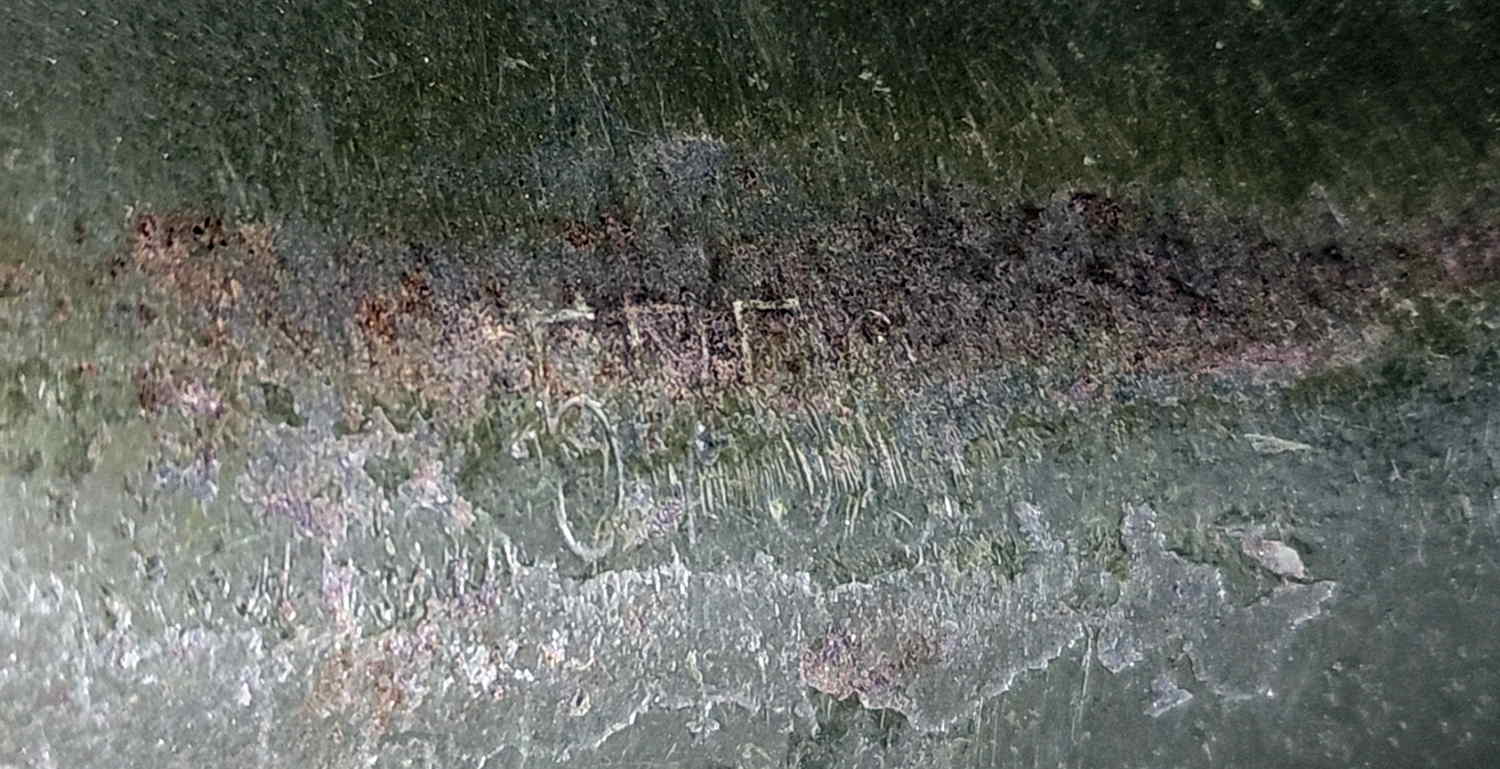
| Heat Lot Stamp | “575C” (inside brim area) |
| Shell Attribution | McCord Radiator & Manufacturing Co. based on heat lot format, no “S” observed |
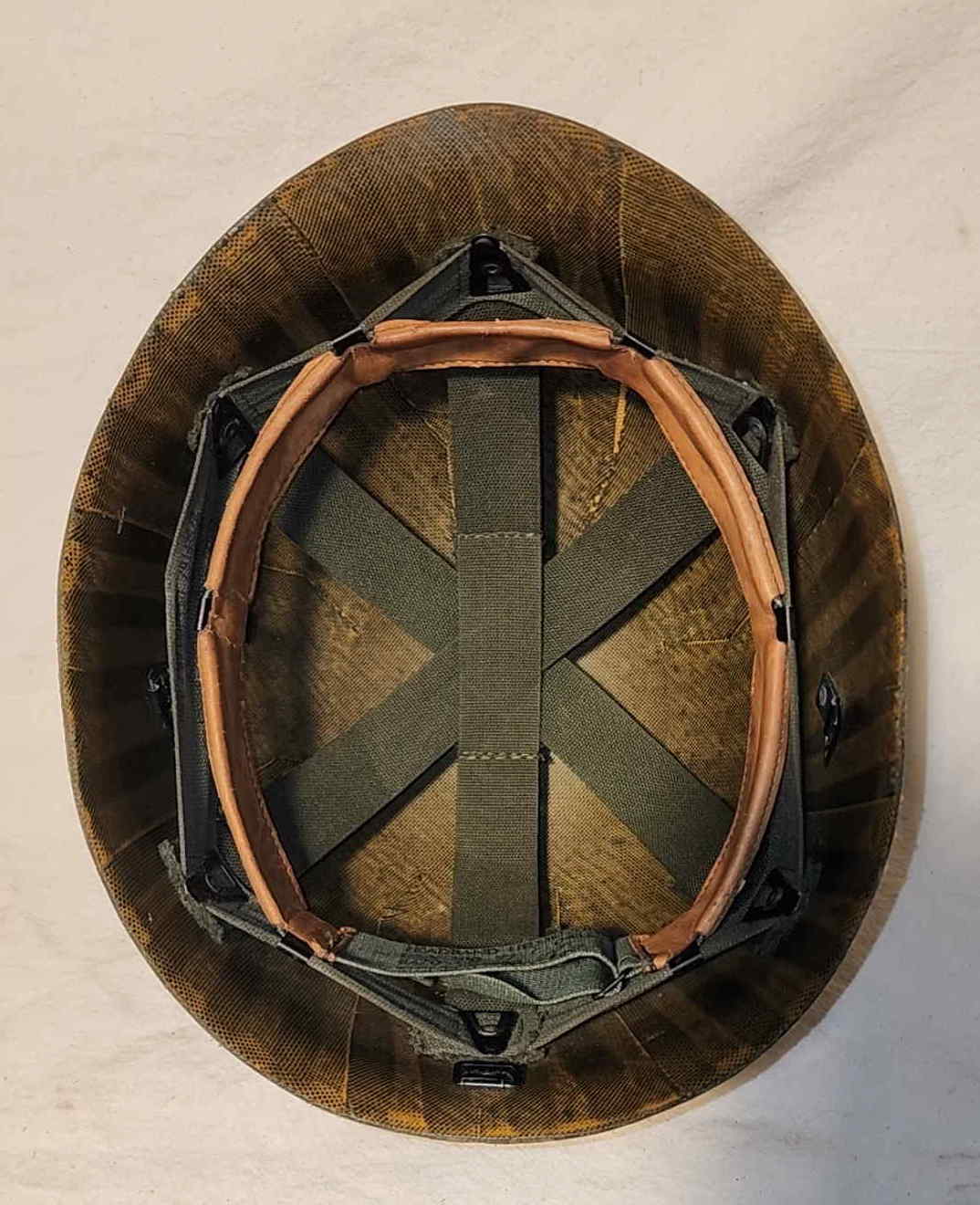
| Liner | Post-1964 “M1964” style liner with cradle suspension |
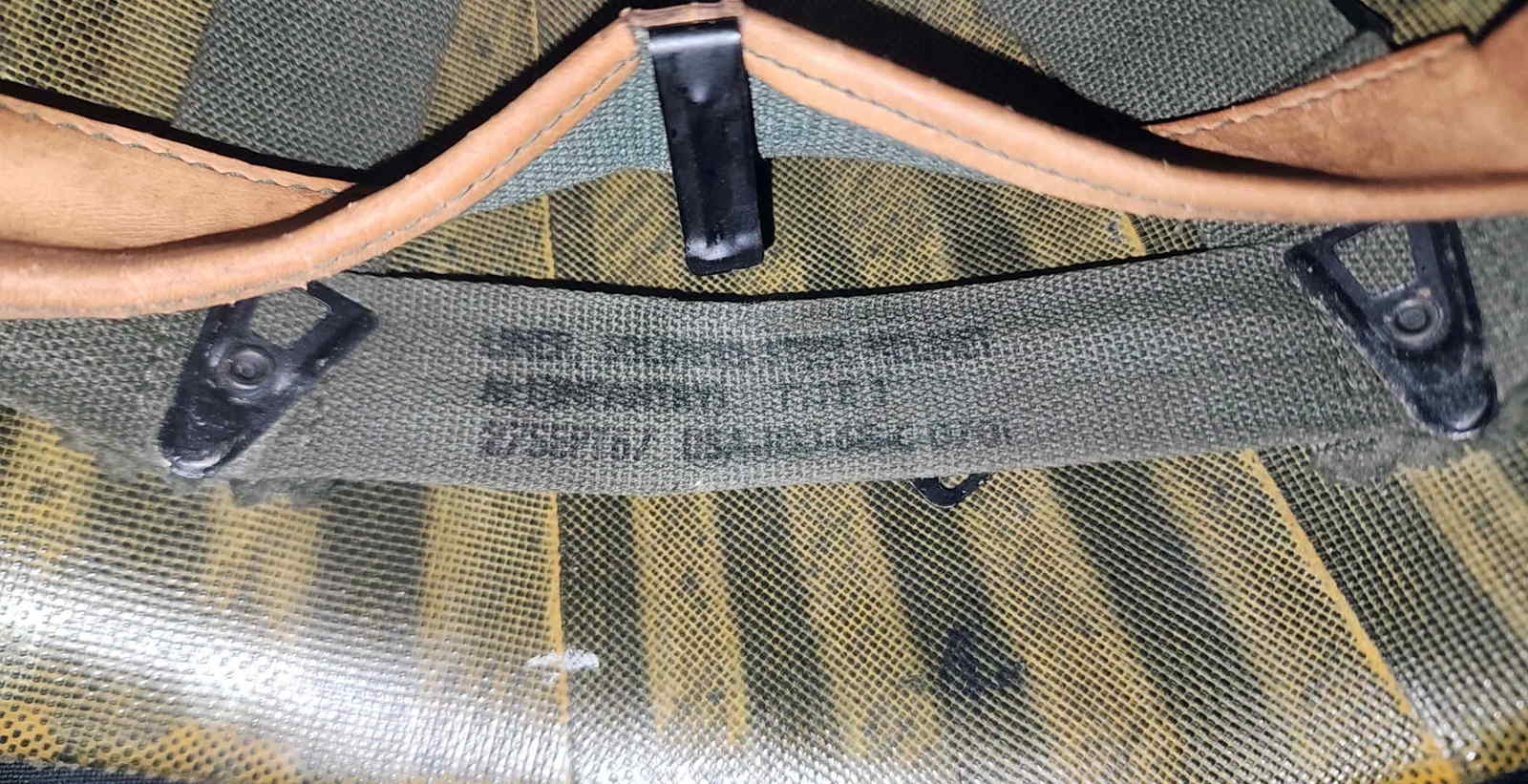
| Liner Marking | “LINER, SOLDIERS, STEEL HELMET, M-1, INFANTRY, TYPE I” dated 27 Sept 1967 |
| Liner Contract | DSA-100-68-C-0701 |
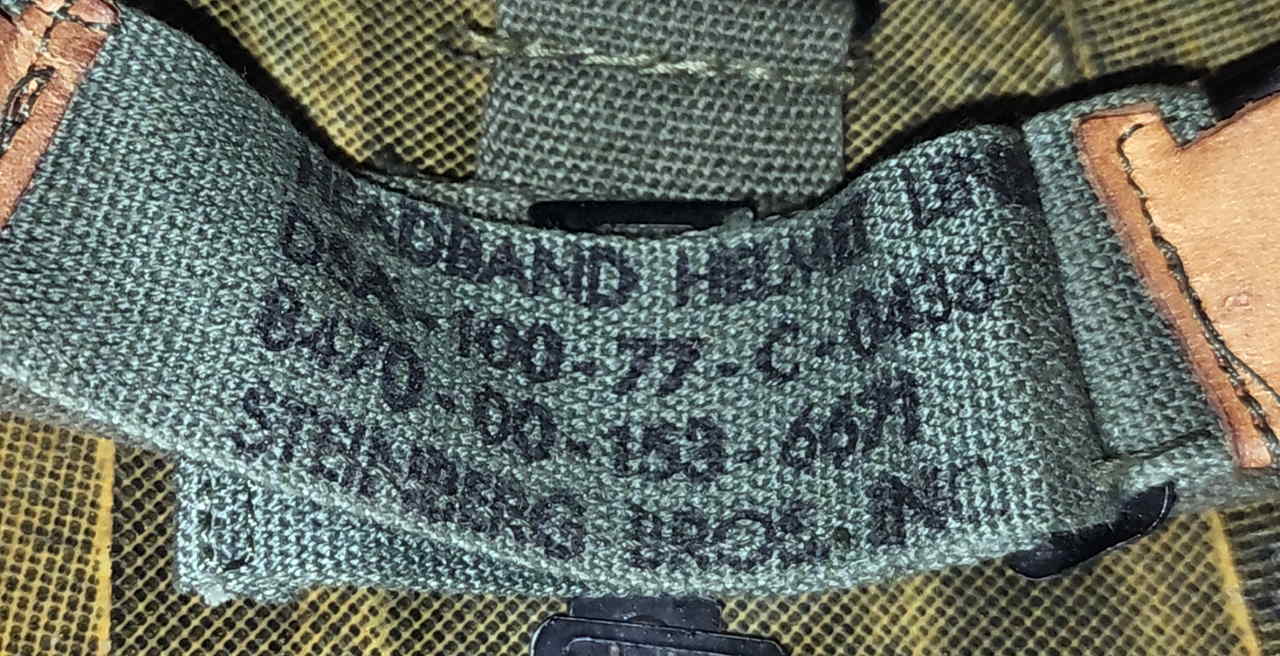
| Headband Marking | DSA-100-77-C-0438, B470-DO-153-6671, Steinburg/Steinberg Bros Inc (later replacement) |
| Decal | Armor (Armored Force) tri-color triangle waterslide decal, unnumbered apex, with track/cannon motif and red lightning bolt |
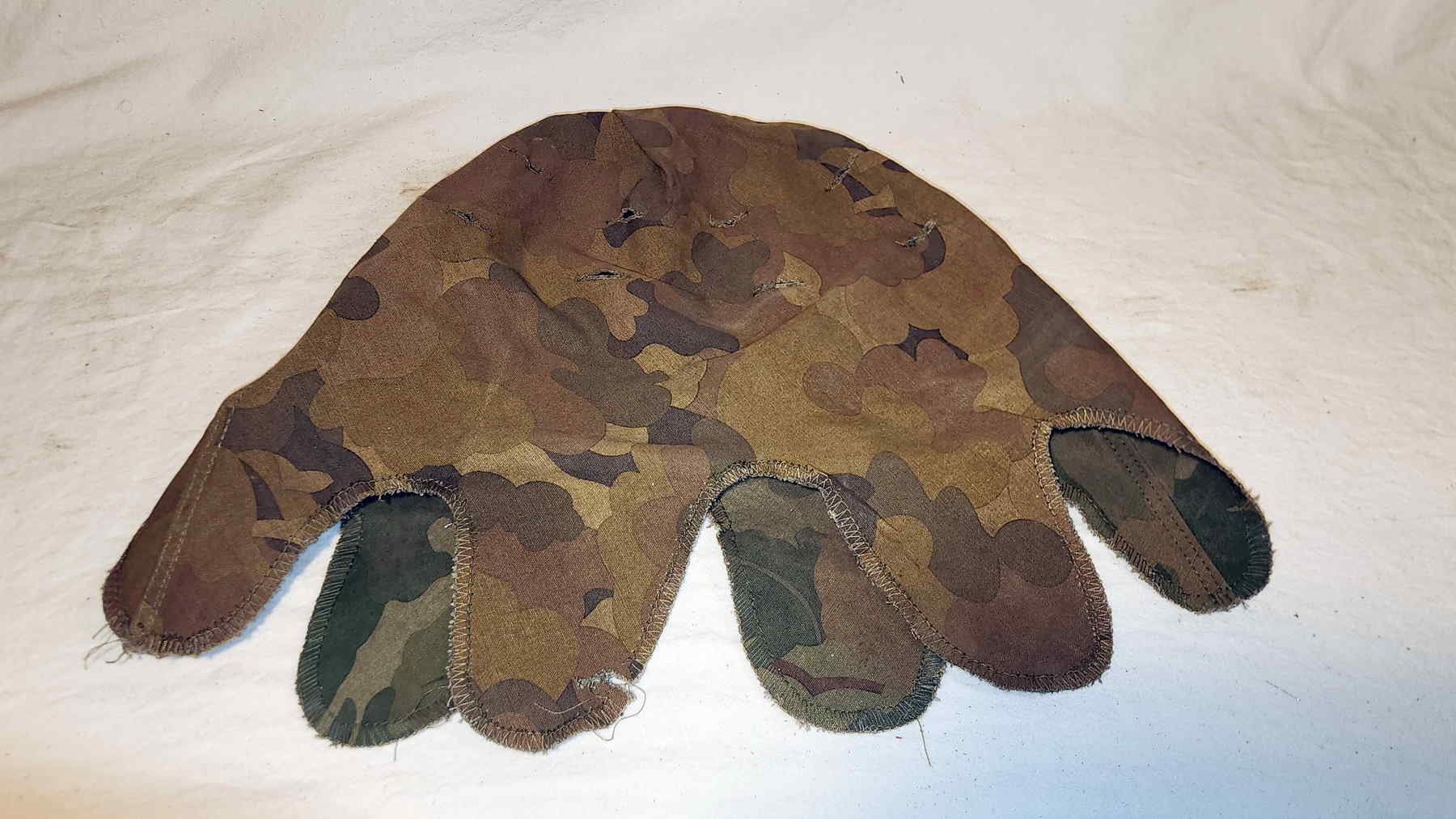
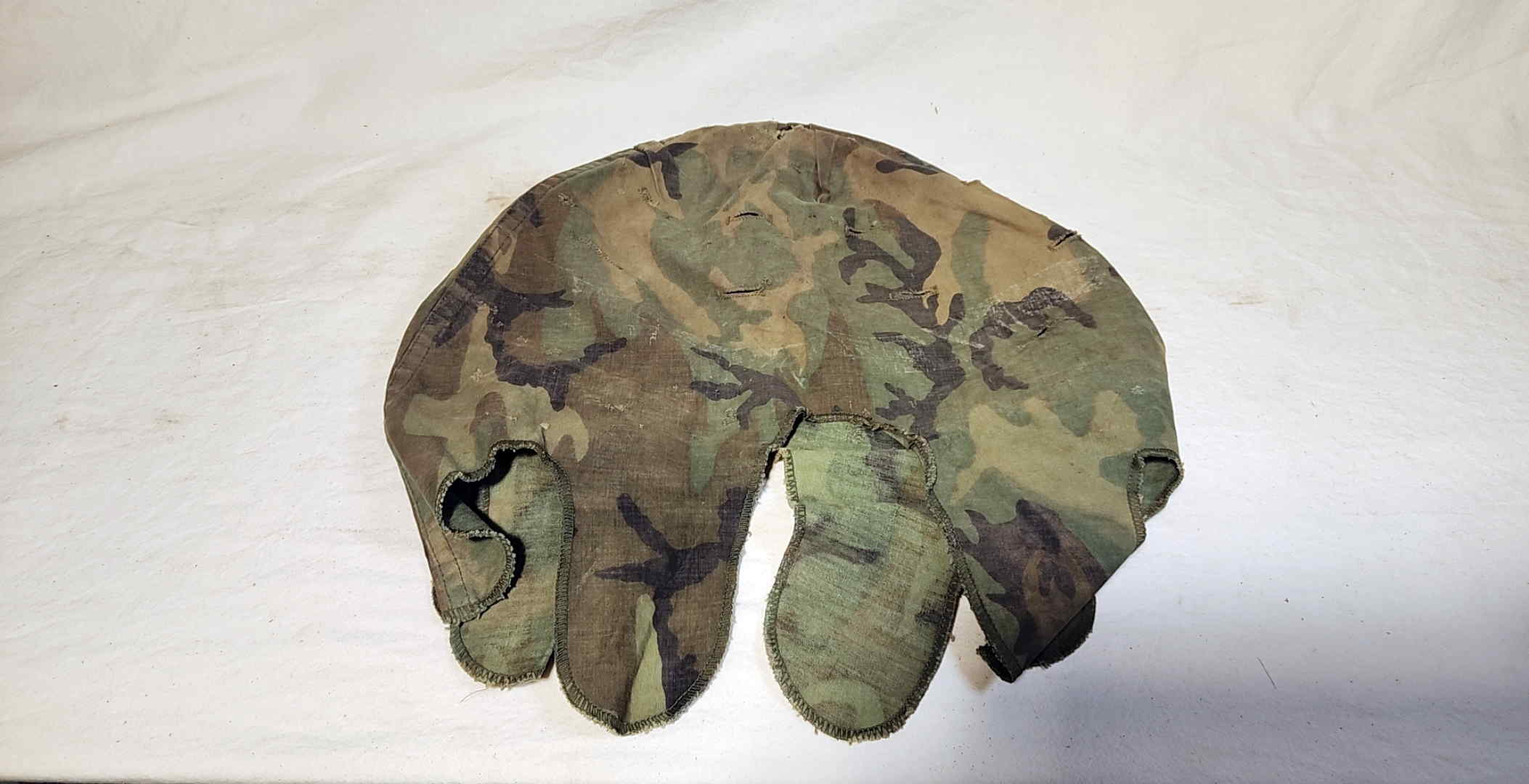
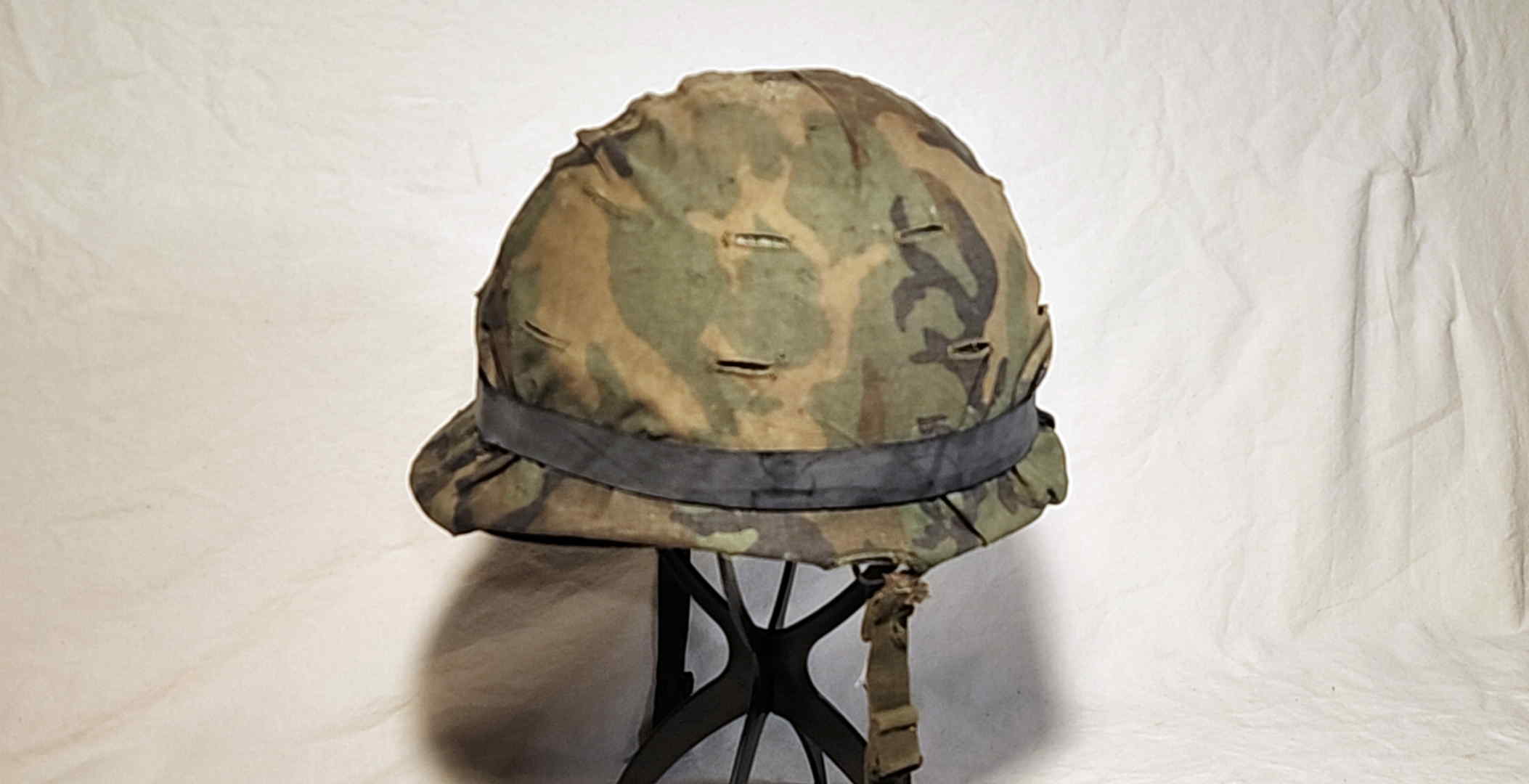
| Covers | Reversible Mitchell pattern cover (no visible contract label); ERDL camouflage cover with very faded stamping |
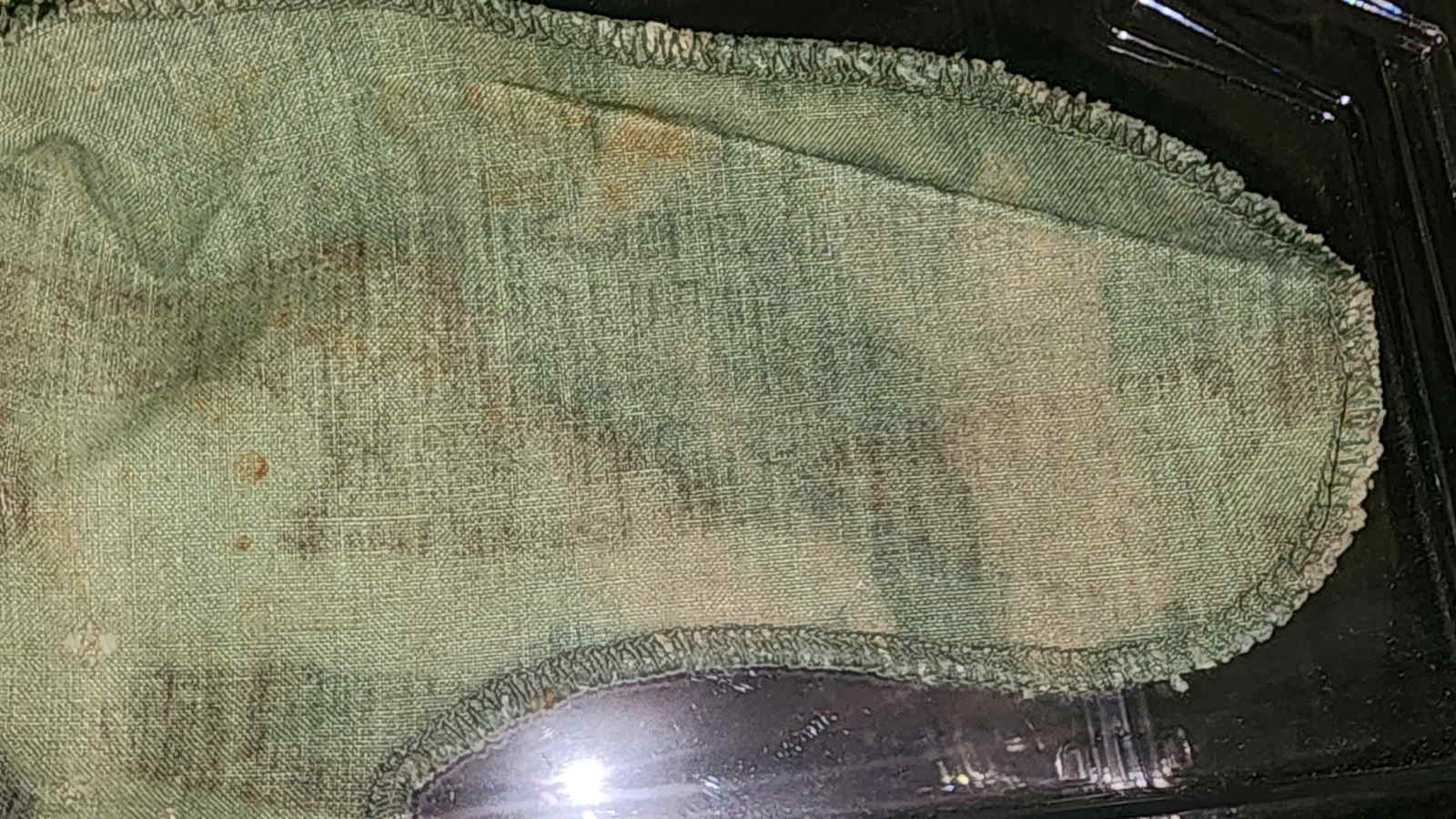
| Field Accessory | Helmet band cut from an M-151 “Mutt” inner tube |
| Condition | Service wear consistent with use and storage, documented as found |
| Restoration | None. Documented as found. |
Historical Summary
The U.S. M1 steel helmet was adopted in 1941 and became the standard American combat helmet through World War II, Korea, and well into the Vietnam era. Its long service life was made possible by a modular design: a durable steel shell for ballistic protection paired with a removable liner that carried the suspension system and could be upgraded as requirements changed. Over time, the Army and Marine Corps updated details such as rim construction, chinstrap hardware, and liner suspension, while older components often remained in circulation through depot maintenance and reissue.
This set reflects that typical “mixed-era” reality. The steel shell presents the World War II era configuration commonly referred to as a “Model 1943” style shell, while the liner is a later, Vietnam-era M1964 liner with cradle suspension and a dated contract marking. The combination is historically consistent with how M1 helmets were used and maintained, with serviceable shells retained and liners, straps, and accessories updated as they wore out or as standardized parts changed.
Also documented with this helmet are two Vietnam-era style camouflage covers and a field-expedient inner-tube helmet band, illustrating how soldiers often tailored fit and retention in the field using readily available materials. Taken together, the shell, liner, markings, and accessories make this a strong reference example for understanding both the durability of the M1 system and the practical evolution of issued equipment from World War II through Vietnam.
Shell Configuration
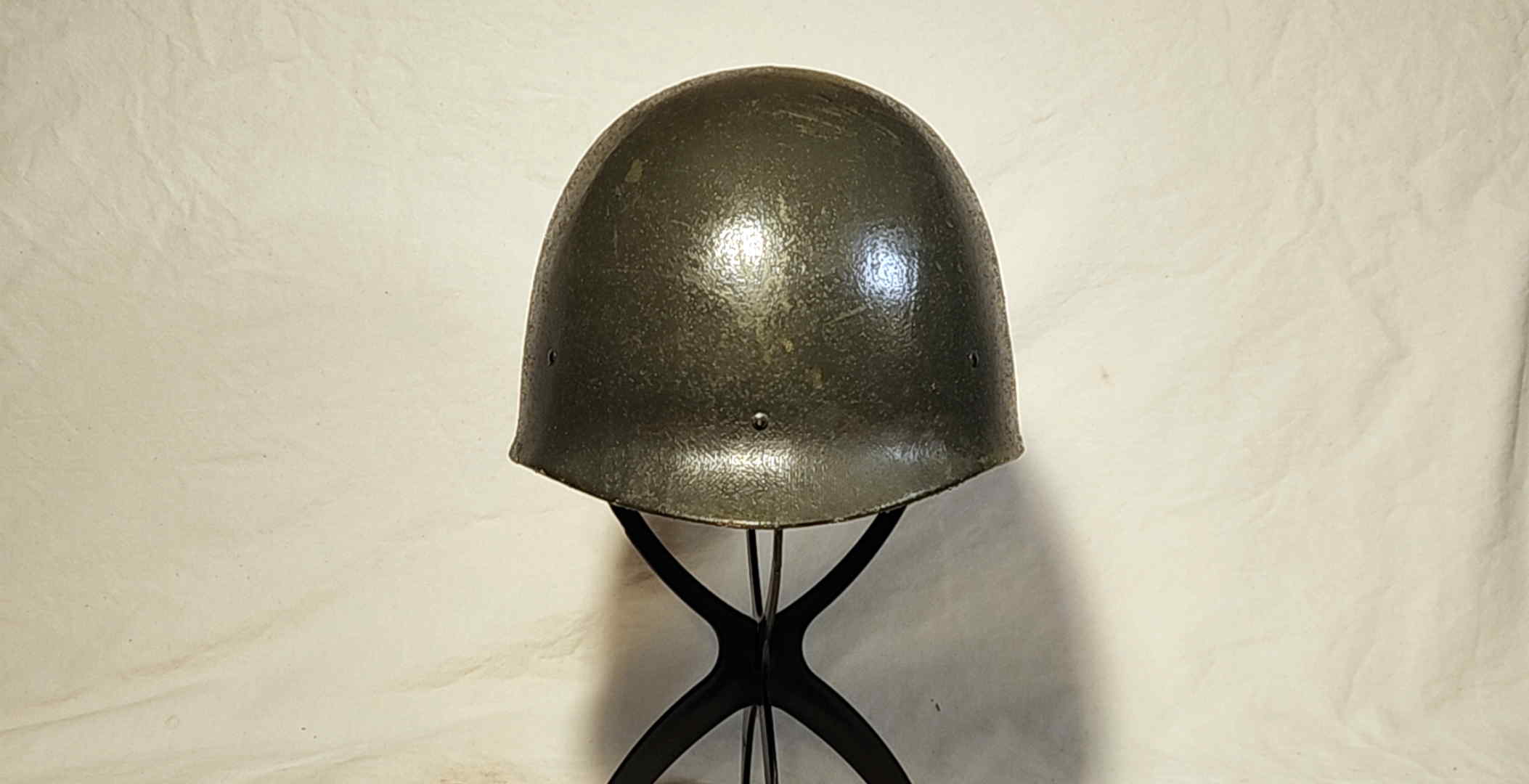
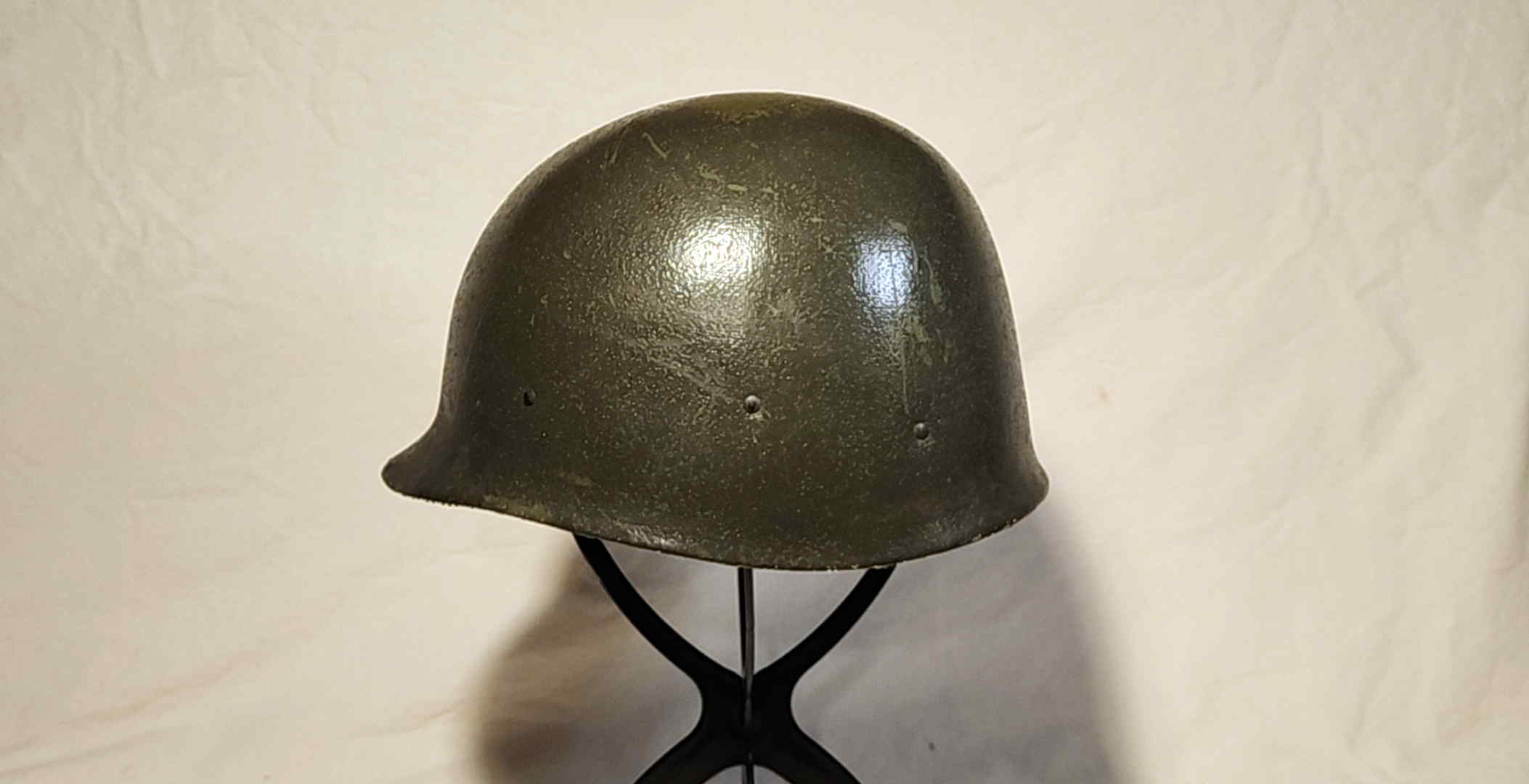
The steel shell shows a front seam rim and swivel bales, shows mid to late World War II production. The heat lot marking “575C” is stamped on the inside brim area. Based on the heat lot format and the absence of an “S” marking, the shell is attributed to McCord Radiator & Manufacturing Co.
The exterior finish displays the characteristic textured paint commonly described as “cork” or “sand” texture. This roughened surface was applied to reduce glare and improve camouflage, and it also gives the helmet a slightly gritty feel compared to smooth enamel-style finishes. In service, this texture often shows wear at high-contact edges and raised areas, while protected zones may retain more of the original finish.
Liner, Suspension, and Contracts
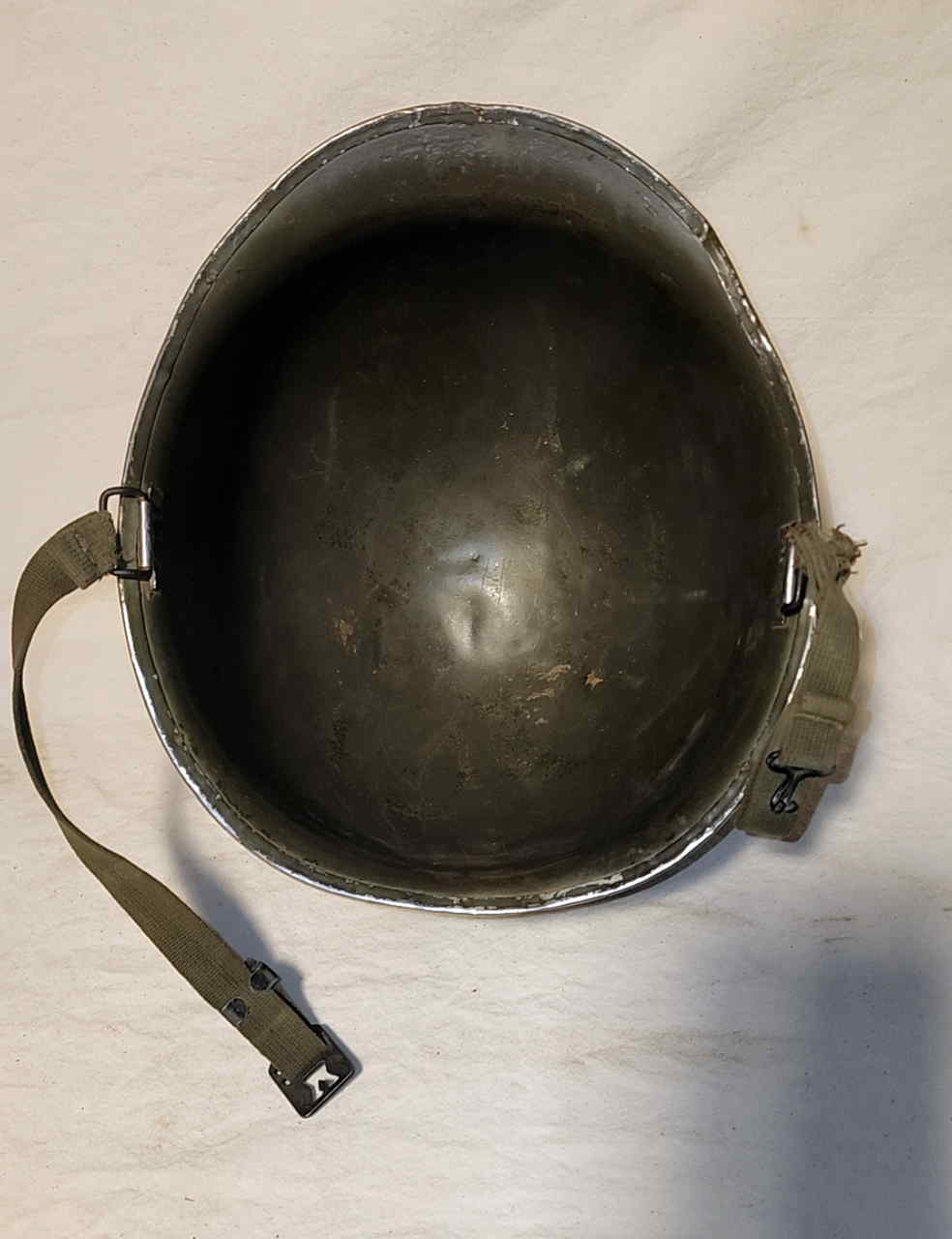
The liner is a post-1964 “M1964” style configuration with cradle suspension. The liner marking reads “LINER, SOLDIERS, STEEL HELMET, M-1, INFANTRY, TYPE I” and is dated 27 Sept 1967, with contract DSA-100-68-C-0701. The headband is a later replacement and is marked DSA-100-77-C-0438 with Steinburg/Steinberg Bros Inc.
Decal
The liner retains an Armor (Armored Force) tri-color triangle waterslide decal, unnumbered apex, with track/cannon motif and red lightning bolt. This is a general Armor insignia.
Covers and Field-Expedient Helmet Band
Two helmet covers are documented with this set. The first is a reversible Mitchell pattern cover with the typical “green” versus “brown/cloud” look, and no visible contract label, which is common on period covers. The second is an ERDL camouflage cover with very faded stamping, where “helmet” and “pattern” are the most legible words. A field-expedient helmet band made from an M-151 “Mutt” inner tube is also present.
Collector Notes
Mixed-era M1 sets are frequently encountered because shells, liners, suspension parts, covers, and straps were replaced throughout service life. For collectors, the key is documenting what is present, preserving markings, and keeping the configuration stable once recorded. This set is a strong reference piece because it includes a clear shell heat lot stamp, a dated liner contract marking, and associated Vietnam-era covers.
The textured exterior finish (often described as a “cork” or “sand” texture) is another useful reference point. Original texture typically appears as an intentionally rough, anti-glare surface with natural wear patterns: smoothing at contact points, edge rub, and localized abrasion where the helmet saw handling or storage. Later repaints can still be legitimate service history, but they sometimes show a more uniform, freshly applied texture or paint bridging into areas that were normally protected by hardware or the rim. The best approach is to treat the finish as part of the helmet’s documented life, preserve it as found, and let the photographed details and wear patterns tell the story rather than forcing a single interpretation.
Provenance
Relics & Rifles collection. Purchased in 1981 at Linden War Surplus (Linden, New Jersey). Acquired with the liner and documented with photographed markings and accessories. No restoration performed.