
U.S. WWII 1942 Transitional M1910 Aluminum Canteen and Cover
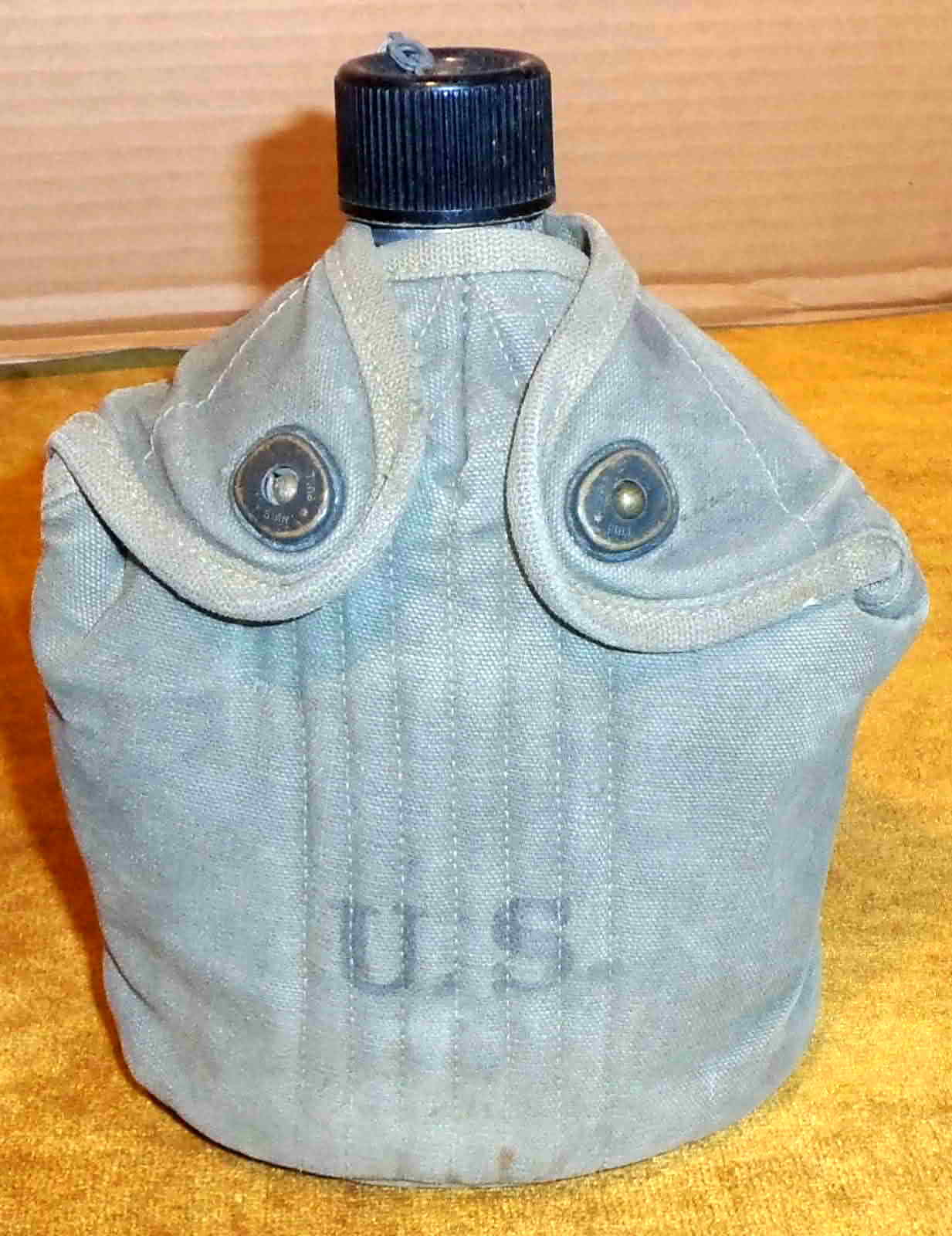
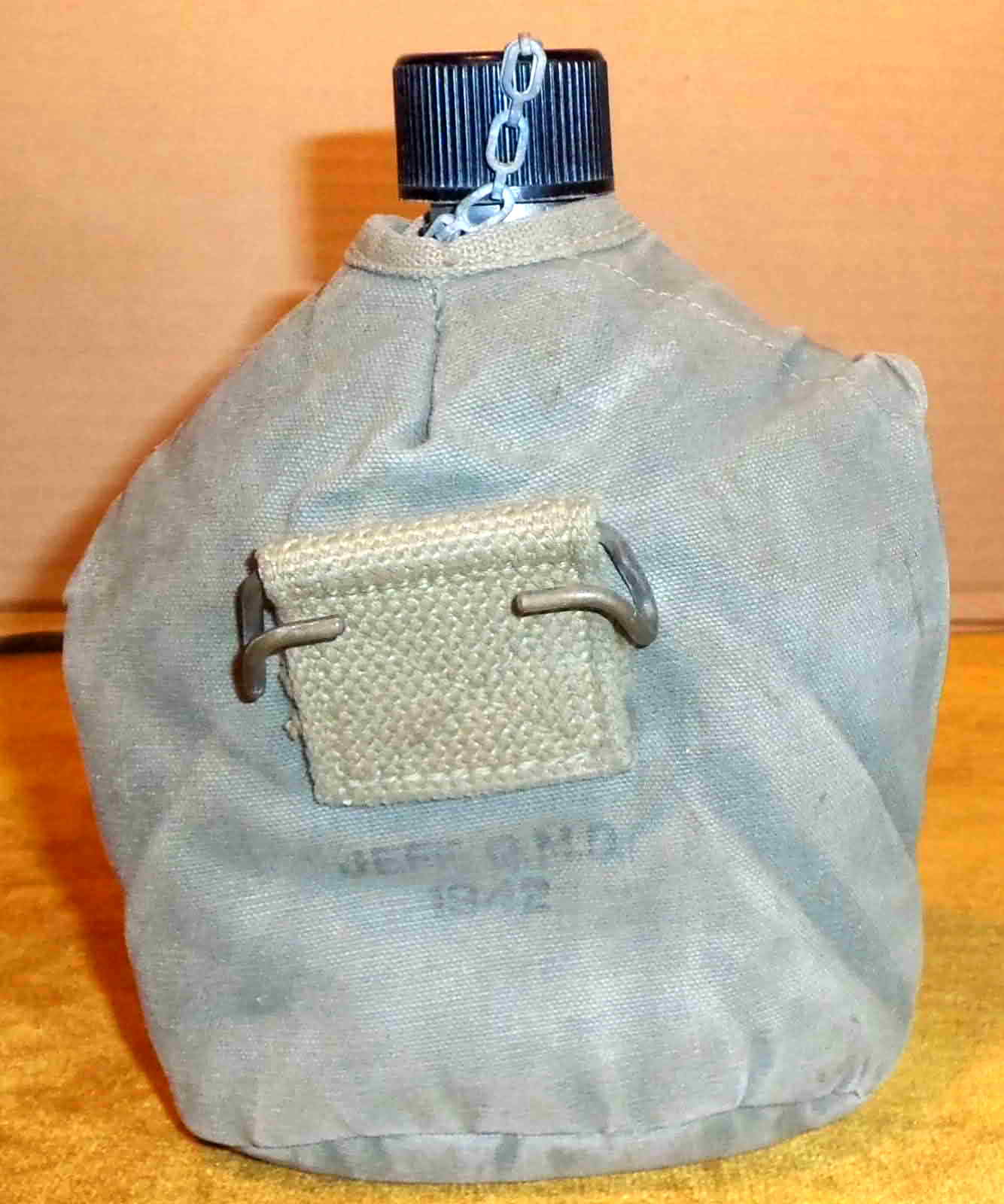
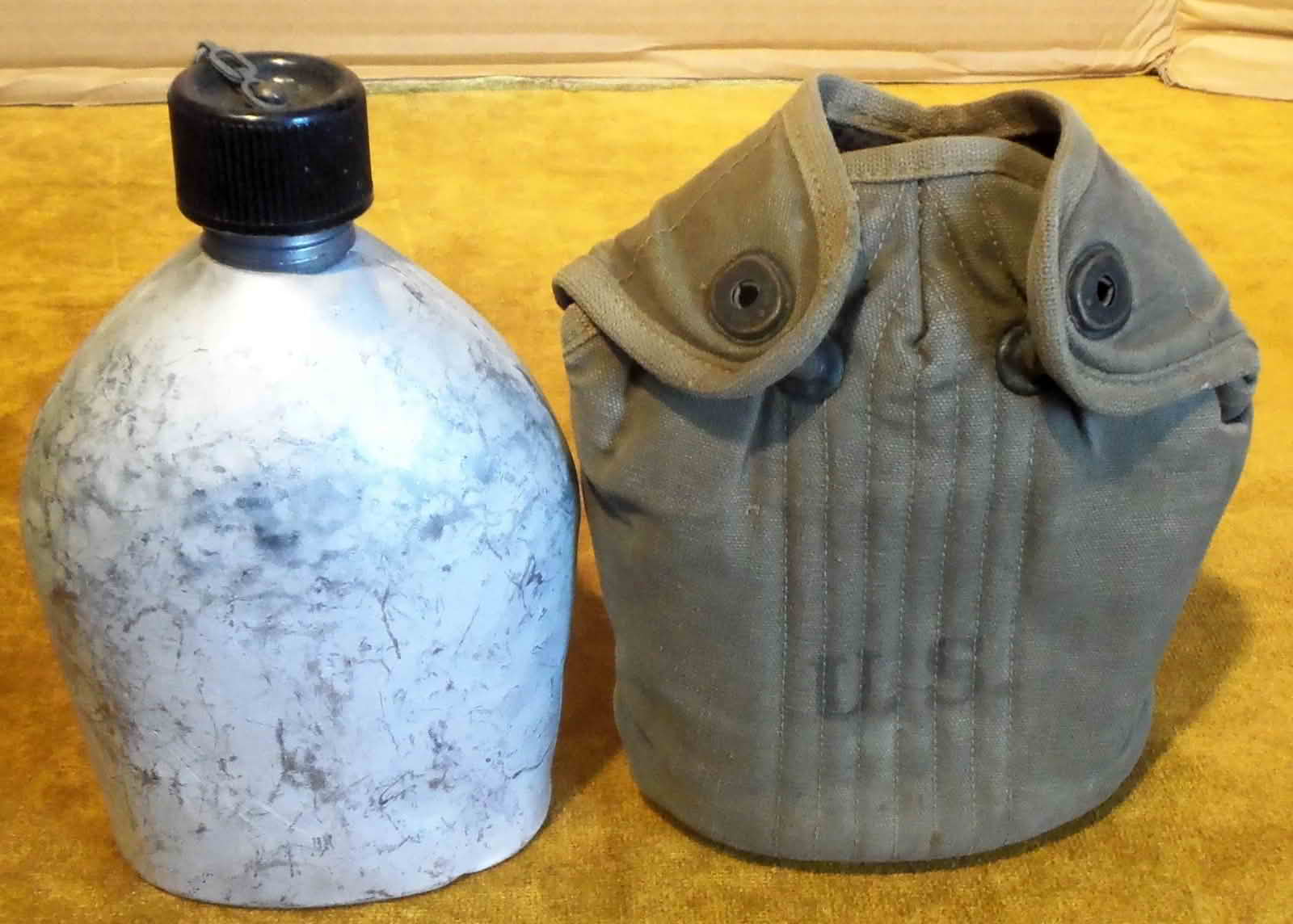
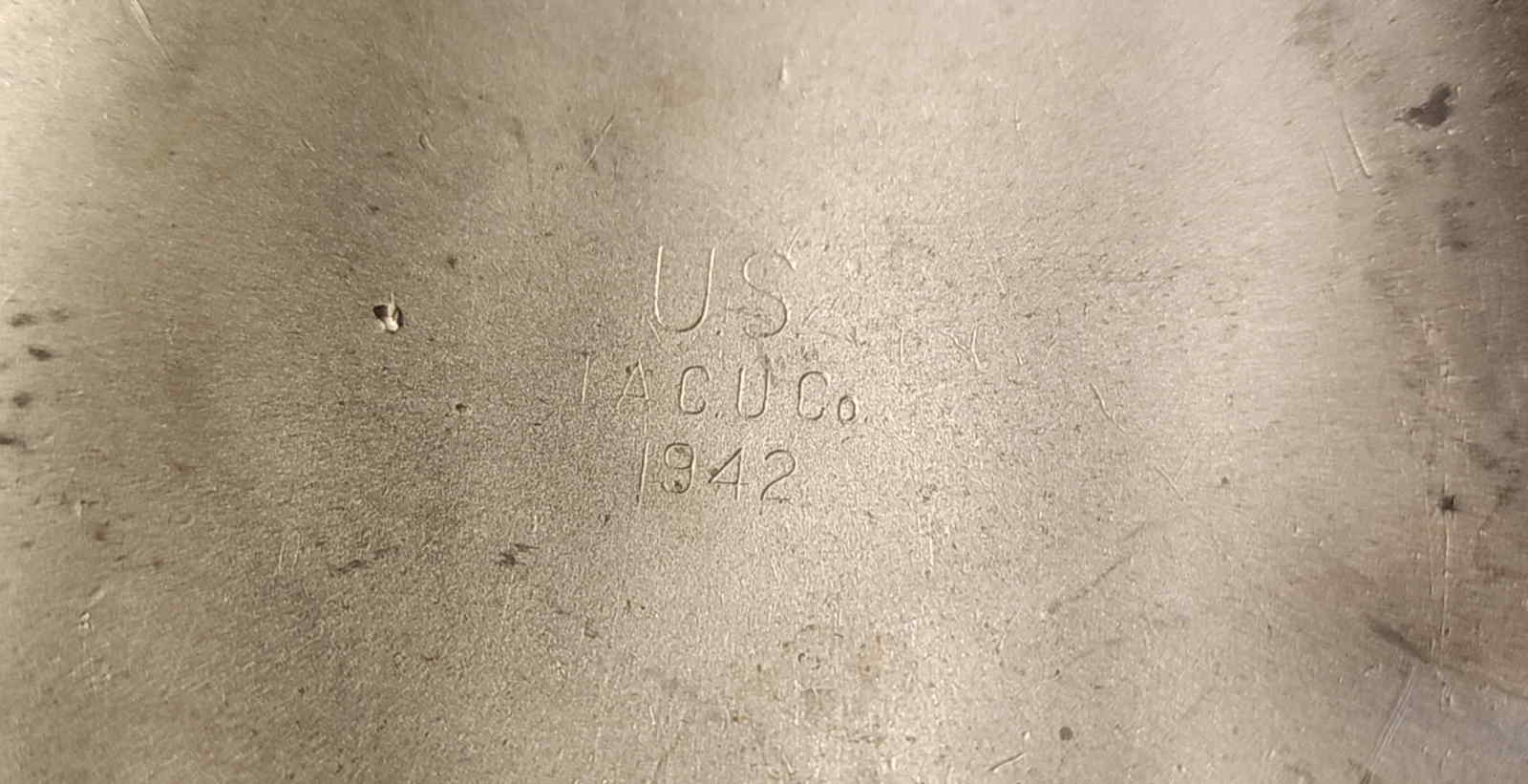
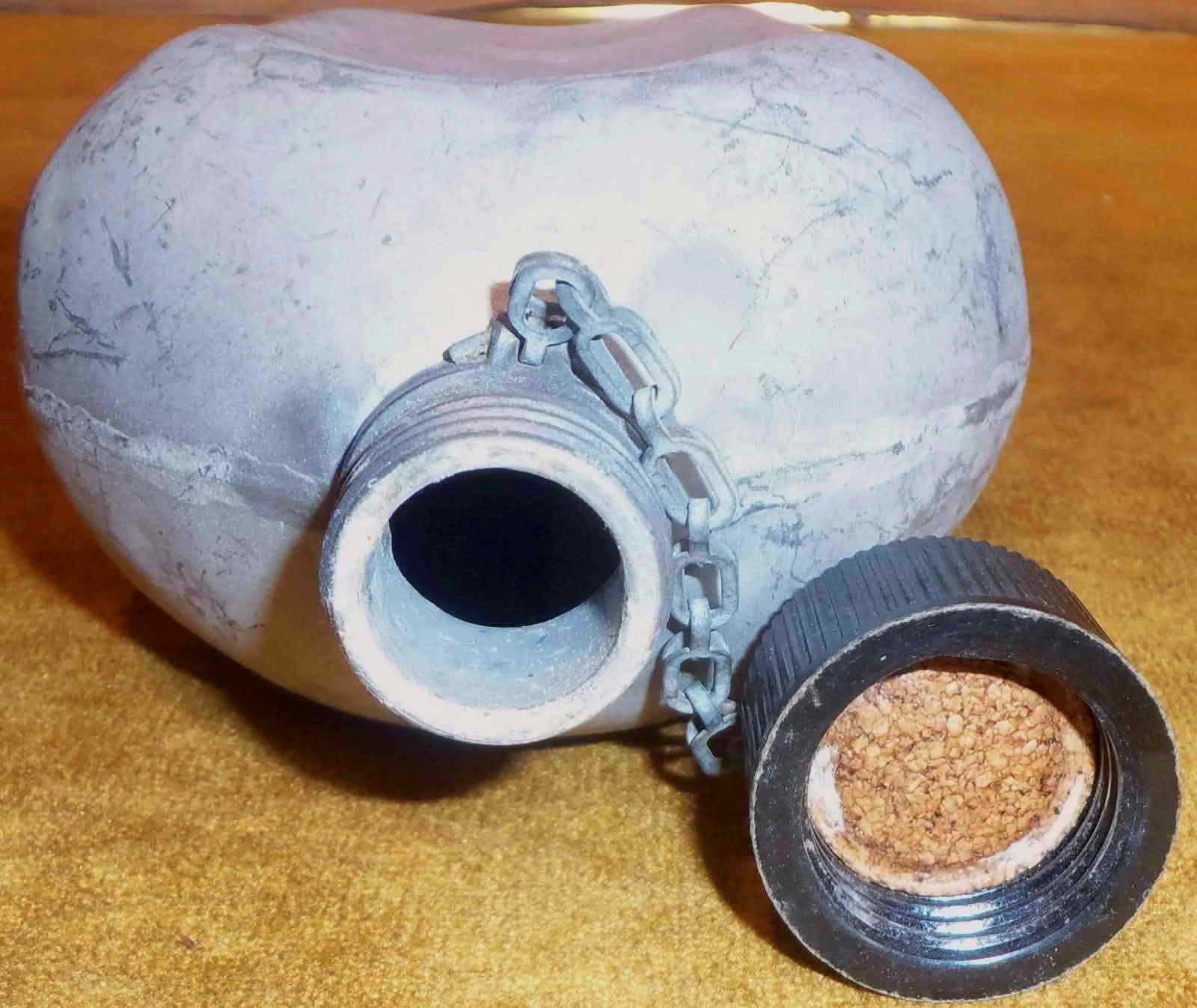
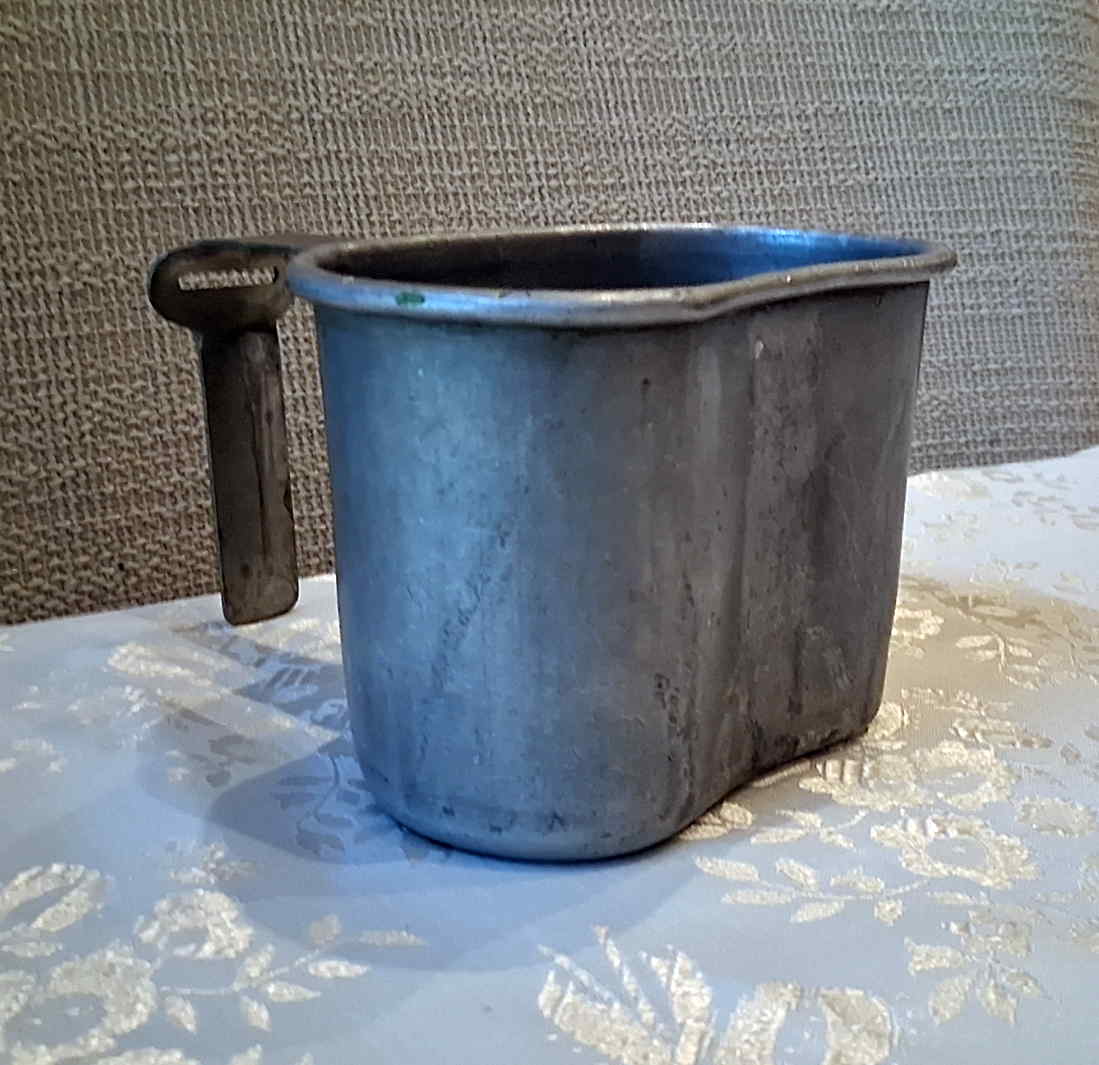
U.S. Army aluminum canteen and canvas cover, both dated 1942. The canteen is marked U.S. / T.A.C.U. Co. / 1942 and retains a black composition cap with cork seal. The cover is marked U.S. / JEFF Q.M.D. / 1942 and has side-seam construction with gray felt lining. The set includes an unmarked aluminum M1910-pattern nesting cup.
Images
Specifications
| General Information | |
|---|---|
| Item | U.S. WWII 1942 transitional M1910 aluminum canteen, cover, and nesting cup |
| Country | United States |
| Service Period | World War II |
| Canteen Marking | U.S. / T.A.C.U. Co. / 1942 |
| Canteen Maker | The Aluminum Cooking Utensil Company |
| Canteen Material | Aluminum |
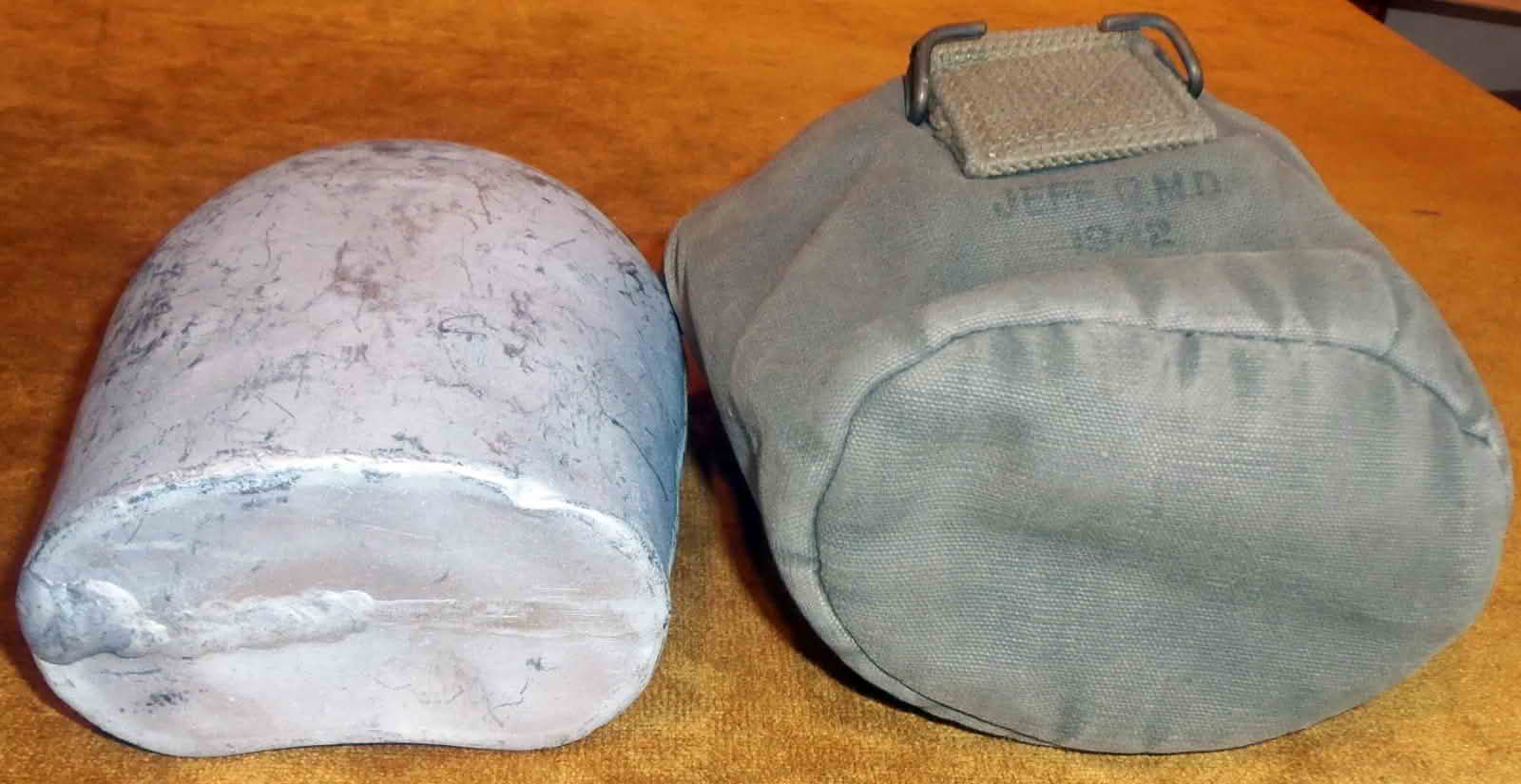
| Canteen Construction | Perimeter seam continuing around the bottom and up the side edges of the aluminum body |
| Cap | Black composition/Bakelite-style cap with cork seal and retaining chain |
| Cover Marking | U.S. / JEFF Q.M.D. / 1942 |
| Cover Attribution | Jeffersonville Quartermaster Depot |
| Cover Construction | Side-seam canvas cover with two-snap flap closure |
| Cover Lining | Gray felt lining |
| Rear Attachment | M1910 wire belt hook |
| Cup | Unmarked aluminum M1910-pattern nesting cup with folding handle |
| Condition | Service and storage wear, with clear canteen and cover markings |
| Restoration | None. Documented as found. |
Historical Summary
This canteen set represents an early World War II transition in U.S. Army field equipment. The overall carrying system follows the long-serving M1910 pattern, with a canvas cover, two flap closures, felt lining, and a rear wire belt hook for attachment to the pistol belt or cartridge belt. At the same time, the canteen itself shows wartime production features associated with the 1942 period, including aluminum construction, a perimeter seam, and a black composition cap with cork seal.
The set is made more useful as a reference because both major dated components were manufactured in 1942. The canteen is marked U.S. / T.A.C.U. Co. / 1942, while the cover is marked U.S. / JEFF Q.M.D. / 1942. The canteen and cover were separate issued components, so different makers are normal. An unmarked aluminum M1910-pattern nesting cup completes the basic canteen, cup, and cover arrangement.
The M1910 Canteen System
The U.S. M1910 canteen system was part of the early twentieth-century modernization of American infantry equipment. The basic system used a kidney-shaped canteen carried in an insulated canvas cover with a nesting metal cup. The cover attached to the soldier’s belt by means of the M1910 wire hook system. This arrangement allowed the canteen, cup, and cover to be carried as one compact field item.
The M1910 pattern remained in service for decades because the basic design worked well. The cover protected the canteen, helped insulate the water, and allowed the soldier to carry the item on standard web equipment. As materials, contracts, and wartime needs changed, the general M1910 system continued to be used while individual details changed.
World War II and the M1942 Transition
During World War II, U.S. canteen production changed to meet the demands of mass mobilization. Earlier M1910-style canteens and covers remained in use, but wartime production introduced variations in materials and construction. Collectors often use the M1942 designation for the World War II aluminum canteen with a lower-body perimeter seam and black composition cap. This example fits that early-war transition point.
The 1942 date is important. The canteen still belongs to the M1910 family in how it was carried and used, but the aluminum body, perimeter seam, black cap, and cork seal show the wartime production direction. The cover also reflects this period, with side-seam construction and gray felt lining. Together, the canteen and cover show older pattern influence and early World War II manufacturing changes in the same set.
Canteen Body, Cap, and Cup
The canteen is aluminum and has the rounded, flattened profile associated with the U.S. canteen pattern. The body is marked on one face with U.S. / T.A.C.U. Co. / 1942. The marking identifies The Aluminum Cooking Utensil Company as the maker and places the canteen in World War II production.
The body has a perimeter seam that continues around the bottom and up the side edges where the formed sections meet. This is one of the key features that gives the piece its transitional value. The cap is a black composition or Bakelite-style cap with a cork insert. The retaining chain remains present. The cork seal is visible inside the cap and is part of the correct wartime style for this type of canteen.
The set also includes an unmarked aluminum M1910-pattern nesting cup with a folding handle. The cup is shaped to fit around the base of the canteen so that both items can be carried together inside the canvas cover. Because the cup is unmarked, its exact manufacturer and production date cannot be established from the surviving features.
Canvas Cover
The cover is marked U.S. / JEFF Q.M.D. / 1942. JEFF Q.M.D. refers to Jeffersonville Quartermaster Depot, a major U.S. Army Quartermaster facility. The cover has two flap closures with snap fasteners, a rear M1910 wire belt hook, and side-seam construction. The lining is gray felt.
The side seams and gray felt lining are useful details for documenting this cover. They show the cover as a wartime production example rather than a strictly earlier pre-war cover. The canvas color and wear are consistent with use and storage. The cover is a match to the 1942 canteen because both items belong to the same early World War II equipment period.
Collector Notes
This set is best described as a transitional World War II canteen set rather than only a late M1910 or only an M1942. It has features of both descriptions. The carry system is still the M1910 pattern, while the canteen body and cap show 1942 wartime production changes. The side-seam cover with gray felt lining adds to that transitional character.
The unmarked aluminum nesting cup completes the basic canteen, cup, and cover arrangement. The identifying features of the set are the 1942 T.A.C.U. Co. canteen stamp, the 1942 JEFF Q.M.D. cover marking, the aluminum perimeter-seam body, the black cap with cork seal, and the fitted aluminum cup. Together, these features make the set a strong example of early World War II U.S. field equipment production.
Provenance and Assessment
Relics & Rifles collection. The canteen and cover were photographed as found, with no restoration performed. The set is documented as a 1942 U.S. Army aluminum canteen by T.A.C.U. Co. with a matching-period 1942 JEFF Q.M.D. canvas cover and an unmarked aluminum M1910-pattern nesting cup. Its main significance is the combination of older M1910 carrying features with early World War II aluminum canteen construction.