Royal Army Medical Corps (RAMC) Cap Badge
Royal Army Medical Corps (RAMC) Cap Badge
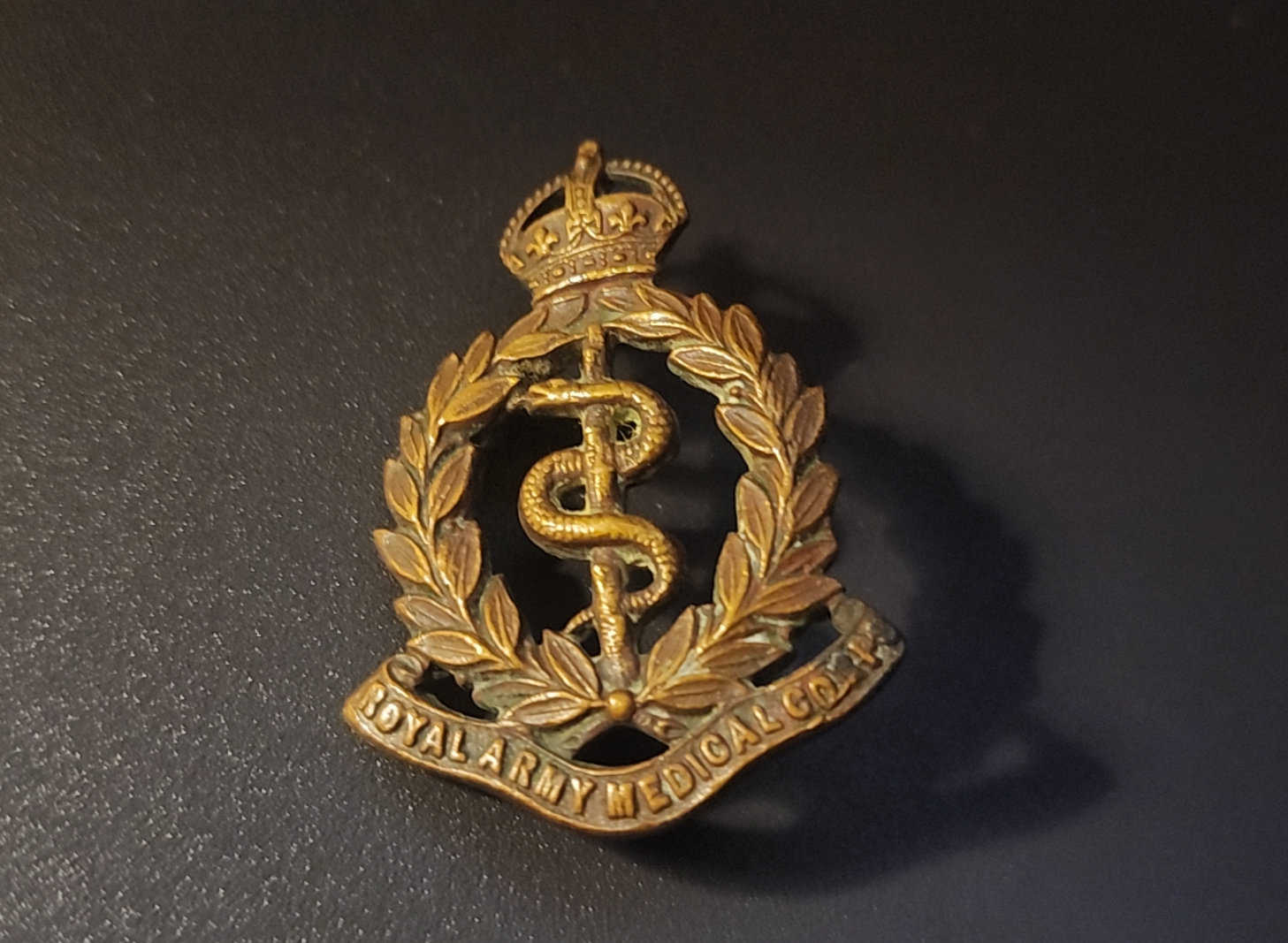
King’s Crown cap badge featuring the Rod of Asclepius medical emblem for the Royal Army Medical Corps.
Images
Specifications
| General Information | |
|---|---|
| Type | Cap badge - Royal Army Medical Corps |
| Country | United Kingdom |
| Service Branch | British Army |
| Unit | Royal Army Medical Corps (RAMC) |
| Era | King’s Crown pattern, in use from 1902 to 1952 |
| Material | Gilding metal / bronze finish |
| Obverse | Rod of Asclepius on a staff within a laurel wreath, surmounted by the King’s Crown; lower scroll reading “ROYAL ARMY MEDICAL CORPS.” |
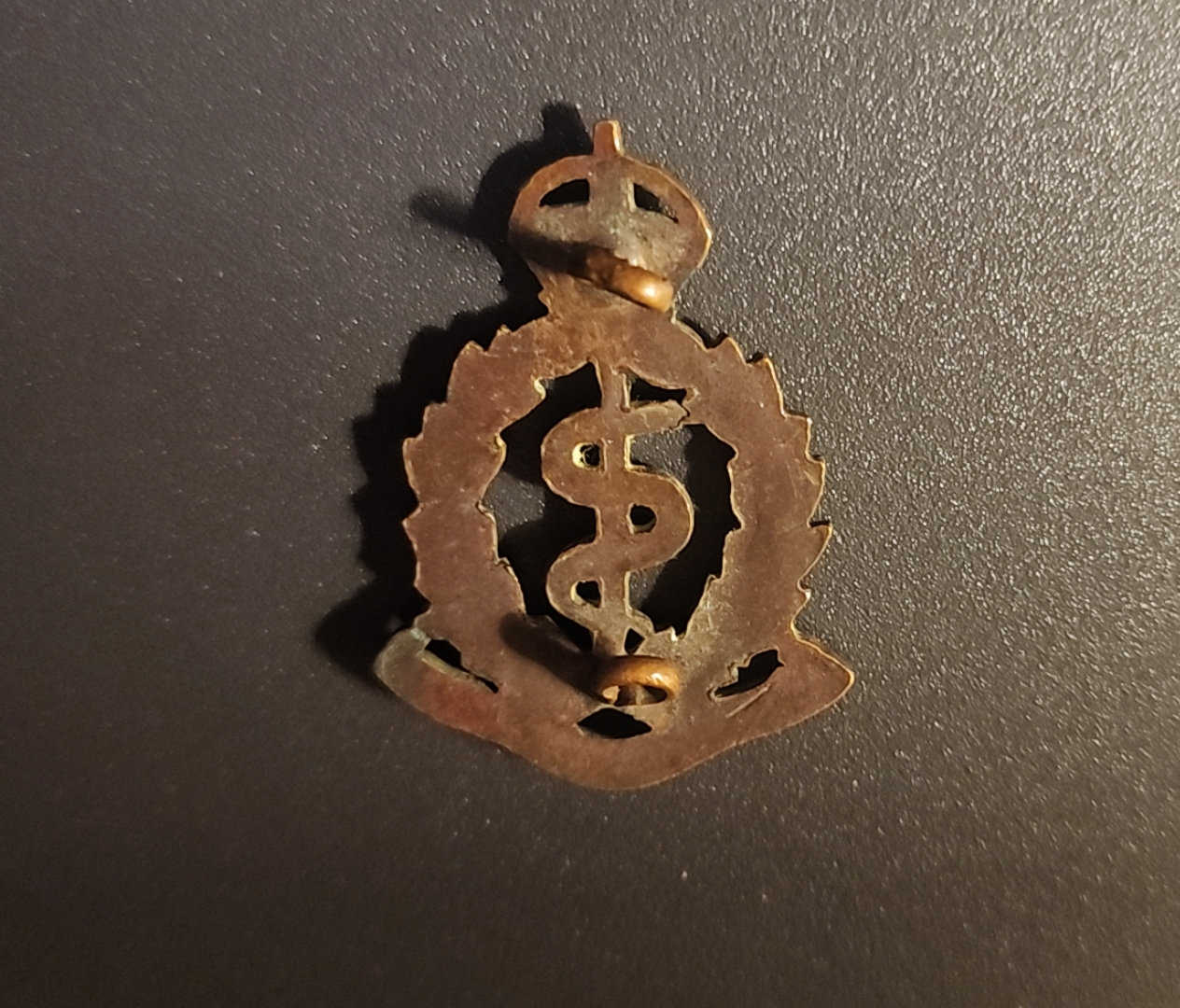
| Reverse | Plain reverse with integral attachment fittings for service dress cap wear; no maker mark visible on this example. |
Historical Summary
The Royal Army Medical Corps (RAMC) was created as a distinct corps in 1898 and unified the British Army’s medical services into a single organization. RAMC personnel provided medical support in every major British conflict of the early twentieth century, from the Boer War through both World Wars and into the early Cold War period.
The badge design centers on the Rod of Asclepius, a classical symbol of medicine showing a single serpent entwined around a staff, set within a laurel wreath that represents honor and achievement. The King’s Crown above dates this pattern to the reigns of Edward VII, George V and George VI. In 1953, new issues adopted the Queen’s Crown, so King’s Crown RAMC badges are closely associated with both World Wars and the interwar era.
RAMC officers and other ranks served in field ambulances, casualty clearing stations, general hospitals and on hospital ships. Their work helped reduce battlefield mortality, improved evacuation and triage procedures, and drove advances in surgery and post operative care. This badge represents not only unit identity but also the professionalization of military medicine within the British Army.
Collector Notes
Dating relies primarily on crown style and construction details. King’s Crown examples pre date 1953, while badges with the Queen’s Crown represent the later postwar period. Finish, sharpness of the Rod of Asclepius and wreath, and the presence or absence of a maker mark help distinguish earlier strikes from later productions or reissues.
Condition is a key factor. Many surviving badges show heavy polishing, worn detail or replacement fittings from repeated use on service caps. This example retains a stable finish and crisp central emblem, making it suitable for display alongside RAMC medical equipment, medals or period photographs.
Provenance
- Acquired from a small estate for the Relics & Rifles reference collection as an example of insignia worn by British Army medical personnel from 1902 to 1952.
- No individual soldier or specific unit level attribution has been documented to date.
Downloads
A printable information sheet and display card for this badge will be linked here once finalized.