Japanese Officer Mess Kit
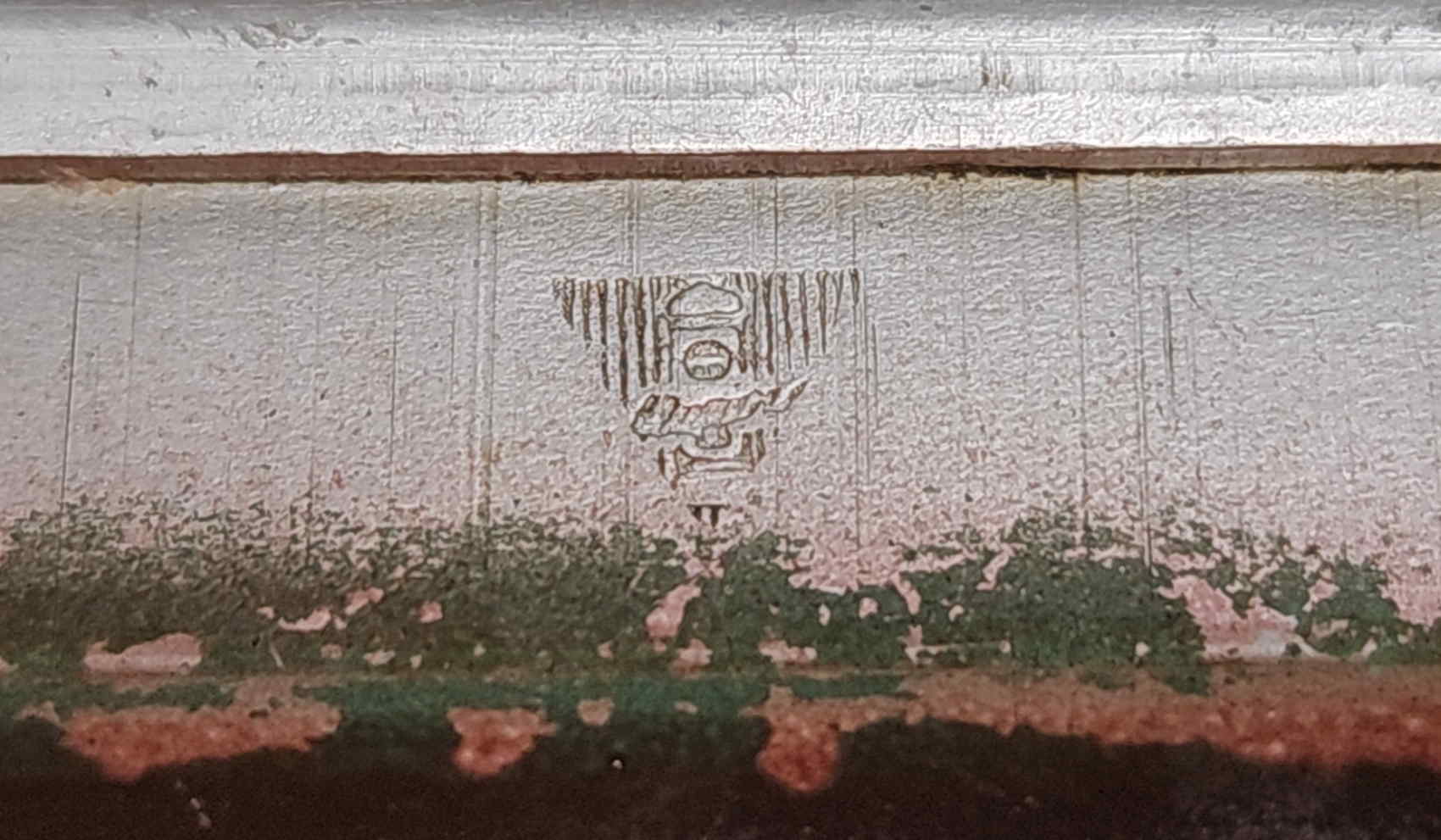
World War II later handled pattern, with fitted lid, removable inner tray, folding wire handle, and a triangular Nigiriya trademark.
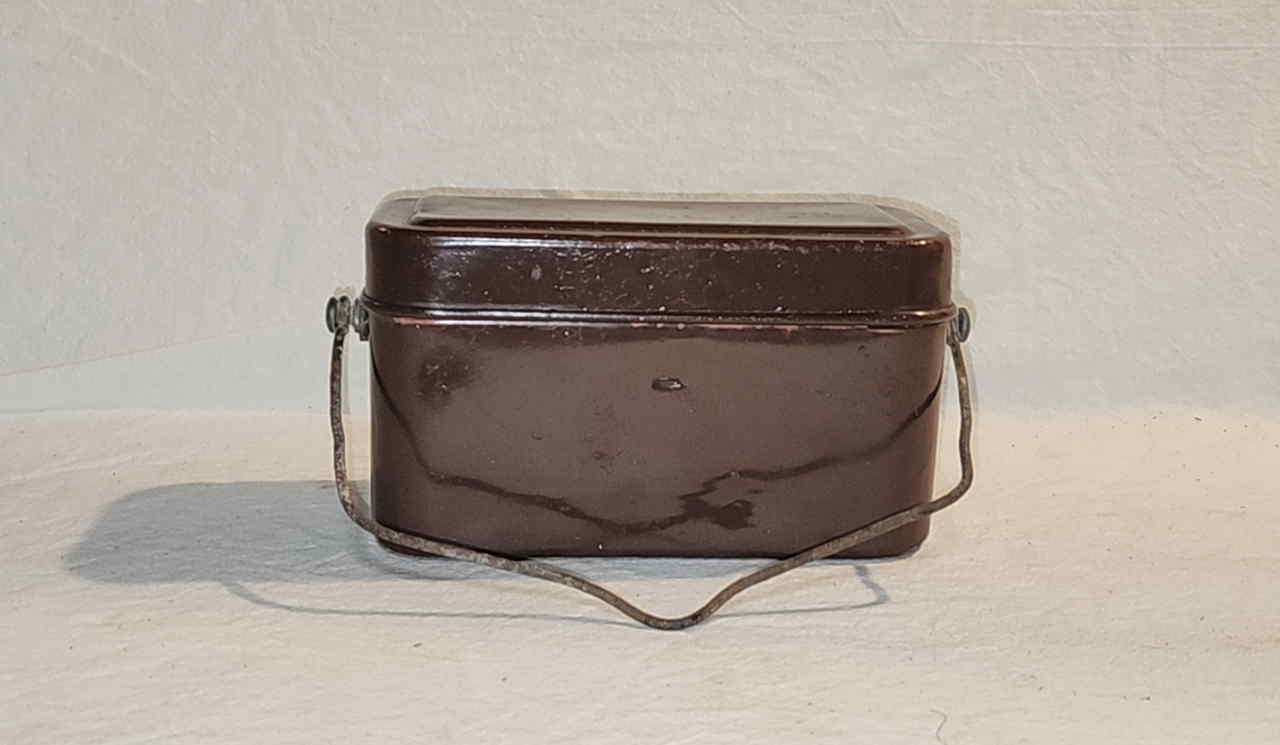
This compact rectangular mess kit is best identified as a Japanese officer mess kit of the later handled pattern. Unlike the more familiar kidney-shaped enlisted hango, officer mess kits followed a distinct rectangular form. Surviving examples and collector research show that officer mess kits were short and box-like, with earlier versions tending to be longer and shallower, while later examples became somewhat shorter, taller, and more commonly fitted with folding wire handles. This example fits that later pattern very well.
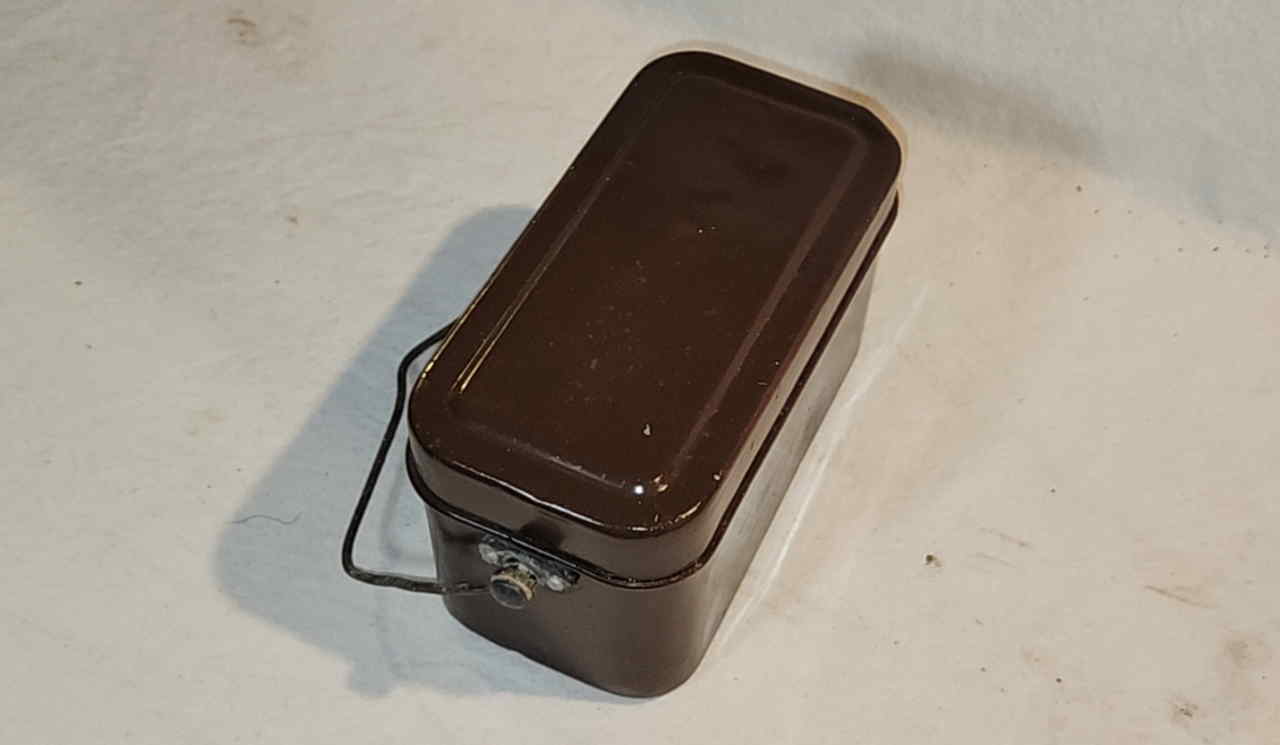
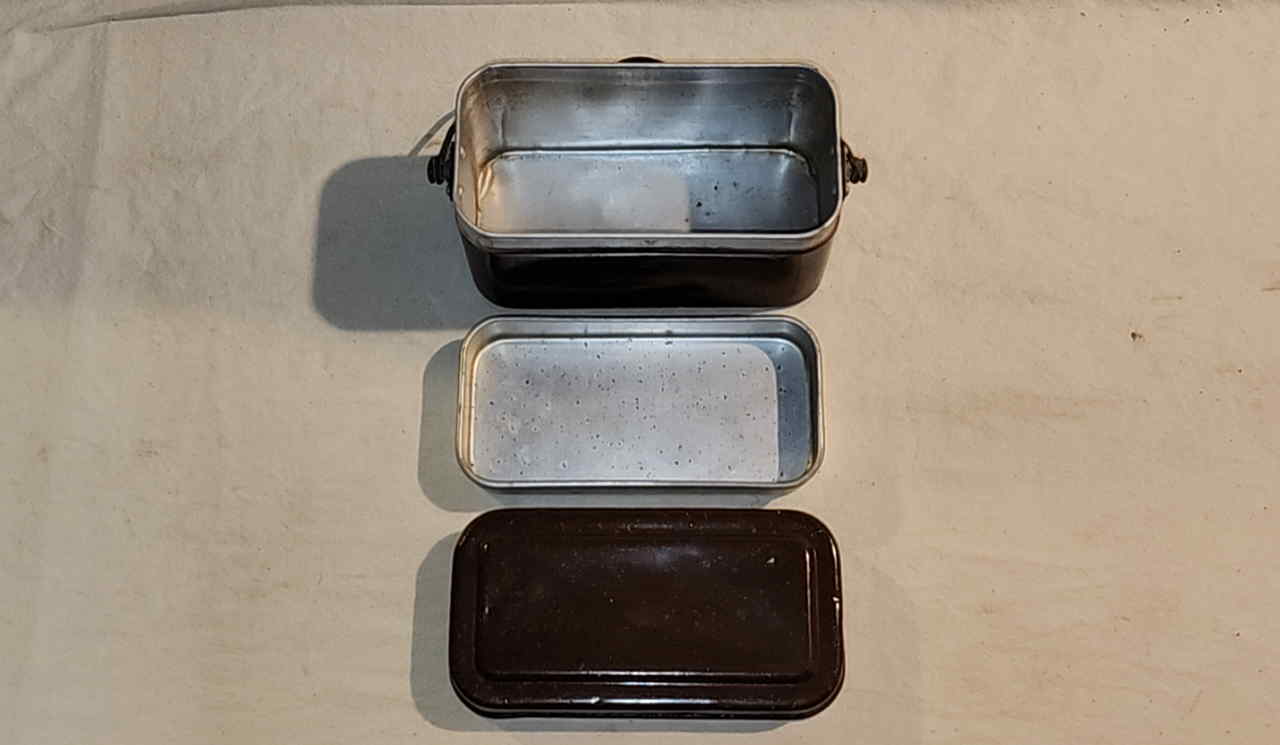
The present mess kit retains the key features associated with the later officer type: a rectangular body with rounded corners, a fitted lid, a removable inner tray, and a wire handle mounted at the sides that can be lowered when not in use. Those features distinguish it from the standard enlisted mess kit and place it in the officer-associated category. Comparison with published examples shows a very close match in profile, construction, and handle layout, especially the handled brown-pattern type often illustrated in reference material.
The set is built in three parts, consisting of the main body, a shallow fitted lid, and a removable inner tray. The body is deeper than a simple lunch tin but remains compact and easy to carry. The exterior finish is dark and now shows honest wear, while the interior remains bright metal, giving the piece a practical but refined appearance. The tray is an especially important detail because it reinforces the idea that this was intended to separate or portion food rather than serve only as a rough cooking vessel. The folding wire handle is simple, sturdy, and designed to sit close to the sides when lowered.
Japanese military mess equipment varied according to rank and function. Enlisted men generally used the standard hango, a field cooking vessel intended for direct use over heat. Officer mess kits appear to have served a somewhat different purpose. Officers were often expected to obtain much of their own approved field equipment, which helps explain variation in surviving examples. They also were not always expected to prepare their own meals personally. Because of that, the officer mess kit likely functioned in many cases as a compact field meal carrier, closer in concept to a bento-style container than to the standard enlisted cook pot.
The mark stamped inside this example is triangular in overall form, with a cloud-like symbol near the top and a circular symbol below, combined with a slanted central device. This trademark is consistent with the Nigiriya mark seen on Japanese mess equipment and associated in collector research with Nasu Aluminum production.
This is a strong and very teachable example because it represents a genuine category of Japanese field equipment that is often misunderstood. Smaller handled rectangular mess kits have long been mislabeled as “NCO mess kits,” but the better interpretation is that they belong to the officer class of mess equipment. In a collection, this piece stands out because of its distinctive form, removable tray, well-preserved maker's mark, and the contrast between the worn dark exterior and clean bright interior. It is exactly the sort of item that benefits from being properly explained, since without context many viewers would mistake it for an ordinary lunch box or civilian tin.
From a collector's standpoint, this mess kit is appealing for several reasons. First, it is visually different from the standard Japanese enlisted hango and is therefore immediately recognizable once the form is understood. Second, it preserves all of its important components, including the lid, removable tray, handle, and maker's mark. Third, its honest finish wear gives it the appearance of genuine field use rather than later restoration. The triangular Nigiriya trademark also helps tie the piece to a specific manufacturing tradition, which strengthens the identification and adds depth to the overall presentation.
Condition is solid and attractive for a field-used example. The dark exterior finish shows notable wear, chipping, and rubbing along the edges, corners, and broader side surfaces, exposing the lighter metal beneath. This wear is consistent with age and service use and contributes positively to the character of the piece. The interior remains relatively clean and presentable, the tray survives intact, the lid still fits properly, and the wire handle appears complete. Overall, this is a strong collector-grade example that clearly illustrates the later handled officer pattern.
Images
Specifications
General Information Item Japanese Officer Mess Kit Pattern Later handled officer type Country Japan Era World War II Form Short rectangular mess kit with fitted lid and removable inner tray Material Metal construction with dark exterior finish and bright metal interior Handle Folding wire carry handle mounted at the ends Interior Layout Main body with separate removable tray and separate lid Maker's Mark Triangular stamped trademark, consistent with the Nigiriya mark Typical Use Officer-associated field meal container rather than the standard enlisted hango Collector Note Often misidentified in the hobby as an “NCO mess kit” Historical Summary
Overview
Identification
Construction
Historical Context
Maker's Mark
Collector Importance
Collector Notes
Condition
Return