Imperial Japanese Army Leather Map / Dispatch Case
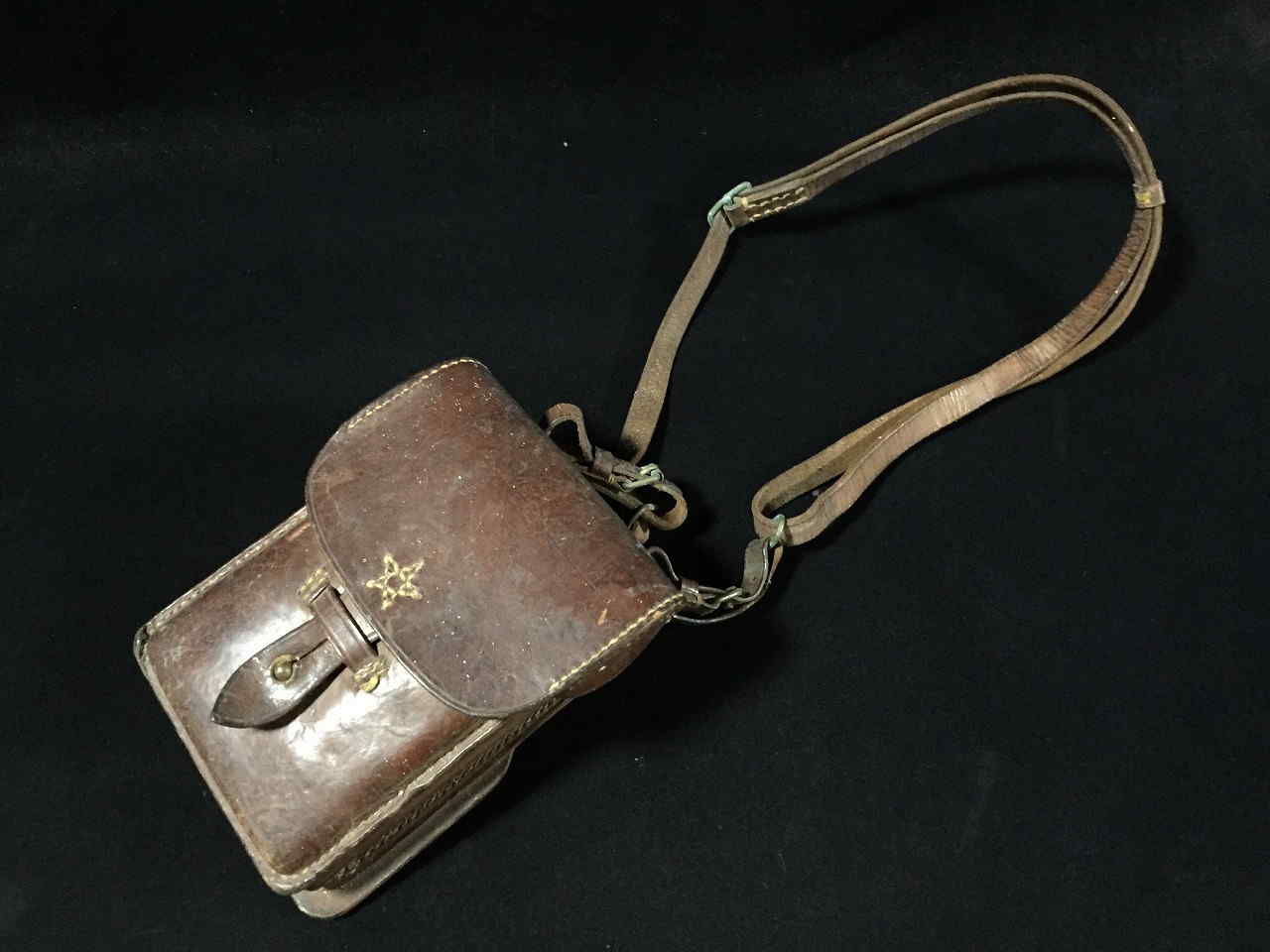
Imperial Japanese Army leather map or dispatch case with stitched Army star insignia, shoulder strap, hand-applied “TK” marking, and Nagasaki provenance.
Images
Specifications
| General Information | |
|---|---|
| Item | Imperial Japanese Army leather map or dispatch case |
| Country | Japan |
| Military Association | Imperial Japanese Army |
| Era | Showa period, WWII era |
| Type | Field map, document, or dispatch case |
| Material | Brown leather with heavy stitching, metal strap fittings, and leather shoulder strap |
| Approximate Dimensions | 18 x 14 x 5 cm |
| Closure | Leather tab and metal stud closure |
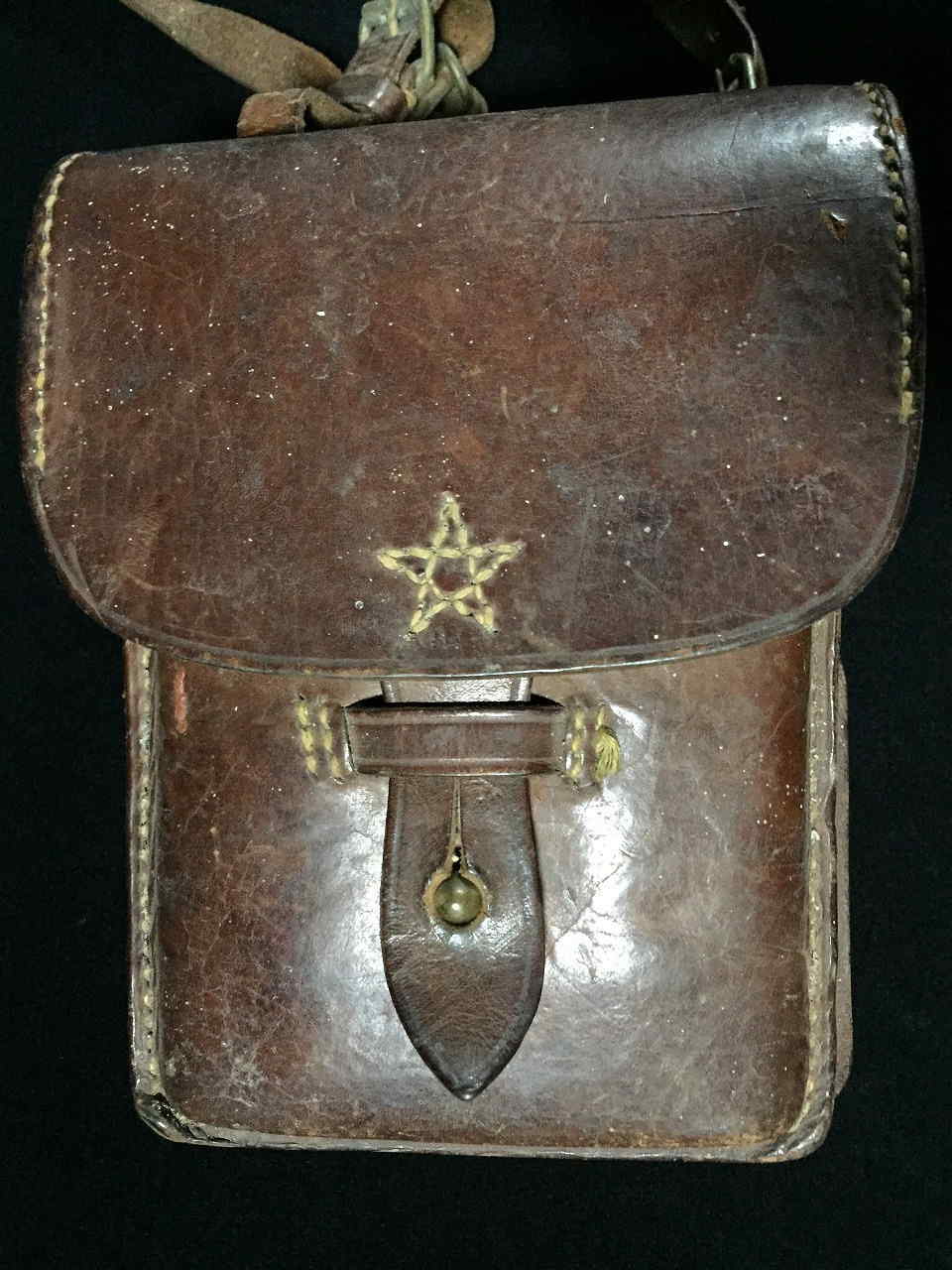
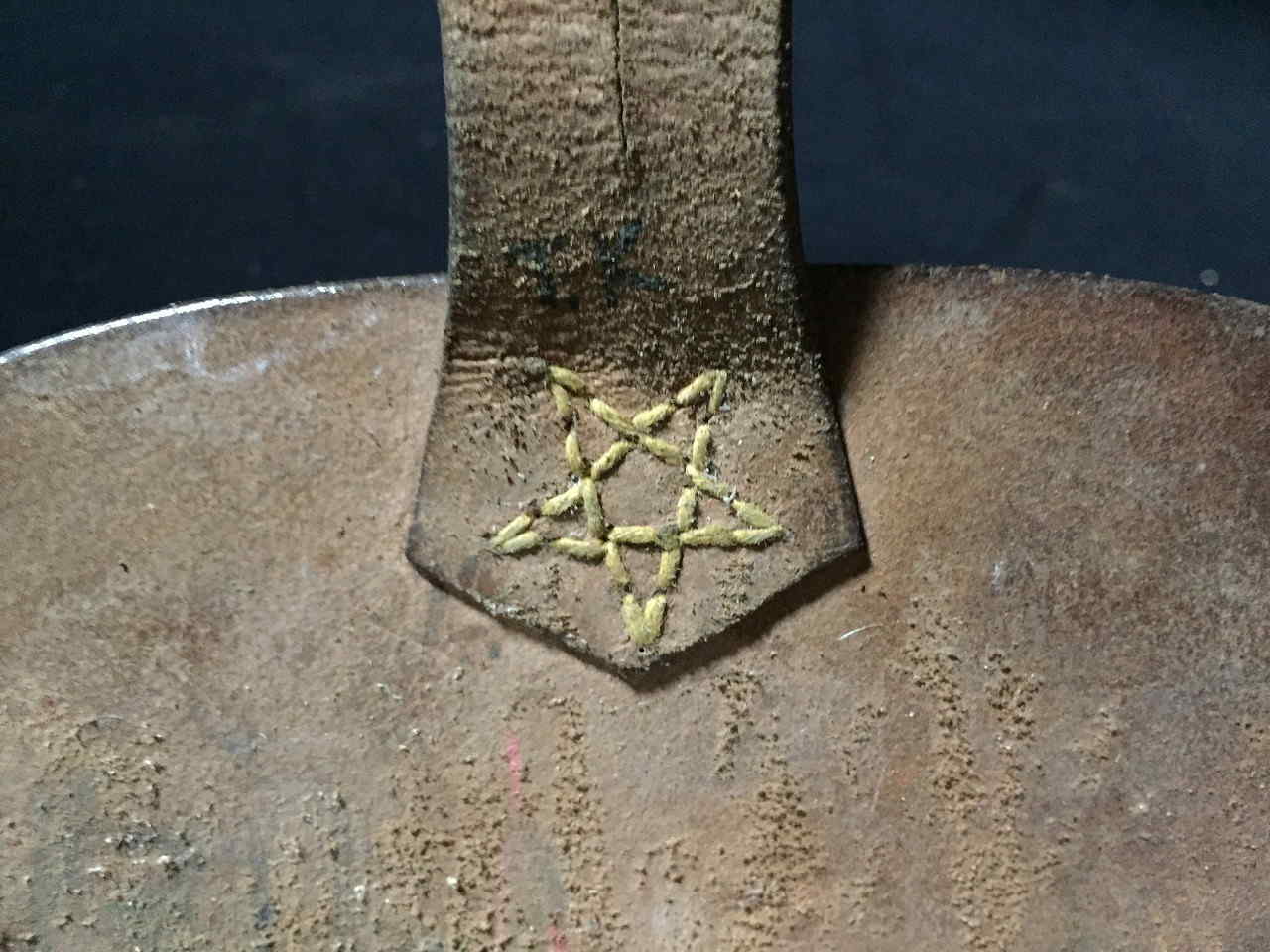
| Insignia | Stitched five-point Imperial Japanese Army-style star on front flap |
| Additional Marking | Hand-applied black marking on the inside closure area, likely “TK” |
| Function | Carrying maps, field papers, written orders, notes, or small documents |
| Reported Provenance | Acquired from Nagasaki, Japan |
Overview
This leather case is an Imperial Japanese Army map or dispatch case from the Showa period, WWII era. It is made from brown leather and features a shoulder strap, flap closure, gusseted body, reinforced rear strap mounts, and stitched five-point Army star insignia. The case was acquired from Nagasaki, Japan, and that provenance should remain attached to the artifact record.
The case is best identified as an Imperial Japanese Army leather map / dispatch case. Its form and construction are consistent with a field document carrier used for maps, written orders, notes, and other small papers. The stitched Army star on the front flap is the primary visible military identifier.
The case measures approximately 18 x 14 x 5 cm. The front flap carries a large stitched five-point star, while the leather closure tab below carries a smaller stitched star. Together, these details give the piece a clear Japanese Army visual identity and make it a strong display item within a Japanese field gear collection.
Physical Description
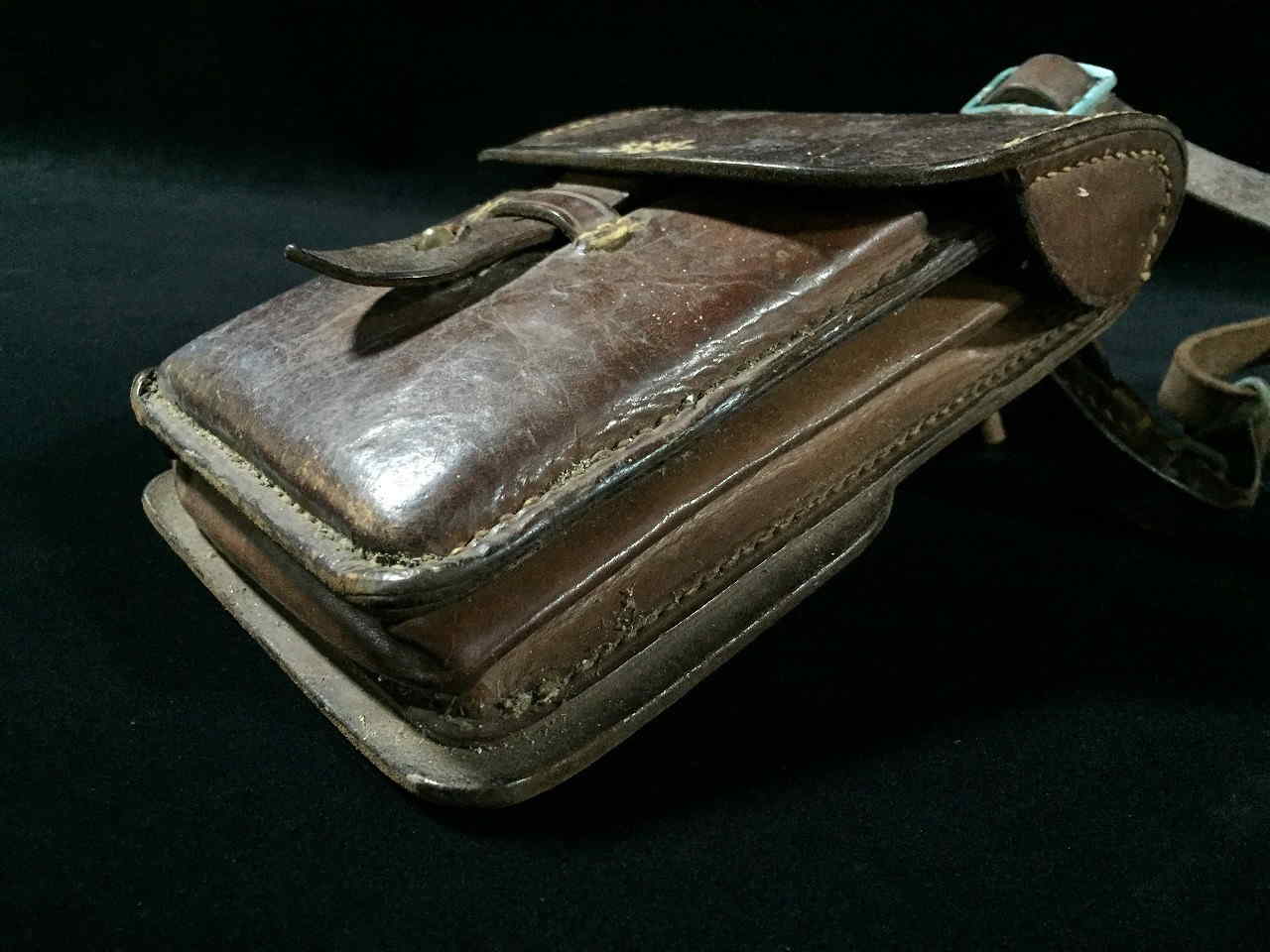
The case is rectangular in form and constructed from aged brown leather. The front flap folds down over the upper body of the case and fastens with a leather closure tab over a metal stud. The lower front portion has a raised pouch-like profile, giving the case depth while helping protect the contents.
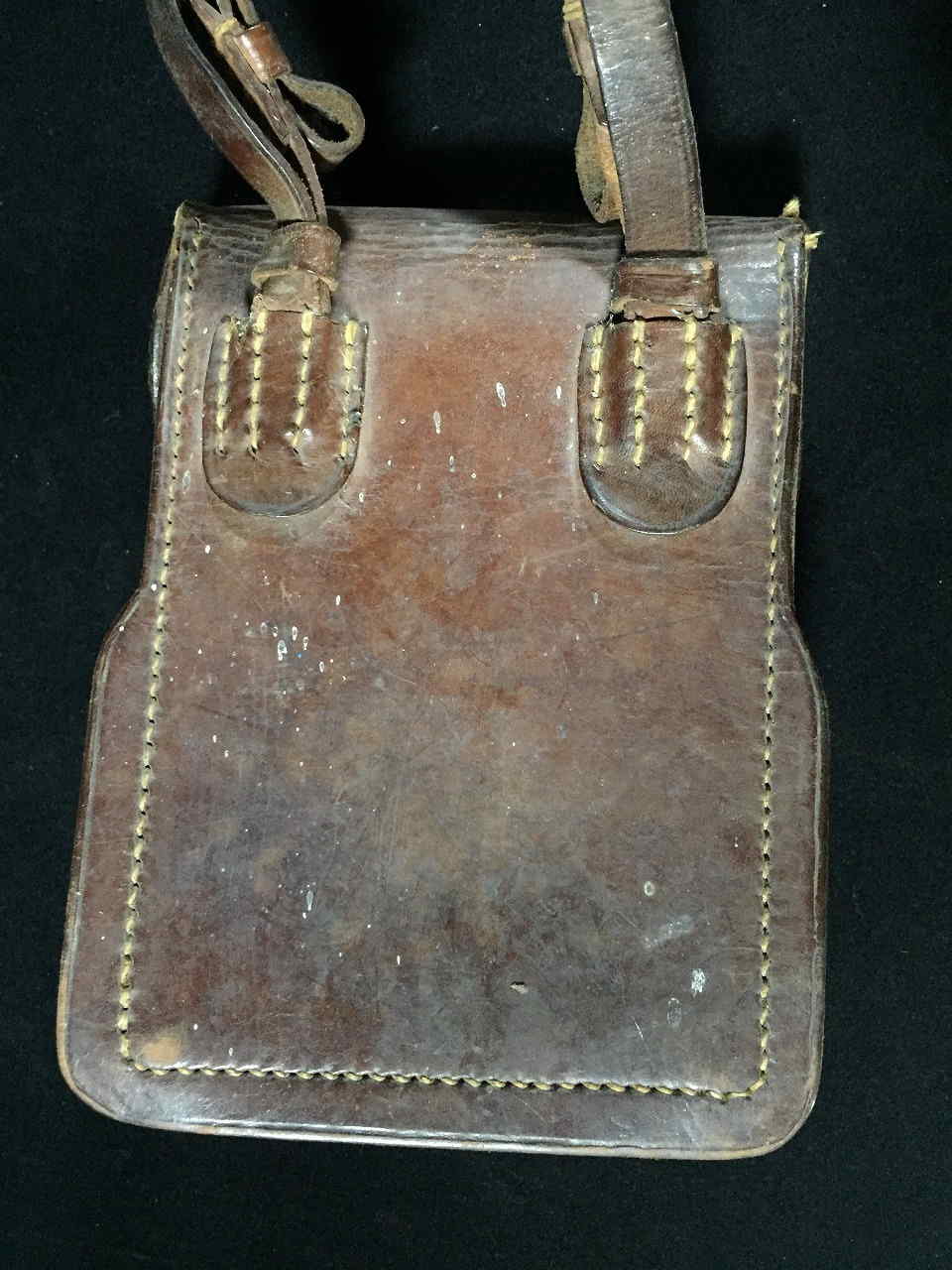
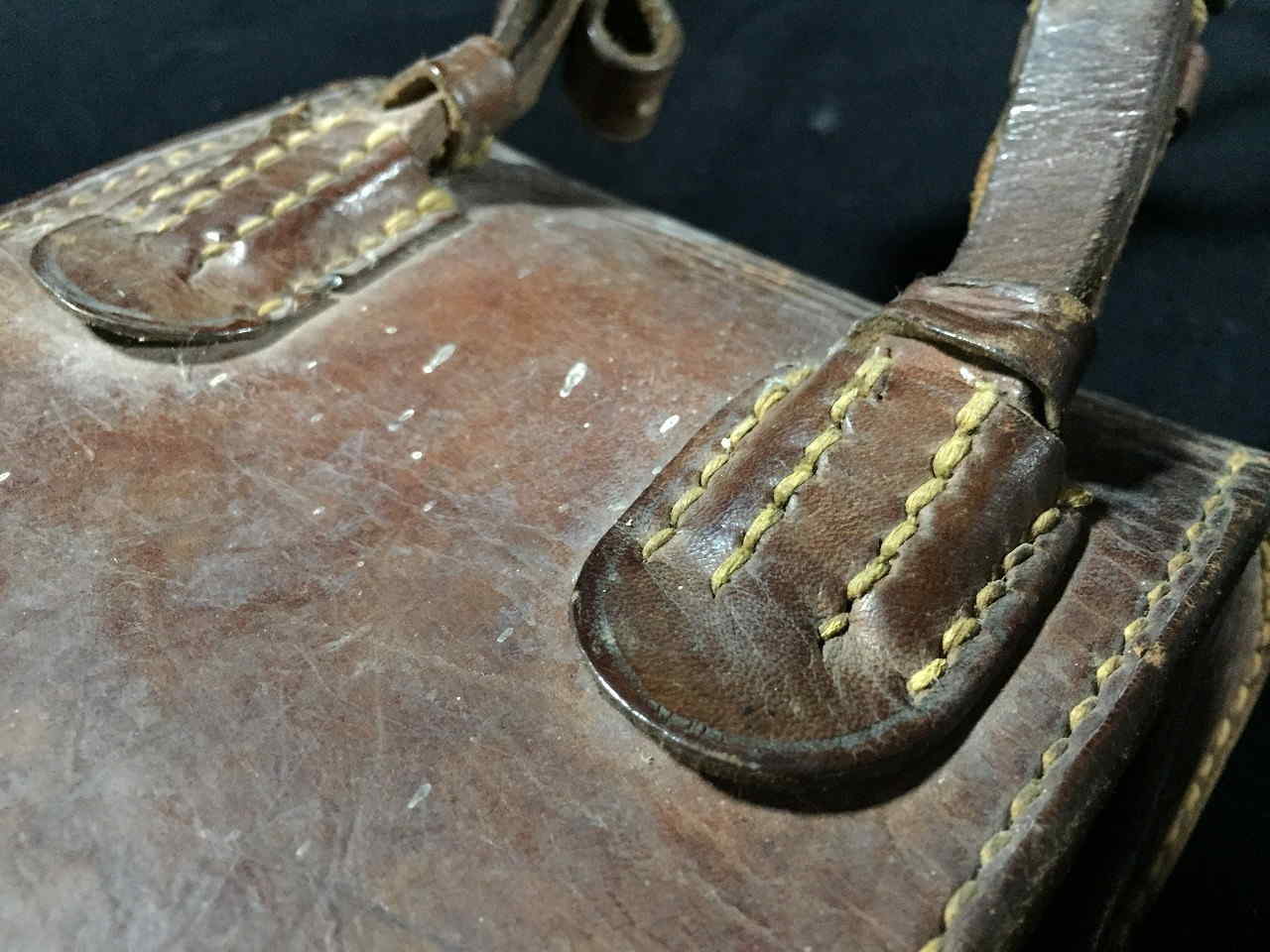
The sides are gusseted, allowing the body to open enough to accept folded papers or other flat items. The rear panel has two reinforced leather strap mounts. These mounts are stitched to the back of the case and connect to the leather shoulder strap through metal fittings.
The leather shows darkening, surface wear, creasing, and dryness from age. The strap remains present, and the rear attachment points survive. The overall condition gives the case an honest used appearance while preserving its original form and function.
Markings & Insignia
The most prominent marking is the stitched five-point star on the front flap. This star is associated with Imperial Japanese Army identity and is the strongest visible feature tying this case to Japanese Army use.
On the inside of the closure area, the reverse stitching from the front star is visible. This should not be interpreted as a second separate star insignia. Above that stitching is a small black hand-applied marking that appears to read “TK”, although the first letter is slightly irregular. It does not appear to be a formal maker stamp or arsenal stamp.
The “TK” marking may represent owner initials, an inventory notation, or a simple control mark. At present, it cannot be tied to a specific person, unit, or maker. It should be recorded cautiously as a hand-applied “TK” marking on the inside closure area, not as confirmed kanji or a translated Japanese unit mark.
Materials and Construction
The case is constructed from medium-weight brown leather with heavy stitching and metal strap fittings. The front closure, rear strap mounts, and gusseted sides are all functional features. The design is practical and intended for carrying flat documents or papers while keeping them close at hand.
The star insignia is stitched directly into the leather rather than attached as a separate metal badge. The lighter thread contrasts with the darker leather and remains one of the most visible features of the case. The smaller stitched star on the closure tab repeats the same motif and adds to the visual character of the piece.
The back of the case shows reinforced attachment points for the shoulder strap. These mounts are important because they show how the case was intended to be carried. The surviving strap, metal fittings, and closure system help preserve the object as a complete field accessory rather than an isolated leather pouch.
Historical Context
Map and dispatch cases were practical accessories for military personnel who needed to carry and protect papers in the field. Maps, written orders, route notes, message papers, sketches, identity documents, and administrative papers all had to be kept organized and accessible. A leather case provided a durable way to carry those materials while moving between locations.
In the Imperial Japanese Army, field paperwork and written orders were an important part of military organization and movement. Cases of this general type belong to the administrative and navigational side of military service. They are not weapons or ammunition equipment, but they are part of the broader system of communication, planning, and field administration.
This example is especially displayable because the stitched Army star is clearly visible on the flap and repeated on the closure tab. The surviving strap and rear mounts also help show the object as a complete carrying case, not just a loose leather container.
Condition
The case is in aged, field-used condition. The leather shows surface scratches, darkening, dryness, creasing, edge wear, and scattered abrasions. The stitching remains visible, and the two star motifs are still easy to identify.
The shoulder strap survives but should be treated carefully. Old leather can be brittle even when it appears stable, so the strap should not be used to support the case during display. The safest display method is to support the case from below or lay it flat.
Heavy oiling or modern leather treatment is not recommended. Such treatment could darken the leather, alter the surface, or disturb the hand-applied “TK” marking. The current condition is part of the artifact’s character and should be preserved.
Collector Notes
This is an appealing Japanese field gear item because it combines leather construction, a complete carrying arrangement, visible Army star insignia, and a small hand-applied marking. The repeated stitched star gives the case strong visual interest and makes the Japanese Army association easy to see in display.
The “TK” marking adds a personal or administrative detail, although it cannot currently be identified further. It may be initials, a control mark, or an inventory notation. Because the mark is hand-applied and not formally stamped, it should be recorded but not over-interpreted.
The case would display well with Japanese helmets, field caps, belts, mess kits, canteens, binocular cases, paper ephemera, or other wartime field accessories. It represents the document-carrying and field administration side of Japanese military material culture.
Provenance / Assessment
This item was acquired from Nagasaki, Japan. No individual service history is currently known. The identification is based on the leather case form, shoulder strap arrangement, gusseted construction, flap closure, and stitched five-point Army star insignia.
The artifact should be cataloged as an Imperial Japanese Army Leather Map / Dispatch Case, with stitched Army star insignia and hand-applied “TK” marking.
Overall, this is a strong Relics & Rifles field gear item. It is a practical military accessory connected to maps, papers, field movement, and military administration. Its value lies in its complete form, visible Army identity, surviving strap, hand-applied marking, and Nagasaki acquisition provenance.