Japanese Civilian Home Guard / National Volunteer Combat Corps Helmet
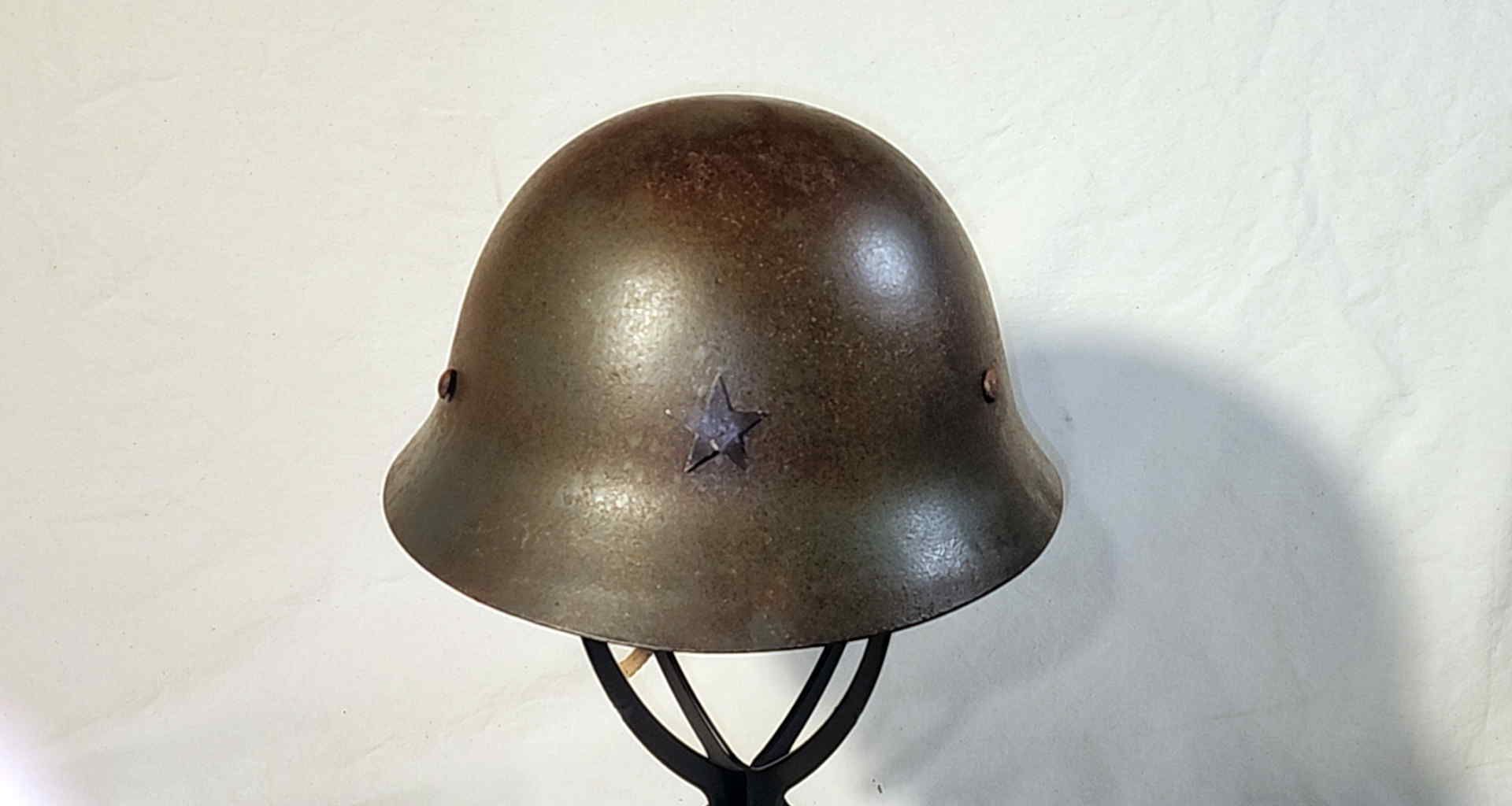
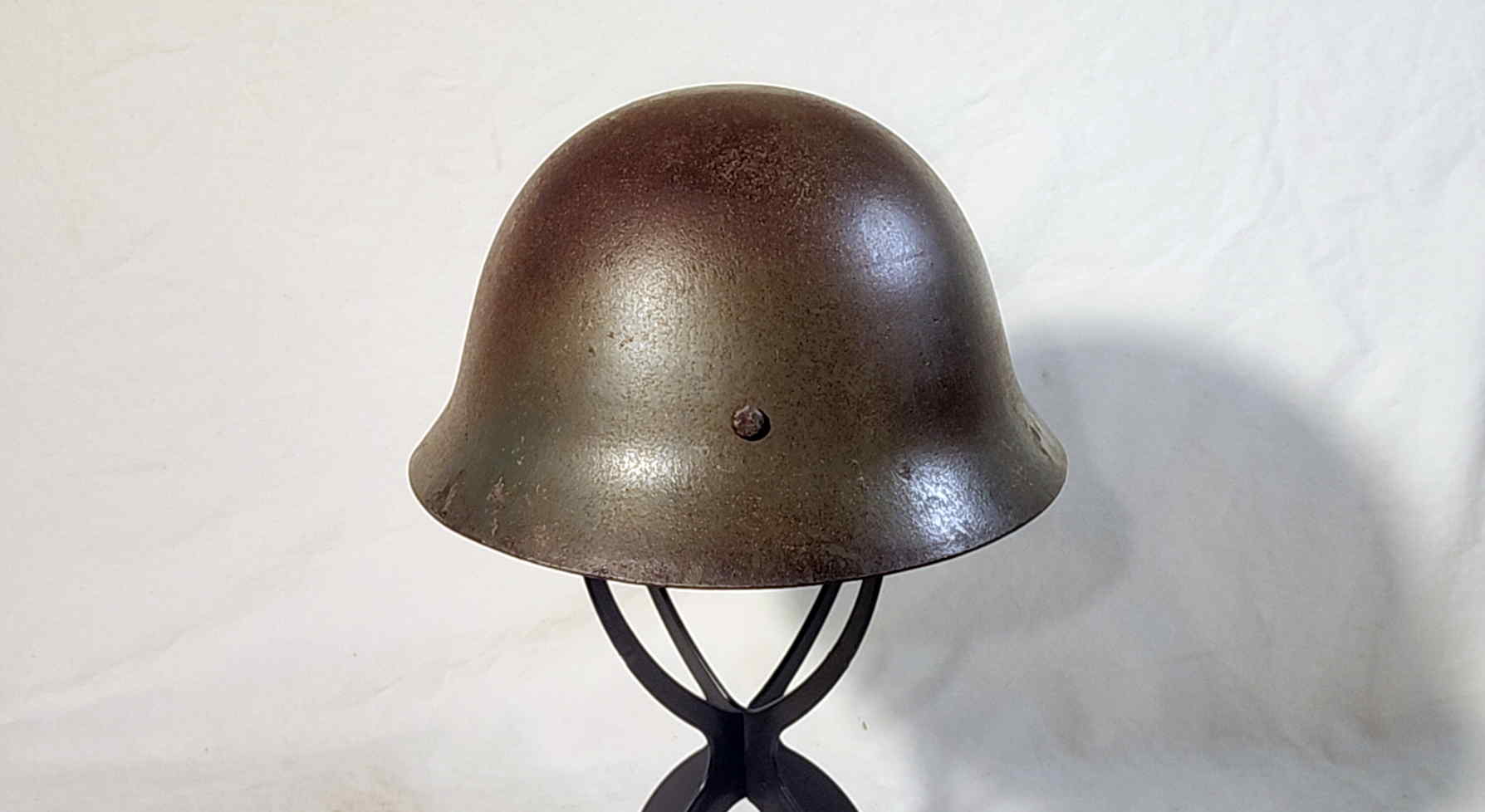
Late war civilian defense steel helmet, attributed example. This helmet is best understood as a Japanese civilian home defense or auxiliary helmet of the final war period, with a simplified Type 90 style shell, five point front star, no crown vent holes, and a replacement leather liner.
Images
Specifications
| General Information | |
|---|---|
| Artifact | Japanese civilian home defense steel helmet |
| Attributed Use | Home Guard / National Volunteer Combat Corps material, late 1945 context |
| Country of Origin | Japan |
| Date | Late World War II, 1945 context |
| Shell Form | Simplified steel shell broadly modeled on the military Type 90 silhouette |
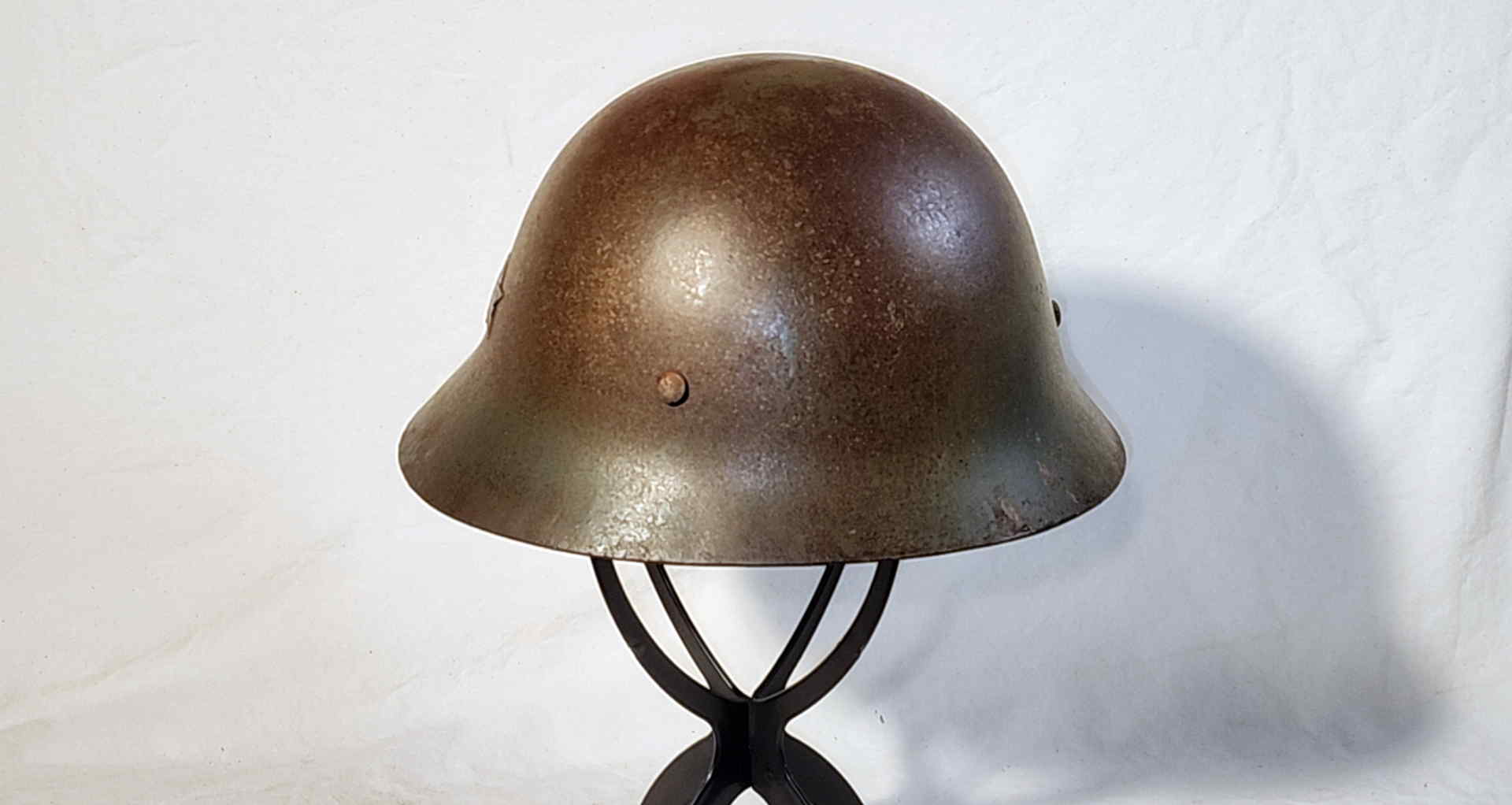
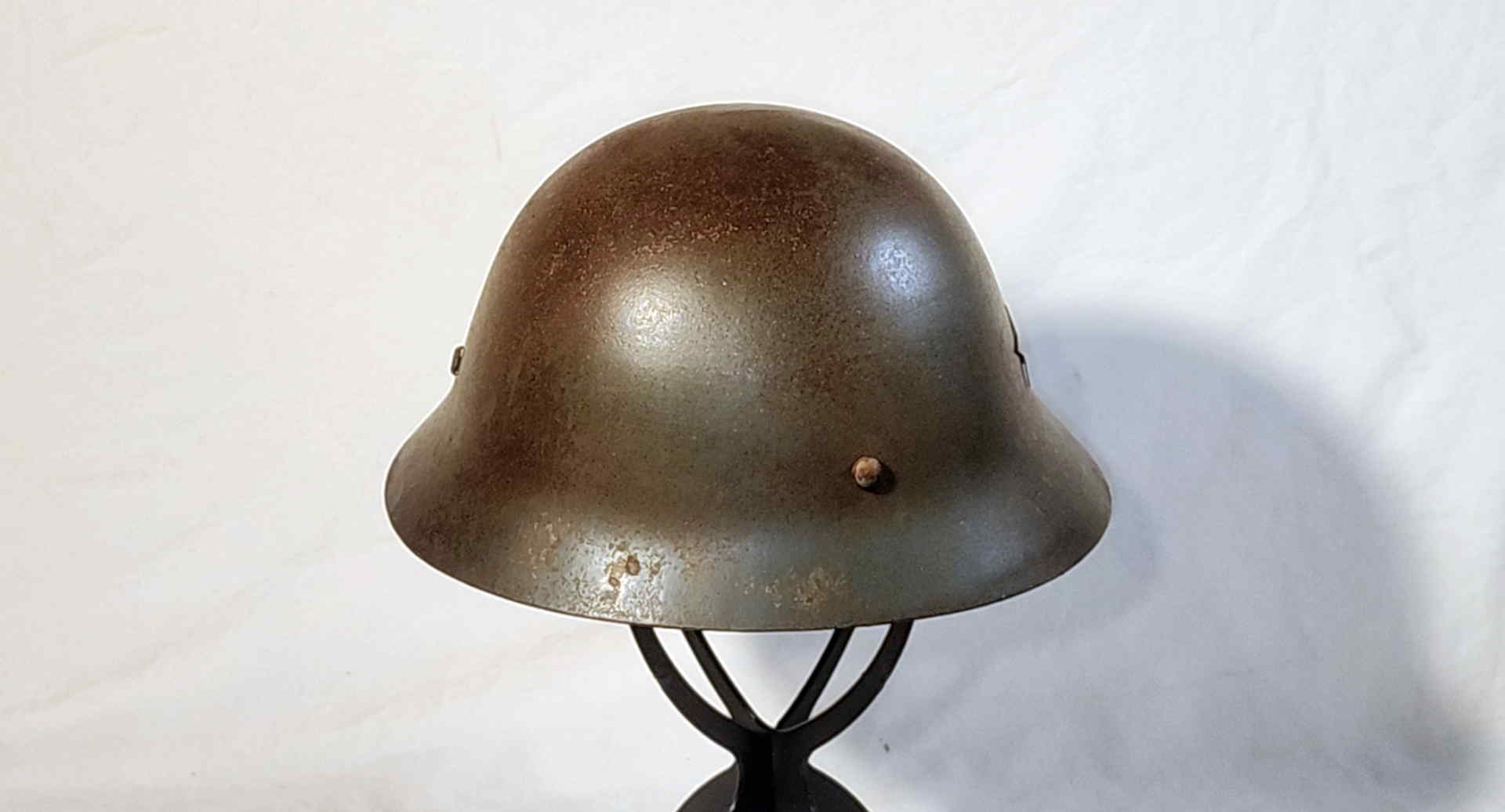
| Exterior Features | Five point star on front; side liner rivets present; no four crown vent holes visible |
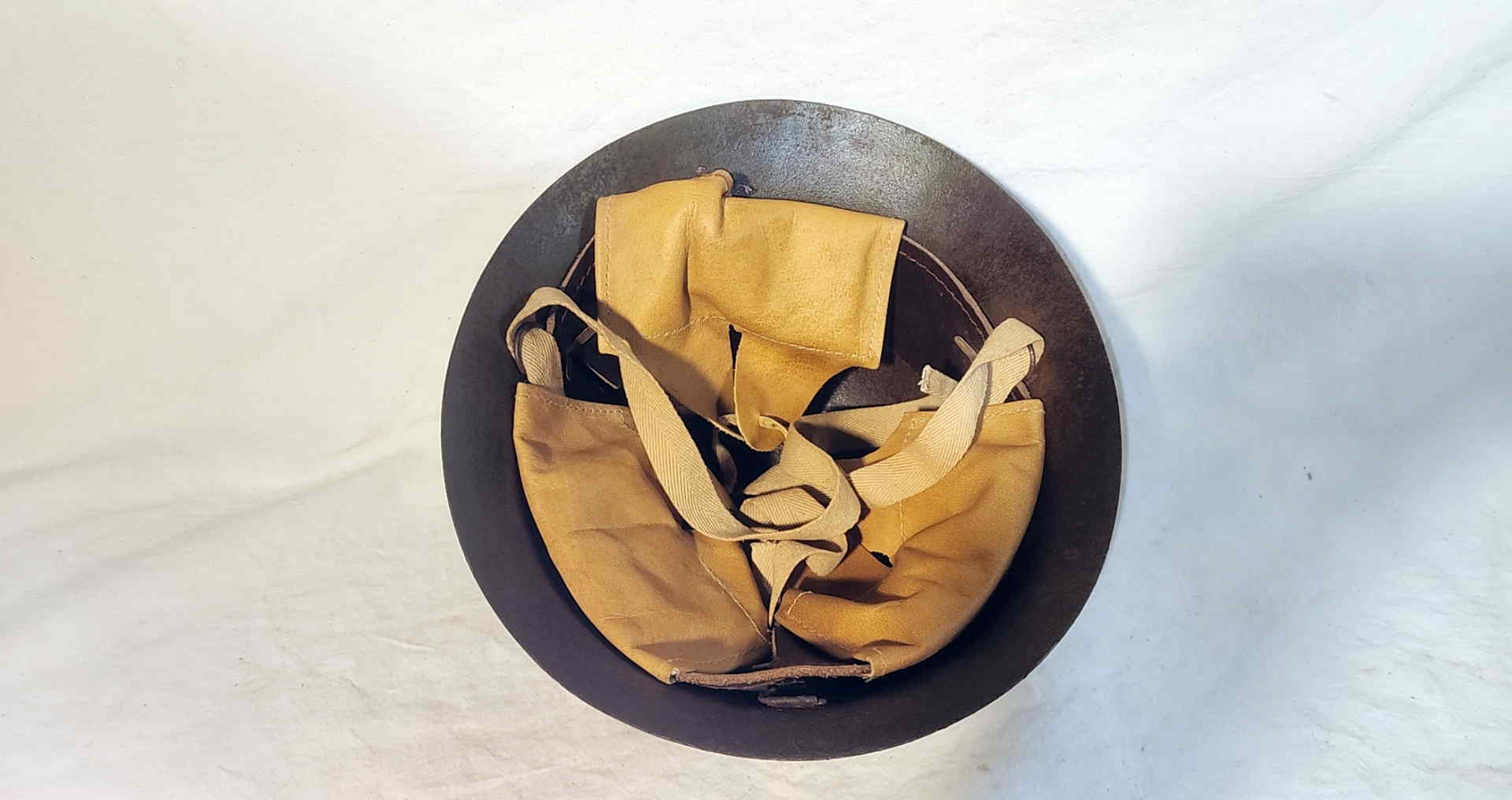
| Interior | Current fitted liner is a reproduction leather liner and is not original to this helmet |
| Expected Original Interior | Simple cloth or canvas style liner is more consistent with attributed civilian examples |
| Finish | Aged olive brown paint with surface wear, patina, and scattered oxidation consistent with age |
| Provenance | Sourced from Wakayama City, Japan |
| Collecting Note | Identification rests primarily on shell form and simplified construction rather than the replaced interior |
| Restoration | No restoration documented to the shell. Present interior liner is a later display replacement. |
Historical Summary
In the final stage of the Pacific War, Japan moved toward total homeland mobilization. By the spring and summer of 1945, civilian men and women were being drawn into organized local defense, labor, fire fighting, evacuation, and emergency support structures as the government prepared for an expected Allied invasion of the home islands.
The late war emergency organizations often grouped together under English descriptions such as Home Guard, Civilian Volunteer Corps, or National Volunteer Combat Force were not equipped on a uniform military basis. Equipment shortages were severe, and many formations drilled with improvised weapons. Surviving helmets associated with civilian defense service are often simpler, more roughly finished, or otherwise distinct from standard front line military issue.
Within that historical setting, this helmet fits best as a civilian or auxiliary homeland defense piece rather than a regular combat issue army Type 90. It reflects the way Japanese military patterns were simplified or echoed in emergency use equipment made for rear area, local defense, or last ditch mobilization roles.
Identification and Attribution
The overall shell shape closely resembles the Japanese Type 90 family, especially in its rounded dome and flared skirt. However, the shell does not show the standard crown vent hole arrangement normally expected on a military Type 90 combat helmet. That missing feature is the strongest reason to separate this example from ordinary army issue.
The front five point star gives the helmet a Japanese military appearance, but the star alone should not be treated as conclusive proof of standard army service. On helmets of non standard or civilian associated pattern, shell construction remains the more dependable identifier. In this case, the simplified shell form and lack of crown vents carry more weight than the badge.
Because the present interior is a reproduction leather liner, the helmet can no longer be judged by its original interior fittings. The current liner should be viewed as a display replacement only. A simpler cloth or canvas liner would be more appropriate for a civilian attributed example of this type.
Construction, Condition, and Provenance
The helmet retains an aged olive brown exterior with a textured, time softened surface and honest display wear. The paint shows scattered abrasion and oxidation, especially along exposed high points and the lower edge. These signs of age support the object as an older steel shell rather than a modern fantasy reproduction, though exact wartime branch use cannot be proved solely from the present configuration.
The known provenance to Wakayama City, Japan, is a useful supporting detail. Geographic source does not by itself authenticate wartime use, but it is consistent with the helmet being a Japanese domestic survivor rather than a postwar export market assembly created elsewhere.
Collector Notes
For cataloging and future display, the clearest description is: "Japanese late war civilian home defense steel helmet, attributed Home Guard / National Volunteer Combat Corps type, with replacement reproduction leather liner."
A simple cloth or canvas style liner would better reflect the likely civilian defense configuration than the present leather interior. The most important diagnostic feature is the absent crown vent holes.
Provenance
Relics & Rifles collection. Sourced from Wakayama City, Japan. Documented in its present state with the shell, star, finish, and replacement liner as found.
Selected References
- National WWII Museum, "There Are No Civilians in Japan."
- Air & Space Forces Magazine, "Japan's Last Ditch Force."
- Nick Komiya, War Relics Forum, "Helmet Translation and Maker Identification."