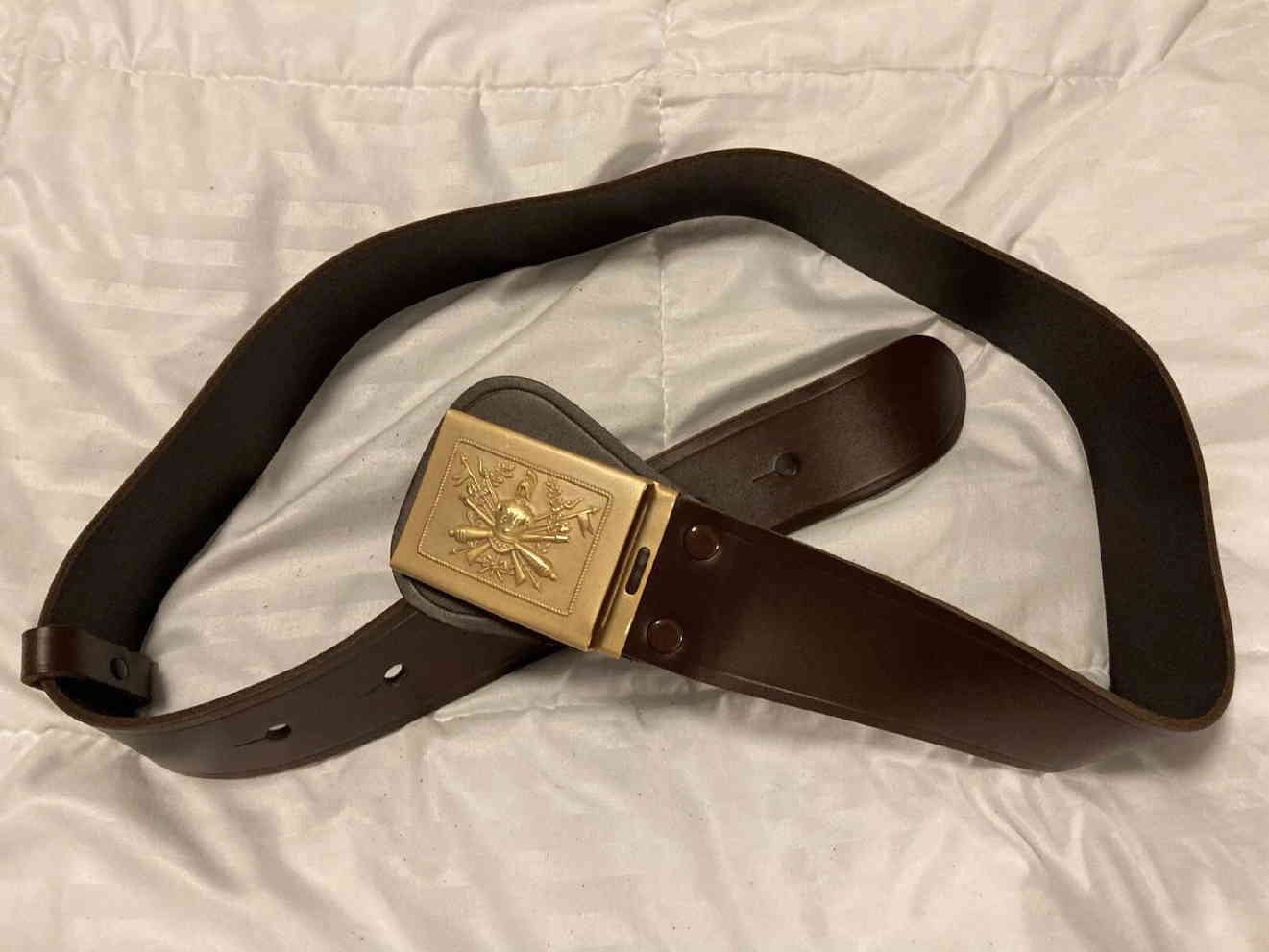
Italian Army Leather Service Belt with Brass Buckle
Post-war Italian service / dress belt with BOMISA MILANO brass buckle
Images
Specifications
| General Information | |
|---|---|
| Type | Italian Army / Carabinieri leather service belt (dress use) |
| Country | Italian Republic |
| Era | Approx. 1950s–1970s, Cold War period |
| Material | Brown leather strap, blackened inner surface |
| Buckle | Brass or brass-plated metal, rectangular friction-type clasp |
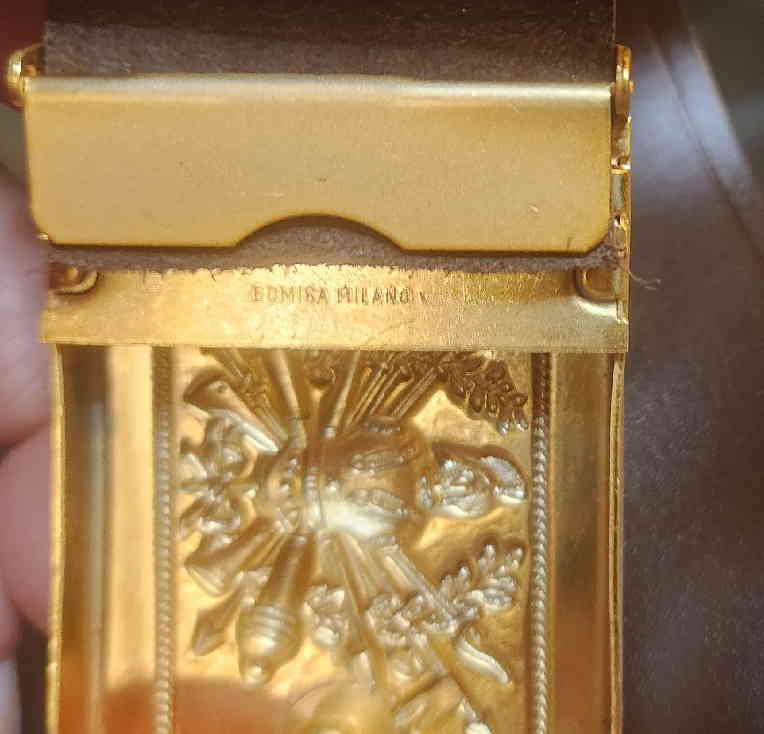
| Maker | BOMISA MILANO (Bonomi Milano S.A.), stamped behind buckle |
| Width | Approx. 45–50 mm |
| Adjustment | Punched holes along the strap for length adjustment |
| Likely Branches of Use | Esercito Italiano (Army), Carabinieri, and other uniformed services for parade / formal wear |
Historical Background
This leather belt represents the post-war evolution of Italian uniform equipment. After the abolition of the monarchy in 1946, the newly formed Italian Republic updated the symbols and styling used on uniforms, insignia, and accoutrements. Belts of this pattern were worn from roughly the 1950s through the 1970s, a period when Italy’s armed forces were being reorganized along NATO standards while still keeping a distinctly Italian visual identity.
The belt would have been used primarily with service dress and ceremonial uniforms rather than combat kit. Soldiers and Carabinieri might wear a plain web or leather field belt for everyday duties, reserving the polished leather belt and bright brass buckle for inspections, parades, and formal occasions.
Buckle Design & Symbolism
The brass buckle is embossed with a compact arrangement of traditional Italian military motifs:
- Crossed rifles – representing the infantry branch and the armed defense of the state.
- Fasces – a long-standing symbol of authority and unified power in Italian heraldry.
- Radiant star – echoing the five-pointed star of the Italian Republic, adopted after World War II.
- Laurel and oak elements – alluding to victory, civic virtue, and military strength.
Together, these elements bridge Italy’s classical iconography with its modern republican era, making the buckle a small but dense piece of symbolism worn at the center of the uniform.
Maker: BOMISA MILANO
The reverse of the buckle is stamped BOMISA MILANO, identifying it as a product of Bonomi Milano S.A., a Milan-based manufacturer that supplied buckles, insignia, and other uniform components to Italian military and police organizations in the mid-20th century. Their marks are commonly encountered on Cold War-era Italian belts, cap badges, and medal fittings, and help narrow the production window for this example.
Collector’s Notes
- Well-preserved leather and intact gilt finish on the buckle are key condition points.
- The BOMISA MILANO stamp is important for confirming authenticity and date range.
- This style of belt pairs naturally with Carabinieri and Army dress tunics, making it useful for Cold War Italian uniform displays.
- Variants exist with slightly different shades of leather and buckle finishes; documenting these differences can help map production runs and intended service branches.
As part of a broader collection of Italian post-war equipment, this belt provides a good visual link between wartime Carcano-era artifacts and the modern uniforms of Italy’s NATO-aligned forces.