Brass Matchbox Holder with Prussian “Gott mit uns” Device and Welt-Hölzer Matchbox
Prussian/Imperial German military motif; possible First World War or early postwar souvenir. Accompanying matchbox probably 1950s–1960s.
Images
Specifications
| General Information | |
|---|---|
| Country / Association | German military motif; holder’s place of manufacture unidentified. German commercial matchbox. |
| Type | Decorative matchbox sleeve with accompanying sliding-tray matchbox |
| Holder Material | Brass |
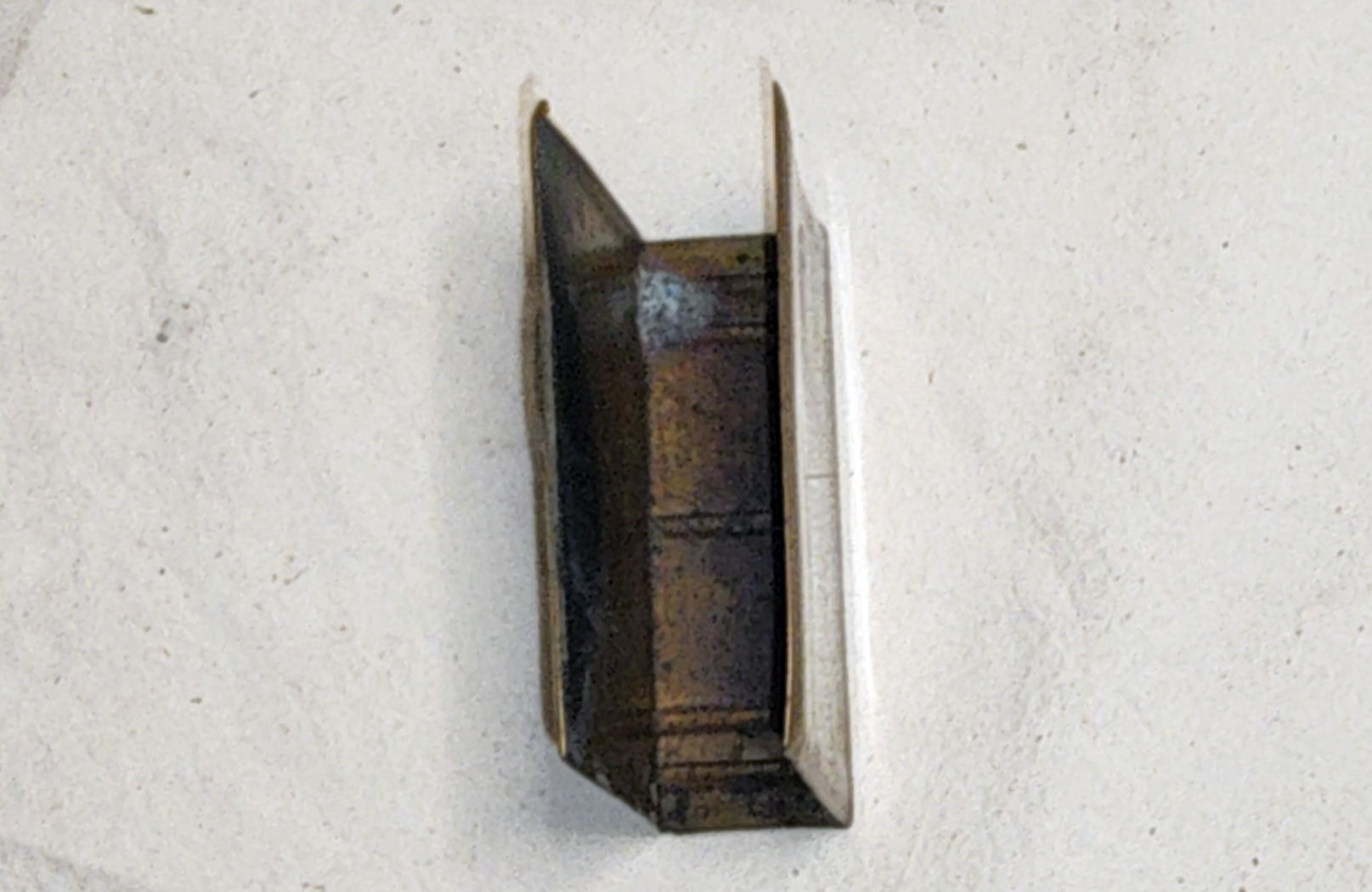
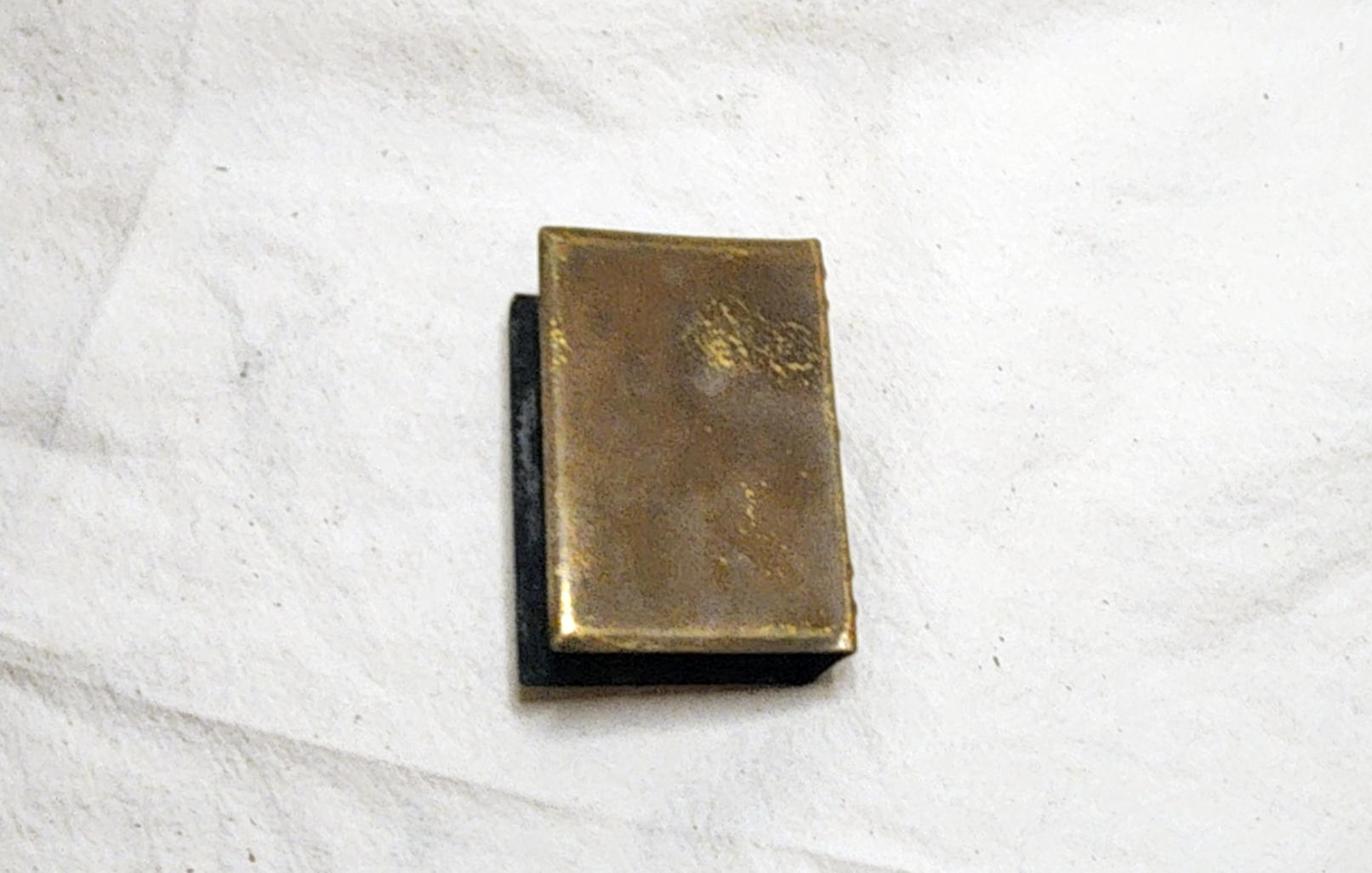
| Holder Construction | Folded sheet-metal body, open side, ribbed spine, and separately applied front device |
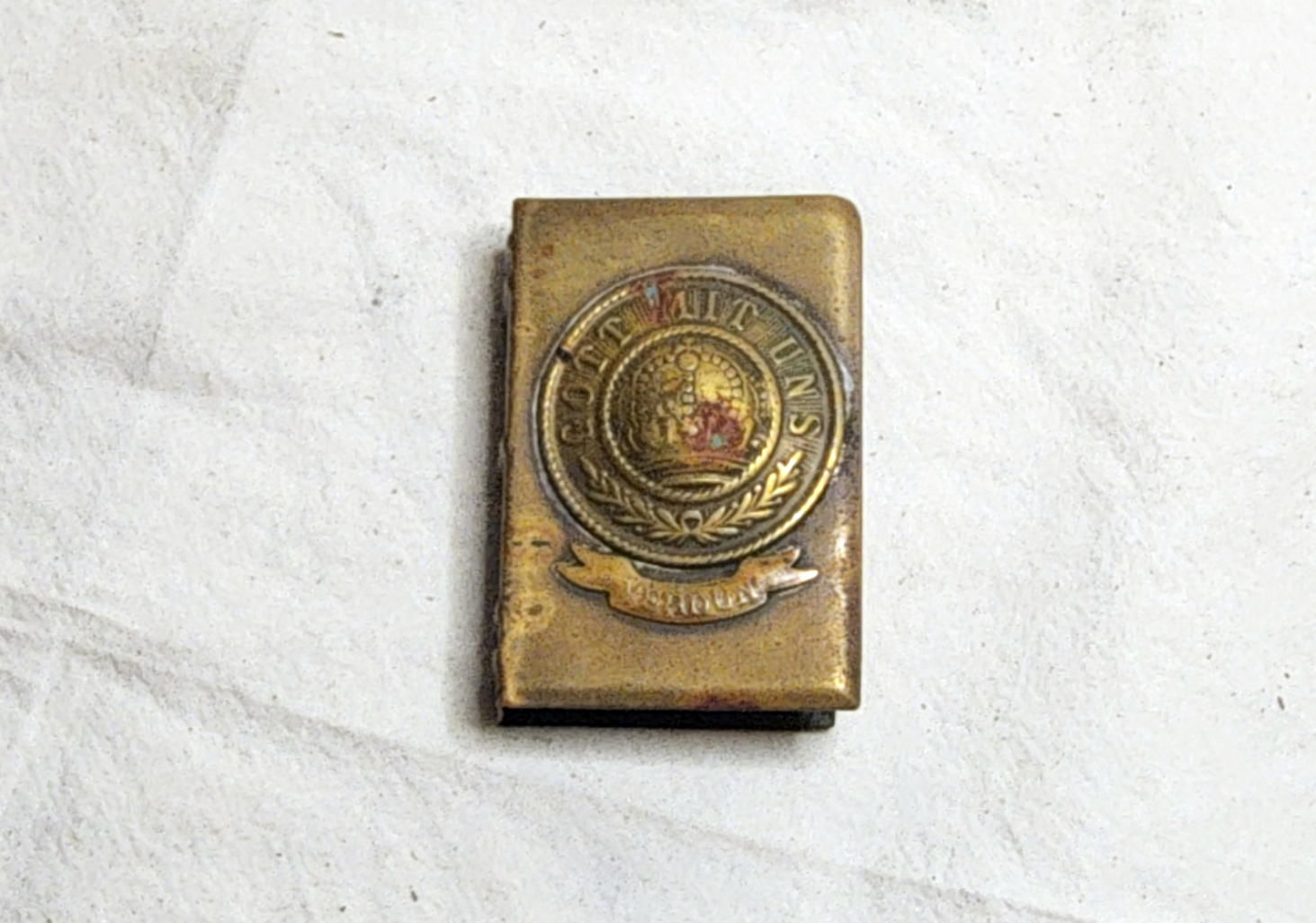
| Device | Prussian-style crown, GOTT MIT UNS inscription, and laurel decoration; small scroll below |
| Inscription | GOTT MIT UNS — “God with us” |
| Holder Period Attribution | Possible First World War or early postwar souvenir; exact production date unconfirmed |
| Holder Maker & Owner | No maker or date mark identified; original owner unknown |
| Matchbox Brand | Welt-Hölzer |
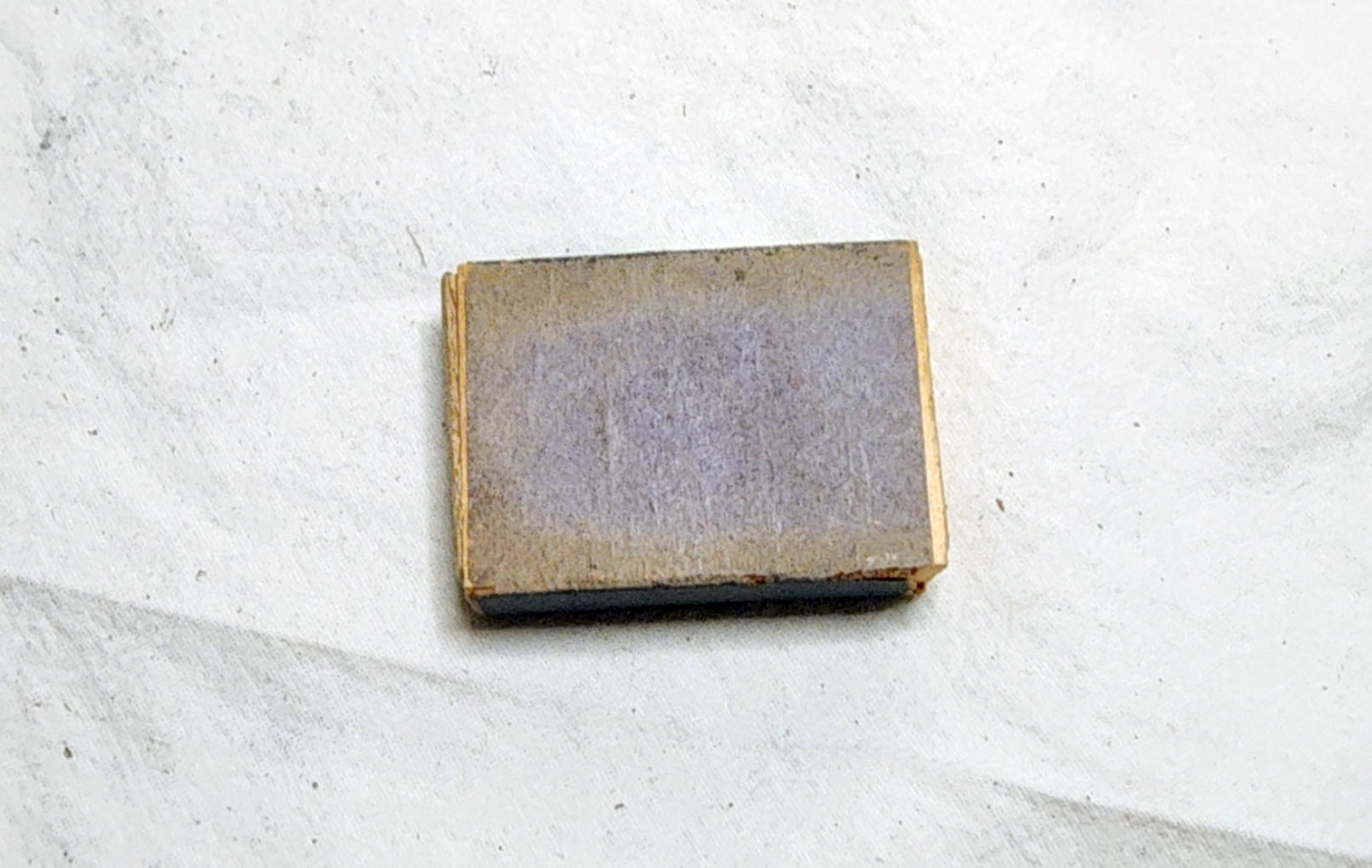
| Matchbox Construction | Wooden sliding-tray box with paper covering, printed label, and side striking surface |
| Label Identification | Deutsche Zündwaren-Monopolges.; small corner number 59 |
| Matchbox Period Attribution | Probably 1950s–1960s; exact production date unconfirmed |
| Relationship of Components | Present collection pairing; an original association between holder and box has not been established |
Identification & Use
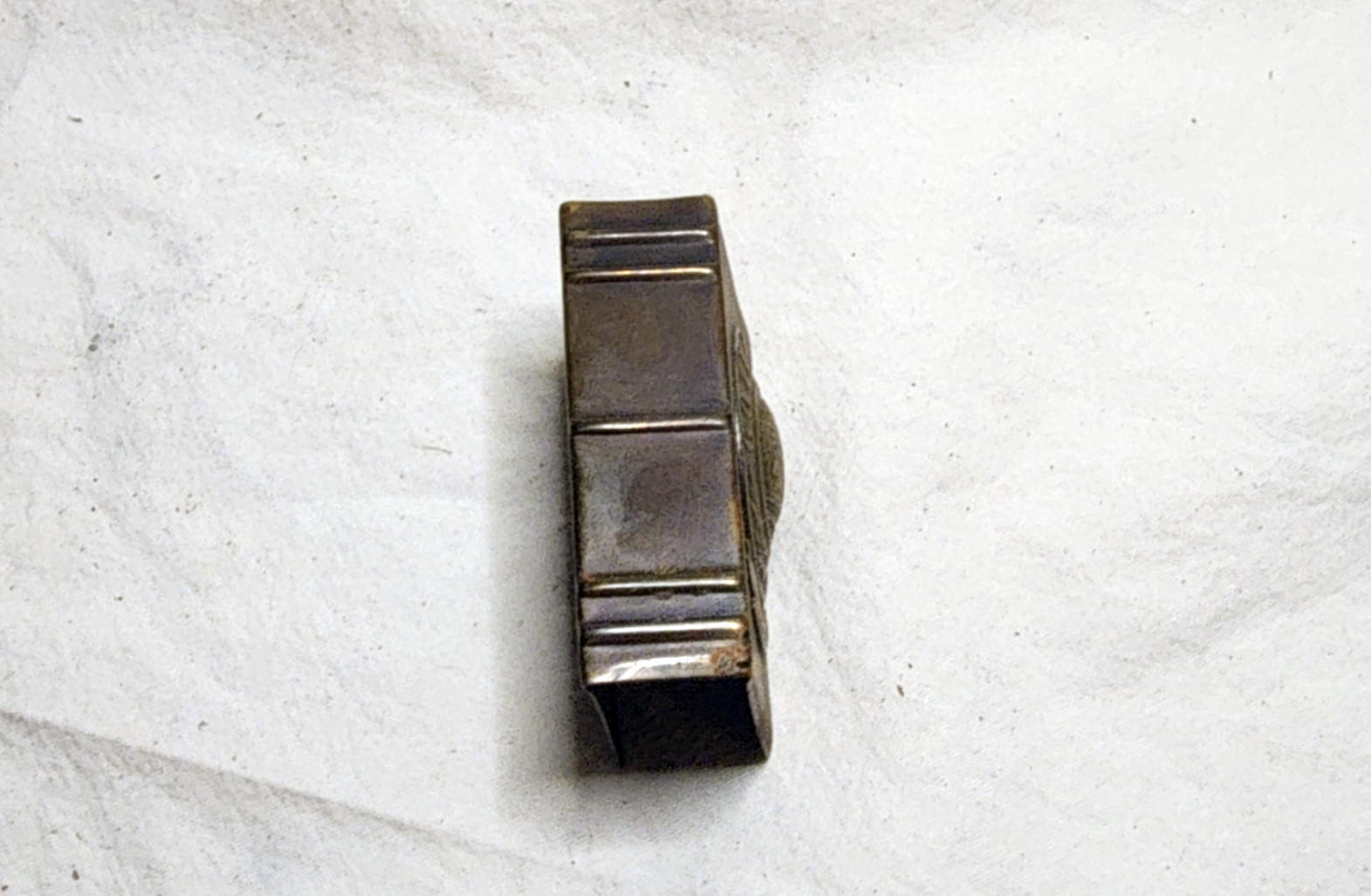
This brass holder is a reusable sleeve for a small matchbox. The folded metal body protects the box while leaving an opening for access to its sliding tray and striking surface. Its raised front device gives the otherwise practical object the appearance of a miniature military belt buckle.
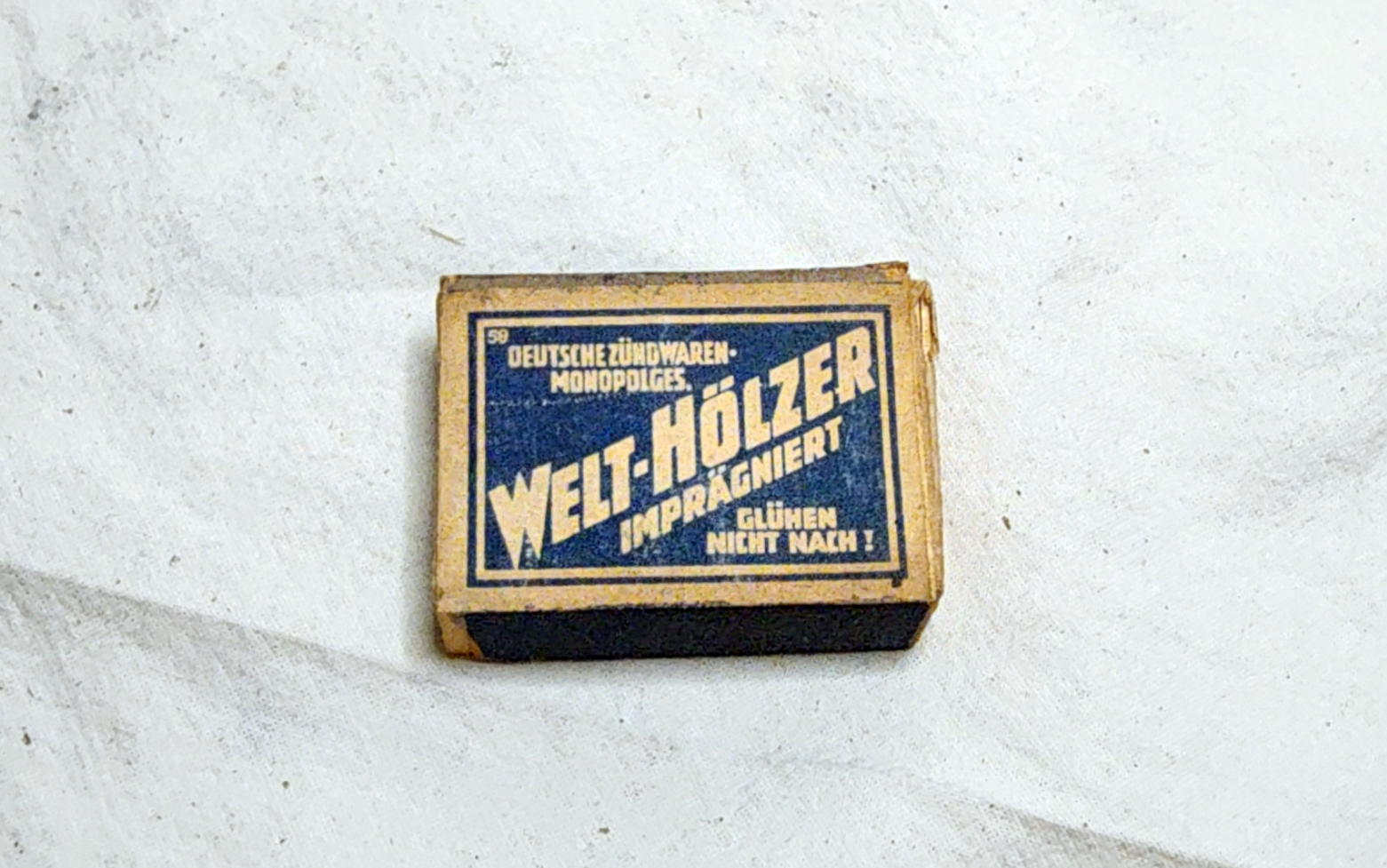
The holder is accompanied by a wooden Welt-Hölzer matchbox with a blue and cream paper label. The two pieces are recorded together in the collection, but they require separate dating: a replaceable matchbox cannot establish the age of the metal sleeve that holds it.
Prussian Device & Construction
The applied circular device has a Prussian-style crown at its center. The motto GOTT MIT UNS, meaning “God with us,” surrounds the upper portion, with laurel decoration below. This crown-and-motto arrangement recalls the Prussian military belt-buckle pattern of the Imperial German period. A small scroll with worn lettering sits beneath the roundel; a firm reading of that lettering has not been recorded.
The holder itself is made from folded brass sheet with a plain reverse and ribbed detail along the narrow spine. Its separate front device and visible interior joins are useful construction details, but do not by themselves establish whether it was made by an individual craftsman or commercially produced.
Holder Attribution & Dating
Decorated metal matchbox holders belong to the wider range of personal objects and souvenirs associated with the First World War. San Diego State University’s Olin Graves World War I Artifact Collection includes a metal matchbox with the Gott mit uns motto and an Imperial crown, providing a documented comparison for this general type of object.
A First World War or early postwar souvenir attribution is therefore a working possibility for this example. Its exact manufacture date remains unconfirmed. The military motif identifies the tradition being represented, while neither that motif nor the surface patina proves a particular production year. No maker, original owner, unit, or service history has been identified. The term “trench art” would require further evidence before being used as a definite description of its manufacture.
The Welt-Hölzer Matchbox
The label names Deutsche Zündwaren-Monopolges., an abbreviation for the Deutsche Zündwaren-Monopolgesellschaft. Its large diagonal WELT-HÖLZER lettering is accompanied by IMPRÄGNIERT (“impregnated” or “treated”) and GLÜHEN NICHT NACH! (“Do not continue to glow!”), referring to treatment intended to prevent the wooden splints from smoldering after the flame is extinguished.
The small 59 in the upper corner belongs to the system of factory identification numbers used on German match labels. It should not be read as a printed date of 1959. The factory represented by this number has not been identified for this profile.
Matchbox Dating
The working attribution for the box is probably 1950s–1960s, with the exact production date unconfirmed. Technik-Museum Kassel illustrates a closely comparable blue label with diagonal Welt-Hölzer lettering among its post-1945 examples. A recollection of match-label collecting in the 1960s also describes Welt-Hölzer labels with blue backgrounds and diagonal lettering. These comparisons support a mid-century attribution, although neither dates this particular box precisely.
The monopoly-company name provides a broad context, rather than a narrow date: the German match monopoly began in 1930 and continued after the Second World War until 1983. Welt-Hölzer boxes also existed before 1945. Earlier manufacture cannot be excluded solely from the brand name, and brittle paper is a condition feature rather than a reliable dating method. The age and originality of the present match contents have not been established.
Condition & Collector’s Notes
The brass retains a mottled brown and gold patina, with wear on the raised device, scratches on the plain reverse, and darker discoloration inside the sleeve. Small traces of colored material remain in parts of the crown decoration; their composition has not been identified. The principal crown, motto, and foliage remain recognizable.
The matchbox has discolored paper, worn edges, and brittleness noted in the collection record, while the blue label remains readable. Together, the holder and box illustrate two histories: a personal object carrying an Imperial German military motif, and a commercial matchbox provisionally assigned to the postwar decades.
Research References
- San Diego State University — metal matchbox with “Gott mit uns” and Imperial crown, Olin Graves World War I Artifact Collection.
- Technik-Museum Kassel — Zündhölzer: Kasseler Fertigung in 100 Jahren (monopoly history and comparative labels).
- Freilichtmuseen Massing und Finsterau — Eine zündende Idee (factory identification numbers).
- Unser Aachen — Streichholzschachteletikettensammler (recollection of 1960s collecting).