British Army-issue Helmet, Steel, Mark II (BMB, 1941)
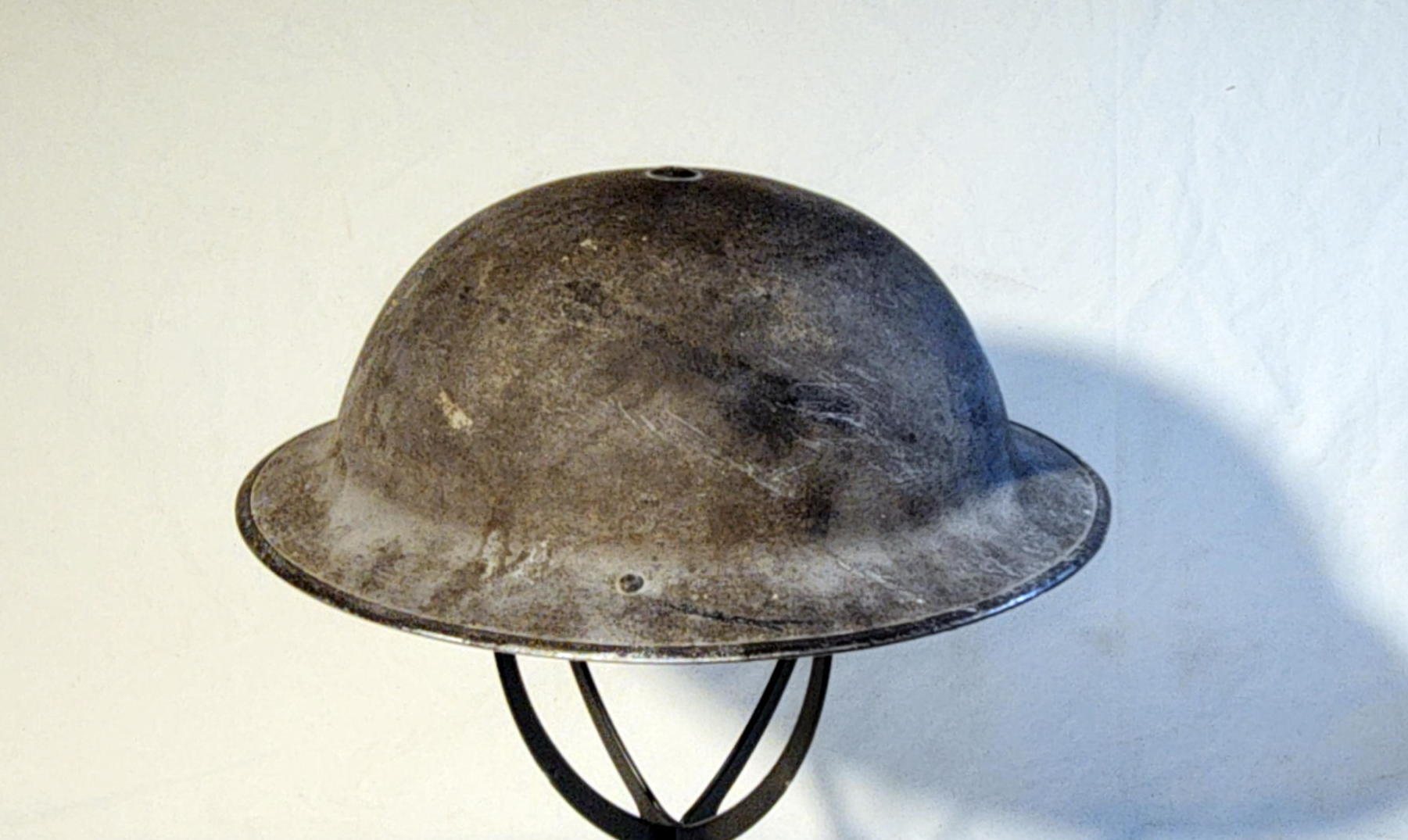
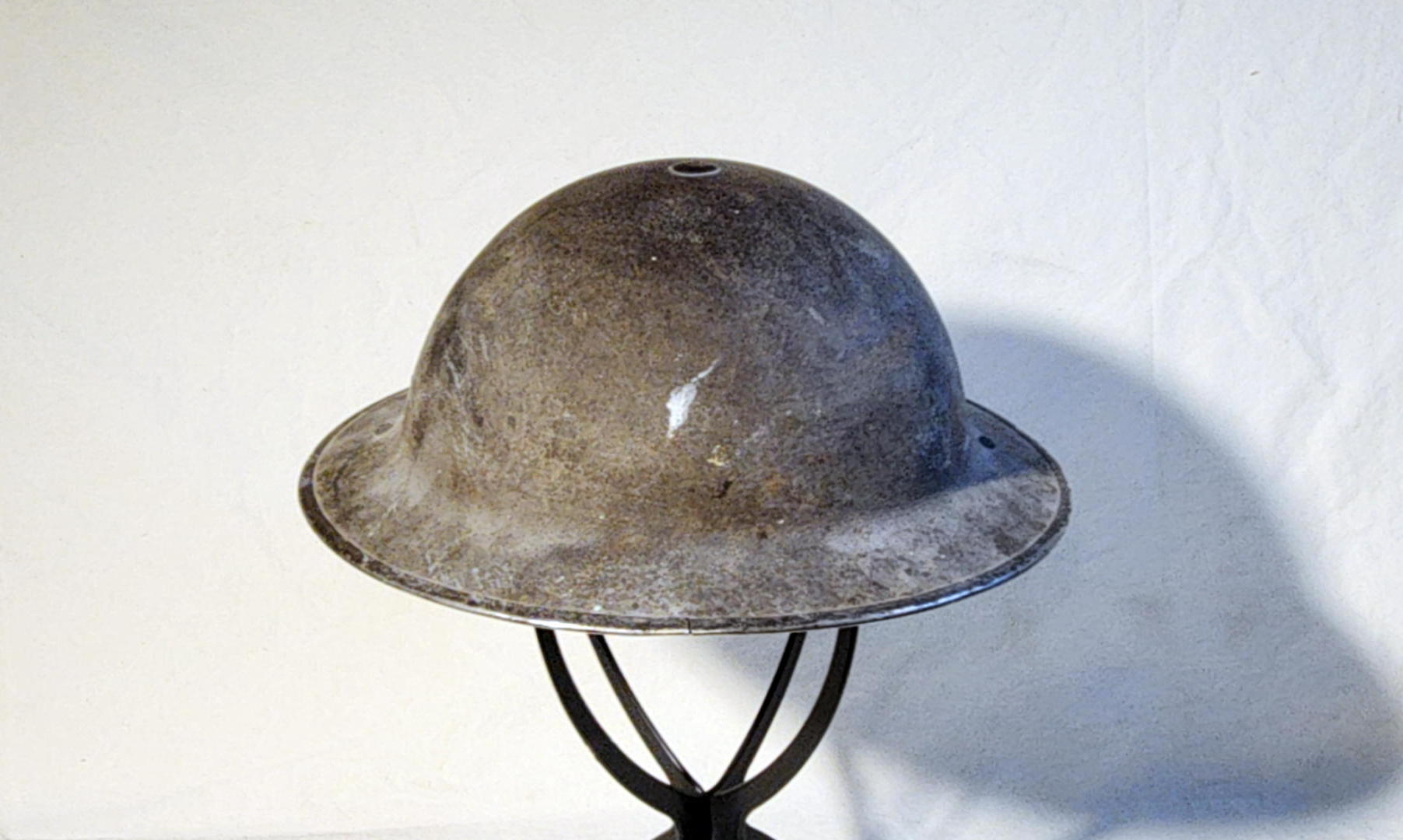
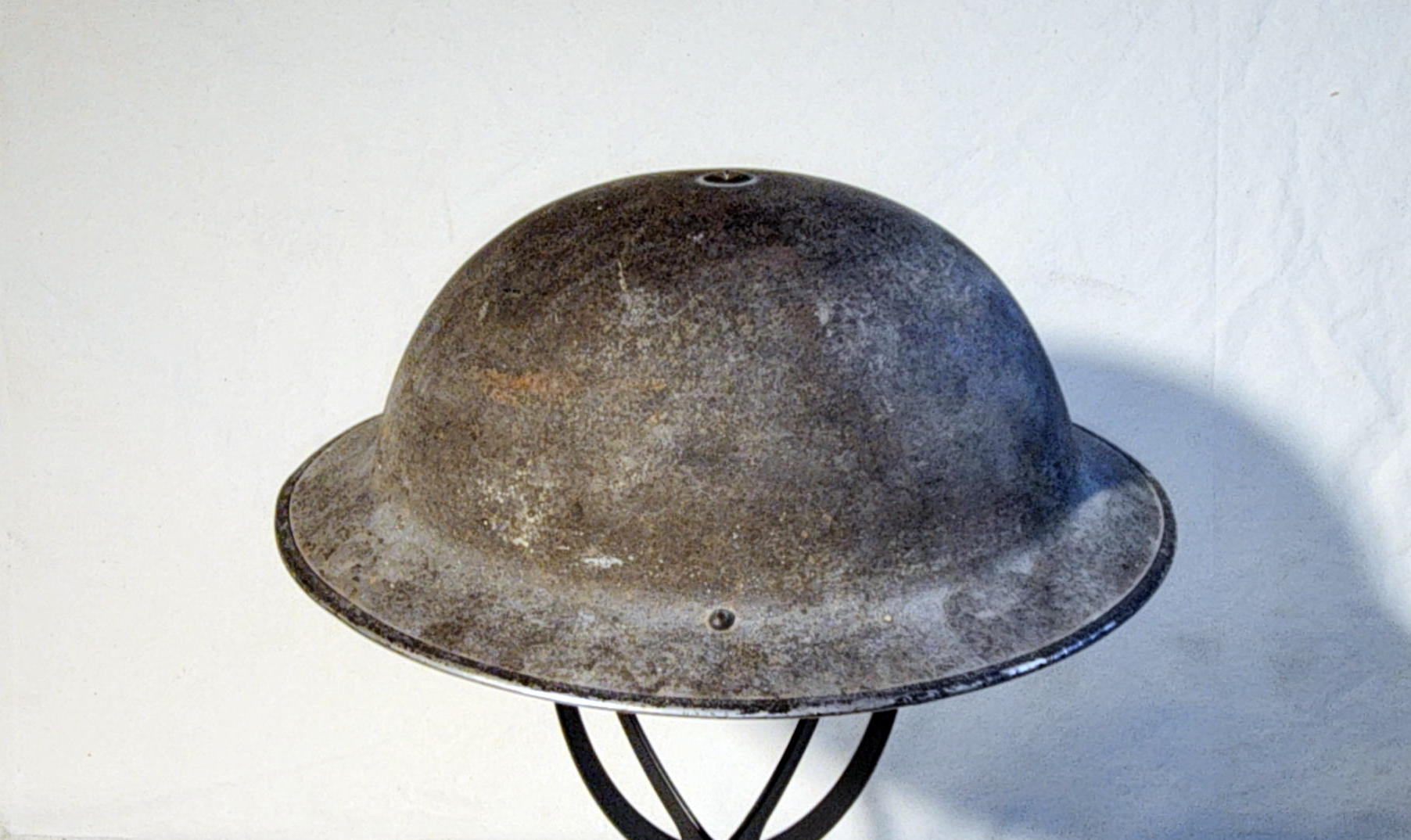
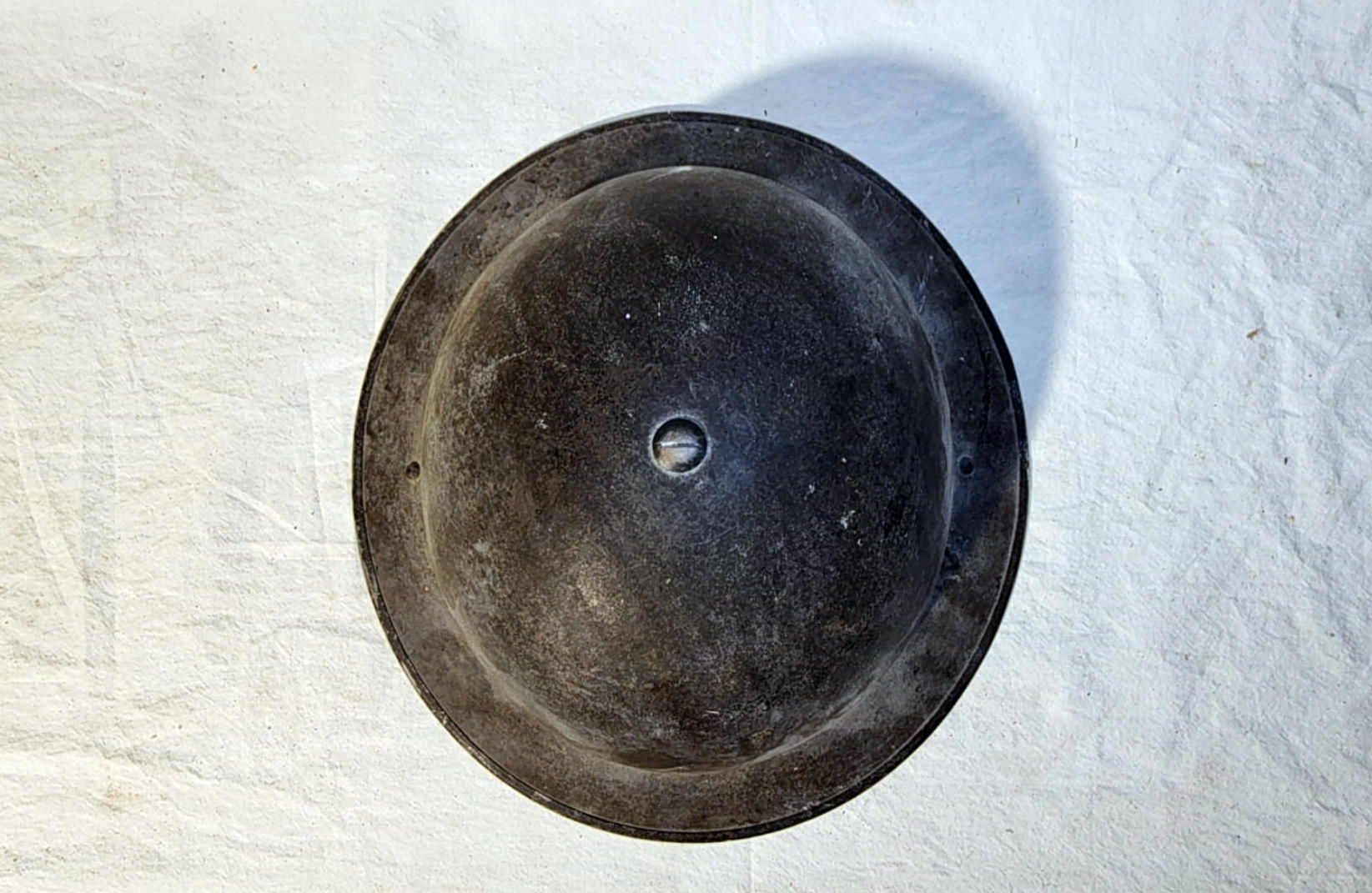
British Army-issue Helmet, Steel, Mark II manufactured by Briggs Motor Bodies Ltd. (BMB), Dagenham, England, in 1941, with a BMB 1941 liner in 6¾ size and surviving dark brown, sand-textured Army finish.
Images
Specifications
| General Information | |
|---|---|
| Type | Helmet, Steel, Mark II |
| Country | Great Britain |
| Branch | British Army |
| Manufacturer | Briggs Motor Bodies Ltd. (BMB) |
| Location | Dagenham, England |
| Year | 1941 |
| Shell Steel | Manganese steel, non-magnetic |
| Finish | Dark brown, sand-textured Army finish |
| Liner | BMB, 1941 |
| Liner Size | 6¾ |
| Liner Designation | Mark I-pattern liner |
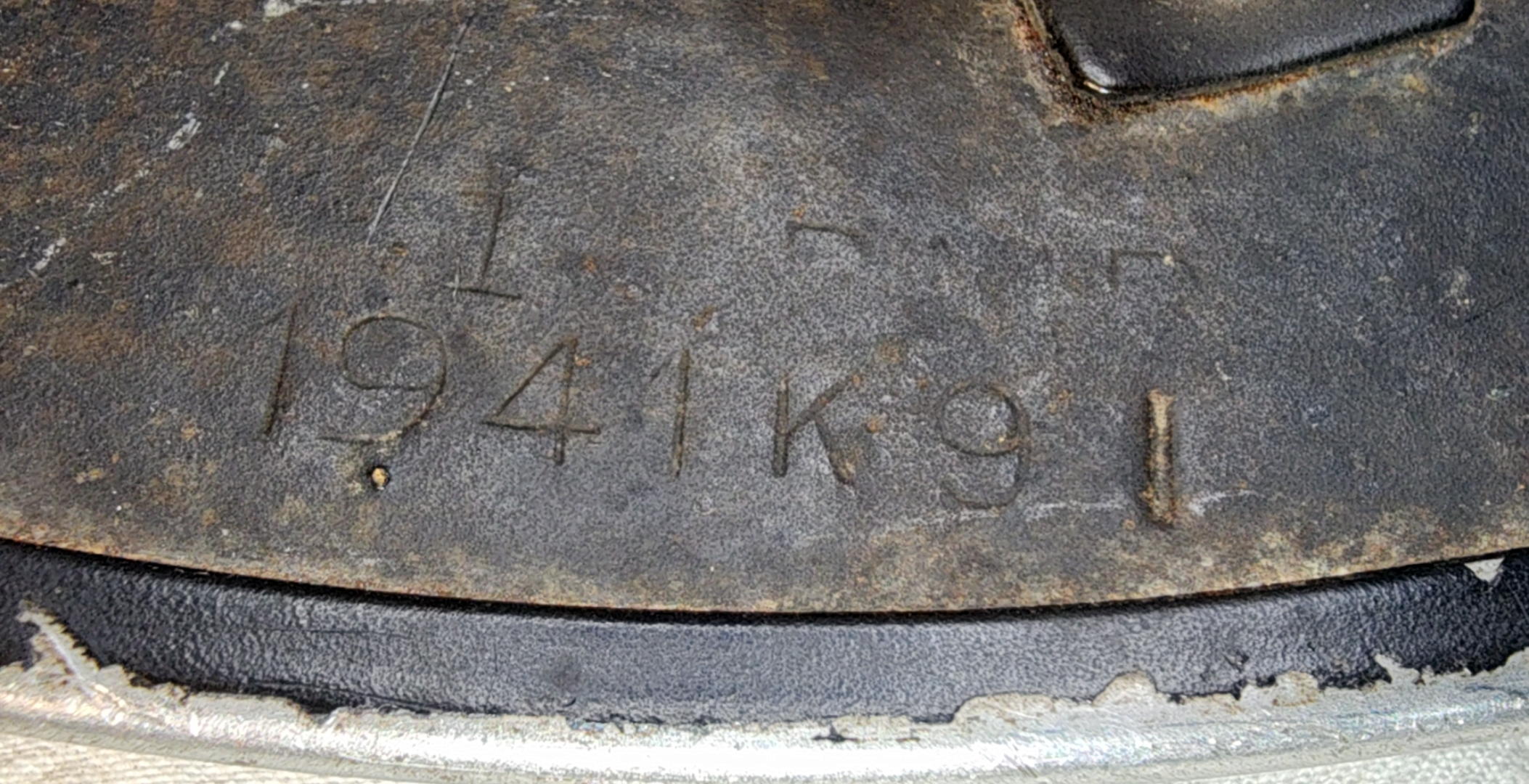
| Shell Marking | “1 BMB 1941 K9 I” as read from the worn stamp |
| Steel Lot | K9 |
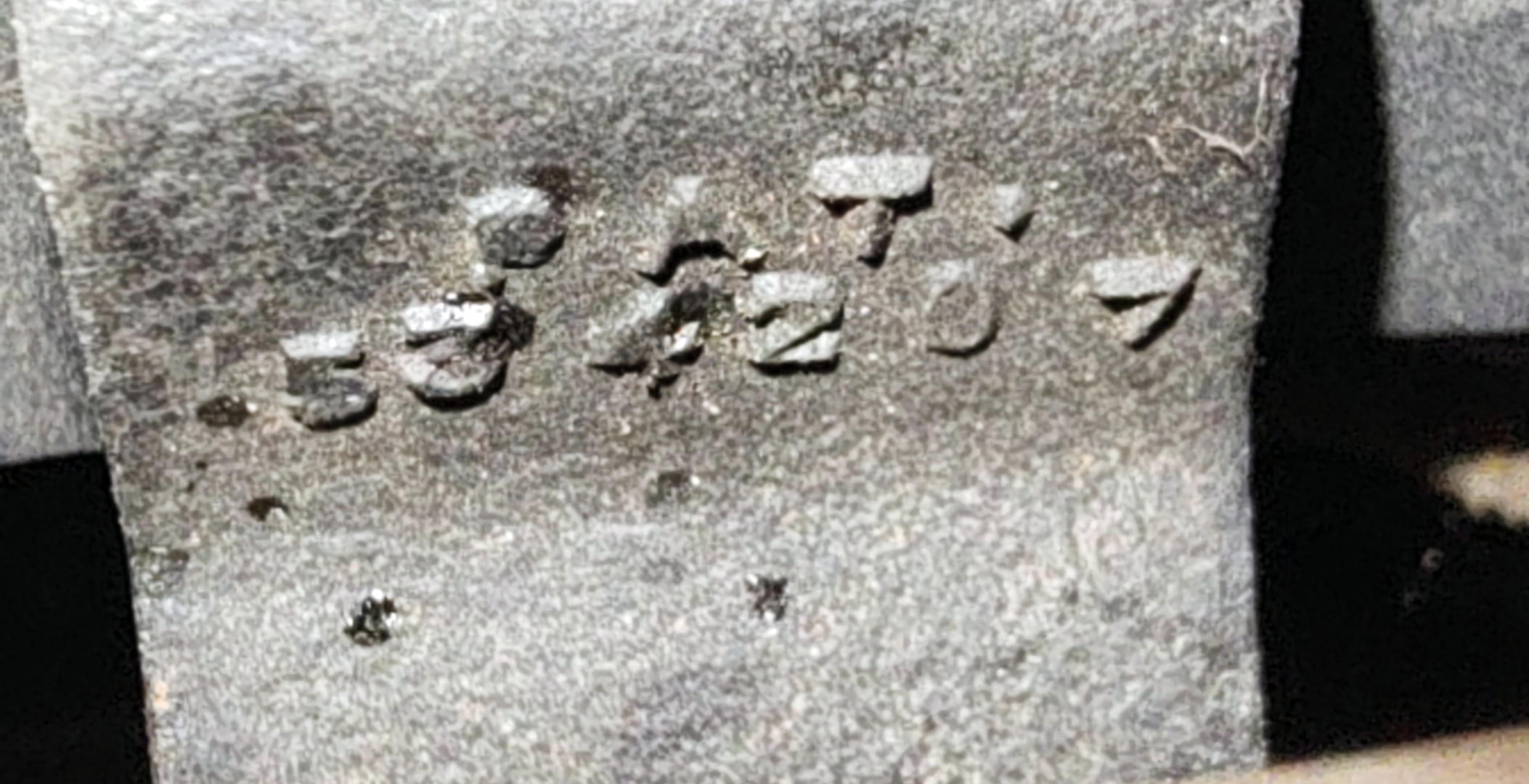
| Liner Patent Marking | PAT 534207 |
| Period | Second World War |
| Restoration | None. Documented as found. |
Identification
This helmet is a British Army-issue Helmet, Steel, Mark II, manufactured by Briggs Motor Bodies Ltd. (BMB) of Dagenham, England, in 1941. The Mark II was Britain's standard Brodie-pattern steel helmet introduced in 1938, with production beginning in 1938 and distribution to the armed forces beginning in 1939.
The shell carries the manufacturer's identification and 1941 date, while the accompanying liner is also marked BMB 1941. The agreement between the shell and liner manufacturer and year provides strong supporting evidence for the documented configuration.
Shell Markings
The interior shell marking is worn but can be read as “1 BMB 1941 K9 I.” The BMB marking identifies Briggs Motor Bodies Ltd., Dagenham, England. The 1941 date identifies the year associated with the shell marking, while K9 is treated here as the steel-lot designation documented in British Mk II shell markings.
Because the stamp is worn, the individual characters are recorded as read from the surviving impression rather than presented as a reconstructed or restored marking.
Liner
The liner is marked 6¾ / BMB / I / 1941, with the 6¾ size marking repeated on another section of the liner frame. The BMB marking identifies Briggs Motor Bodies, while the 1941 date corresponds to the shell's production year.
The Roman I on the liner identifies the liner pattern and does not by itself make the shell a Mark I helmet. Mark I-pattern liners were used with Mark II shells, making the 1941 BMB liner compatible with this Mk II shell.
Liner Construction
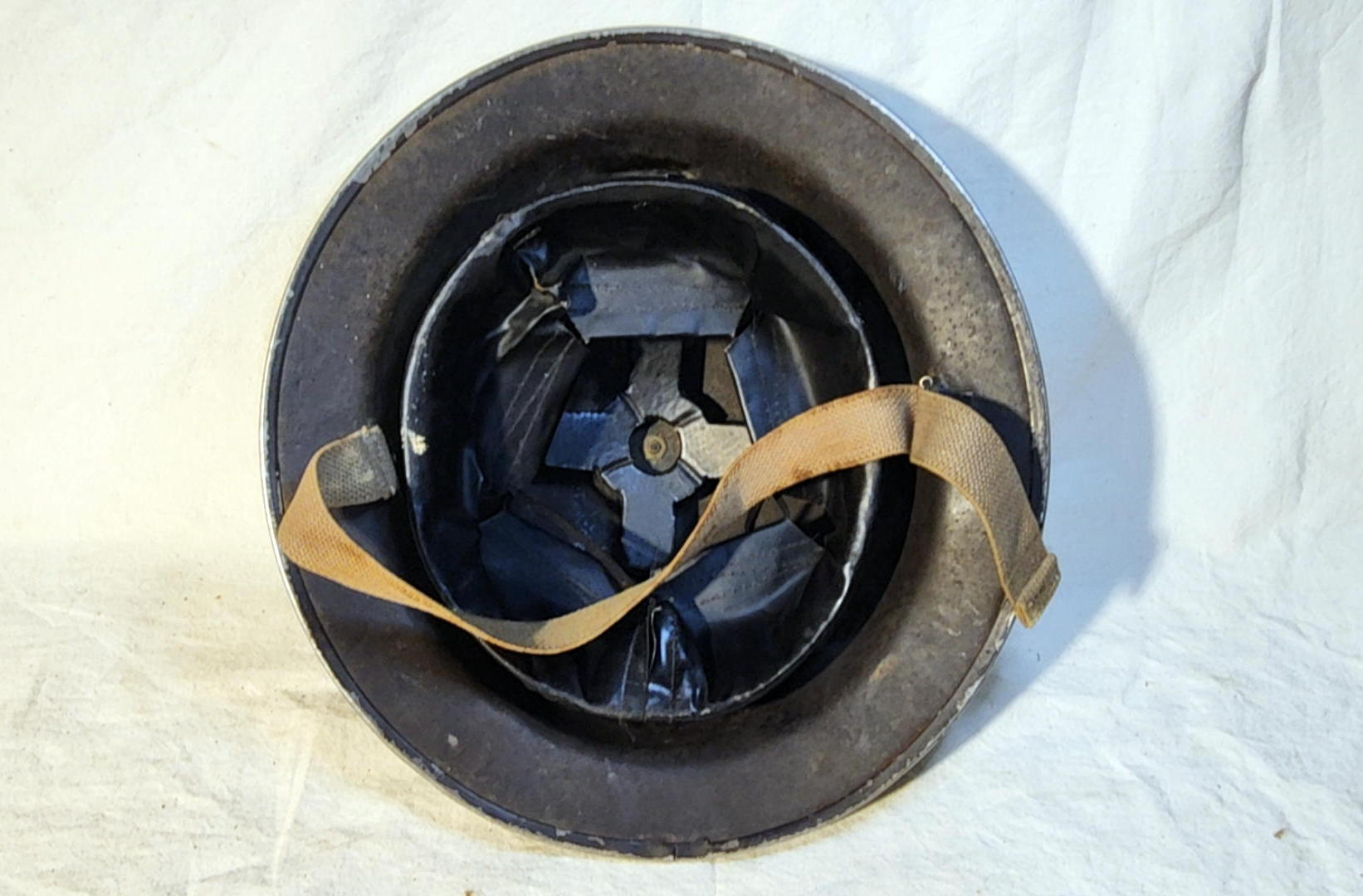
The liner retains its black vulcanized-fiber suspension frame, oilcloth-type liner material, central cruciform rubber pad, and molded rubber suspension buffers. The liner is also marked PAT 534207 on the rubber buffers.
Paint and Finish
The helmet retains a dark brown, sand-textured Army finish. The documented British Army finish progression places dark brown sand-textured finishes in the 1941–1944 period. The surviving finish on this example is consistent with that wartime period.
Shell Construction
The Mark II shell was manufactured from non-magnetic manganese steel and fitted with a non-magnetic stainless-steel rim. A magnet test performed on this helmet produced no attraction on the shell, rim, central liner fastener, liner hardware, chinstrap fittings, or rivets, providing useful physical corroboration of the non-magnetic construction.
The BMB shell also has the documented two-point weld closure associated with BMB Mk II shells.
No. 2 Identification
No drilled grading holes are present in the brim. British Mk II No. 2 helmets were identified by drilled perforations corresponding to their quality classification. The absence of these holes is consistent with a standard Army Mk II rather than a drilled No. 2 helmet.
Historical Background
The British Mk II evolved from the World War I Brodie helmet and was developed as an improved version of the Mark I. New Mk II shells began production in 1938, with the first helmets being distributed to the armed forces in 1939. The design retained the familiar broad-brimmed Brodie profile while introducing a new shell, stainless-steel rim, revised chinstrap fittings, and improved liner system.
The Mk II remained in British service well beyond the Second World War, although it was officially superseded by the Mk III beginning in 1943. Mk II production nevertheless continued through the end of 1944.
1941 Production Context
By 1941 the British Army was producing the Mk II in very large numbers. World War Helmets estimates approximately 12 million British Mk II helmets were produced between 1939 and 1944, excluding Commonwealth production.
Beginning in May 1940, shell manufacturers were asked to supply complete helmets and obtain necessary components from subcontractors. The matching BMB manufacturer and 1941 date on this shell and liner provide useful evidence for the documented configuration of this example.
Service History
The helmet's physical characteristics identify it as a British Army-issue Mk II, but its individual service history is unknown. There is no surviving unit marking or provenance establishing a particular regiment, formation, theater, or campaign.
The helmet was manufactured for British Army service during the Second World War.
Condition
The helmet retains a substantial amount of its original dark brown textured finish, although the surface shows expected wear, aging, and areas of corrosion associated with an approximately 85-year-old steel helmet.
The liner remains assembled and intact, with visible age and wear to the liner material and suspension system. No attempt has been made to repaint or substantially restore the helmet.
Identification Summary
British Army-issue Helmet, Steel, Mark II
- Manufacturer: Briggs Motor Bodies Ltd. (BMB), Dagenham, England
- Year: 1941
- Shell: Non-magnetic manganese steel
- Steel Lot: K9
- Finish: Dark brown sand-textured Army finish
- Liner: BMB, 1941, 6¾, Mark I-pattern
- Liner Patent Marking: PAT 534207
The identification is supported by the convergence of the BMB manufacturer marking, 1941 shell date, steel-lot marking, non-magnetic construction, Army-period finish, absence of No. 2 identification holes, BMB 1941 liner, 6¾ size marking, and period liner construction.
Taken together, these characteristics support identification as a 1941 British Army-issue Mk II helmet manufactured by Briggs Motor Bodies Ltd. The helmet's specific wartime service history remains undocumented.
Provenance
Relics & Rifles collection. Individual service provenance is undocumented. No restoration performed.