British Pattern 1937 Utility Pouch Chest Rig & Associated Webbing (1940–1942)
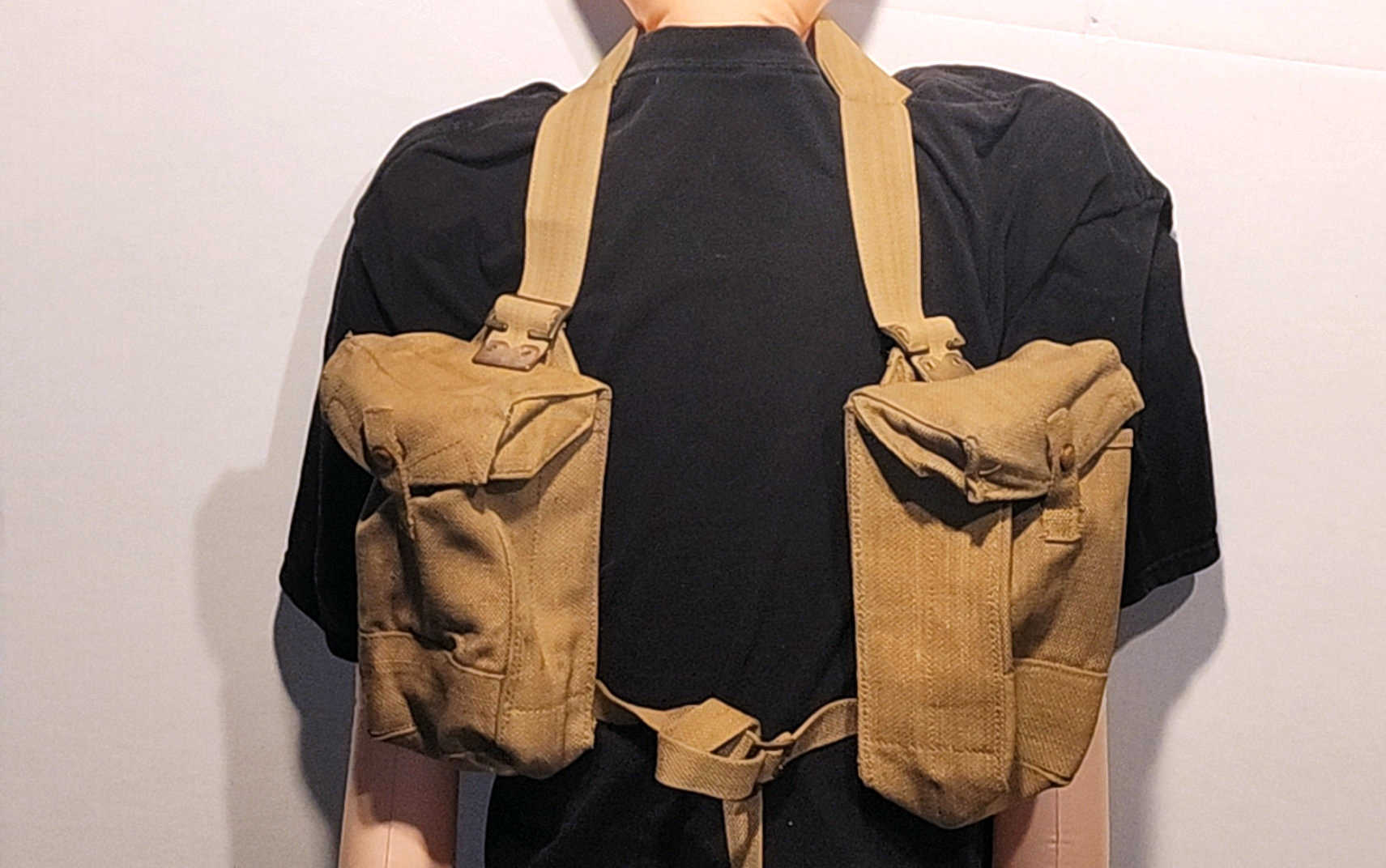
Two-utility-pouch chest rig with yoke and built-in waist strap, featuring Mills Equipment Company (M.E.Co) dated components from 1940–1941 and associated Pattern 1937 webbing examples from 1941–1942.
Images
Specifications
| General Information | |
|---|---|
| Item Type | Pattern 1937 Utility Pouch Chest Rig (two utility pouches with yoke and built-in waist strap) |
| Country | United Kingdom |
| Primary Maker | Mills Equipment Company (M.E.Co) |
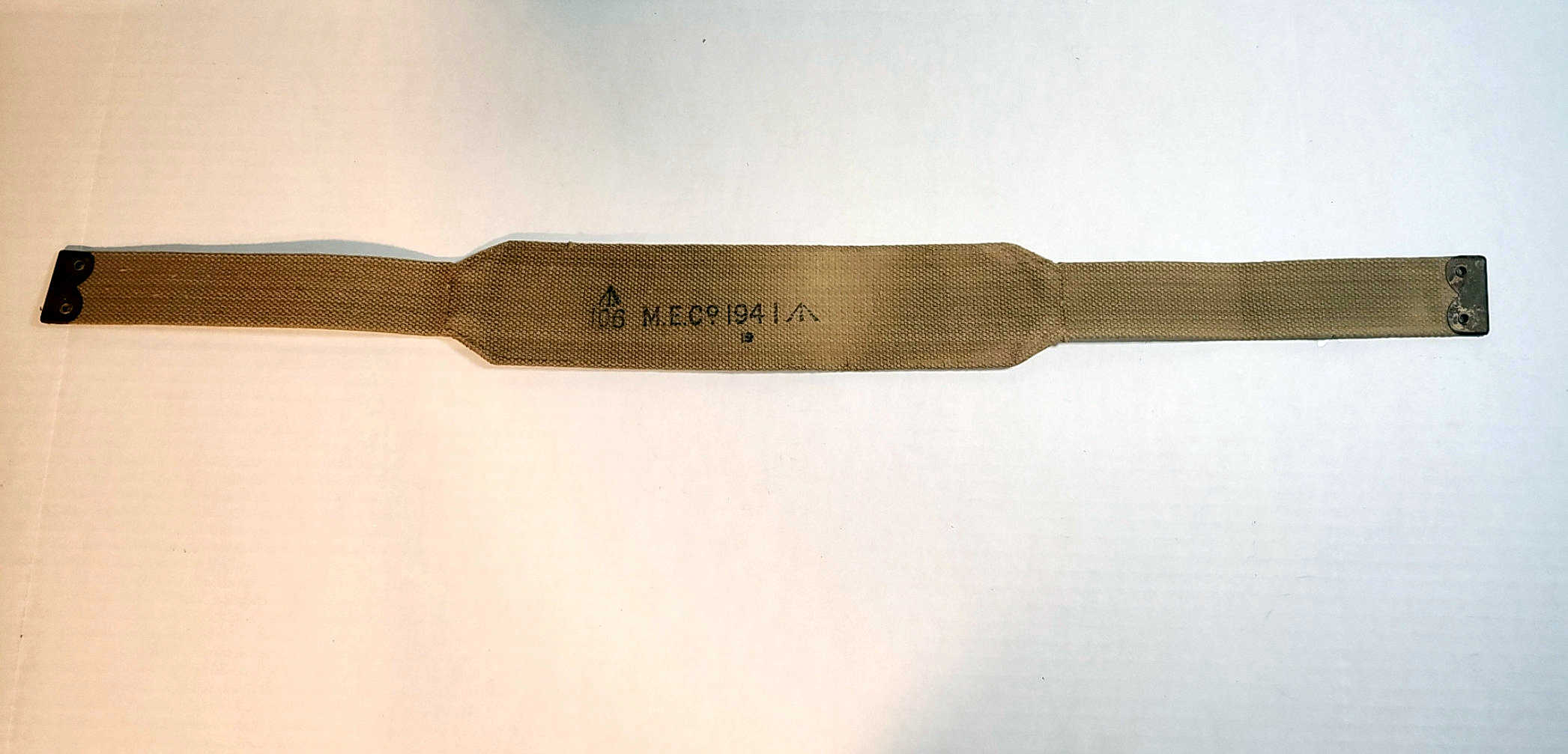
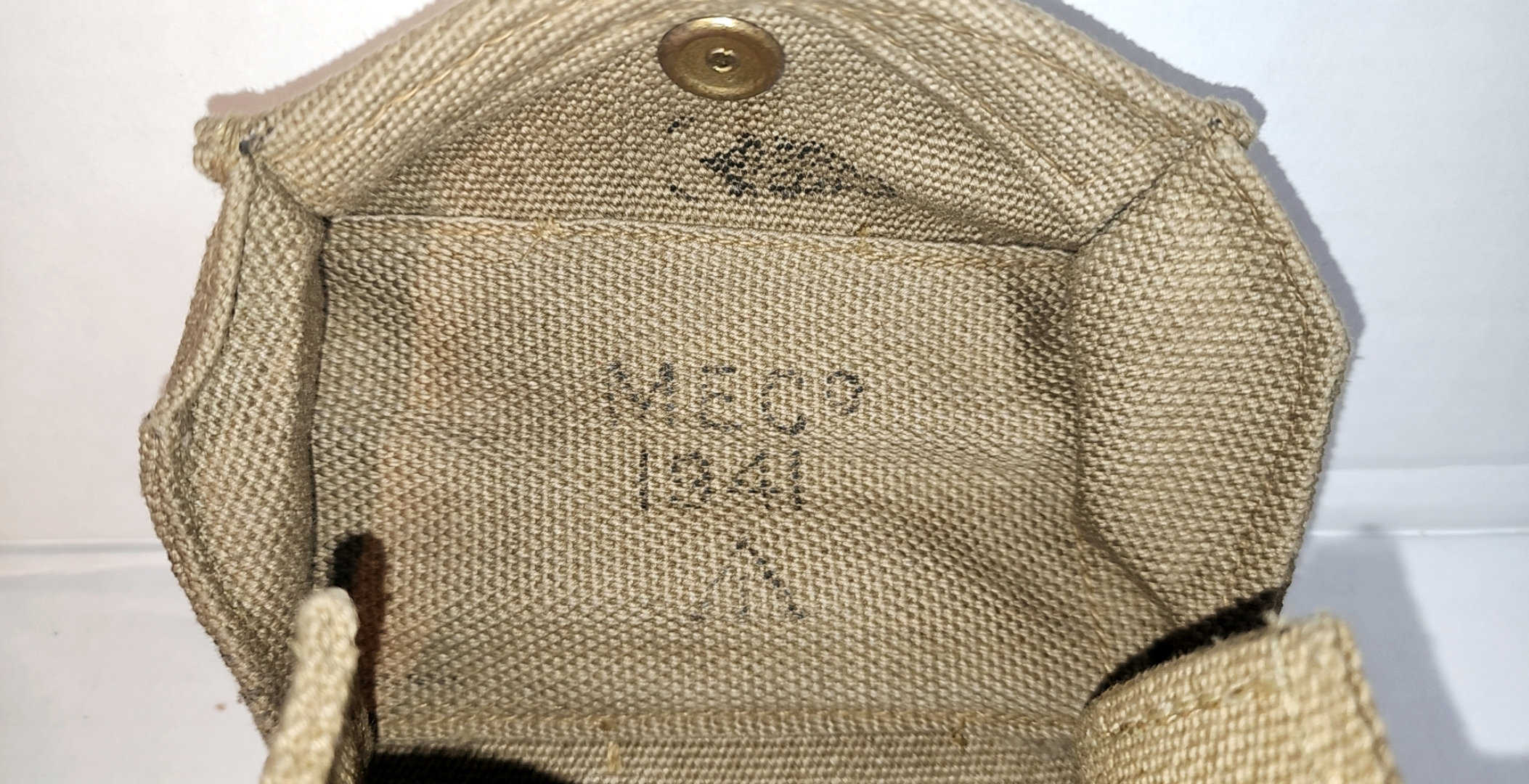
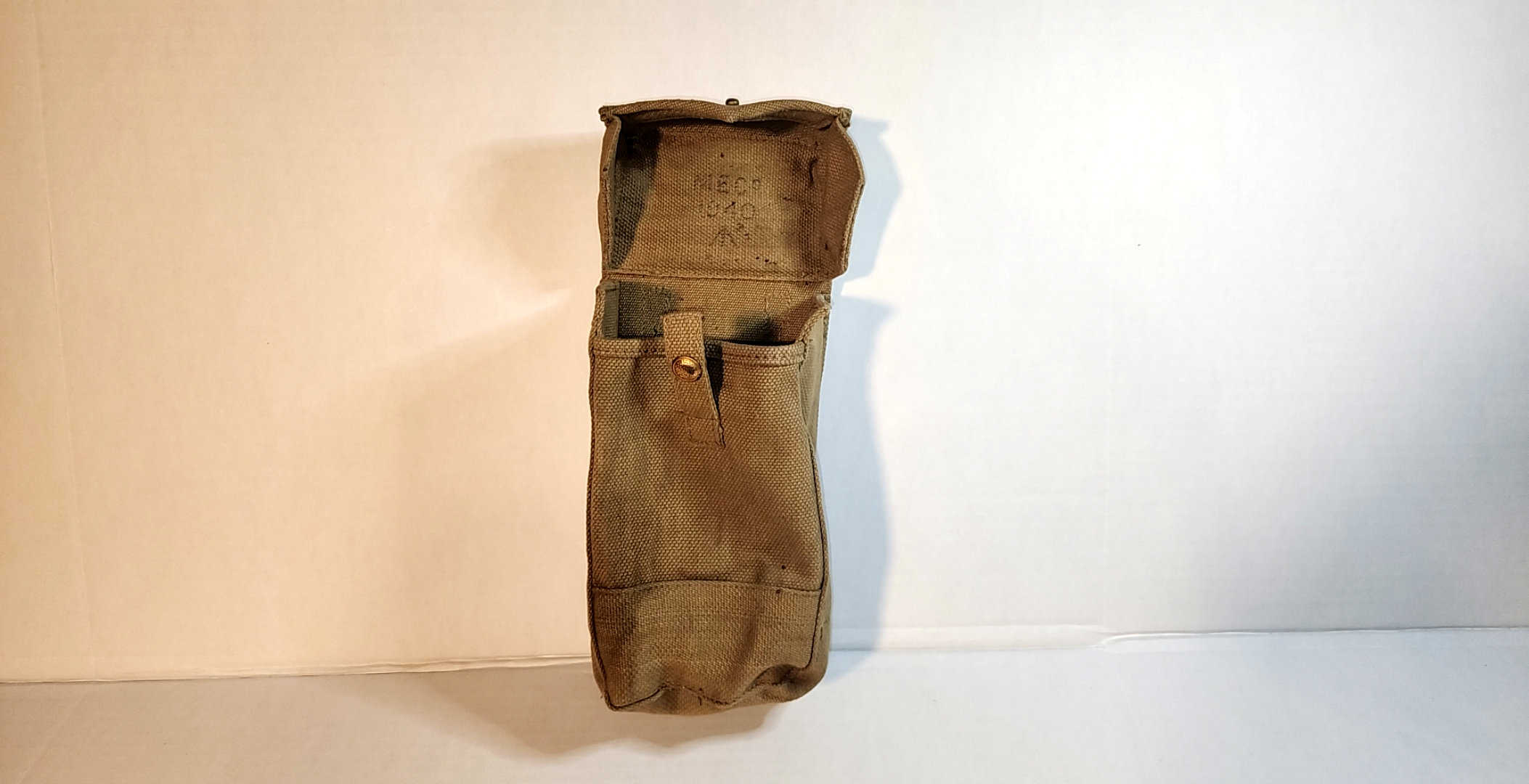
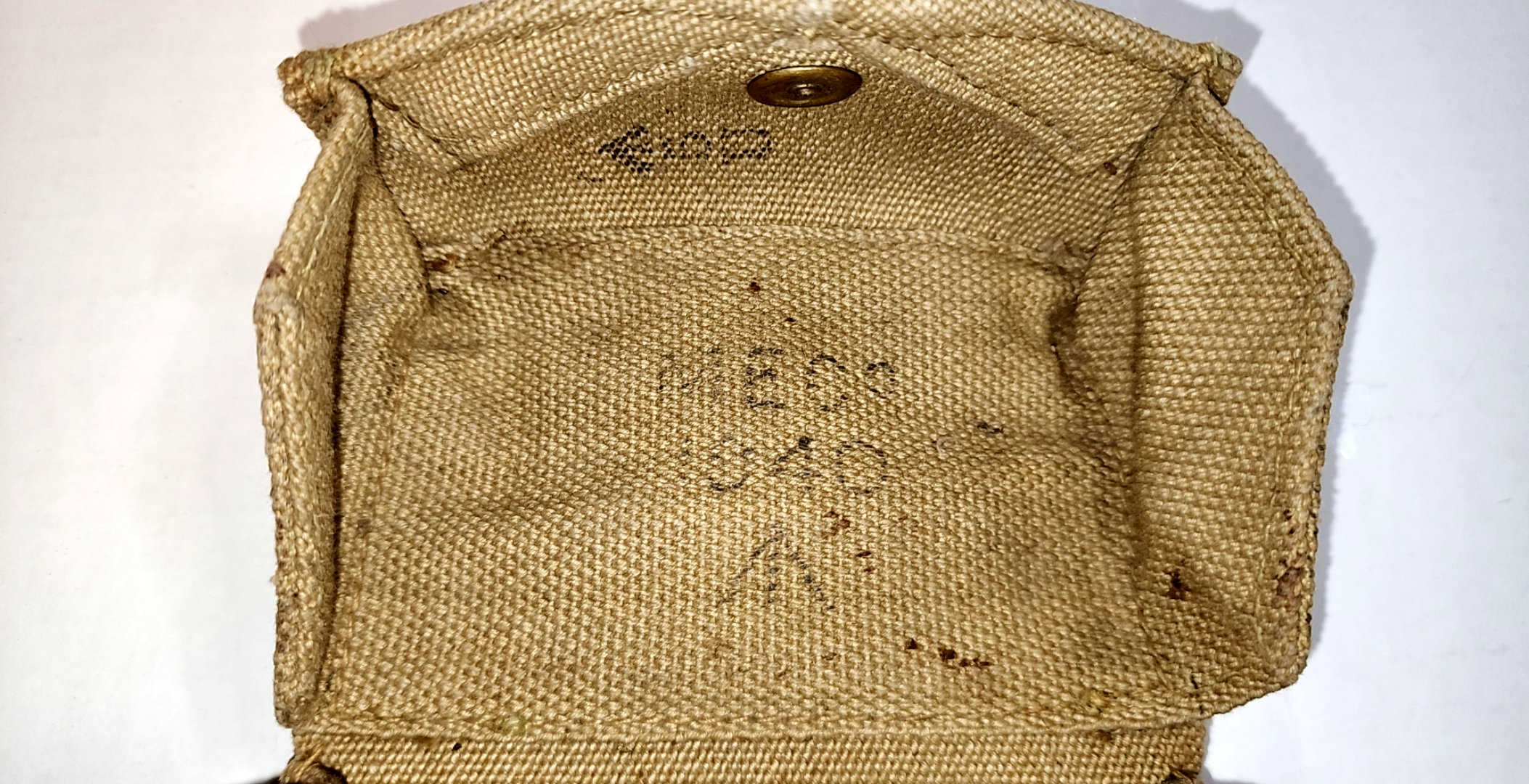
| Dated Components | Utility pouches dated 1940 and 1941; yoke dated 1941 |
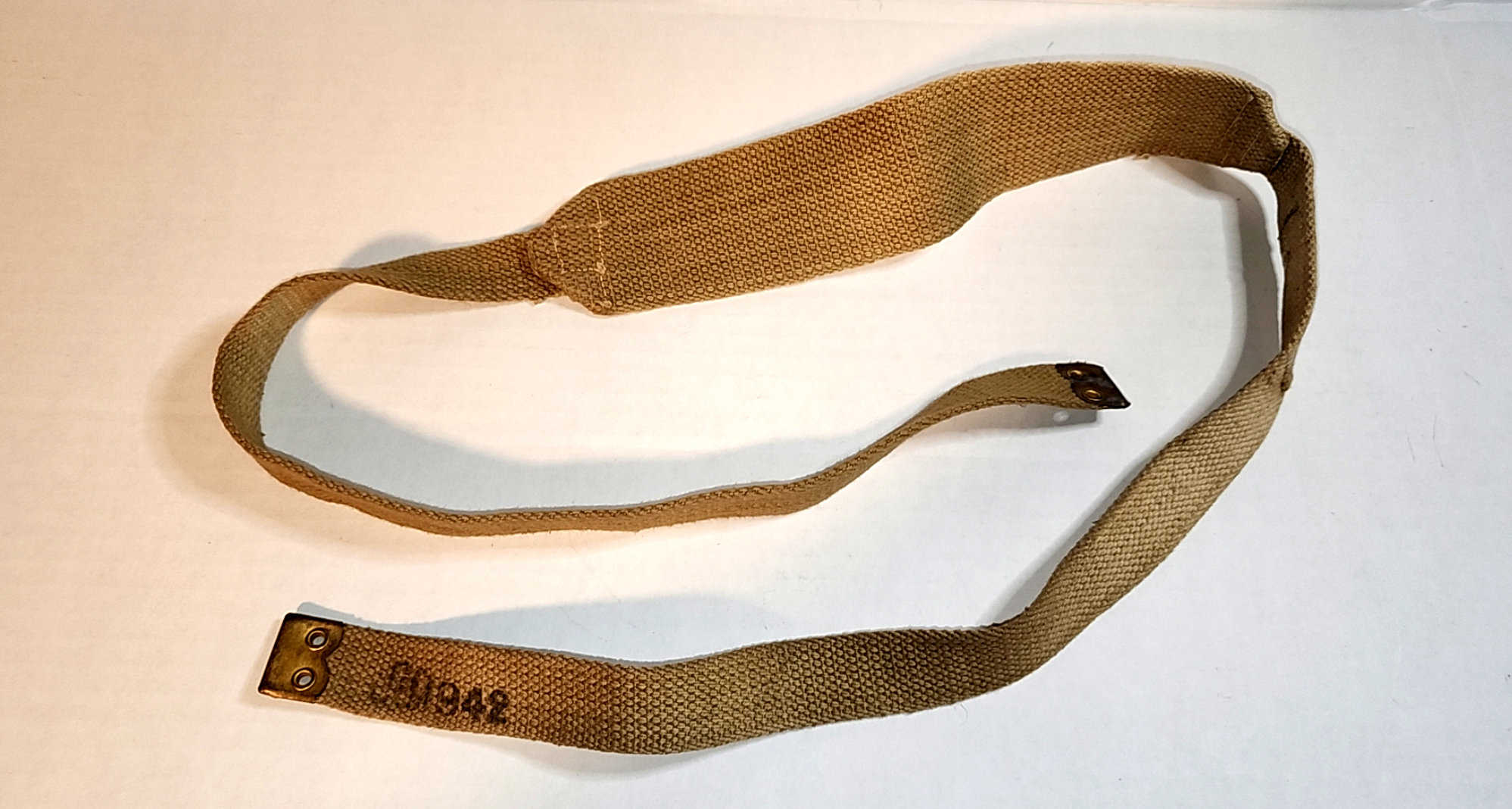
| Associated Items | Brace marked “J & A 1942”; Utility pouch “Z.L.&T. Ltd 1941” with cartridge loops |
| Materials | Khaki cotton webbing with brass fittings |
| Stores References | A1/AA 1515, A1/AA 1516, A1/AA 1990 |
Description & Construction – Utility Pouch Chest Rig
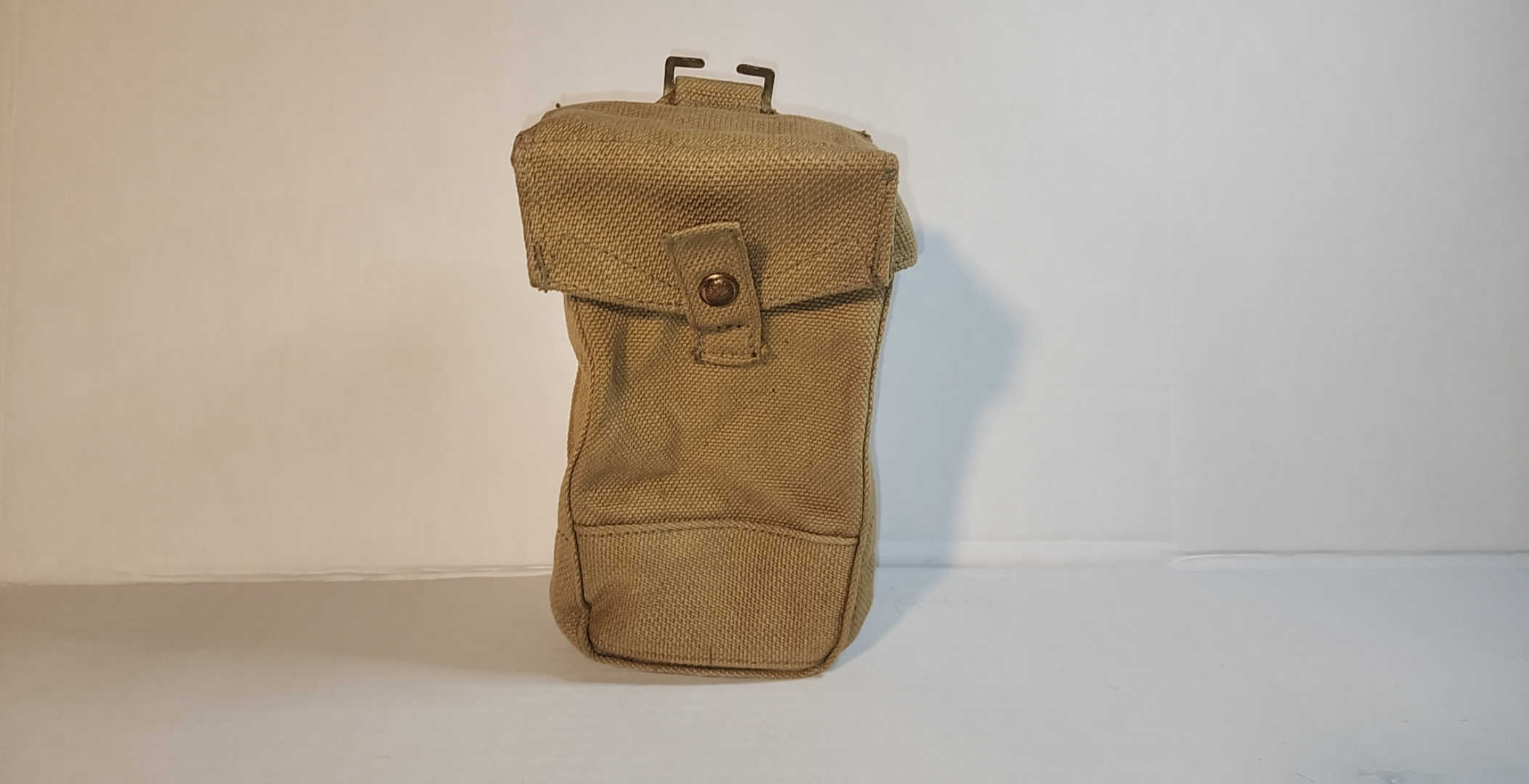
The chest rig consists of two oversized utility pouches carried high on the torso, linked by a short webbing yoke over the shoulders and tied together around the waist. Each pouch is constructed from tightly woven khaki cotton webbing with a reinforced lower band and a single main compartment. The front flap closes with a short web tab and brass press-stud. Inside, the capacity is greater than a standard Pattern 1937 basic ammunition pouch.
The distinguishing features of the utility pouches lie on the rear faces. At the top of each pouch is a 1½-inch three-bar buckle sewn to a broad chape. These larger buckles accept the dedicated yoke straps. At the bottom rear of the front pouch a 1-inch waist strap is stitched permanently in place, terminating in a 1-inch buckle that points to the wearer’s right when viewed from behind. The rear pouch omits the strap and instead has a wide web fairlead. The waist strap from the front pouch passes through this loop and back to the buckle, forming the waist girdle.
The yoke is a short webbing strap with a flared centre section to sit comfortably at the back of the neck. Brass end plates are fitted at each end for attachment to the 1½-inch buckles on the tops of the pouches, taking most of the weight onto the wearer’s shoulders. When assembled, the rig can be worn over either Pattern 1908 or Pattern 1937 web equipment to supplement existing ammunition carrying capacity.
Intended Loads & Tactical Role
According to contemporary equipment tables and later research, each utility pouch was designed to carry greater loads than the standard basic pouch. Typical contents included:
- Stripper clips of .303 rifle ammunition for Short Magazine Lee–Enfield rifles.
- Three Bren light machine gun magazines (where the basic pouch generally carried two).
- Ammunition and accessories for the Boys anti-tank rifle and the 2-inch mortar.
- Alternatively, a Mark VI water bottle or other bulky stores.
The set was introduced as an economical way to provide additional ammunition carriage without redesigning the whole webbing system. The Lists of Changes entry notes that the utility pouches could be worn over either the Pattern 1908 or Pattern 1937 equipment, reflecting their intended role as a bolt-on supplement for specialist teams rather than a replacement for standard pouches.
Associated Items – Additional Makers and Components
In addition to the M.E.Co chest rig, the collection includes two closely related webbing items that help illustrate the broader ecosystem of British Second World War equipment:
- A webbing strap marked “J & A 1942”, identified as a Brace, W.E. Patt. ’37 (Stores Ref. A1/AA 0354). Braces of this pattern were general-purpose shoulder straps used with Pattern 1937 webbing. They could be employed in numerous configurations: supporting the standard belt and basic pouches, used in Bren gun set-ups, attached to a haversack or water bottle carrier, paired with a supporting strap or yoke, or used in conjunction with a pistol holster. The maker’s code “J & A” stands for Jones & Alexander, a wartime webbing contractor.
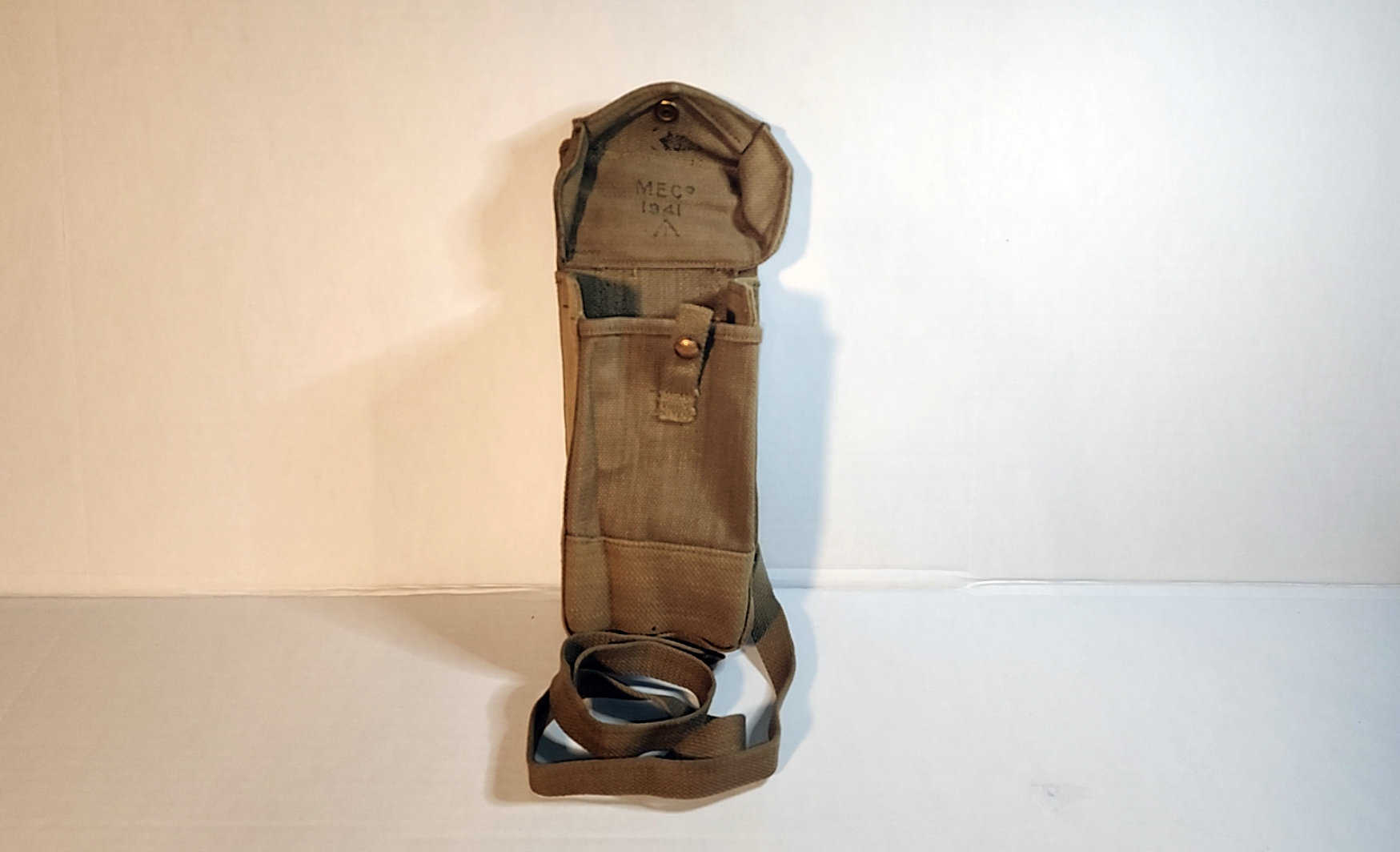
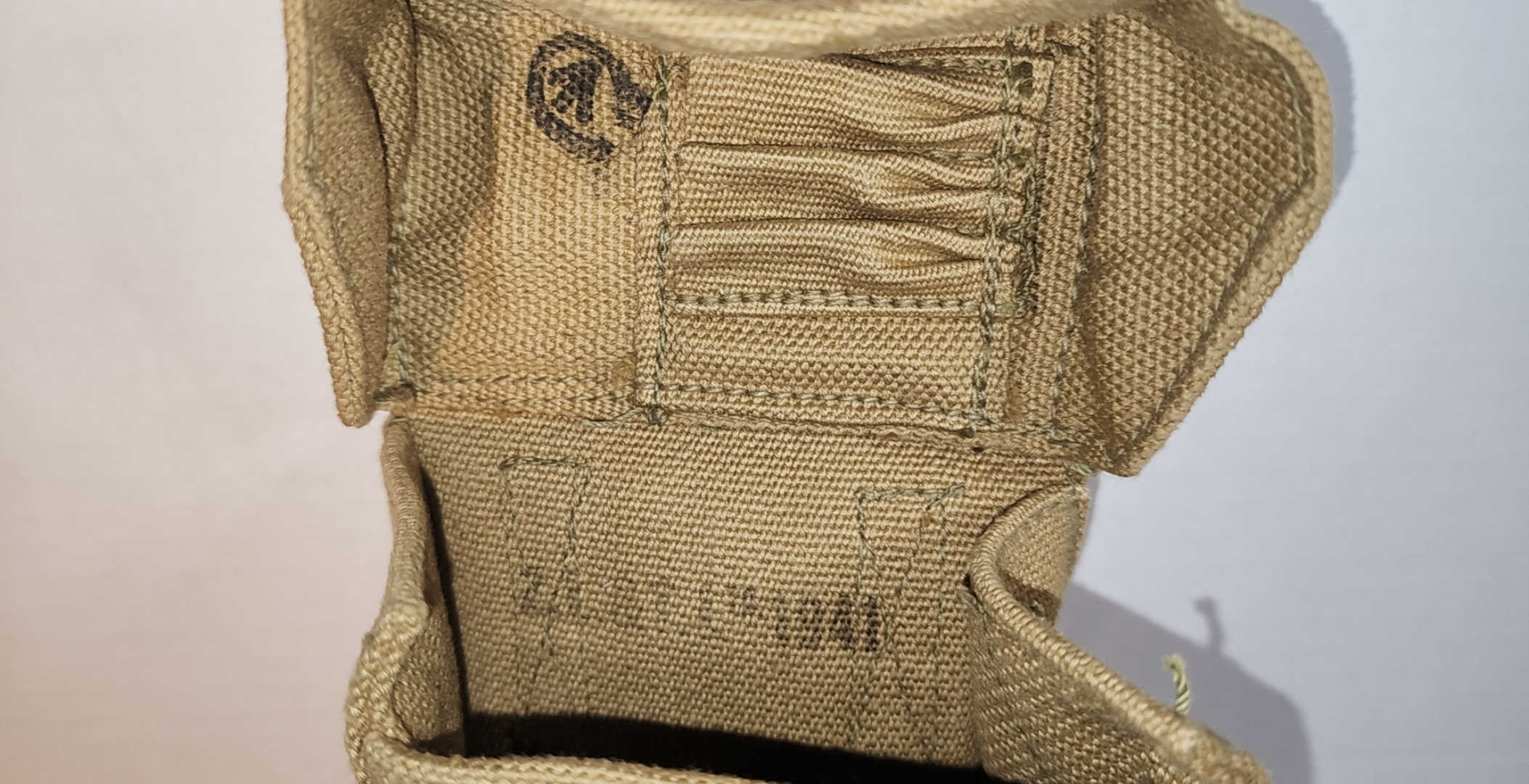
- A separate utility pouch by Z.L.&T. Ltd, dated 1941. Under the lid are stitched cartridge loops, representing an early pattern of the utility pouch supplied with cartridge loops. The interior stamp reads “Z.L.&T. Ltd 1941” beneath a War Department acceptance mark. Z.L.&T. Ltd is Zephyr Loom & Textile Co. Ltd, another contractor that contributed to Pattern 1937 webbing production.
Reference Note: Stores References (A1/AA Numbers)
British Pattern 1937 web equipment is often identified by “Stores References,” typically shown as codes such as A1/AA ####. These are War Department catalog identifiers used for supply, ordering, and standardization. In period documents and post-war lists, the Stores Reference ties a specific pattern of equipment to its official entry, regardless of which contractor produced the item or which date stamp appears on the webbing.
In practice, collectors use Stores References alongside maker/date stamps (for example, M.E.Co 1940, M.E.Co 1941, J & A 1942) to confirm the intended pattern, compare variations, and document correct configurations.
Collector Notes
- Mixed dates (1940 and 1941 pouches with a 1941 yoke) reflect normal wartime interchange and represent a realistic in-service combination.
- The included Jones & Alexander brace and Z.L.&T. Ltd utility pouch show how multiple contractors contributed to the Pattern 1937 ecosystem.