U.S. Rifle, Cal. .30 M1 (Springfield Armory No. 328660)
U.S. Rifle, Cal. .30 M1 (Springfield Armory No. 328660)
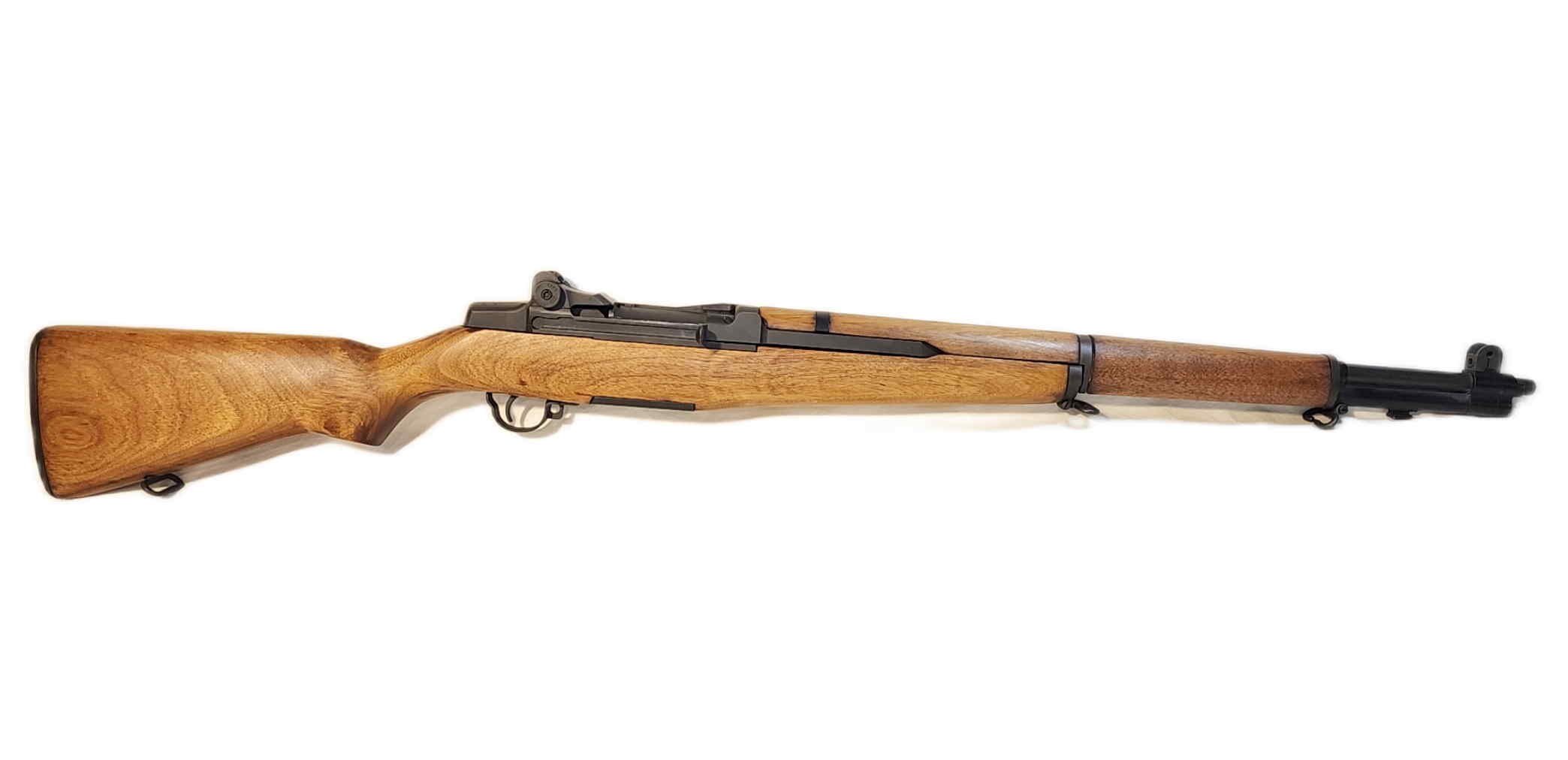
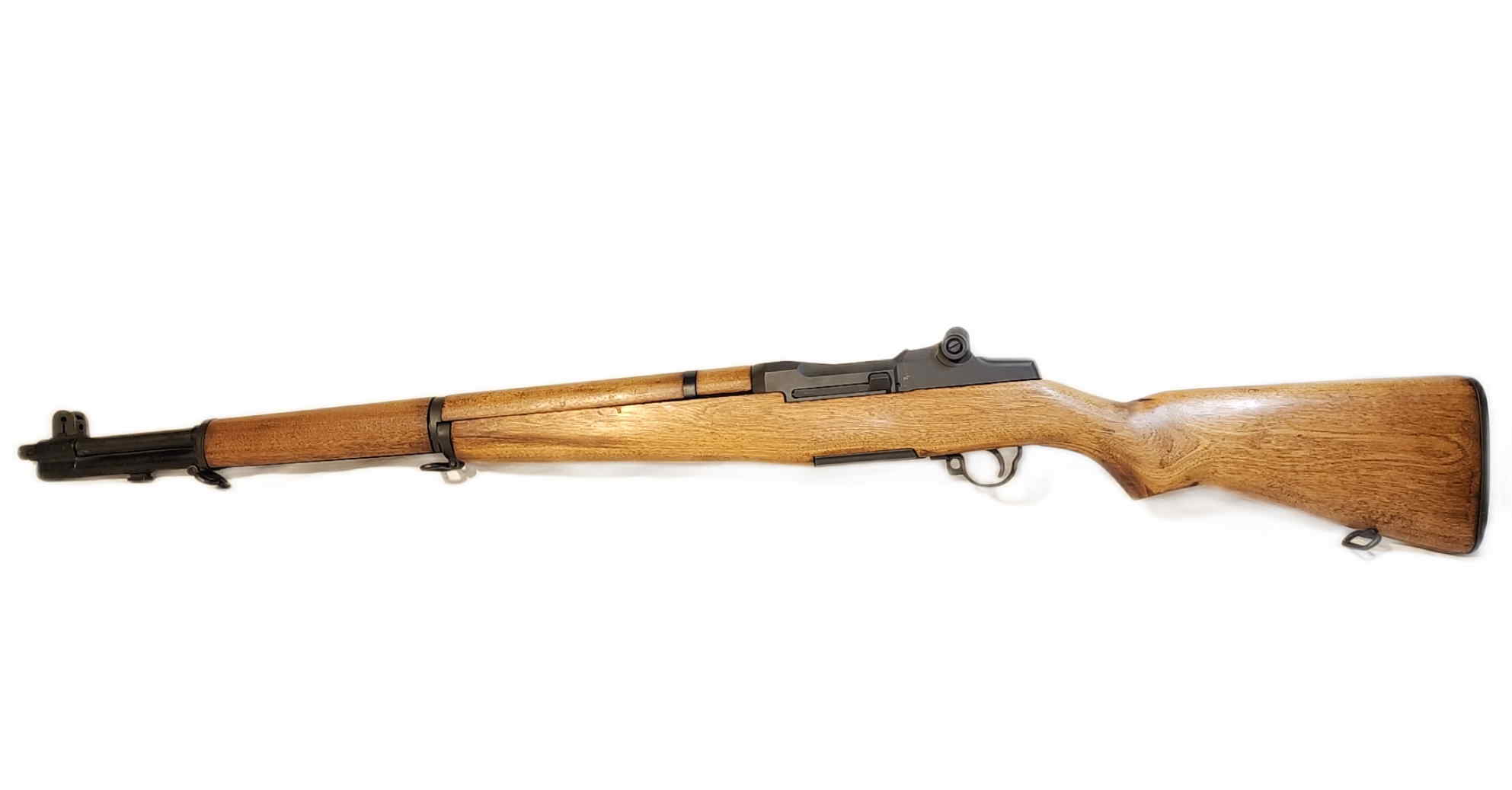
Springfield Armory M1 Garand built on receiver no. 328660, manufactured in September 1941 and later rebuilt with a Springfield Armory replacement barrel dated May 1966, a later postwar operating rod, and several desirable early Springfield components.
Images
Specifications
| General Information | |
|---|---|
| Country | United States |
| Manufacturer | Springfield Armory |
| Model | U.S. Rifle, Cal. .30, M1 (M1 Garand) |
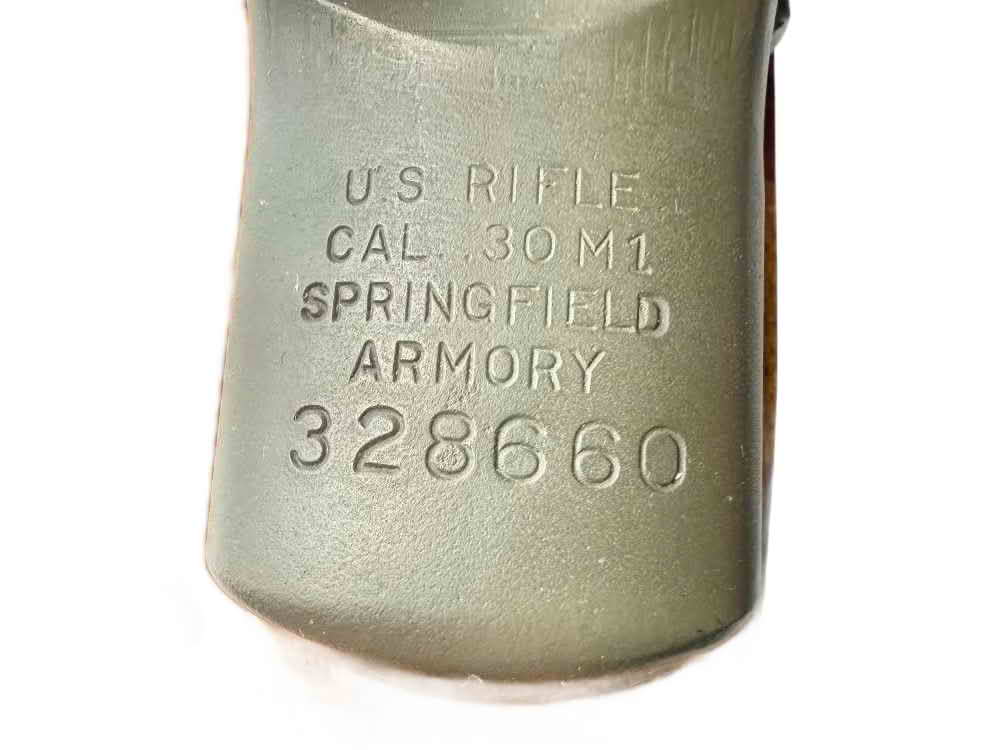
| Receiver Serial Number | 328660 |
| Receiver Production | September 1941 |
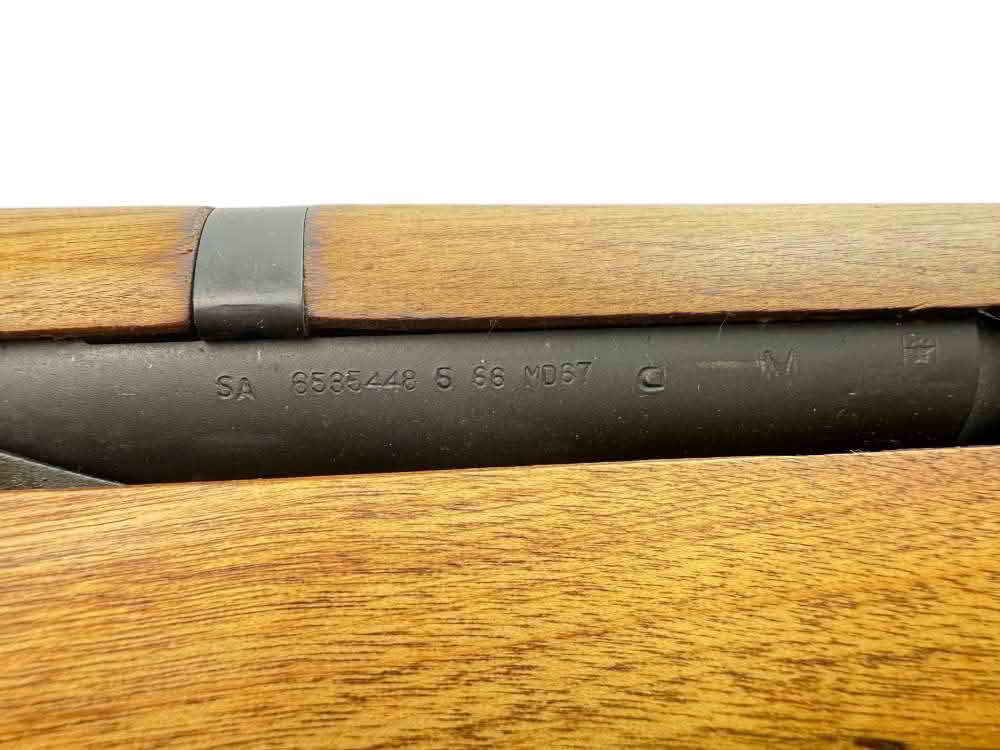
| Barrel | Springfield Armory replacement barrel, marked SA 6535448 5 66 MD67, dated May 1966 |
| Caliber | .30-06 Springfield |
| Action | Gas-operated semi-automatic rifle |
| Configuration | Authentic long-service U.S. arsenal rebuild centered on an early Springfield receiver |
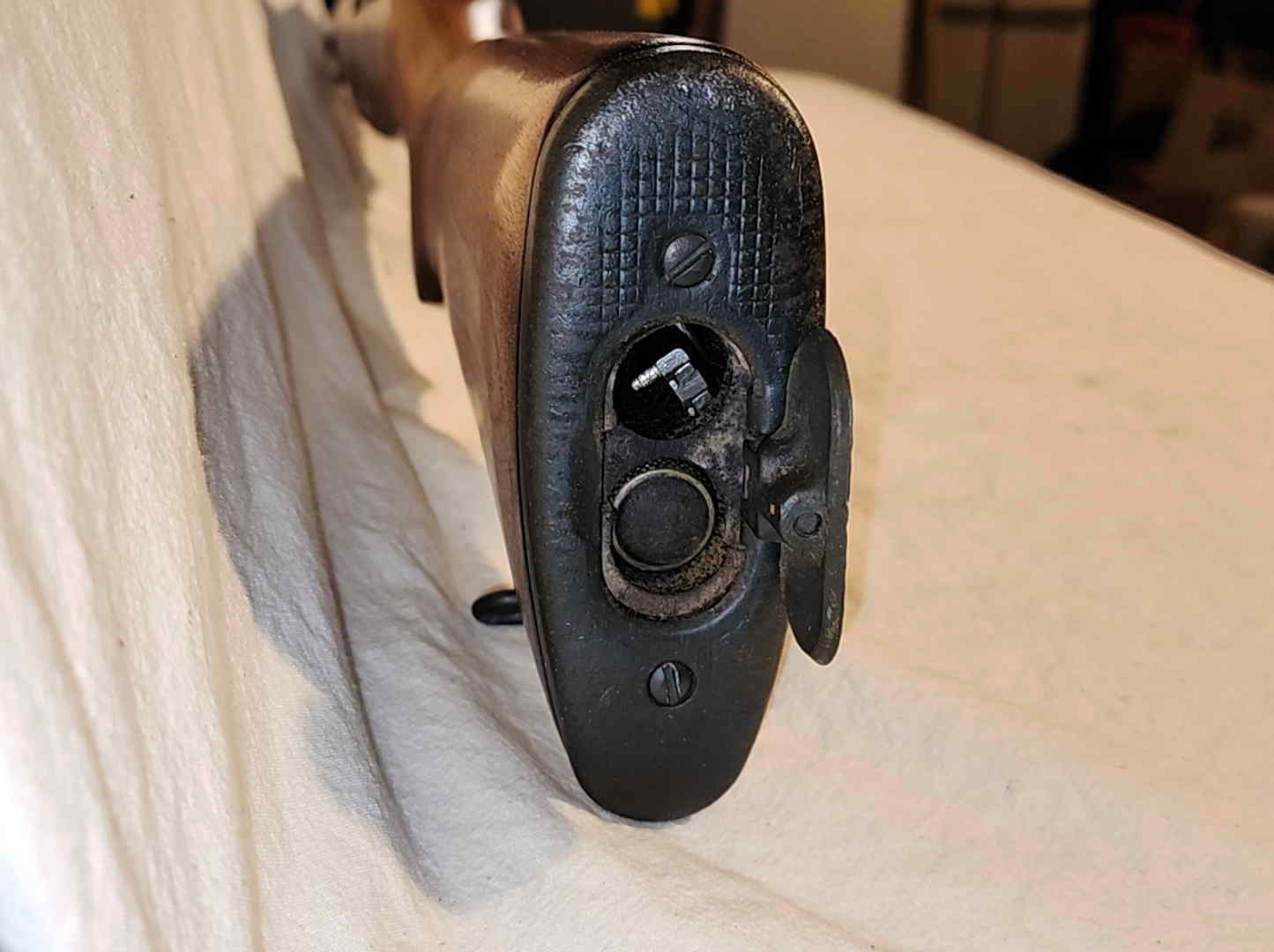
| Stock | Later replacement service wood with trapdoor buttplate. |
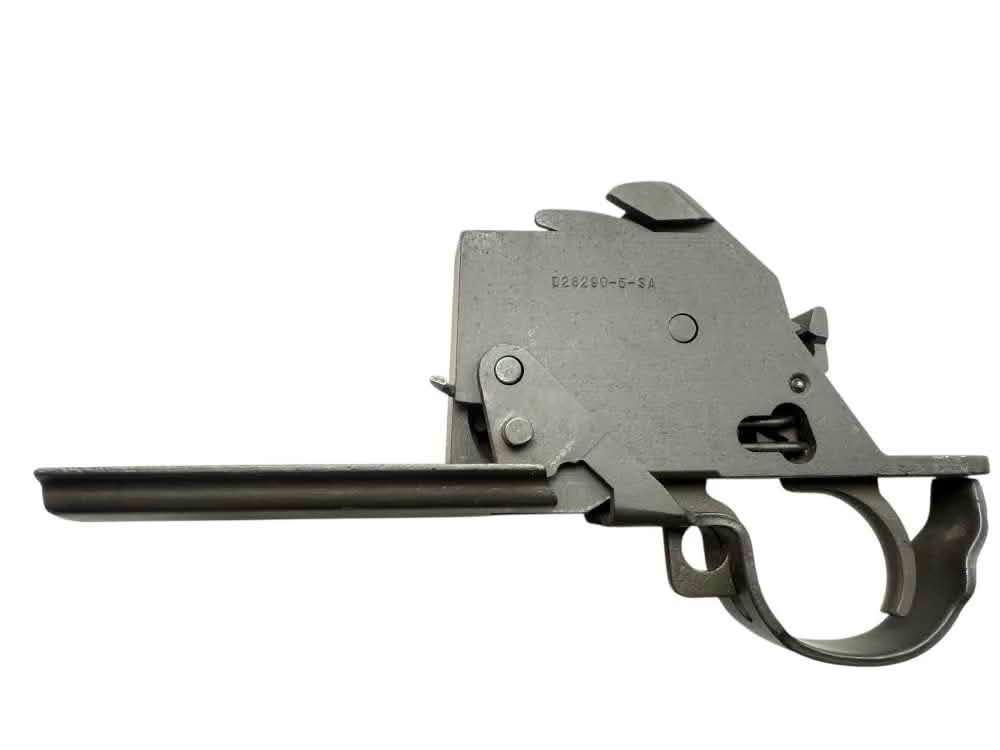
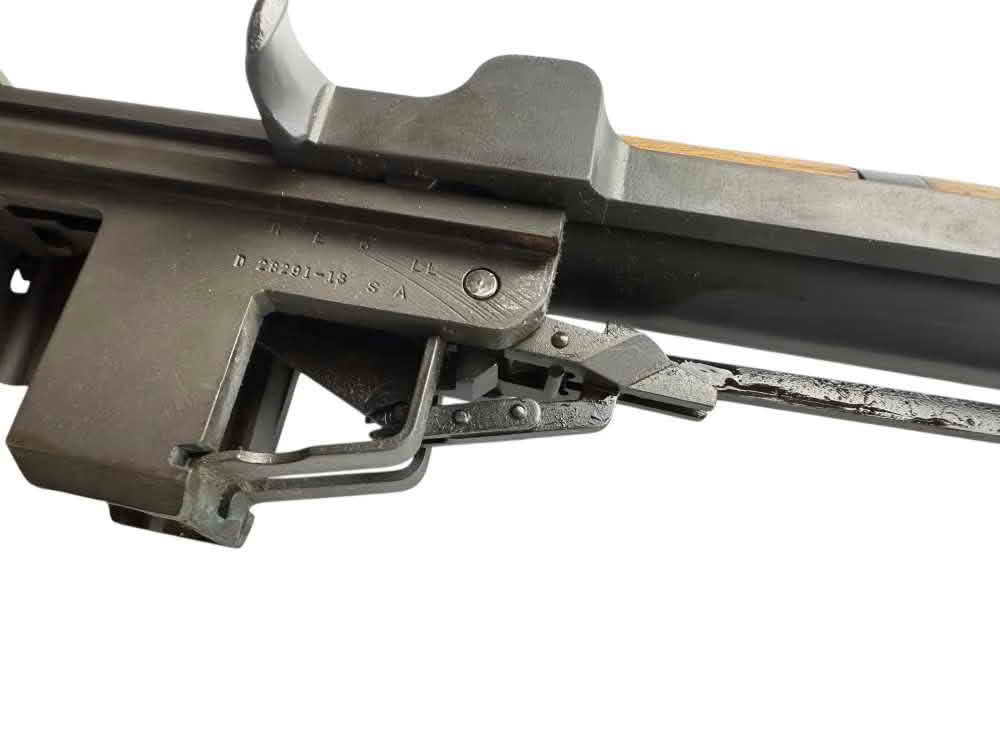
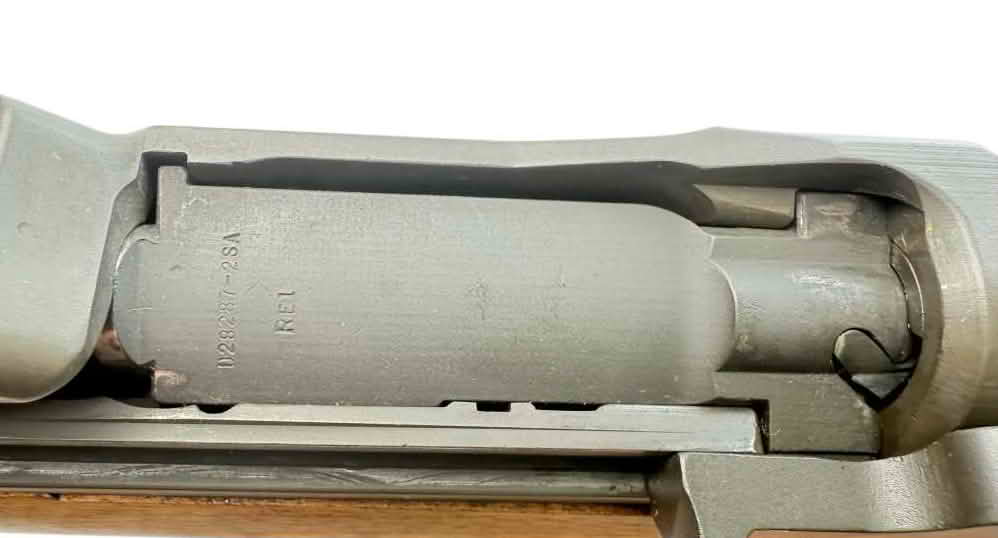
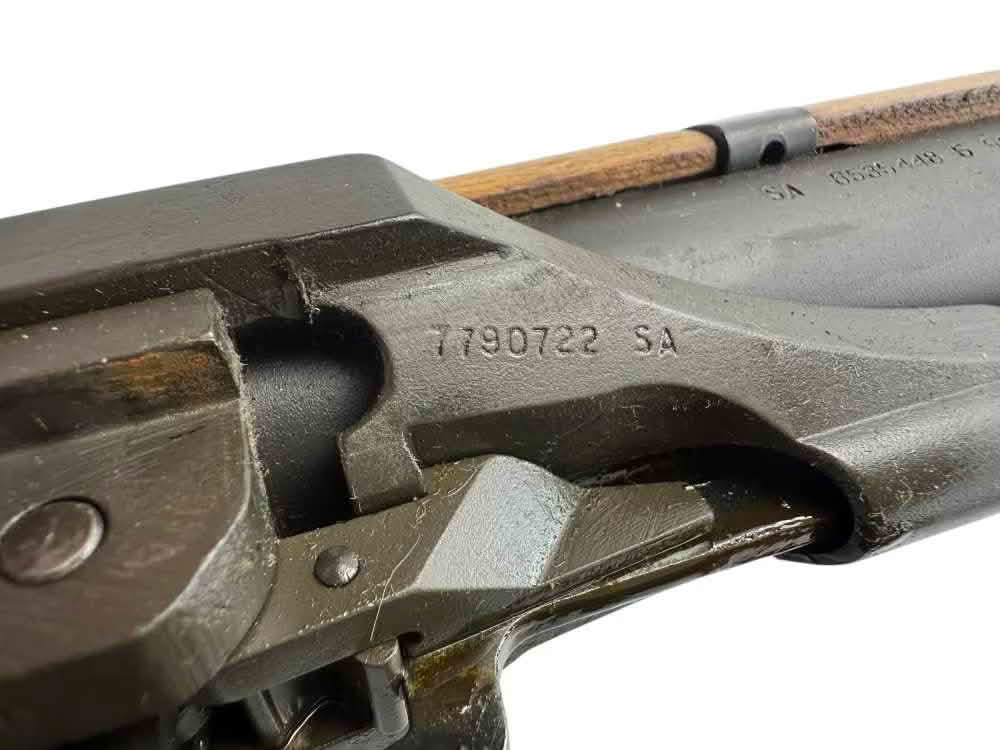
| Major Markings | Receiver heel marked U.S. Rifle / Cal. .30 M1 / Springfield Armory, serial 328660; barrel marked SA 6535448 5 66 MD67; trigger housing D28290-5-SA; receiver leg D28291-18 SA; bolt D28287-2SA with REL heat lot; operating rod marked in the postwar 7790722-SA Springfield pattern. |
Historical Summary
The M1 Garand was the standard U.S. service rifle of the Second World War and remained in front-line and reserve use well into the postwar period. This example is built on Springfield Armory receiver no. 328660, placing its manufacture in September 1941, just months before the United States entered the war. Rather than surviving in untouched factory-original form, it represents an honest long-service rebuild that remained in the U.S. military system long after its original manufacture.
The rifle combines an early Springfield receiver with a Springfield Armory replacement barrel dated May 1966, a later postwar operating rod, replacement service wood, and several Springfield-marked early components that remain especially desirable to collectors. It is best understood as a legitimate service rebuild retaining meaningful early parts, rather than as a fully factory-correct September 1941 rifle.
Springfield Armory Production, September 1941
The Springfield Armory, formally known as the United States Armory and Arsenal at Springfield in Springfield, Massachusetts, served as the nation’s primary center for military firearms production from 1777 until its closure in 1968. Springfield Armory was the principal producer of the M1 Garand during the prewar and wartime years, and serial no. 328660 falls into September 1941 production. That places this rifle in an important transitional moment in U.S. military history, during the final months before wartime mobilization accelerated after Pearl Harbor. The heel marking remains the core identity of the rifle, even though the final configuration changed through normal military rebuilding and maintenance.
Barrel and Rebuild History
The barrel marking SA 6535448 5 66 MD67 identifies a Springfield Armory replacement barrel manufactured in May 1966. This confirms that the rifle passed through later service rebuild or maintenance channels, where worn components were replaced to keep rifles serviceable. That kind of update was entirely typical for Garands that remained in military inventory after the war.
The barrel date also makes clear that the rifle should not be described as an untouched early-war example. Instead, it is a later arsenal-maintained rifle built around an early Springfield receiver, preserving the military history of continued use rather than frozen original condition.
Early Bolt and Trigger Housing
Two of the most attractive surviving parts on this rifle are the bolt and trigger housing. The bolt is marked D28287-2SA with REL heat lot, an early Springfield variation that is correct for rifles in roughly this early to mid-1941 range and is especially appropriate on a receiver of this period. It is clearly a strong and desirable period component.
The trigger housing is marked D28290-5-SA, an early WWII Springfield drawing revision that fits well within the production timeframe of this rifle. Together, the bolt and trigger housing show that although the rifle was rebuilt later in service, it still retains important early Springfield features that add historical and collector interest.
Operating Rod and Later Service Updates
The operating rod is of the later Springfield 7790722-SA pattern, a postwar drawing number not associated with a September 1941 as-built configuration. This makes it a replacement part from a later rebuild cycle rather than an original early-war operating rod. Its presence is fully consistent with the rifle’s 1966 barrel and overall long-service rebuild profile.
In practical terms, the rifle presents as a Springfield-on-Springfield service rebuild, not a random mix of commercial parts. It remained within the military maintenance stream, receiving later serviceable components while retaining some earlier period-correct pieces.
Stock, Furniture, and Service Wear
The stock appears to be later replacement service wood rather than original 1941 furniture. Early Springfield cartouches are not visible, and the overall appearance is more consistent with arsenal replacement wood than with an untouched prewar stock set. The trapdoor buttplate and cleaning kit compartment reflect continued service utility rather than strict collector preservation.
The rifle’s overall appearance, including internal wear and honest age to the metal surfaces, supports the interpretation of an authentic older rebuild rather than a recent commercial assembly. That kind of continuity is often part of the appeal with Garands that remained in real service life for decades.
Collector Notes
- Receiver serial no. 328660 places this rifle in September 1941 Springfield Armory production.
- The barrel is a documented Springfield Armory replacement made in May 1966.
- The bolt, marked D28287-2SA with REL heat lot, is an early variation and a strong period-appropriate feature for this rifle.
- The trigger housing, marked D28290-5-SA, is also an early WWII Springfield component appropriate to the receiver’s production timeframe.
- The operating rod, marked in the 7790722-SA Springfield pattern, is a later postwar replacement and reflects rebuild-era updating.
- The stock is later replacement service wood.
- This rifle is best understood as an honest long-service Springfield rebuild retaining desirable early parts, rather than a fully factory-correct September 1941 specimen.
Provenance
Manufactured at Springfield Armory in September 1941. Later updated in U.S. service with a Springfield Armory replacement barrel dated May 1966, a later postwar operating rod, and additional Springfield-marked service components. Present configuration reflects a legitimate long-service arsenal rebuild.
Editorial Note
These pages are presented for historical and collector-reference purposes. Relics & Rifles does not sell firearms or facilitate transactions. Any discussion of configuration, markings, or accessories is descriptive and intended to preserve context for research.