U.S. Springfield Krag-Jørgensen Rifle, Model 1898
U.S. Springfield Krag-Jørgensen Rifle, Model 1898
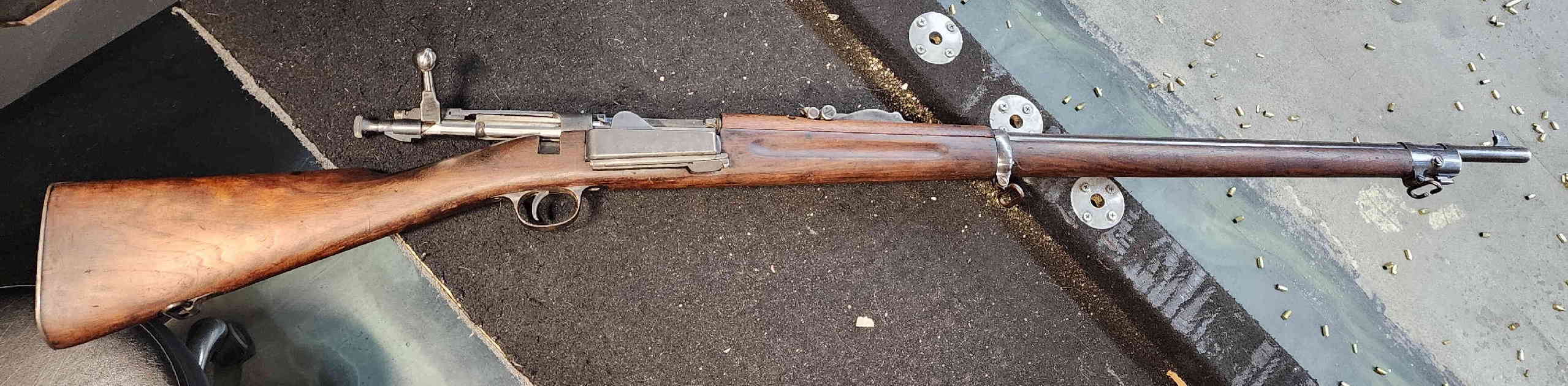
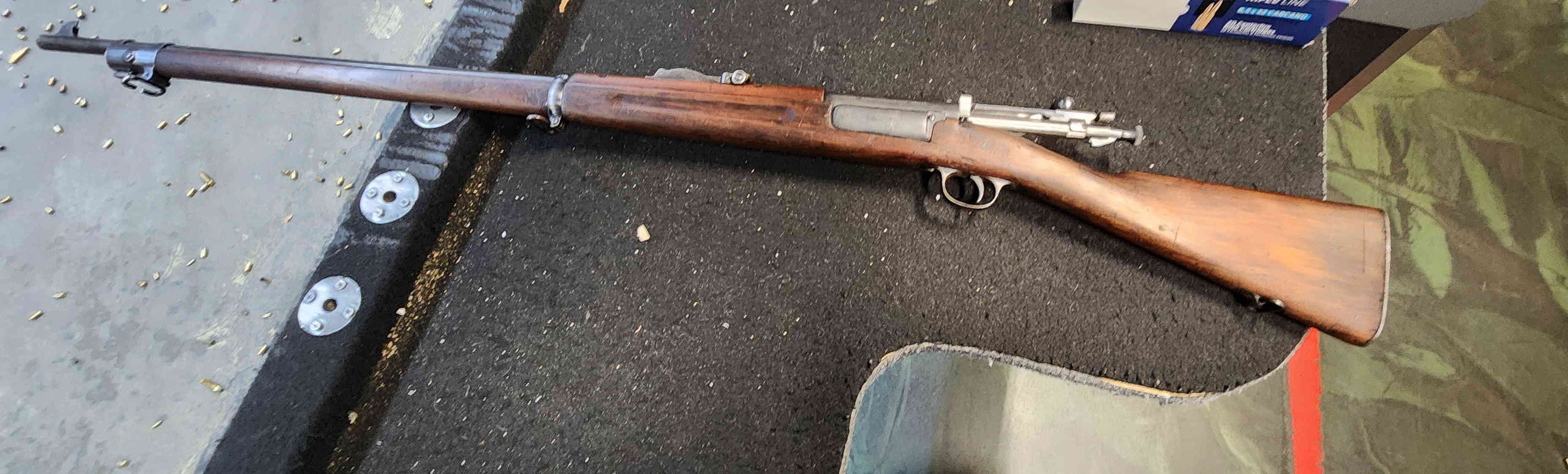
Historical profile for a well-preserved Springfield Armory Krag-Jørgensen, observed and fired. The Krag was the standard U.S. infantry service rifle of the Spanish-American War era and a key transitional design between black powder arms and modern smokeless military rifles.
Images
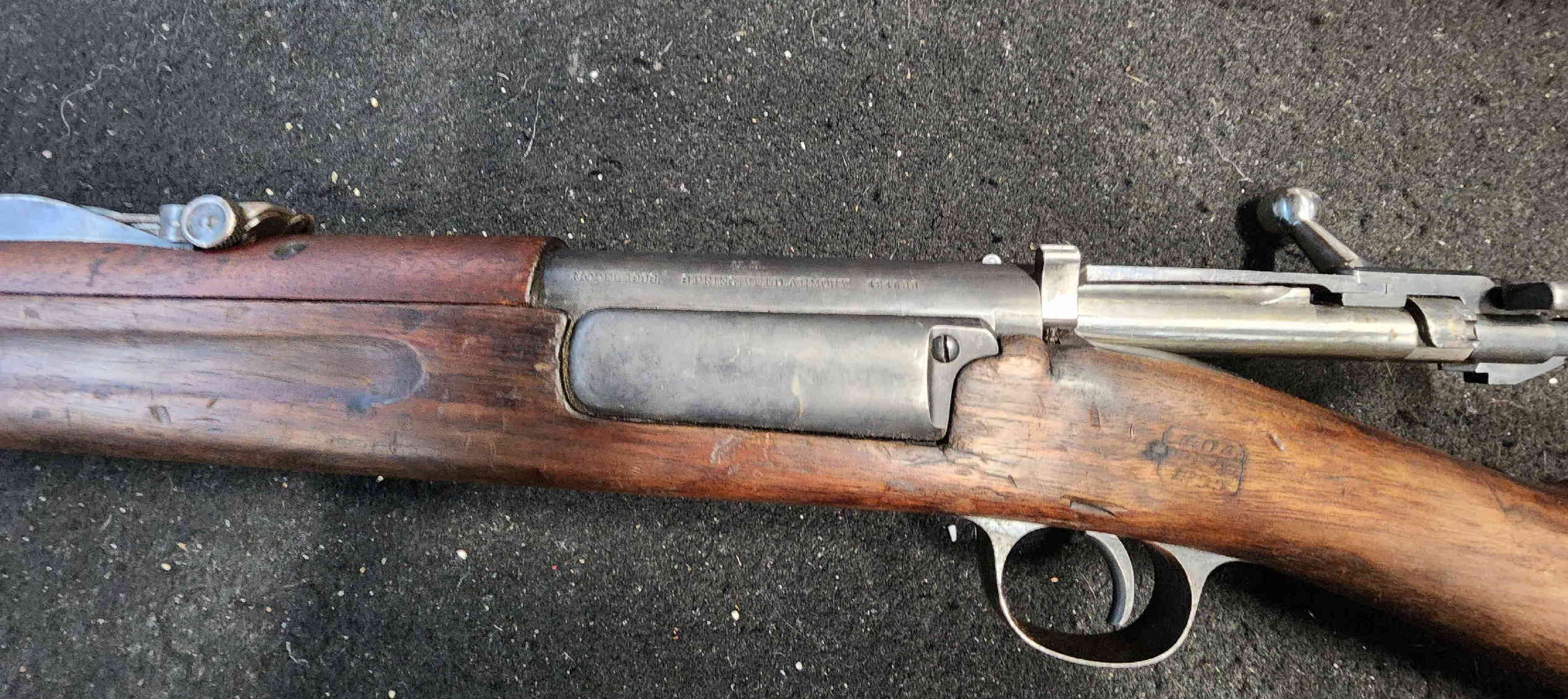
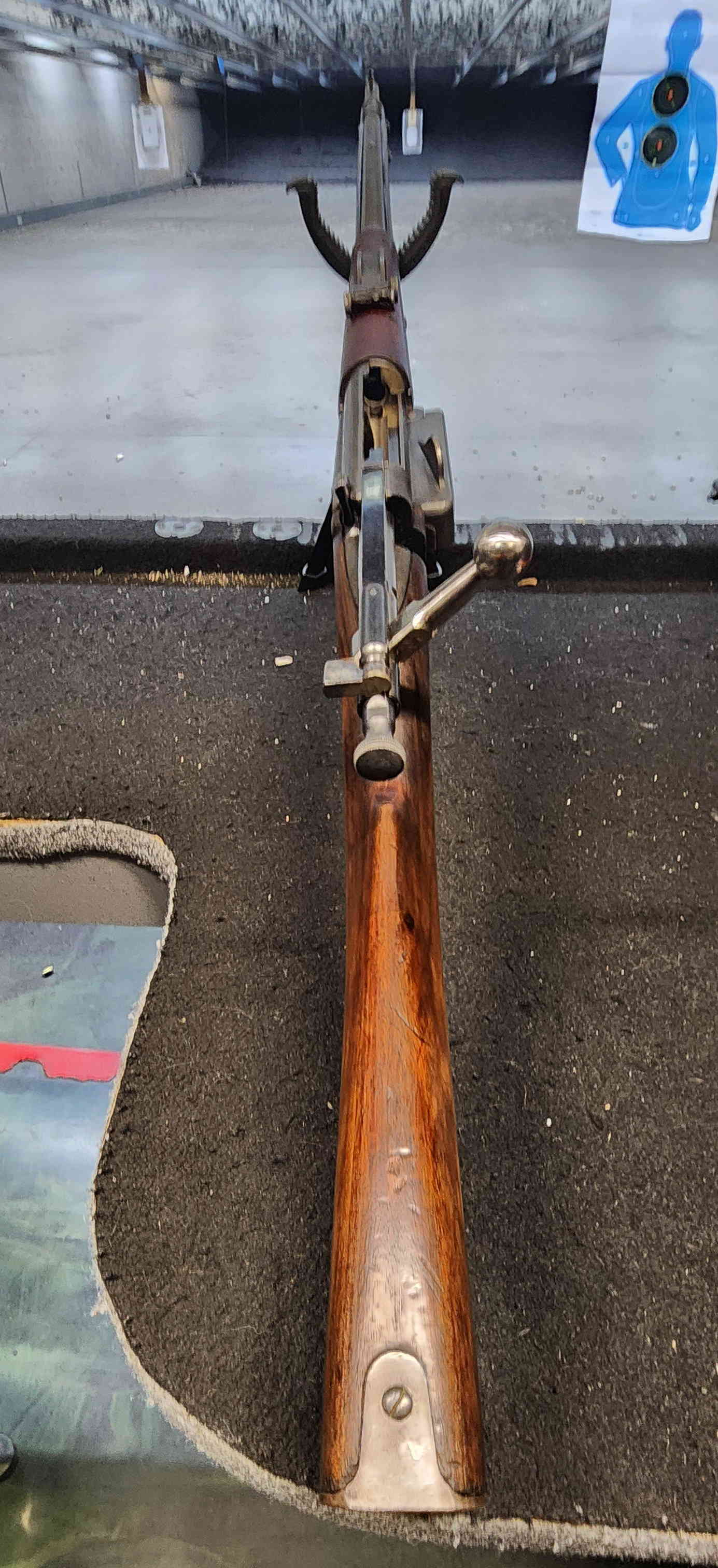
Specifications
| General Information | |
|---|---|
| Manufacturer | Springfield Armory (U.S.) |
| Model | Krag-Jørgensen, Model 1898 |
| Caliber | .30-40 Krag (.30 Army) |
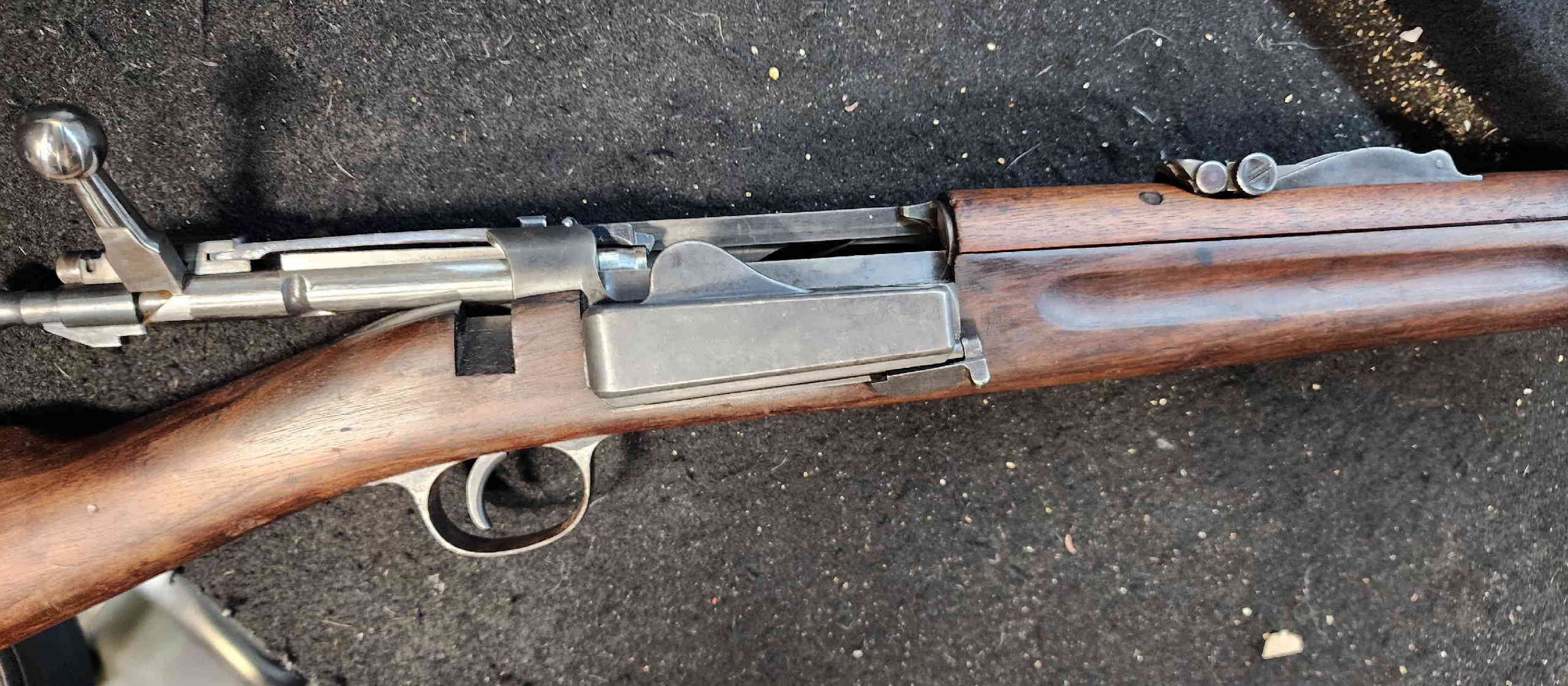
| Action | Bolt-action, side-loading rotary magazine |
| Configuration | Infantry rifle |
| Serial Number | 4xxxxx |
| Receiver Markings |
Left side marked: MODEL 1898 SPRINGFIELD ARMORY |
The visible serial number begins with the digit “4,” placing manufacture approximately between 1899 and 1901 during peak production of the Model 1898 infantry rifle.
Historical Summary
The Krag-Jørgensen rifle was adopted by the United States Army in 1892 and served as the standard U.S. service rifle through the Spanish-American War and into the early twentieth century. The Model 1898 represented the culmination of Krag development, incorporating improvements drawn from earlier service experience. In combat, the .30-40 Krag was praised for accuracy, controllability, and relatively mild recoil.
Ballistics and Performance (.30-40 Krag)
The .30-40 Krag cartridge, officially designated the .30 Army, was the first smokeless powder small-arms cartridge adopted by the United States military. Introduced in the early 1890s, it represented a significant leap forward from earlier black powder service ammunition.
Standard U.S. military ball ammunition during the Spanish-American War era typically consisted of a 220-grain round-nose full metal jacket bullet propelled at approximately 2,000 feet per second from the Krag’s 30-inch infantry barrel.
| Typical Service Ballistics | |
|---|---|
| Bullet Weight | 220 grains (FMJ, round-nose) |
| Muzzle Velocity | ≈ 2,000 fps |
| Muzzle Energy | ≈ 1,950–2,000 ft-lbs |
| Effective Range | ≈ 400–600 yards (practical military use) |
| Maximum Range | Exceeding 3,000 yards (volley fire) |
The Krag, Theodore Roosevelt, and the Rough Riders
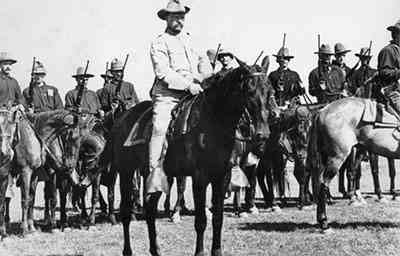
During the Spanish-American War, the Krag-Jørgensen was the primary rifle issued to U.S. Regular Army units and many volunteer formations. Lieutenant Colonel Theodore Roosevelt’s 1st U.S. Volunteer Cavalry, the famed Rough Riders, were equipped with a mixture of standard issue arms and privately purchased weapons.
Roosevelt himself commented on the variety present within the regiment. In The Rough Riders (1899), he noted that his men carried a range of rifles, including Krag-Jørgensen rifles alongside older Springfields and a smaller number of repeating rifles.
While some Rough Riders carried non standard arms, Krag rifles and carbines were present within the regiment, and the Regular Army units supporting the Rough Riders were armed almost exclusively with the Krag. Combat experience in 1898 also highlighted limitations when facing Spanish troops armed with 7×57mm Mauser rifles, particularly the Spanish use of smokeless powder and charger loading. These lessons influenced U.S. ordnance thinking and contributed to the adoption of the U.S. Model 1903 Springfield, which incorporated Mauser style features.
Photo Caption (Image 6): Lieutenant Colonel Theodore Roosevelt with members of the 1st U.S. Volunteer Cavalry (the “Rough Riders”), 1898. The regiment was equipped with a mixture of privately purchased arms and standard U.S. Army weapons, including the Krag-Jørgensen, while Regular Army units supporting them were armed with the Krag.
Collector Notes
Original infantry-length Krag rifles are increasingly scarce, as many were sporterized during the early to mid-20th century. Examples retaining their military configuration provide valuable insight into the transitional period between black powder arms and modern smokeless military rifles.
Editorial Note
These pages are presented for historical and collector-reference purposes. Relics & Rifles does not sell firearms or facilitate transactions. Any discussion of configuration, markings, or accessories is descriptive and intended to preserve context for research.