WWII U.S. Navy Mark 2 Fighting/Utility Knife by KA-BAR
Blade-marked USN wartime production with a fullered seven-inch clip-point blade, stacked-leather grip, and heavy peened steel pommel
Images
Specifications
| General Information | |
|---|---|
| Identification | U.S. Navy Mark 2 fighting and utility knife |
| Country | United States |
| Service | United States Navy |
| Manufacturer | Union Cutlery Company, Olean, New York, using the KA-BAR trademark |
| Production Period | World War II, approximately 1943-1944 |
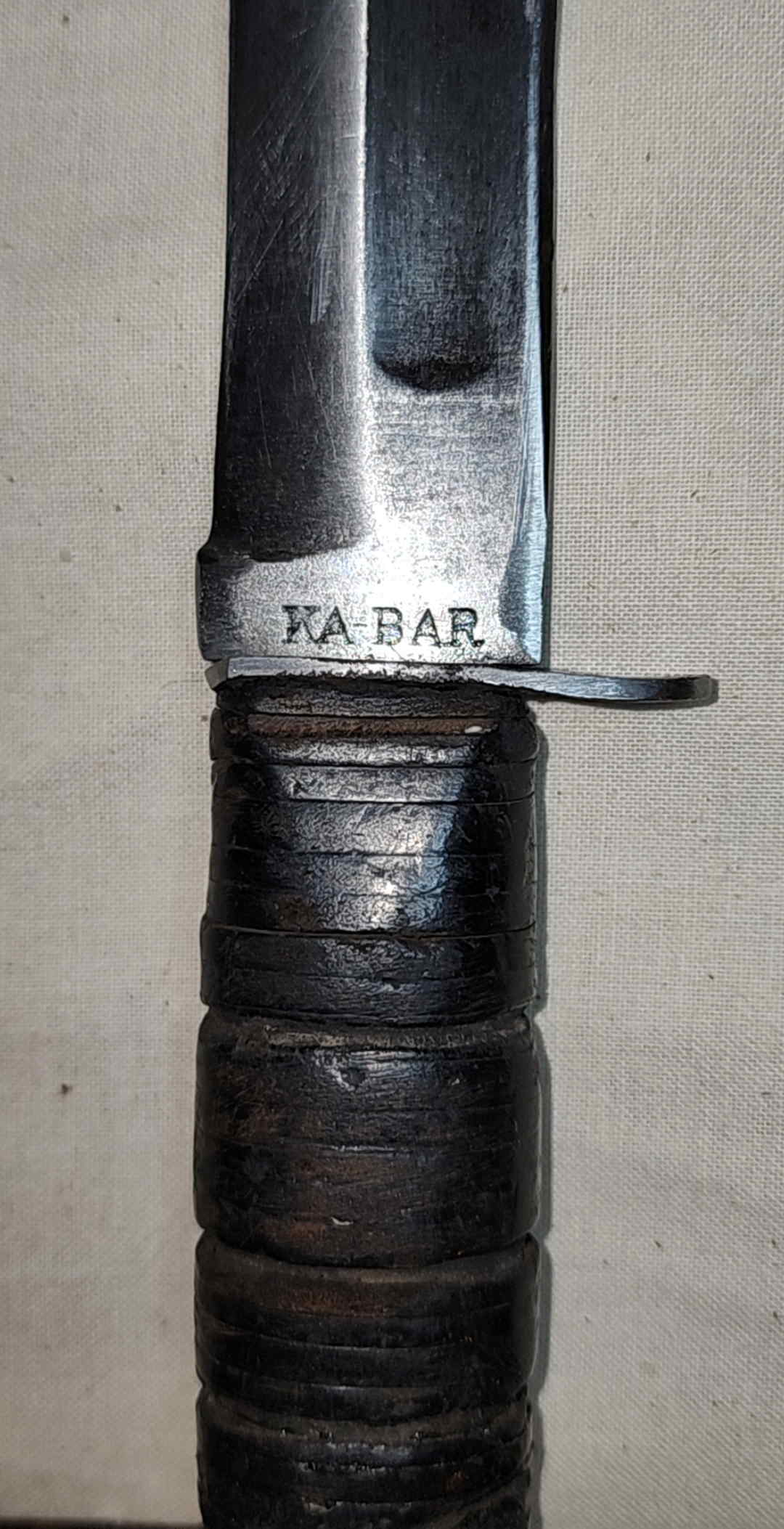
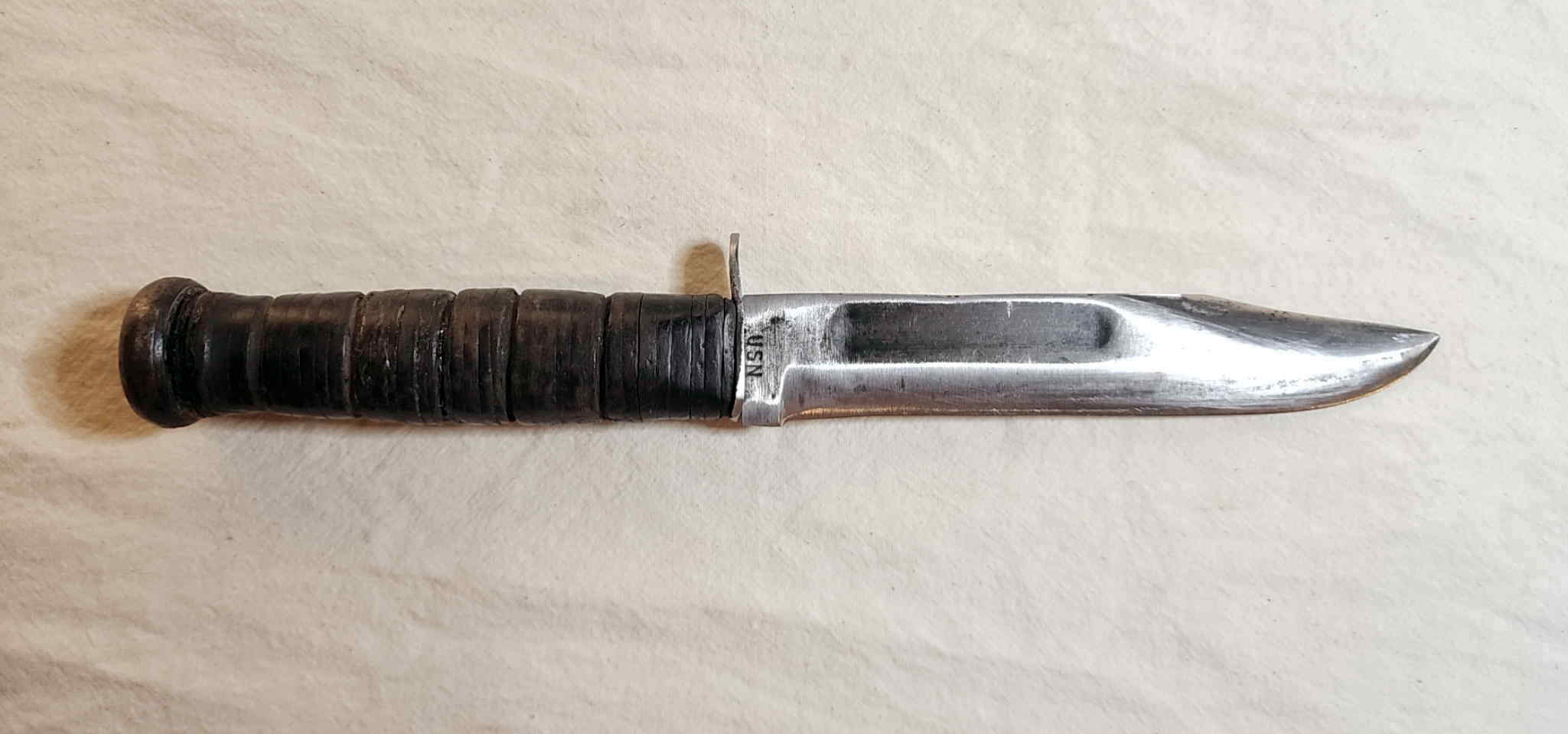
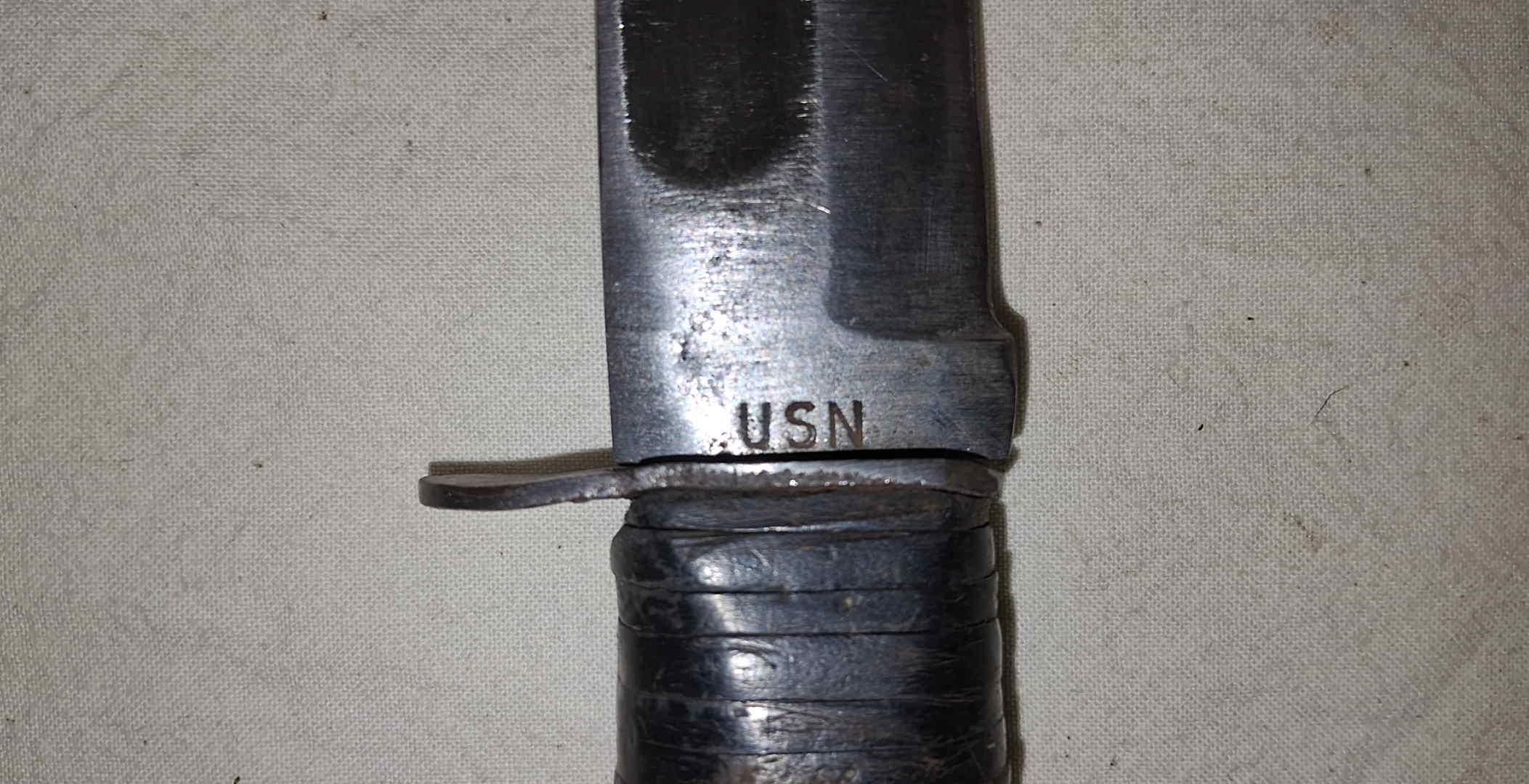
| Markings | KA-BAR on one ricasso; USN on the opposite ricasso |
| Blade | Single-edged steel clip-point blade with broad fullers on both sides |
| Grip | Shaped and grooved stacked-leather washer grip |
| Guard | Steel crossguard with one quillon shortened close to the blade |
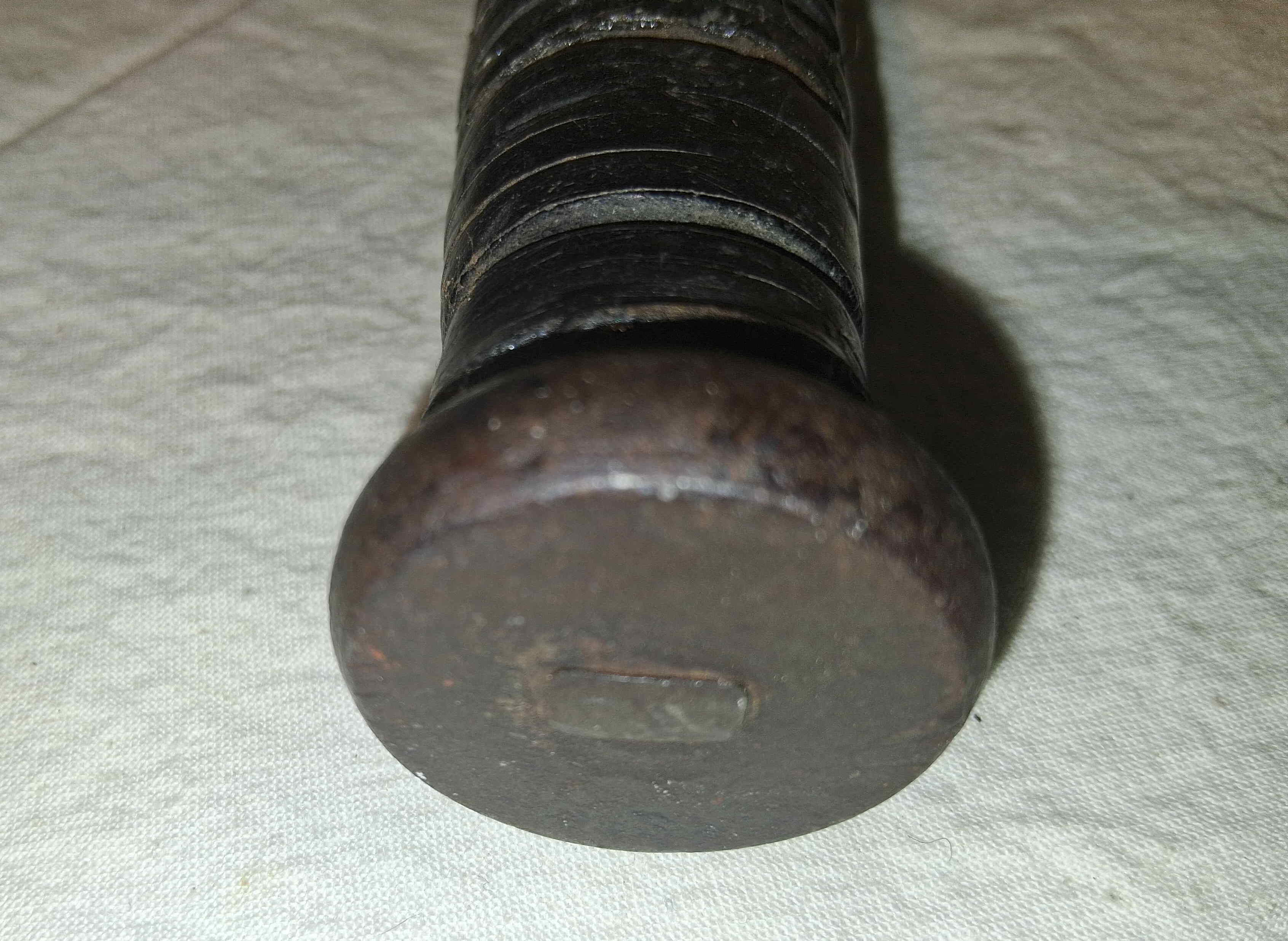
| Pommel | Heavy steel pommel secured by the rectangular tang peened at the butt |
| Overall Length | Approximately 12.25 in (311 mm) |
| Blade Length | Approximately 7 in (178 mm) |
| Handle Length | Approximately 5.25 in (133 mm), including guard and pommel |
Identification
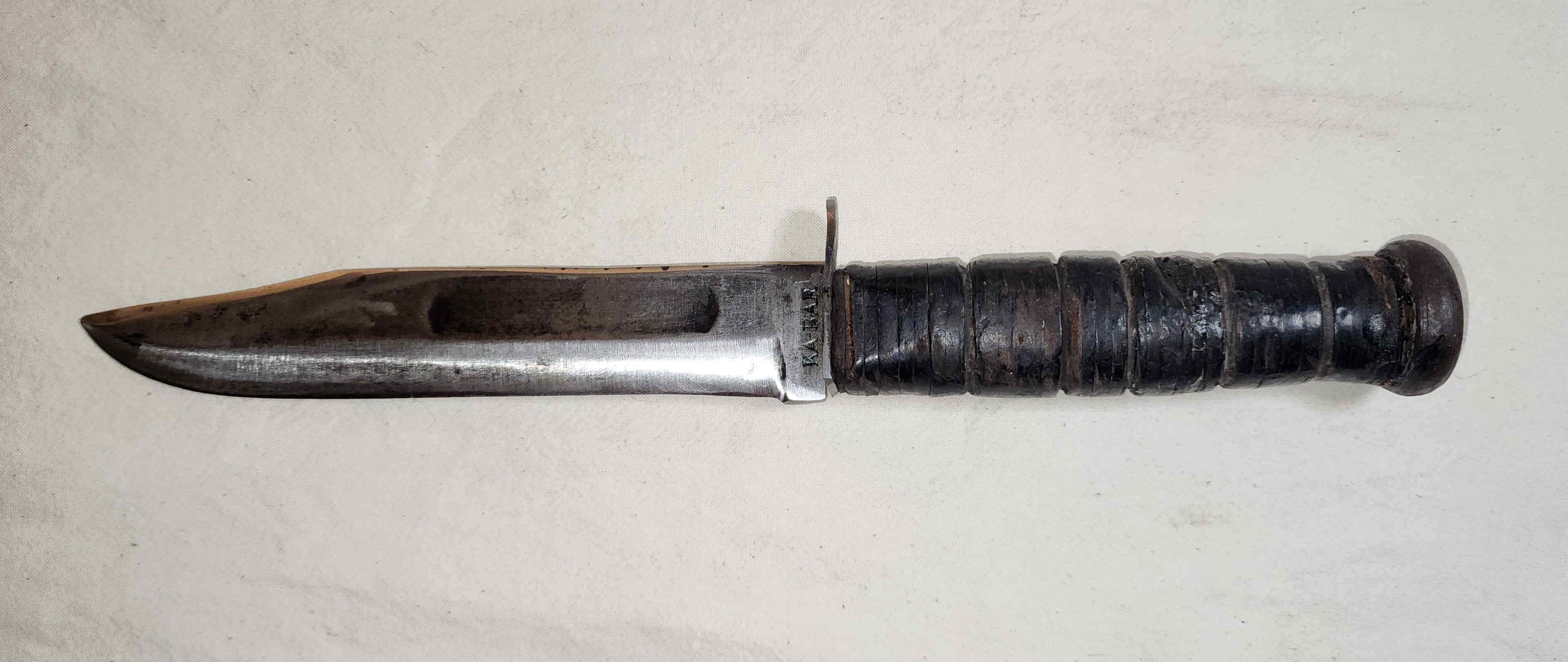
This artifact is an original World War II U.S. Navy Mark 2 fighting and utility knife manufactured by the Union Cutlery Company under its well-known KA-BAR trademark. The knife has the standard seven-inch clip-point blade, broad fullers, stacked-leather grip, steel guard, and heavy steel pommel associated with wartime Mark 2 production.
The blade is marked KA-BAR on one side of the ricasso and USN on the other. This blade-marked arrangement, combined with the heavy pommel and peened rectangular tang, places the knife within Union Cutlery's early to mid-war Navy Mark 2 production, approximately 1943 to 1944.
The U.S. Navy Mark 2 Knife
The Navy adopted the Mark 2 during World War II as a robust multipurpose knife for combat, utility work, and emergency use. Its general pattern combined a seven-inch clip-point blade with a deeply grooved stacked-leather grip and a substantial pommel. The design proved useful to sailors, Marines, naval landing parties, and other personnel who needed a durable field knife capable of cutting, opening containers, preparing positions, and performing routine shipboard or shore duties.
Although commonly called a fighting knife, the Mark 2 was equally important as a working tool. Its strong blade, secure grip, and simple construction made it suitable for the wide range of tasks encountered during amphibious operations and prolonged field service.
Union Cutlery and the KA-BAR Trademark
Union Cutlery of Olean, New York, was one of the major contractors that produced Mark 2 knives during the war. The company had used the KA-BAR trademark before World War II, and the name became so closely associated with this military pattern that collectors and veterans often use “KA-BAR” as a general name for Mark 2-style fighting and utility knives.
On this example, the simple KA-BAR stamp appears on the blade ricasso without an address line. The opposite USN marking identifies the Navy contract and distinguishes the knife as a wartime service model rather than a civilian hunting pattern.
Blade and Fuller
The approximately seven-inch blade follows the classic Mark 2 profile, with a straight cutting edge that rises into a clipped point and a long swedge along the spine. A broad, rounded-end fuller is machined into each side of the blade. The fuller reduces weight while preserving stiffness and is one of the most recognizable visual features of the wartime pattern.
The blade now presents a mostly bright steel surface with darker finish and patina remaining inside the fullers and in protected areas. Repeated sharpening and cleaning have left visible longitudinal marks, but the blade profile and fullers remain clear and readily identifiable.
Stacked-Leather Grip
The handle is formed from a series of compressed leather washers fitted over the tang and shaped into an oval grip. Deep circumferential grooves improve traction, even when the knife is wet or the user's hands are gloved. The darkened leather on this example shows extensive handling, compression, and service wear while retaining the characteristic Mark 2 contour.
Stacked leather was practical for wartime production because it provided a resilient, secure gripping surface and could be shaped efficiently after the washers were assembled and compressed between the guard and pommel.
Pommel, Tang, and Guard
The knife has the substantial early-style steel pommel used on blade-marked KA-BAR production. At the center of the butt, the rectangular end of the tang is visible where it was peened to lock the pommel, leather washers, and guard into a single compressed assembly.
The steel crossguard retains one projecting quillon. The opposite quillon has been shortened close to the blade, producing a compact one-sided guard. Such owner modifications are encountered on service knives and may have been intended to reduce snagging or alter the feel of the knife during use. The exact date of the modification cannot be established from the knife alone.
Condition & Collector Notes
The knife is in well-used, substantially complete condition. The blade has been polished and sharpened, with most of its original dark finish removed from the exposed surfaces. Darker finish and patina remain within the fullers, while scratches, minor pitting, and edge wear document prolonged use and later maintenance.
The stacked-leather grip is heavily worn, compressed, and darkened but remains intact around the tang. The pommel carries an even brown patina, and the peened tang is clearly visible. The shortened guard is the principal physical alteration. Despite its service wear, the knife retains all of the features of a wartime U.S. Navy Mark 2 by Union Cutlery.
Dating & Authentication
The correct seven-inch Mark 2 blade profile, broad rounded-end fullers, KA-BAR and USN ricasso stamps, shaped stacked-leather grip, heavy steel pommel, and peened rectangular tang collectively authenticate this as an original World War II Union Cutlery knife.
The blade-marked configuration and heavy pommel are characteristic of early to mid-war production before markings were commonly moved to the guard and thinner pinned pommels became more prevalent. The surviving construction features support a production date of approximately 1943 to 1944.
Selected Research References
- M. H. Cole, U.S. Military Knives, Bayonets and Machetes, Book III.
- Robert Silvey, United States Military Knives 1941 to 1991.
- Frank Trzaska, U.S. Military Knives - Manufacturer, marking, and construction research on American military knives.
- U.S. Militaria Forum: Union Cutlery Co. / KA-BAR - Collector reference on Union Cutlery markings, tangs, pommels, and wartime production changes.