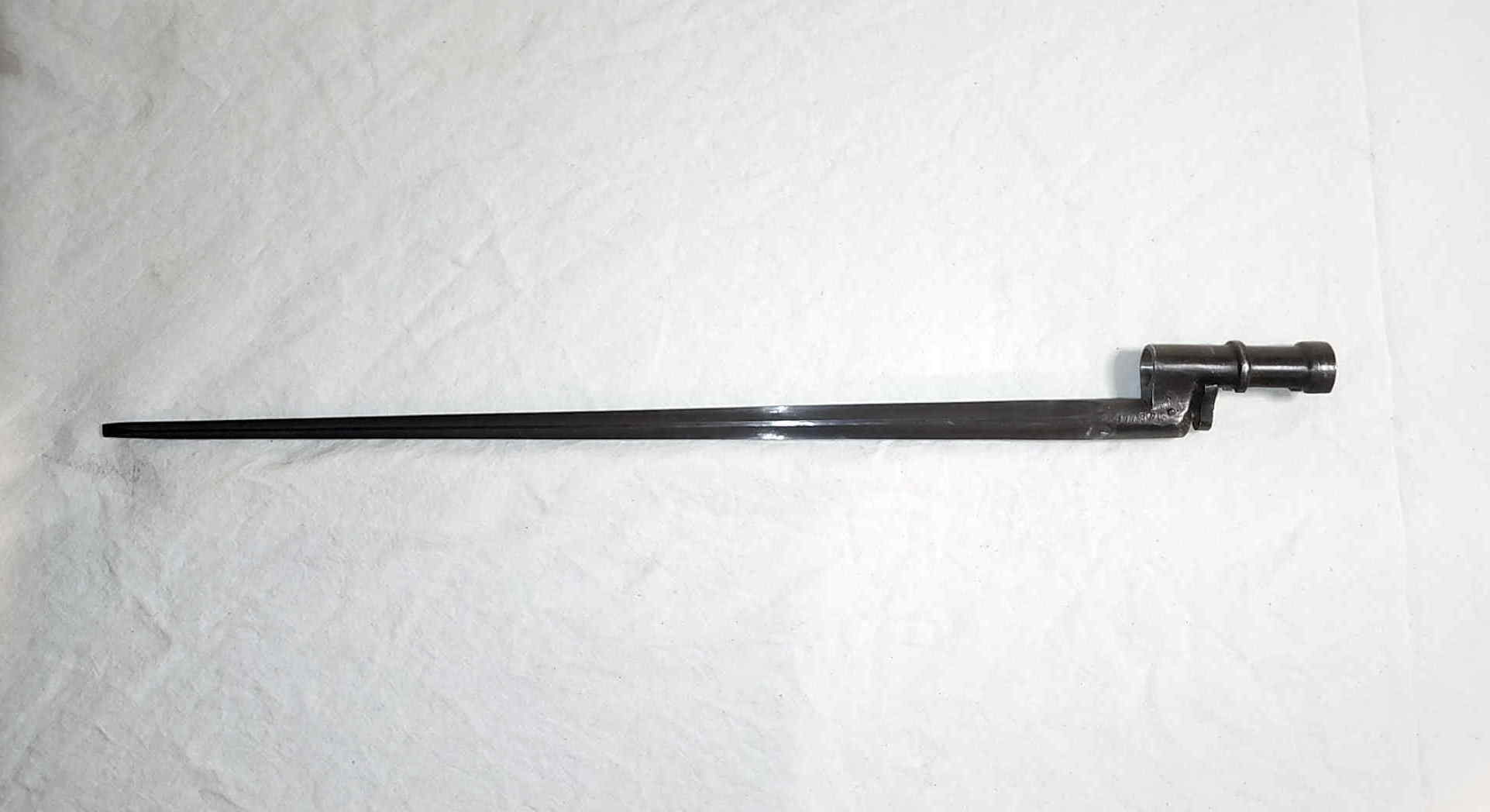
Mosin-Nagant M1891/30 Socket Bayonet
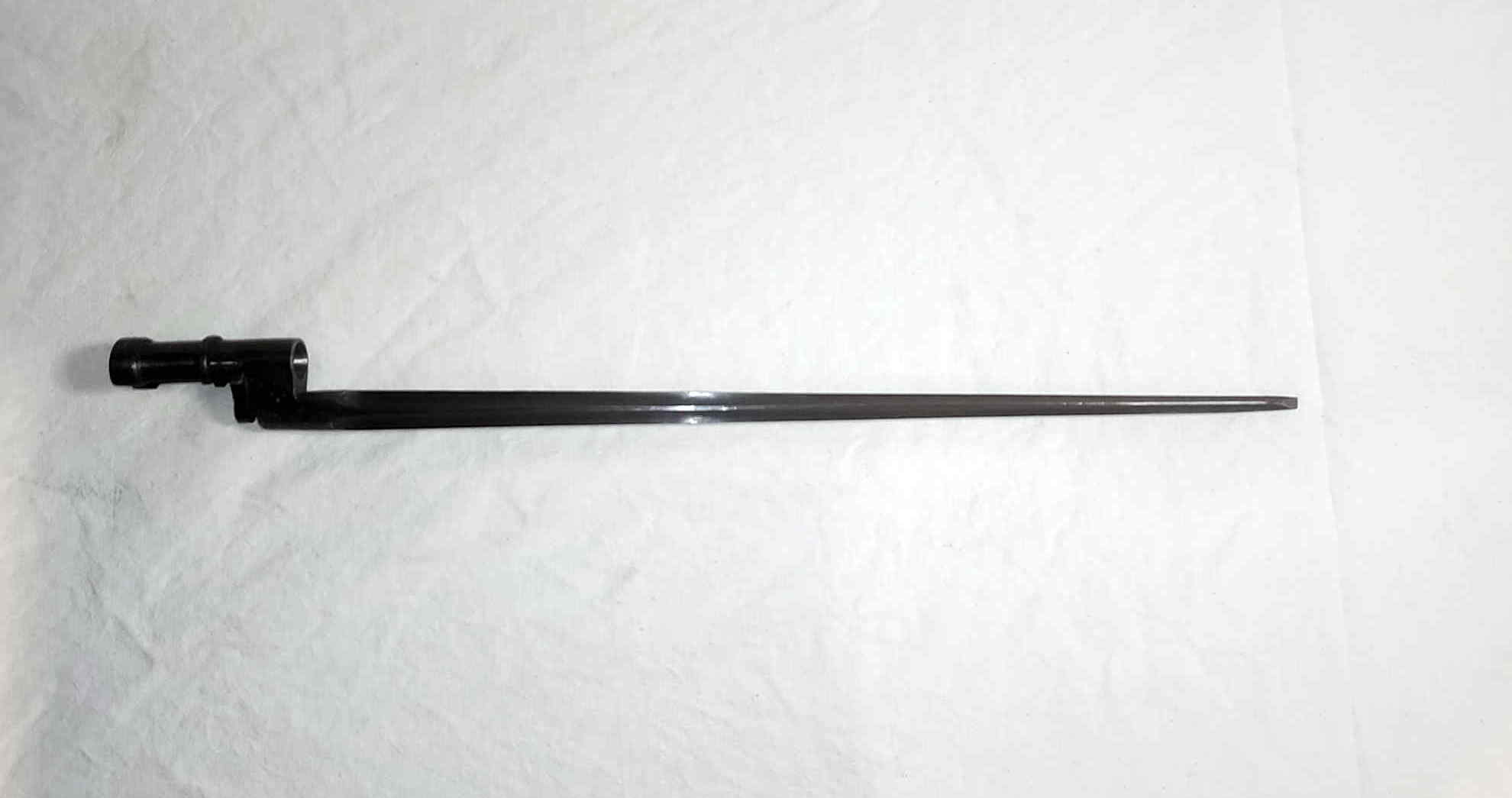
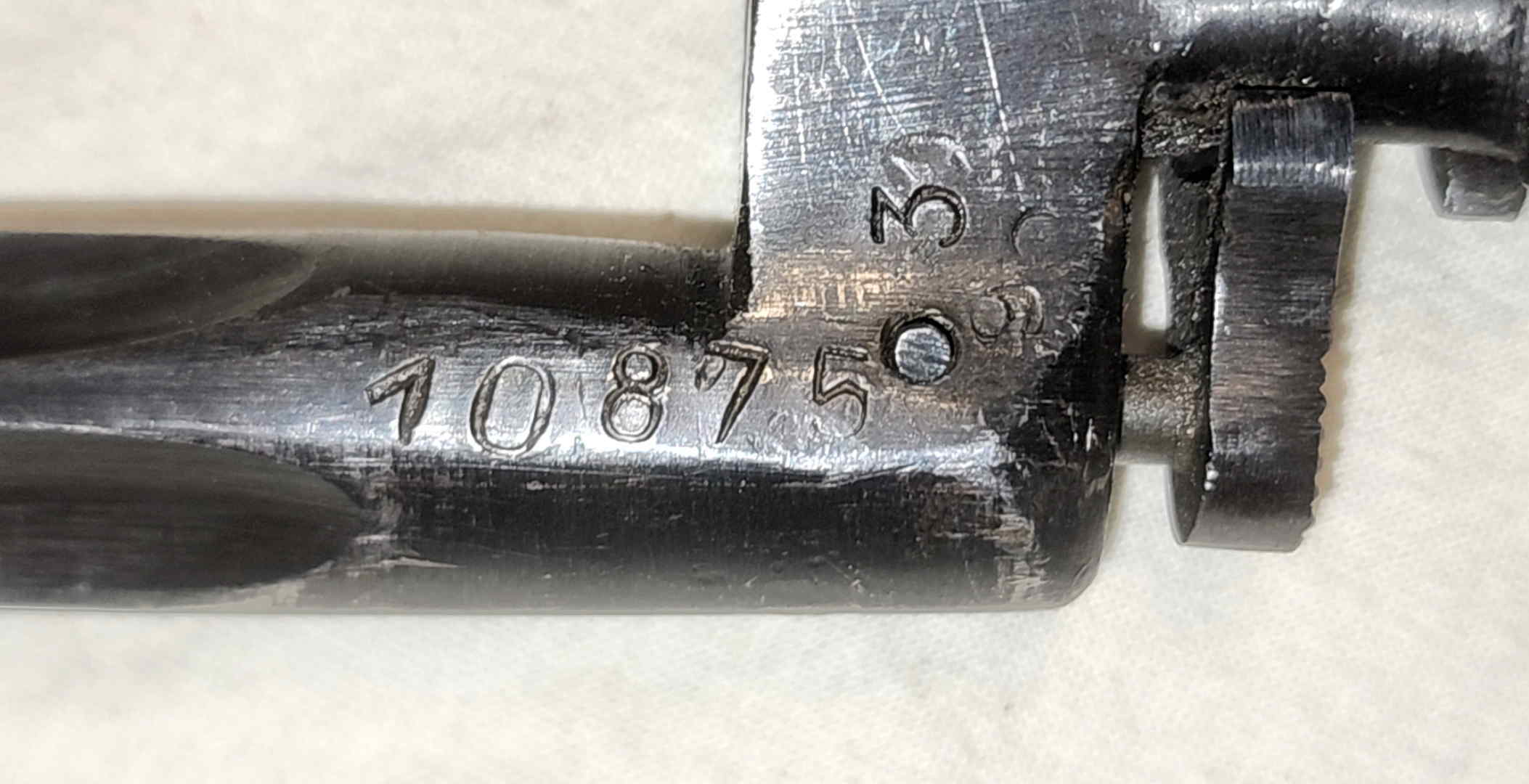
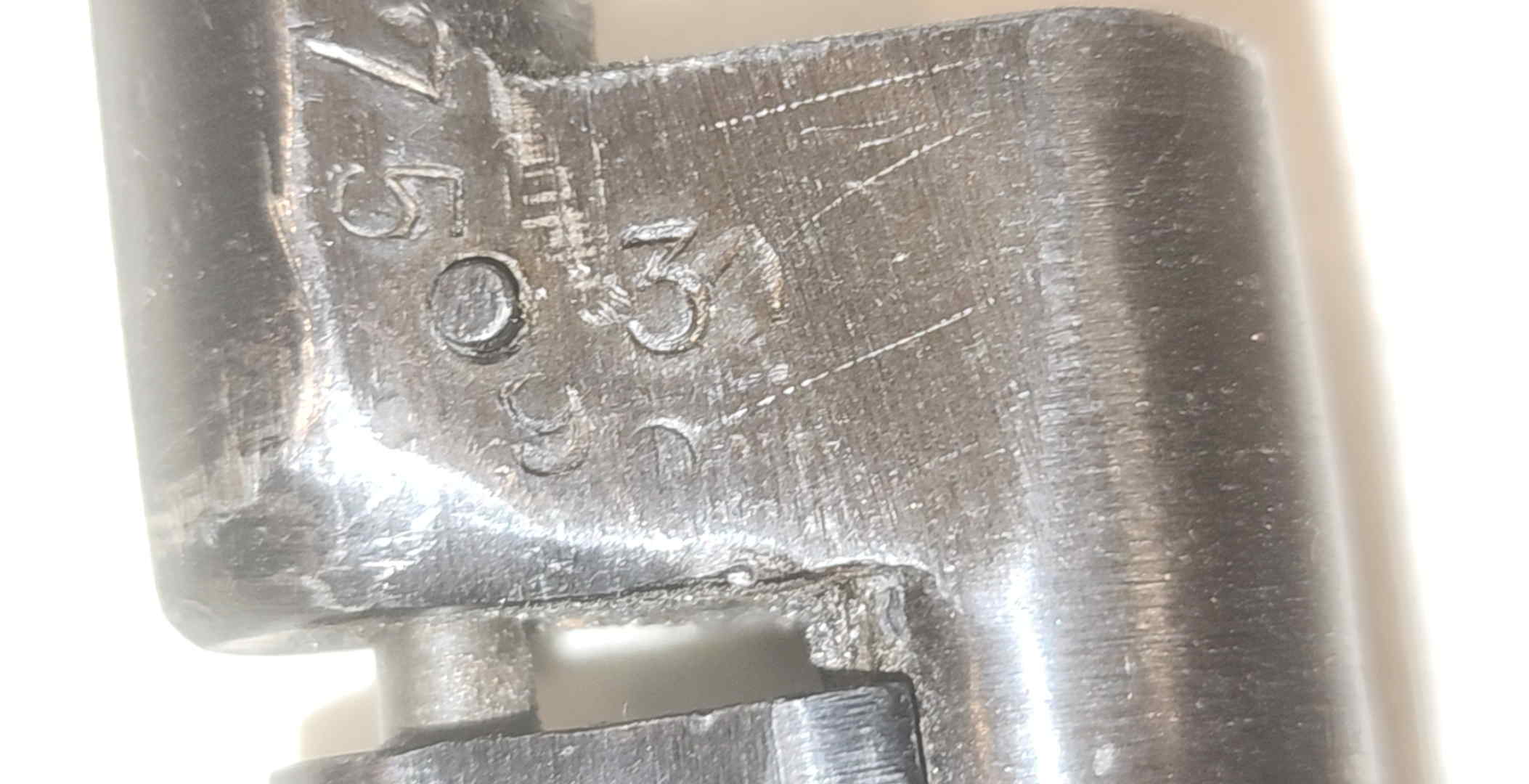
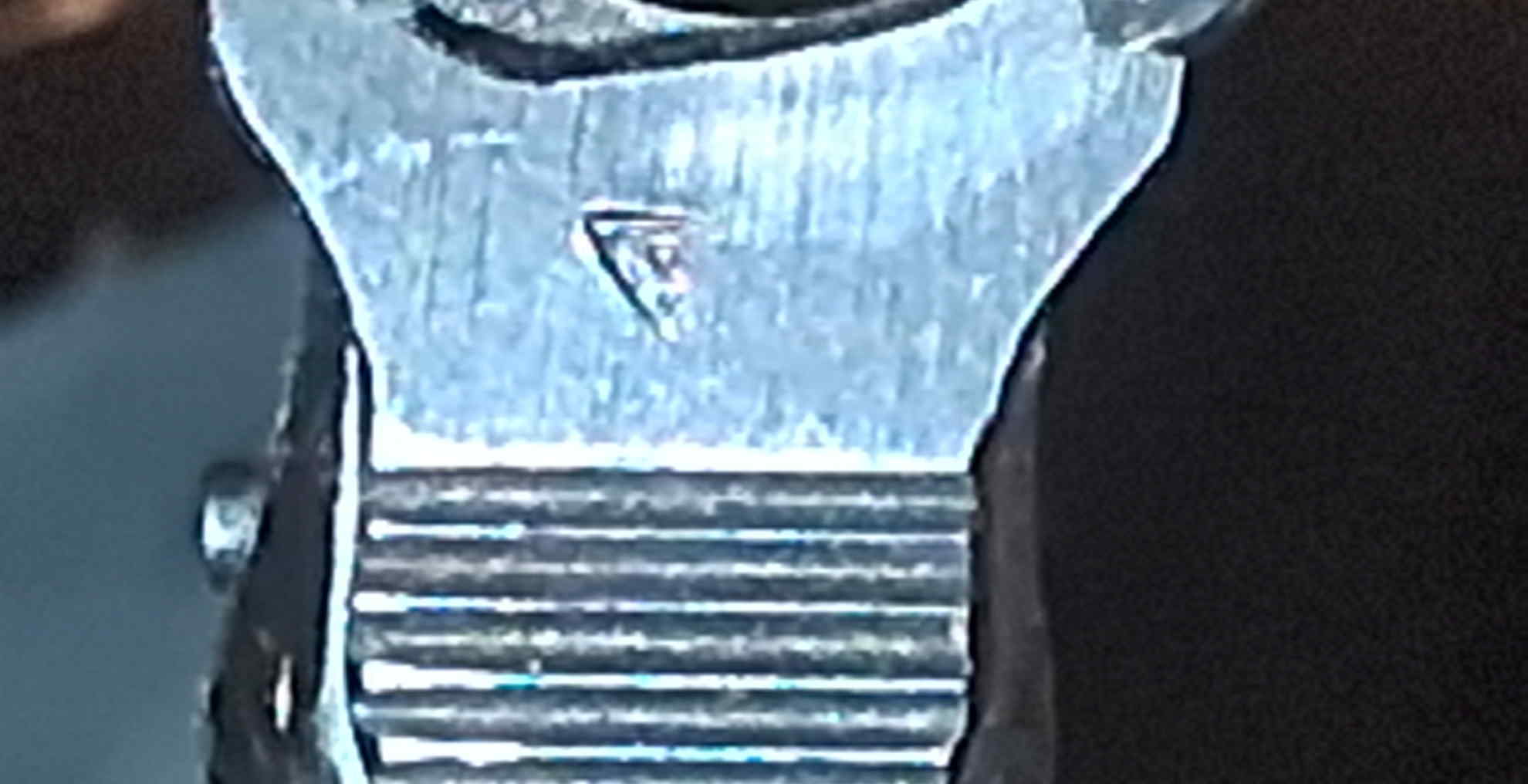
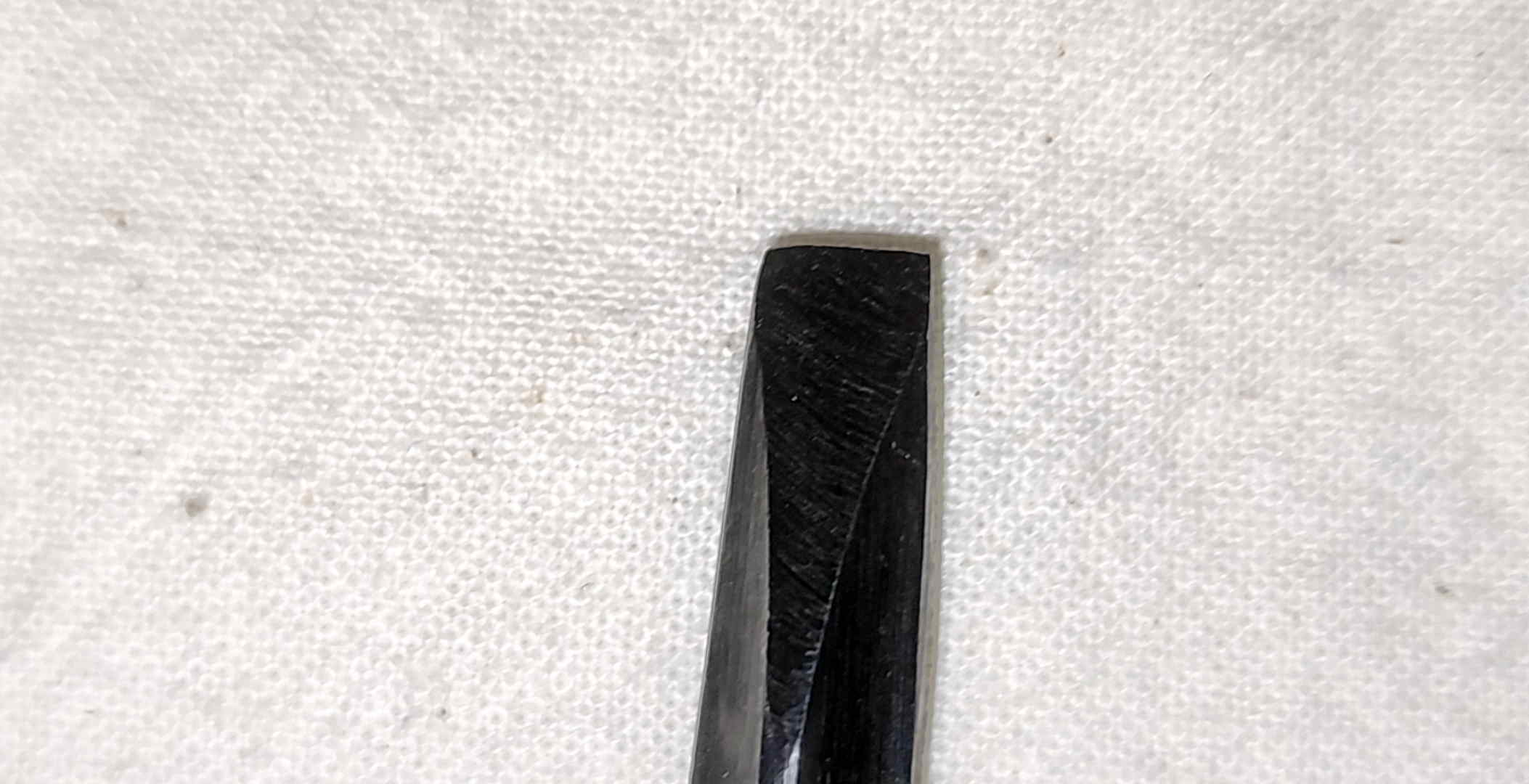
Soviet cruciform socket bayonet with Izhevsk Arsenal mark, serial number 10875, and an intact screwdriver point
Images
Specifications
| General Information | |
|---|---|
| Official Pattern | M1891/30 socket bayonet |
| Common Collector Name | Mosin-Nagant 91/30 bayonet |
| Country | Soviet Union / Russia |
| Arsenal | Izhevsk Arsenal, marked with arrow in triangle |
| Serial Number | 10875 |
| Additional Marks | Small inspection or control numerals near the serial and socket area; visible but not fully interpreted |
| Era | Undated Soviet production; pattern used through the Second World War and postwar reserve service |
| Blade Type | Cruciform spike blade with screwdriver-style chisel point |
| Point Condition | Screwdriver point remains intact and unmarred |
| Standard Overall Length | Approx. 20.5 in (520 mm) |
| Standard Blade Length | Approx. 17 in (430 mm) |
| Mounting System | Socket mounting system with rotating locking collar |
| Primary Rifle | Mosin-Nagant M1891/30 rifle, chambered for 7.62×54mmR |
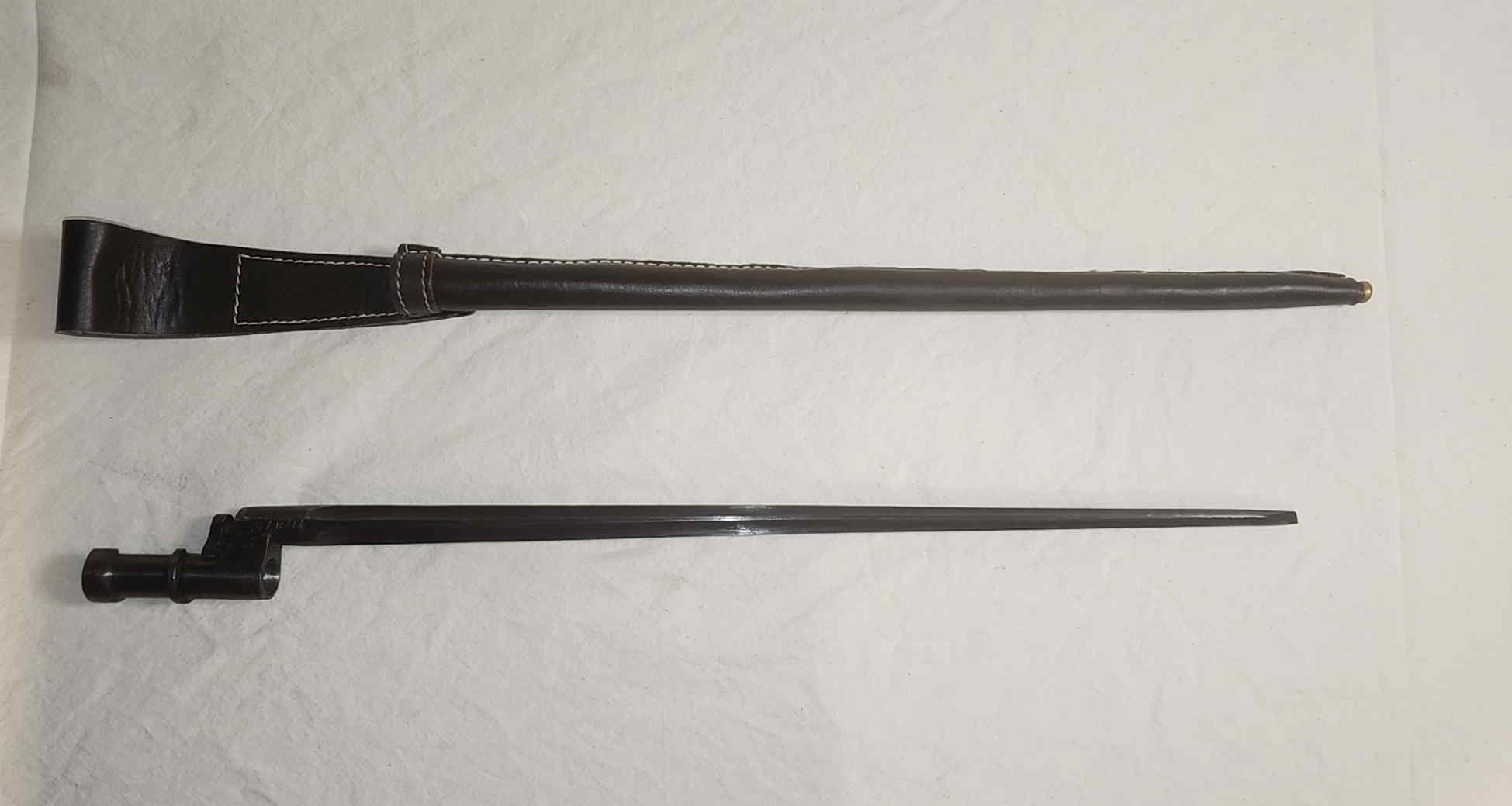
| Sheath | Brown leather brass-tipped reproduction sheath, included for display and storage |
Identification
This artifact is a Soviet Mosin-Nagant M1891/30 socket bayonet, the standard cruciform spike bayonet issued with the M1891/30 rifle. It is identified by its long four-sided blade, cylindrical socket, rotating locking collar, and screwdriver-style chisel point.
The bayonet bears serial number 10875 on the socket area. The small arrow in triangle mark identifies production or acceptance through Izhevsk Arsenal, one of the principal Russian and Soviet arms manufacturing centers associated with Mosin-Nagant rifles and bayonets.
Markings & Serial Numbers
The principal serial marking on this bayonet is 10875. Additional small numerals and inspection marks appear near the serial number and socket collar area. These secondary marks are typical of Soviet military production and inspection practice, but the individual stamps are not interpreted here beyond noting their presence.
The Izhevsk arrow in triangle mark is present on the bayonet. On Mosin-Nagant arms and accessories, this mark is associated with Izhevsk Arsenal production or acceptance. Because the bayonet itself is not dated, the safest identification is by pattern, arsenal mark, and physical features rather than by a precise year.
Design & Development
The Mosin-Nagant rifle family used a socket bayonet from its original Model 1891 form. The M1891/30 rifle retained the same basic Russian idea: a long, rigid spike bayonet mounted over the muzzle rather than a short knife bayonet mounted below the barrel.
The M1891/30 bayonet is a practical and economical military design. Its cruciform blade gave stiffness without the weight of a sword bayonet, while the socket and rotating collar allowed the bayonet to lock onto the rifle without a conventional knife hilt. The chisel-like tip could also serve as a screwdriver point, a feature often seen worn or damaged on examples that saw rough field or postwar utility use.
Russian and Soviet doctrine treated the bayonet as a normal companion to the rifle. Mosin-Nagant rifles were commonly sighted with the bayonet fixed, and the long spike bayonet remained part of the rifle's practical field identity well into the Second World War.
Construction & Features
- Long cruciform spike blade with four reinforcing ribs.
- Flattened screwdriver-style chisel point at the tip.
- Cylindrical socket that fits over the rifle muzzle.
- Rotating locking collar for securing the bayonet to the front sight base and muzzle area.
- Offset socket arrangement placing the blade to the side of the bore when mounted.
- Serial number stamped on the socket area.
- Izhevsk Arsenal arrow-in-triangle mark visible on the locking collar area.
Service Use
The M1891/30 socket bayonet served with the Soviet 7.62×54mmR Mosin-Nagant rifle throughout the Second World War. It was simple to manufacture, rugged, and well suited to mass infantry issue. The bayonet extended the already long rifle into an imposing close-combat weapon, especially in trench, urban, and defensive fighting.
Although formally a bayonet, this type also had routine field utility. The screwdriver point could be useful for equipment maintenance, but it was not a general-purpose knife. Its spike construction was intended for thrusting rather than cutting.
Condition & Collector Notes
This example remains complete and displays well. The socket, locking collar, cruciform blade, and screwdriver-style point are present. The serial number 10875 is clear, and the Izhevsk Arsenal mark remains visible.
A notable condition point is the unmarred screwdriver tip. Many Mosin-Nagant socket bayonets show chipping, rounding, grinding, or abuse at the chisel point from later utility use. The intact point on this example gives the bayonet a stronger collector presentation.
The brown leather brass-tipped sheath shown with the bayonet is a reproduction display sheath. Soviet service bayonets of this type were commonly associated with rifle-mounted carry or armory storage rather than a standard individual leather scabbard. The reproduction sheath is useful for display and storage, but it should not be described as an original Soviet issue scabbard.
Dating & Authentication
The bayonet's socket form, rotating locking collar, cruciform spike blade, screwdriver point, serial placement, and Izhevsk Arsenal mark are consistent with an original Soviet M1891/30 Mosin-Nagant socket bayonet. The piece is undated, so the profile identifies it by pattern and arsenal marking rather than assigning a specific year.
The markings and construction support identification as a Soviet service bayonet for the Mosin-Nagant M1891/30 rifle. The reproduction sheath is a modern accessory and is treated separately from the bayonet itself.
Provenance
Documented as part of the Relics & Rifles collection. The reproduction sheath is included with the object for safe storage and display.