
German S84/98 III Bayonet (43 crs, 1943)
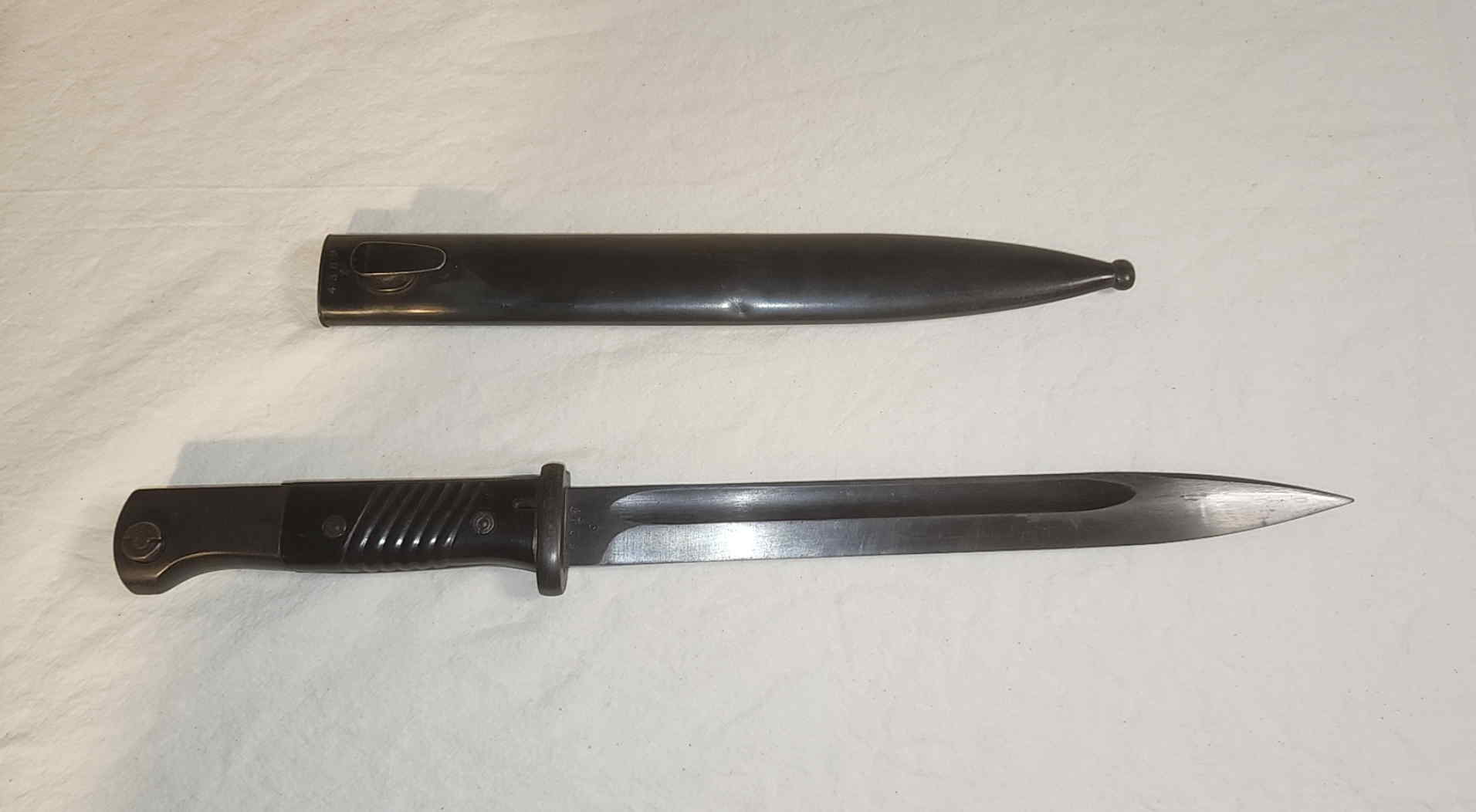
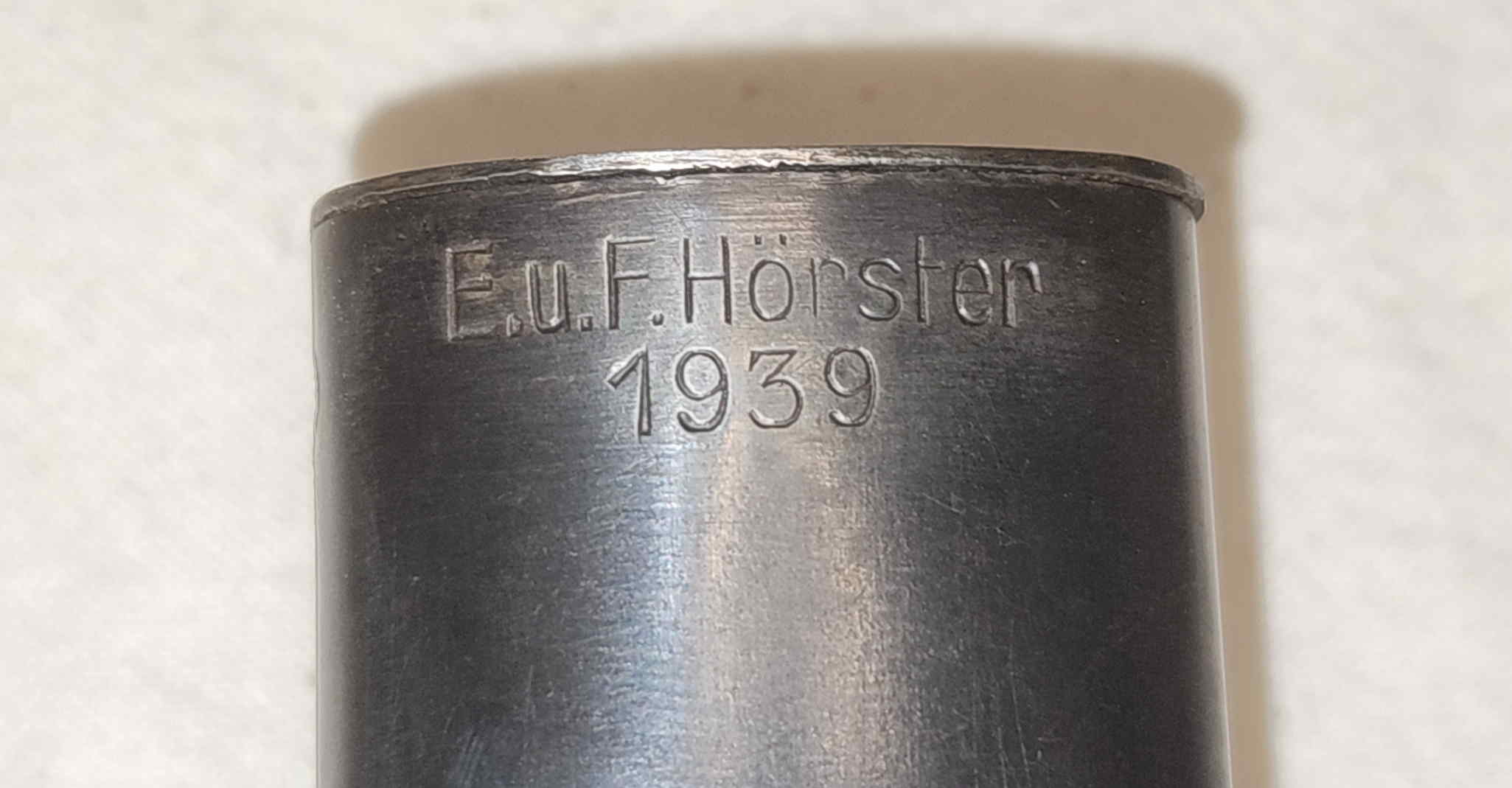
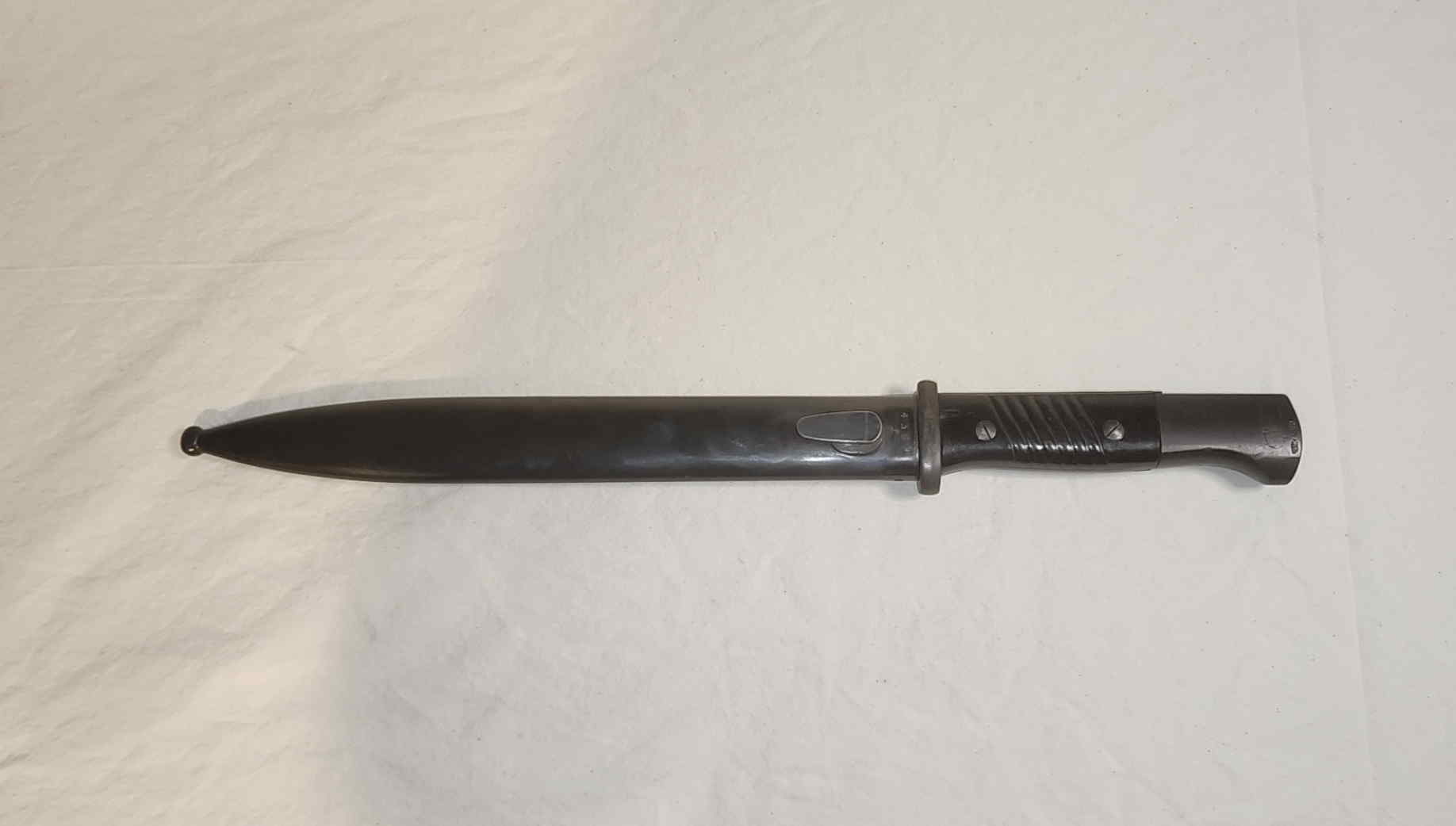
Wartime Karabiner 98k bayonet with dark brown phenolic grips and a 1939 E. u. F. Hörster steel scabbard
Images
Specifications
| General Information | |
|---|---|
| Official Pattern | Seitengewehr 84/98 III |
| Common Collector Name | K98k or Karabiner 98k bayonet |
| Country | Germany |
| Bayonet Manufacturer | Paul Weyersberg & Co., Solingen |
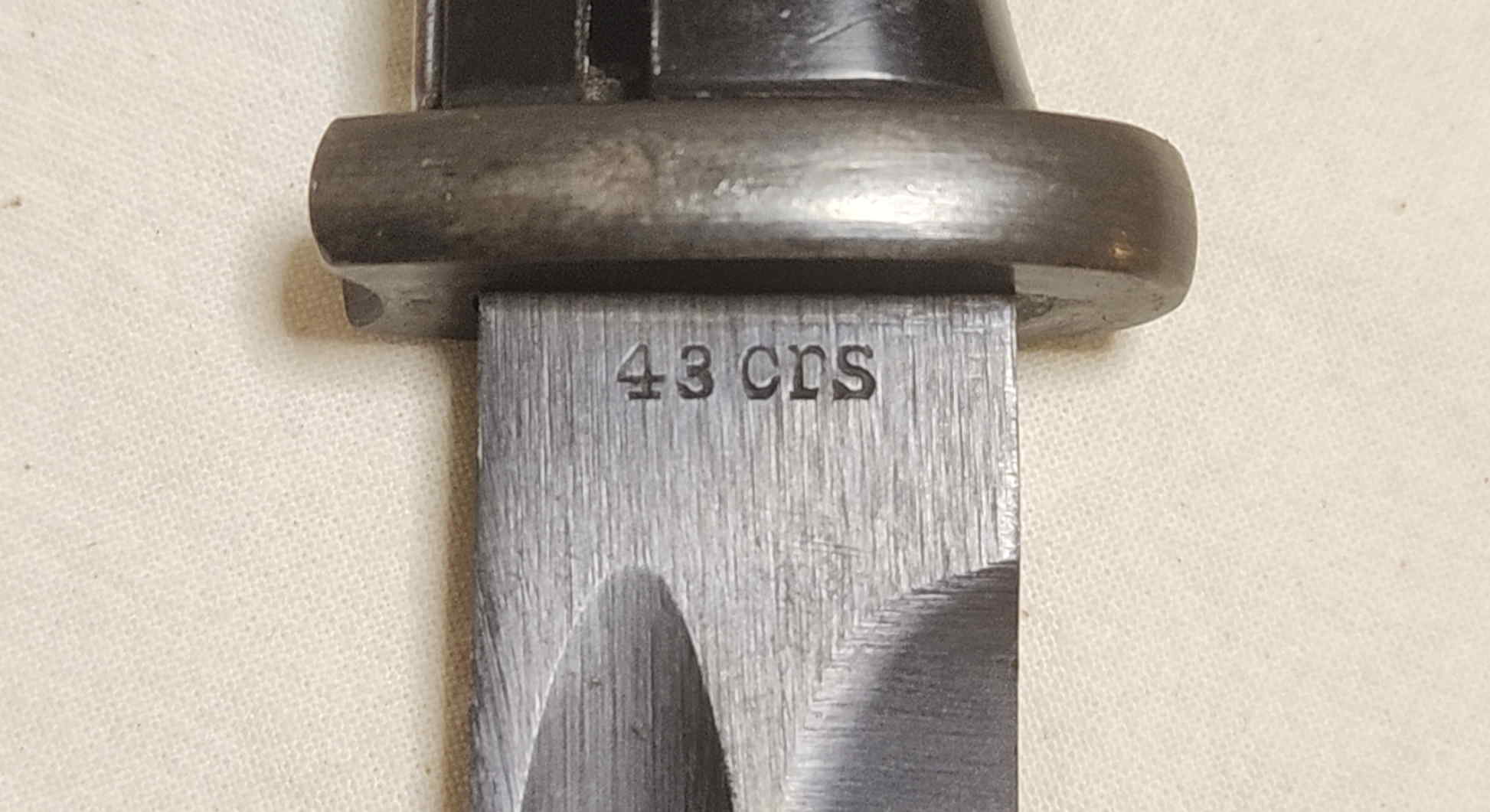
| Bayonet Date and Code | 43 crs, manufactured in 1943 |
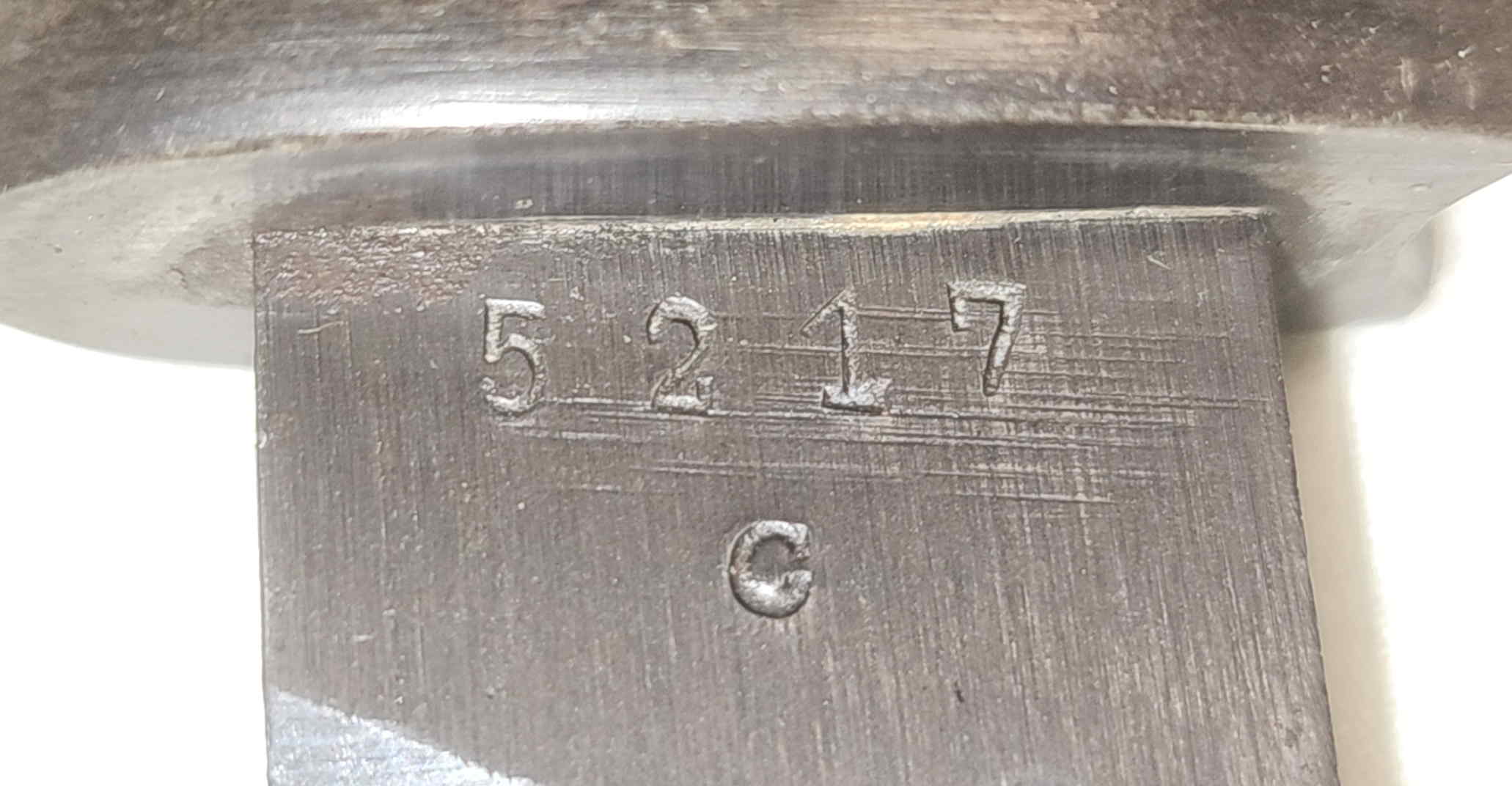
| Bayonet Serial Number | 5217 c |
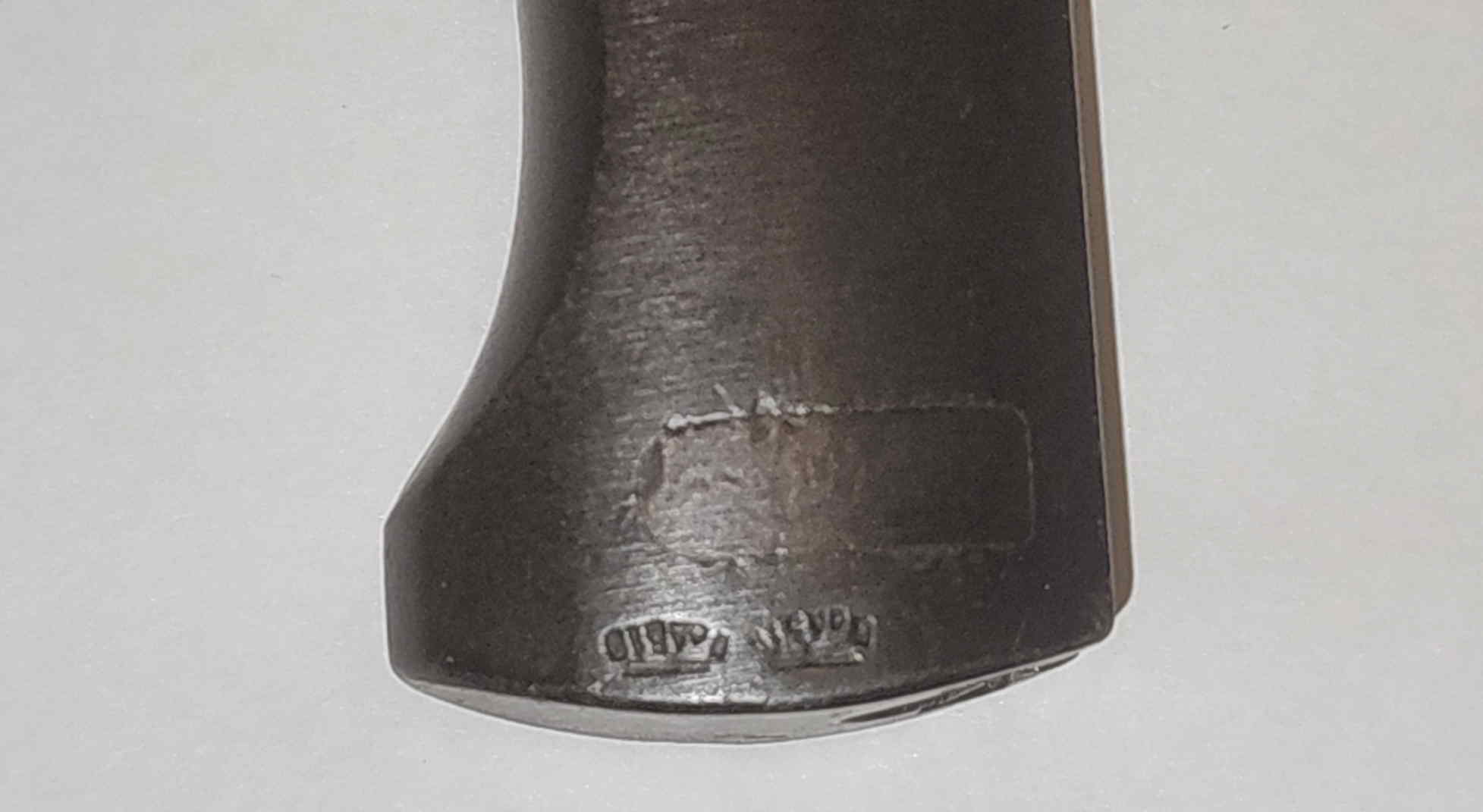
| Acceptance Marks | Two German Waffenamt inspection and acceptance stamps on the pommel; inspector numbers are indistinct in the photograph |
| Grip Material | Dark brown ribbed phenolic resin, commonly called Bakelite |
| Blade | Single-edged spear-point blade with a long fuller and dark blued finish |
| Standard Blade Length | Approx. 9.9 in (252 mm) |
| Standard Overall Length | Approx. 15.2 in (385 mm) |
| Mounting System | Muzzle-ringless Mauser mounting slot with spring-loaded pommel catch |
| Scabbard Manufacturer | E. u. F. Hörster & Co., Solingen |
| Scabbard Date | 1939 |
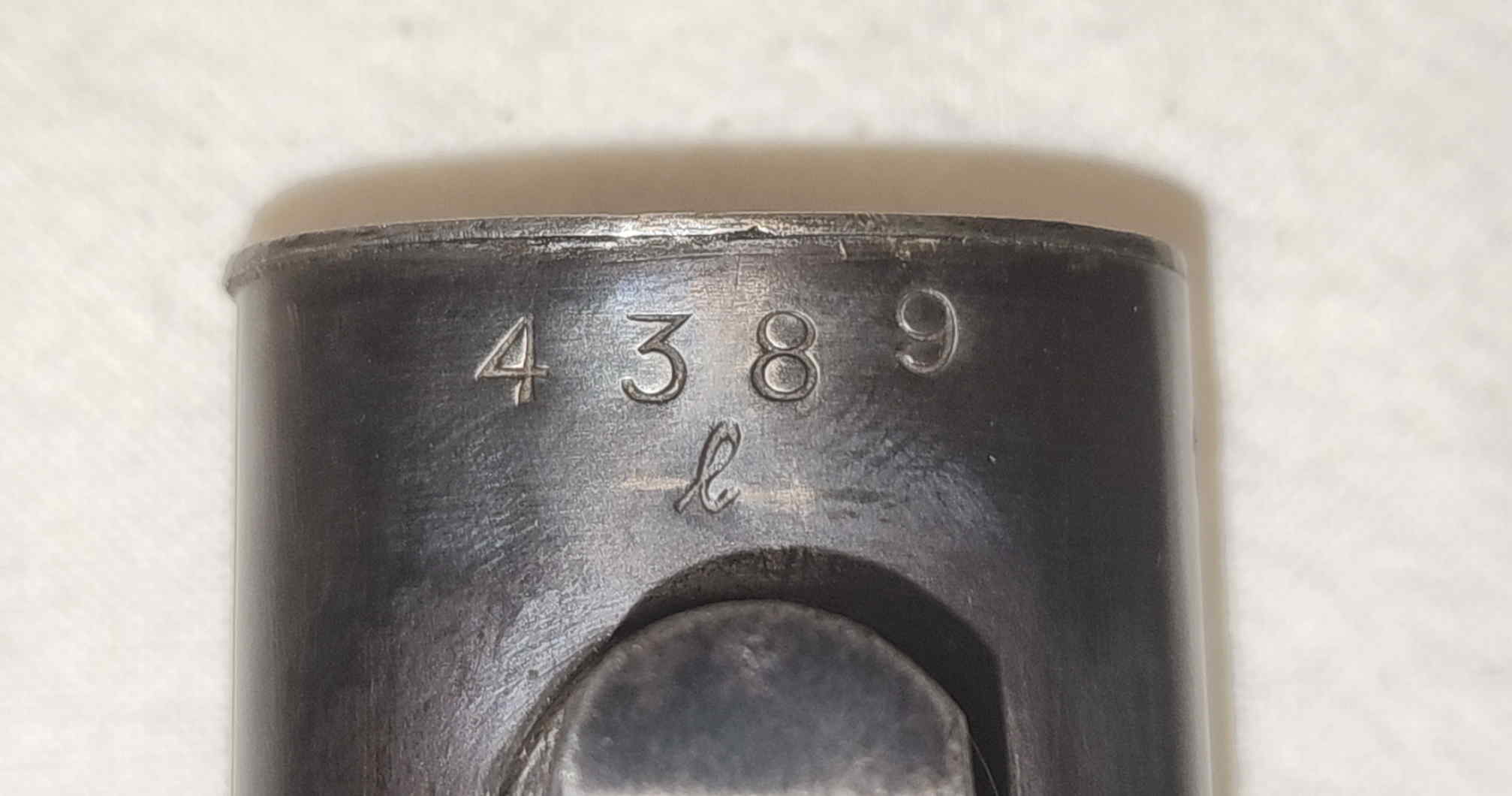
| Scabbard Serial Number | 4389 l |
| Primary Rifle | Karabiner 98k, chambered for 7.92×57mm Mauser |
Identification
This artifact is an original German Seitengewehr 84/98 III, the standard short knife-bayonet most closely associated with the Karabiner 98k rifle during the Second World War. The bayonet was manufactured in 1943 by Paul Weyersberg & Co. of Solingen, identified by the wartime marking 43 crs. Its serial number is 5217 c.
The bayonet is fitted with dark brown ribbed phenolic-resin grip panels, commonly described by collectors as Bakelite. It is accompanied by an original blued-steel scabbard manufactured by E. u. F. Hörster & Co. in 1939. The scabbard is numbered 4389 l, establishing that the two pieces are a wartime but not factory-matched set.
Markings & Serial Numbers
The marking 43 crs combines the two-digit production year with the German wartime letter code assigned to Paul Weyersberg & Co. The opposite ricasso bears serial number 5217 over the lowercase production-block suffix c. German S84/98 III serial numbers were normally issued in blocks of 10,000. After numbers 1 through 9999, production continued with lettered blocks such as a, b, c, and so forth.
Two German Army Waffenamt acceptance stamps are present on the pommel near the grip. Their placement and form are consistent with military inspection marks applied during manufacture.
The scabbard is marked E. u. F. Hörster 1939 on one face and 4389 l on the other. This earlier commercial maker marking reflects the late-1930s system, before three-letter concealment codes became standard.
The S84/98 III was the final major form of a German knife-bayonet family whose origins reached back to the Model 1871/84. The first S84/98 adapted that earlier knife bayonet to the mounting bar of the Gewehr 98. A second pattern returned to production during the First World War, when the German Army required a shorter, lighter bayonet that used less steel than the long sword-bayonets then in service.
The improved third pattern was produced during the late Weimar period and again in large quantities after the Karabiner 98k was adopted in 1934. Its short blade, compact hilt, and relatively economical construction made it well suited to modern infantry equipment. It became the most widely issued German bayonet of the Second World War.
Unlike many earlier military bayonets, the S84/98 III has no muzzle ring. The Mauser rifle's substantial bayonet mounting bar supported the weapon without contact around the muzzle, avoiding the potential effect of a muzzle ring on rifle accuracy.
The S84/98 III was issued primarily with the 7.92×57mm Karabiner 98k and accompanied German troops across every major theater in which the rifle served. Although designed for attachment to the rifle during close combat, bayonets were also useful as general field knives for opening containers, cutting cordage, preparing positions, and other routine tasks.
The 1943 manufacture date places this example in the middle of Germany's wartime production period, when the Karabiner 98k remained the standard German service rifle and demand for replacement weapons and equipment was extremely high.
The bayonet is complete and remains in very good display condition. The dark brown grip panels are intact, with their diagonal ribbing clearly defined. The grip screws, crossguard, flash guard, pommel, locking catch, and mounting slot are present. Two Waffenamt acceptance stamps remain visible on the pommel.
Direct examination indicates that the blade retains approximately 80 percent of its original dark blued finish. The finish appears blue-black under ordinary lighting and is strongest through the fuller and near the ricasso, with localized thinning and bright wear toward portions of the cutting edge and point. The blade should therefore be described as substantially finish-retaining rather than polished bright.
The 1939 Hörster scabbard retains much of its dark finish and displays normal age, surface wear, and shallow handling marks. The frog stud, throat, and ball finial remain present.
The bayonet's form, dimensions, molded grip style, flash guard, Mauser mounting system, serial placement, letter-block suffix, 43 crs marking, and Waffenamt acceptance stamps are consistent with original 1943 German S84/98 III manufacture by Paul Weyersberg & Co. The scabbard's construction, commercial Hörster marking, 1939 date, serial placement, frog stud, and blued finish are likewise consistent with original prewar German military production.
Taken together, the visible evidence identifies an authentic 1943 Paul Weyersberg bayonet with an authentic earlier 1939 E. u. F. Hörster scabbard. The preserved blued blade, dark brown grips, legible markings, and visible acceptance stamps make the set a strong representative example of the standard German Karabiner 98k bayonet.
Design & Development
Construction & Features
Service Use
Condition & Collector Notes
Dating & Authentication