Italian M1938 “Pugnale-Baionetta” Bayonet (Fixed Variant)
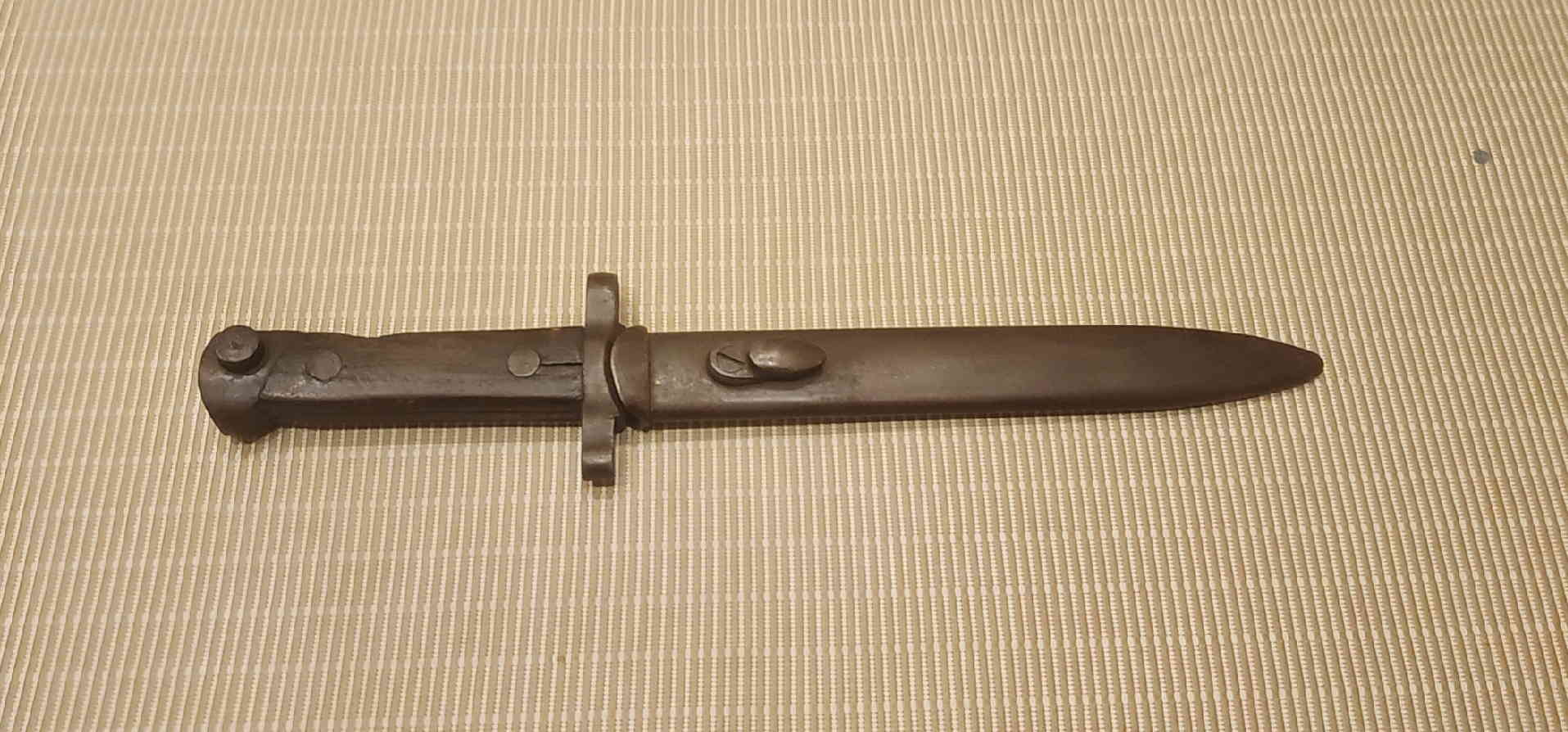
Fixed knife-bayonet for the Fucile Mod. 38 short rifle (6.5 mm Carcano)
Images
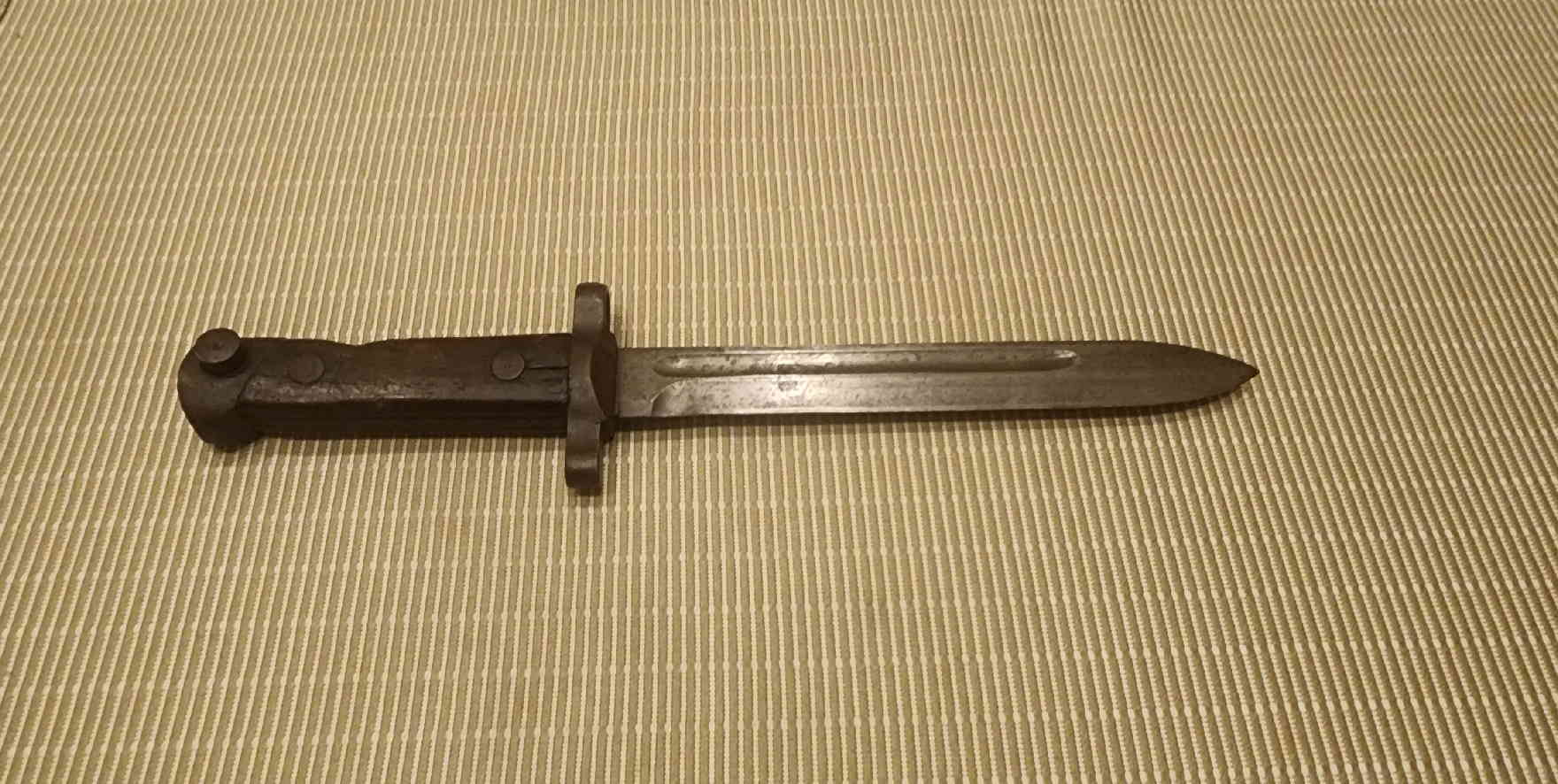
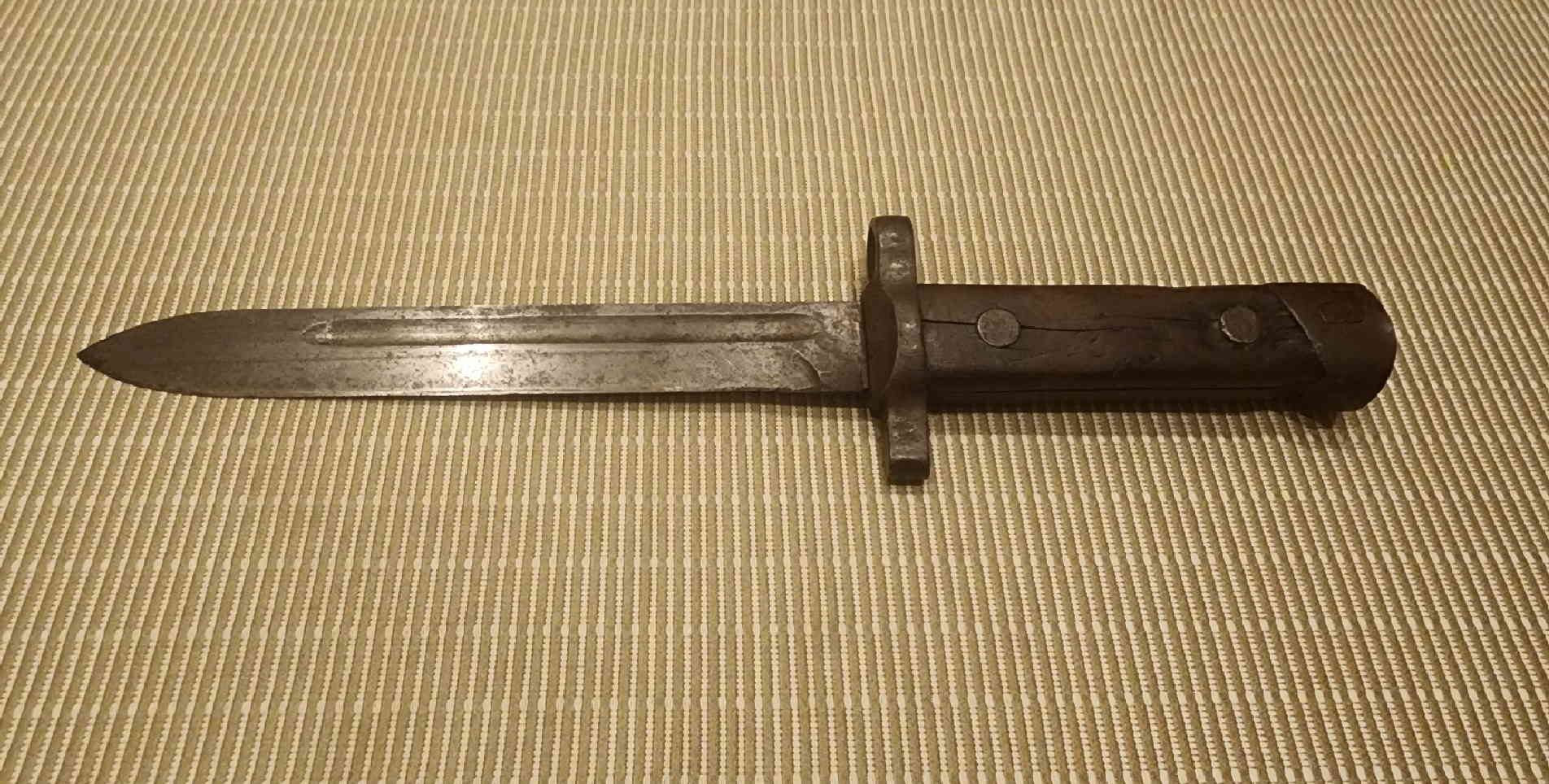
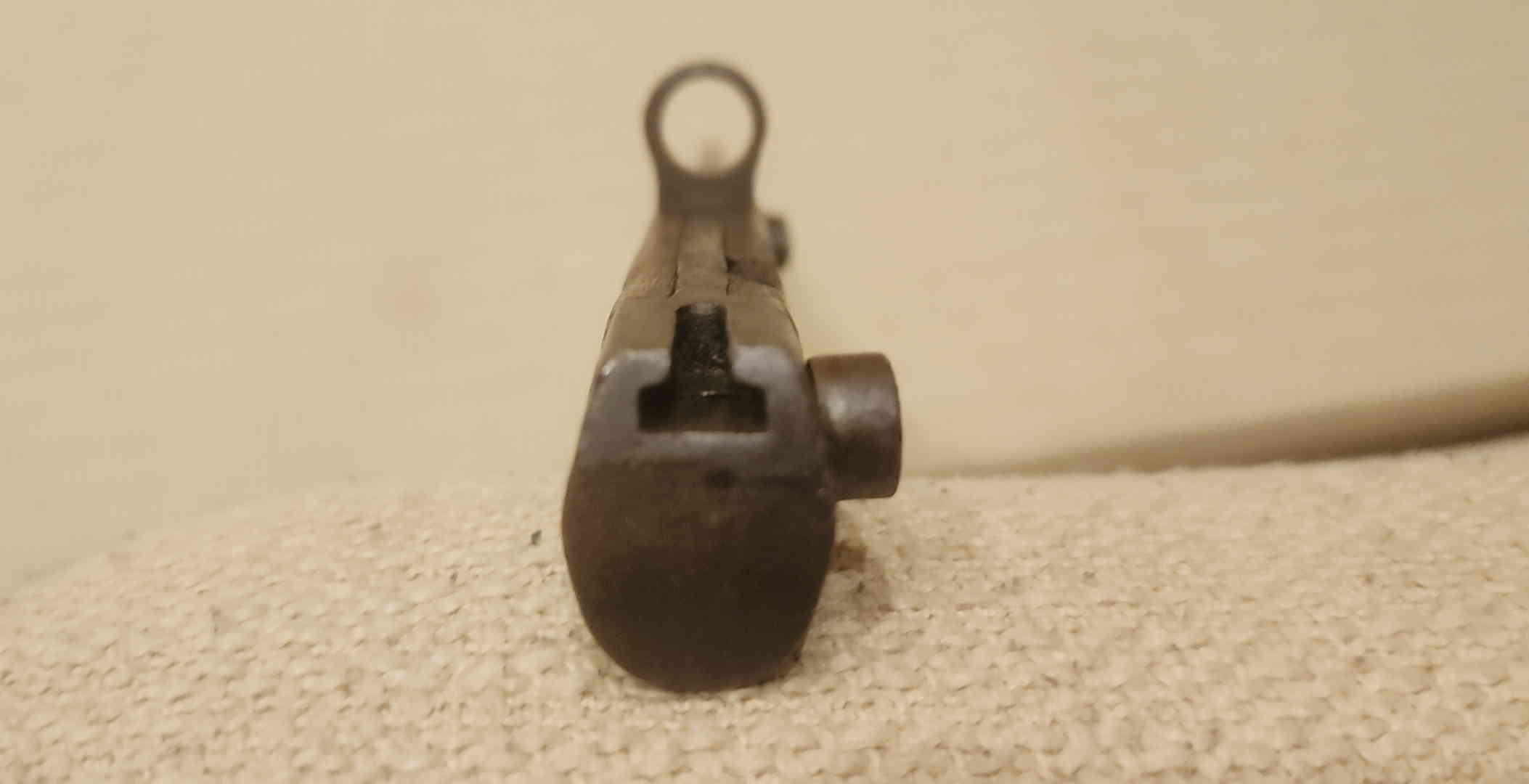
Specifications
| General Information | |
|---|---|
| Model | Italian M1938 “Pugnale-Baionetta” (fixed blade) |
| Country | Kingdom of Italy |
| Type | Detachable knife-bayonet with separate scabbard |
| Era | World War II (c. 1940–1945) |
| Blade Length | Approx. 7.3 in (18.5 cm) |
| Overall Length | Approx. 12.0 in (30.5 cm) |
| Blade Type | Dagger-like spear point with single fullers on each face |
| Attachment | Muzzle ring plus spring-loaded pommel catch engaging rifle bayonet lug |
| Scabbard | Blued steel scabbard with tear-drop frog stud |
| Compatibility |
Designed for the Fucile Mod. 38 short rifle (6.5 mm M38 Carcano; fixed-bayonet variant). |
| Markings | No visible maker or serial markings on this example; likely late-war or depot-refurbished production. |
Design & Development
The M1938 bayonet was introduced alongside Italy’s new Fucile Mod. 38 short rifle. Breaking with the long “sword” bayonets of earlier Carcano models, it was conceived as a true pugnale-baionetta – a compact knife-bayonet, styled after contemporary Fascist combat daggers. Early M1938 patterns were folding bayonets that stowed in a slot in the rifle’s fore-end, allowing the blade to fold back into the stock when not in use.
In the field, this folding system proved fragile and unnecessarily complex. Mechanisms jammed with dirt, were difficult to maintain, and offered little real advantage in combat. As World War II progressed, Italian arsenals simplified the design by eliminating the folding feature entirely. Existing folding bayonets were modified to lock in the open position, and new production shifted to purpose-built fixed bayonets with conventional grips and separate scabbards.
Fixed Variant & Features
- Simplified, solid hilt construction with wooden grips pinned to a full tang, replacing the earlier folding hinge hardware.
- Conventional steel crossguard with muzzle ring and forward quillon.
- Standard Carcano bayonet mounting system: a spring-loaded press-stud catch in the pommel engages the rifle’s bayonet lug.
- Medium-length spear-point blade with central fullers – suitable both as a combat knife and as a bayonet.
- Separate blued-steel scabbard with frog stud for belt carry, issued once the folding feature was abandoned.
- This example shows no visible maker or serial markings, consistent with late-war production or depot refurbishment where standard marking practice was sometimes skipped.
Service Use & Deployment
The fixed M1938 bayonet entered service around 1940, as the Italian Army phased out the problematic folding design. By 1941, infantry units equipped with the 6.5 mm M38 short rifle were typically issued this fixed bayonet and scabbard, while units still armed with earlier M1891 rifles carried the long 1891 bayonet.
In combat, the pugnale-baionetta saw service wherever M38 rifles were deployed: North Africa, the Balkans, the Eastern Front, and home defense. As with most WWII bayonets, it was used as much for daily chores – cutting wire, opening tins, and general field tasks – as it was for close-quarters fighting.
After the 1943 armistice, many M38 rifles and bayonets were seized by German forces or captured by the Allies. U.S. servicemen frequently kept the compact Italian bayonet as a souvenir, contributing to the number of examples found today in overseas collections.
Rarity & Identification Notes
- This bayonet represents the purpose-made fixed variant, not a simple “locked-open” conversion of a folding bayonet.
- Lack of markings suggests either late-war manufacture or depot-level work where re-serialization was omitted.
- The steel scabbard with tear-drop frog stud is typical of M38 bayonets and helps distinguish complete, matching sets from loose blades.
- Surviving fixed M1938 bayonets are scarcer than earlier M1891 long bayonets due to lower production numbers and post-war attrition, making complete, honest-service examples desirable to Carcano collectors.
Together with a correct M38 short rifle, an M1938 fixed bayonet like this one provides a compact and visually distinctive snapshot of Italy’s late-war small-arms development.