Japanese Arisaka Type 99 Short Rifle
Japanese Arisaka Type 99 Short Rifle
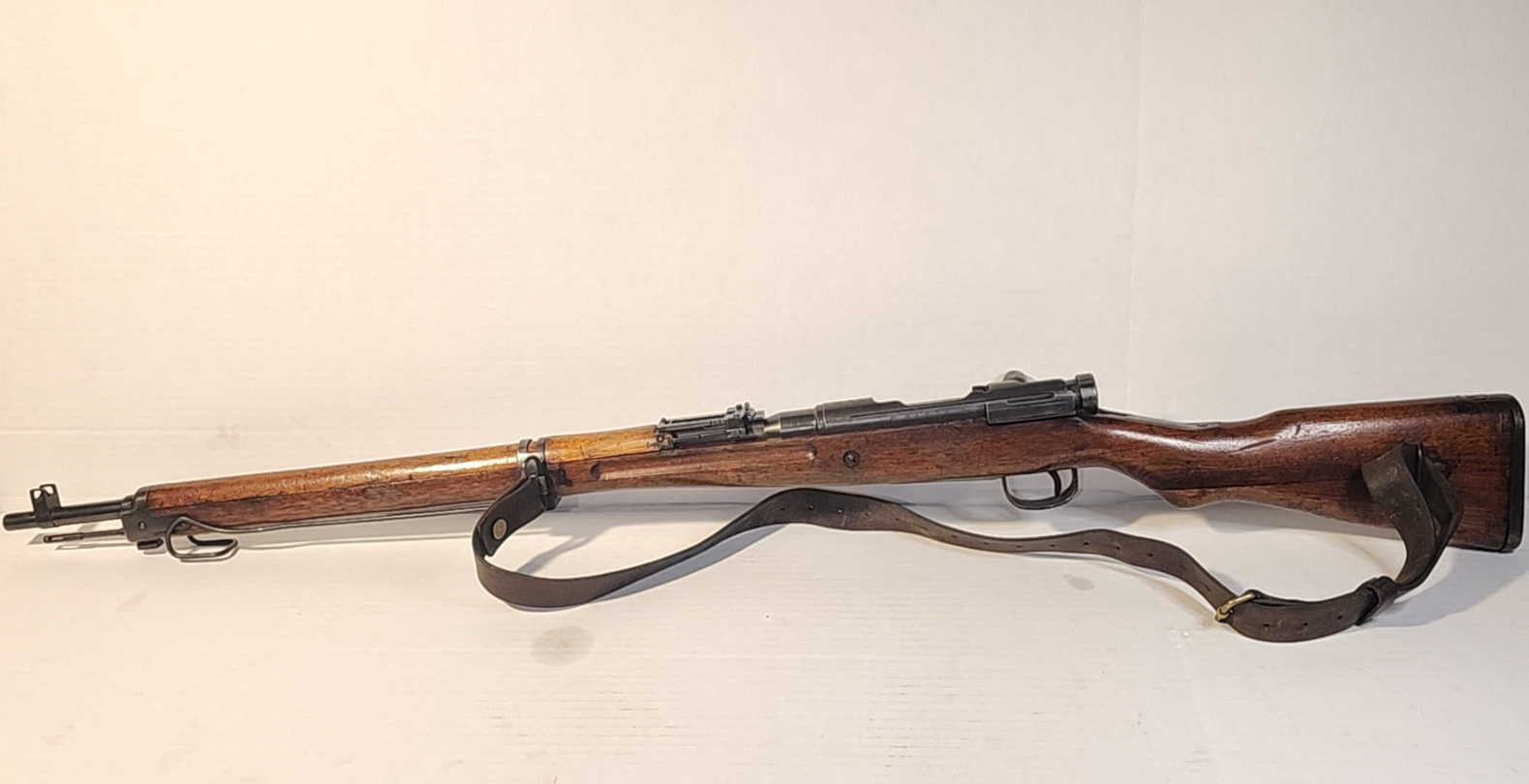
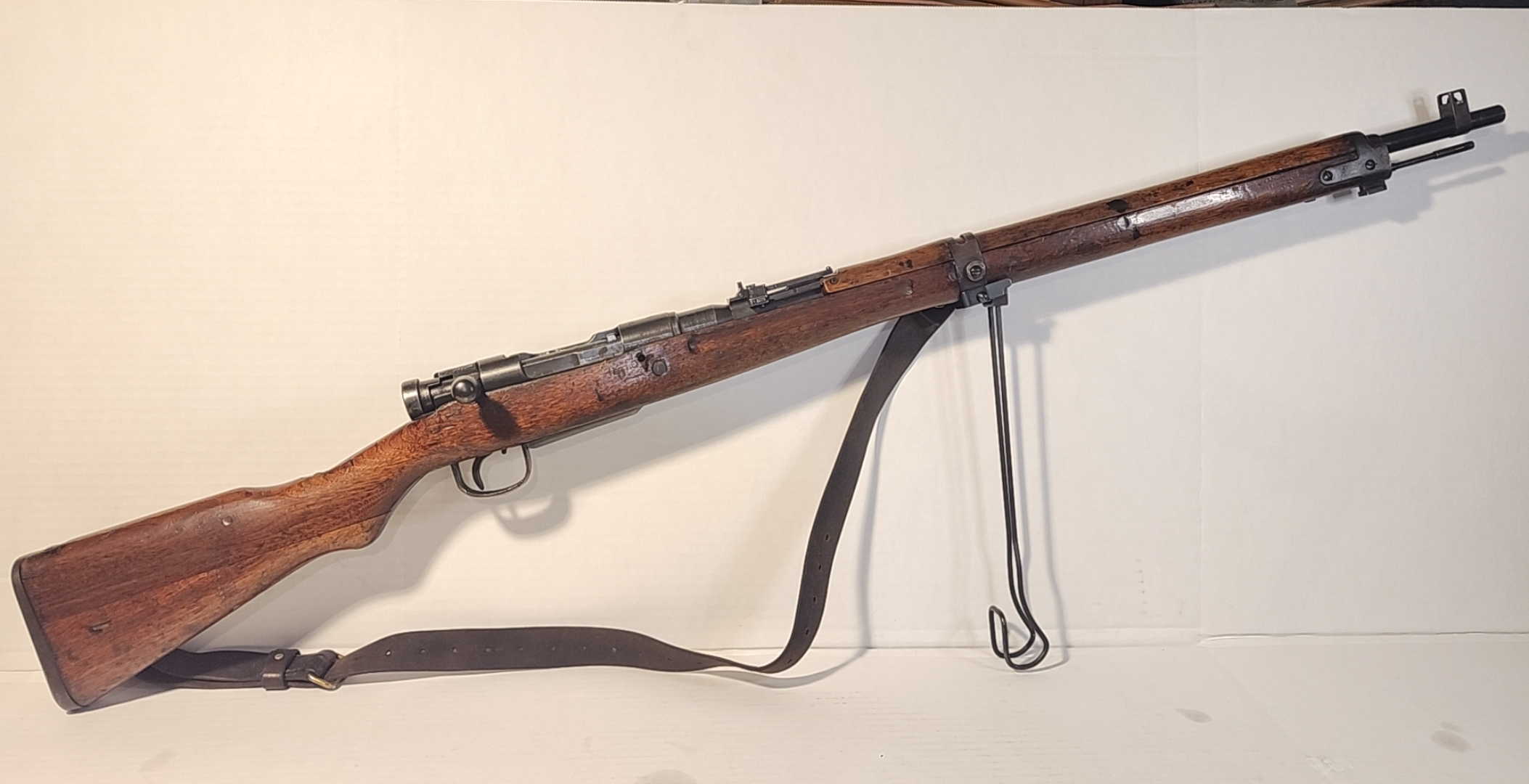
Kokura Arsenal, 22nd series, serial no. 31876. Early pattern features include anti-aircraft rear sight wings, dust cover, long cleaning rod, and reproduction monopod.
Images
Specifications
| General Information | |
|---|---|
| Model | Arisaka Type 99 short rifle (九九式短小銃) |
| Cartridge | 7.7×58mm Arisaka |
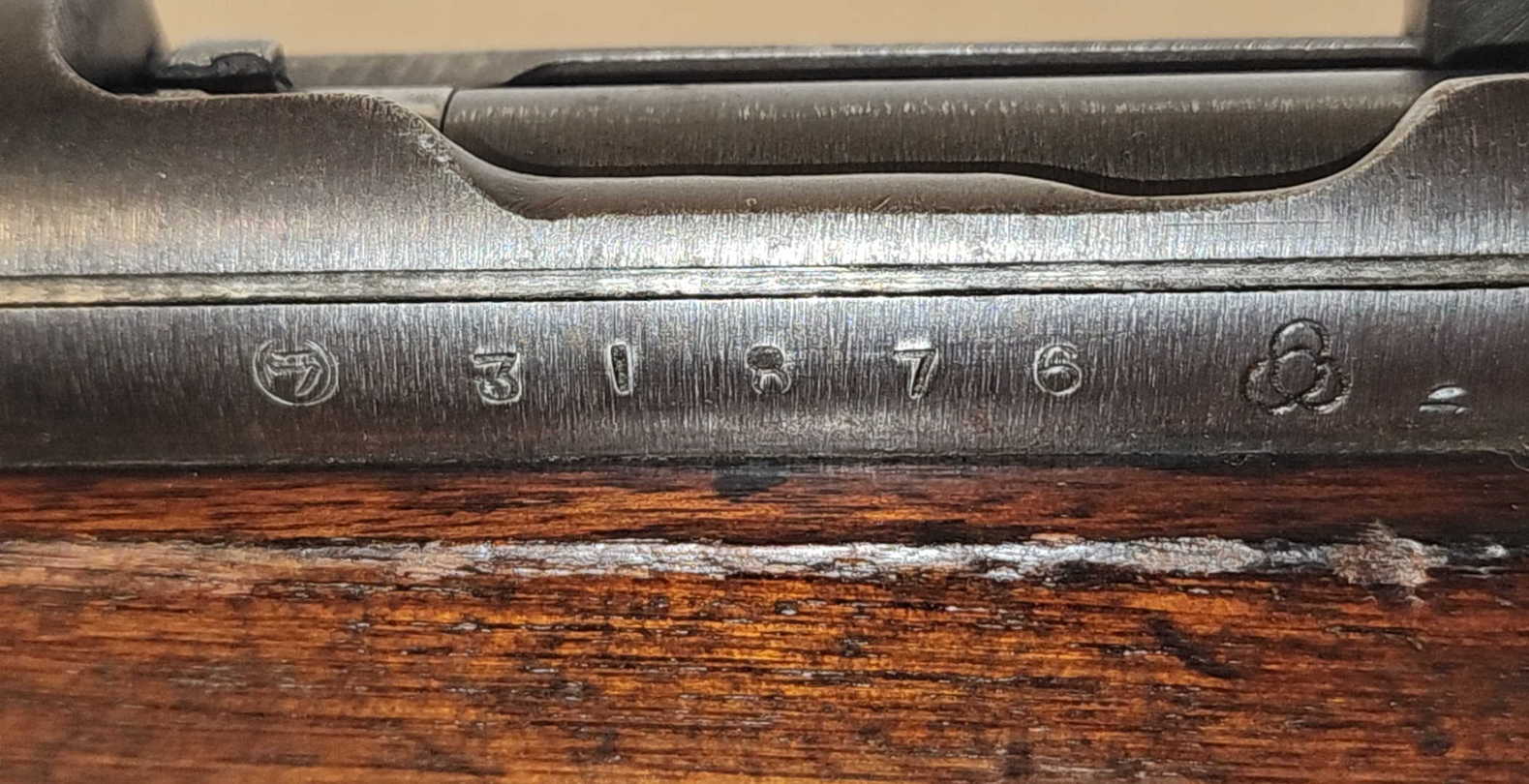
| Arsenal | Kokura Arsenal (stacked cannonballs / trefoil symbol) |
| Series | 22nd series (circled kana series mark) |
| Serial Number | 31876 |
| Estimated Production | Approximately 1942 to 1943 (series-level estimate) |
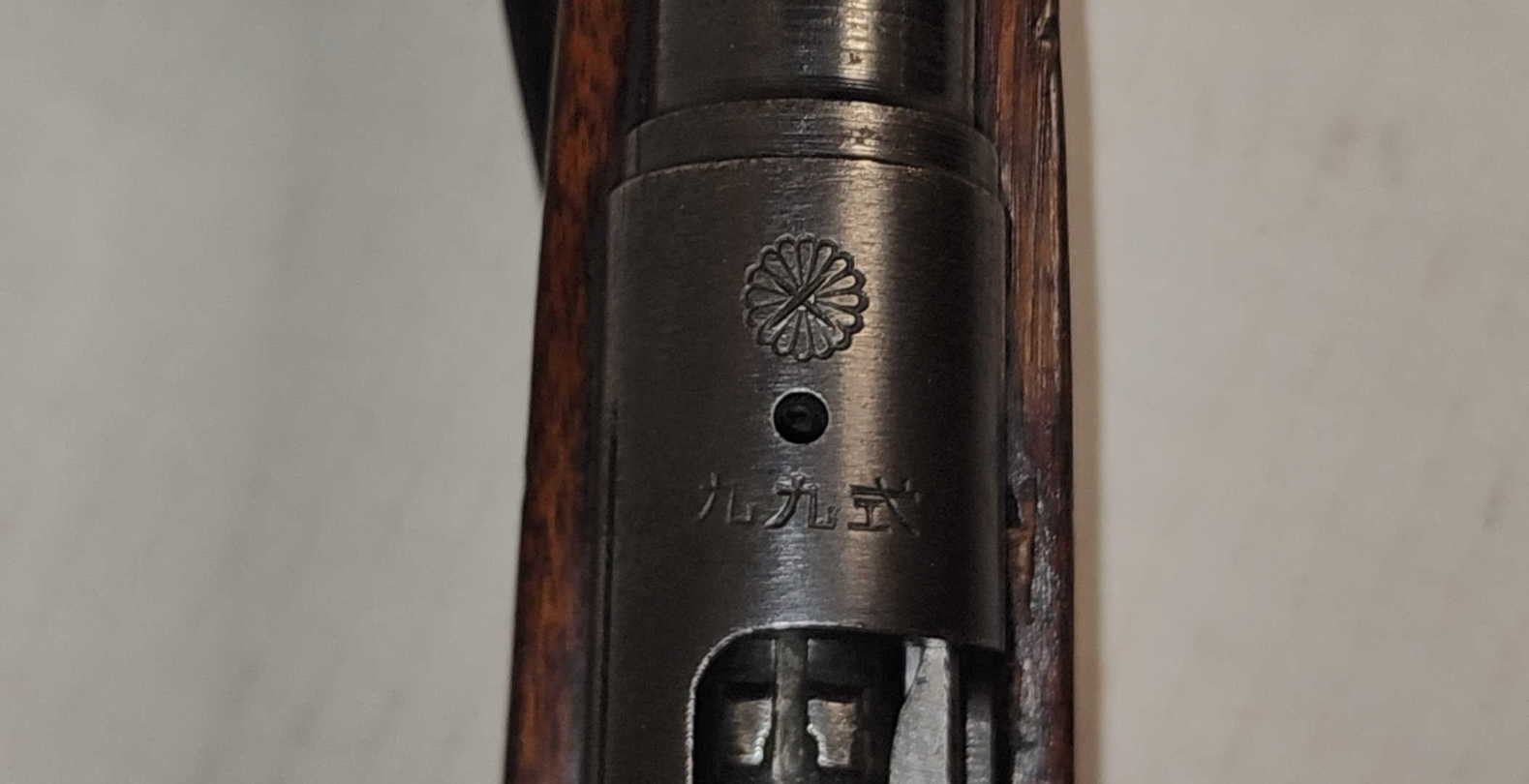
| Imperial Chrysanthemum | Mum present, with a visible impact cross on the crest |
| Features Present | Anti-aircraft rear sight wings, sliding dust cover, long cleaning rod, and reproduction monopod. |
Primary Markings Observed
- Receiver (left): circled series mark, serial number 31876, Kokura Arsenal symbol.
- Receiver ring: 16-petal imperial chrysanthemum (mum) present and Type 99 designation.
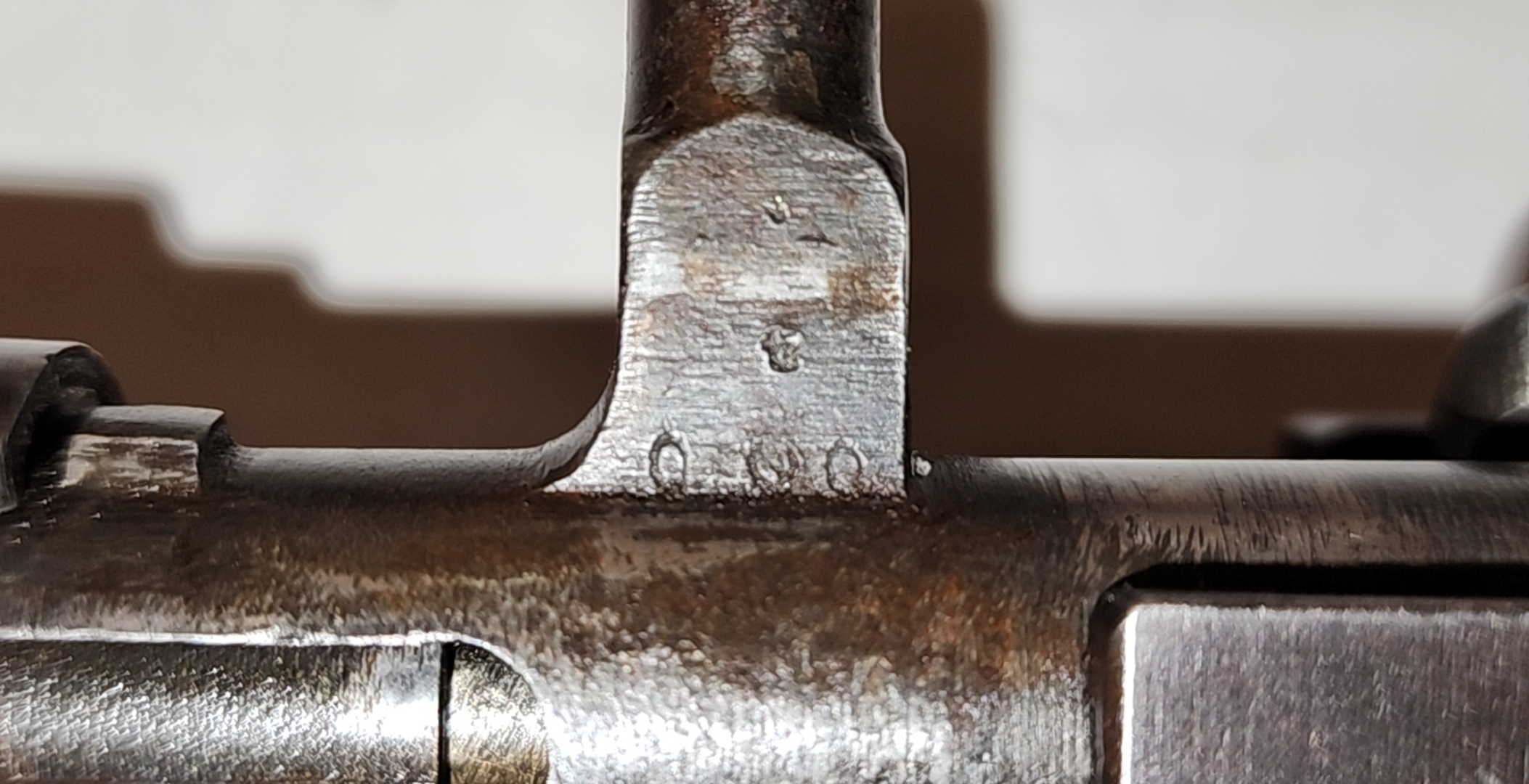
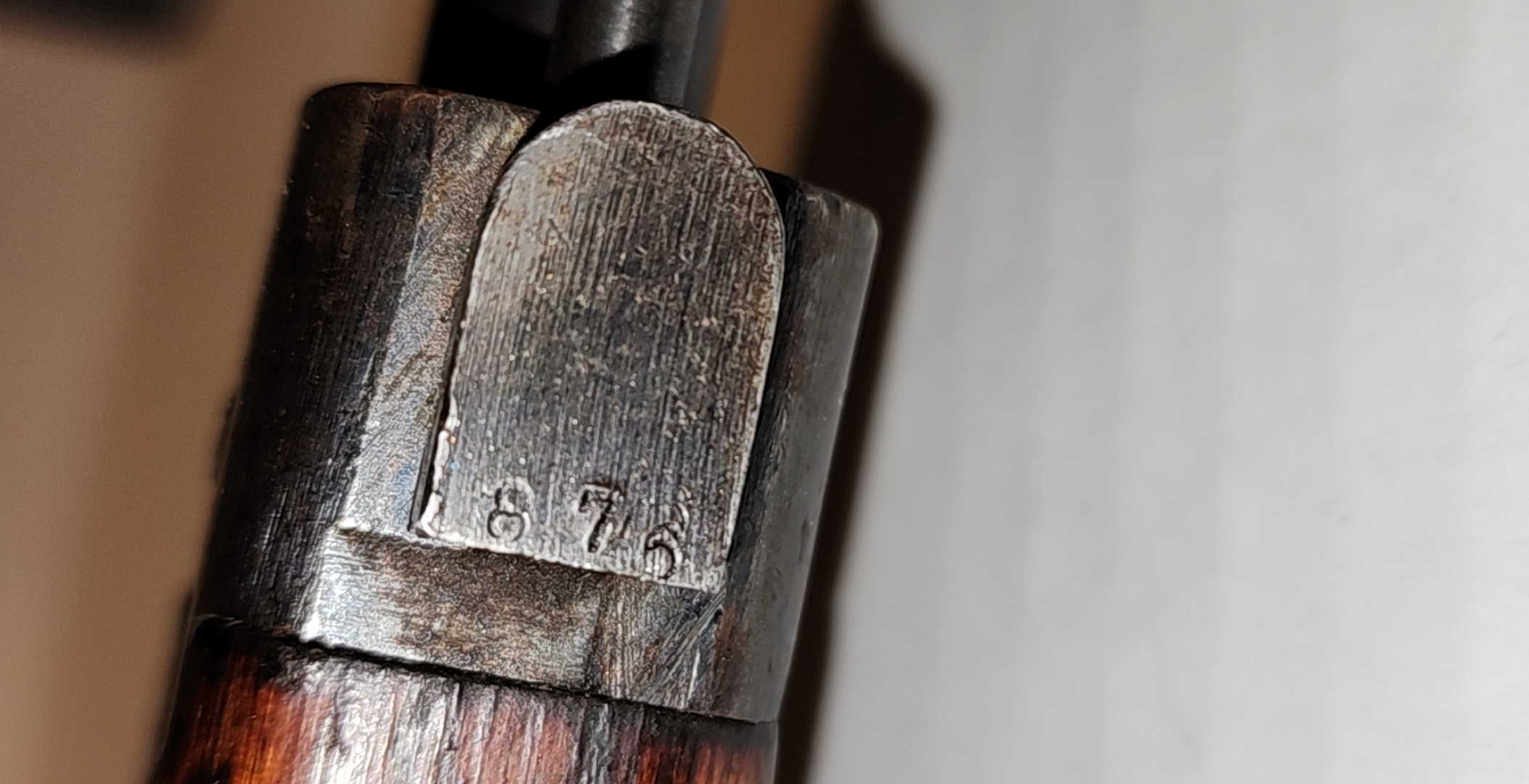
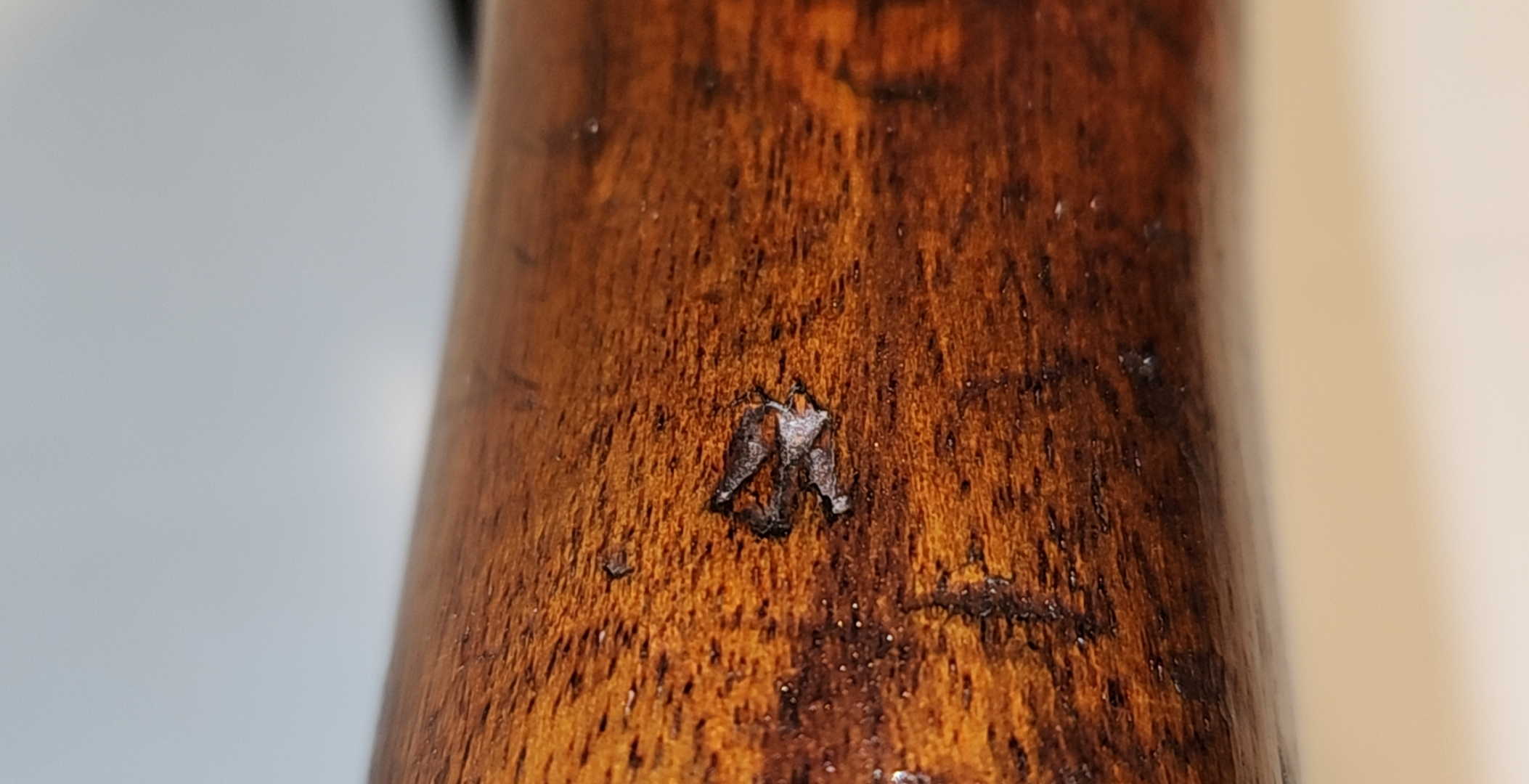
- Small parts: bayonet lug marked 876 (matches receiver last three digits). Bolt handle root marked 000 (non-matching).
Observed Serial Numbers and Parts
Type 99 rifles often show mismatched serial numbers on removable parts due to wartime repairs, postwar parts mixing, and the way some components were hand-stamped. The table below records markings visible.
| Serials and Part Markings | |
|---|---|
| Receiver | 31876 |
| Bayonet lug | 876 |
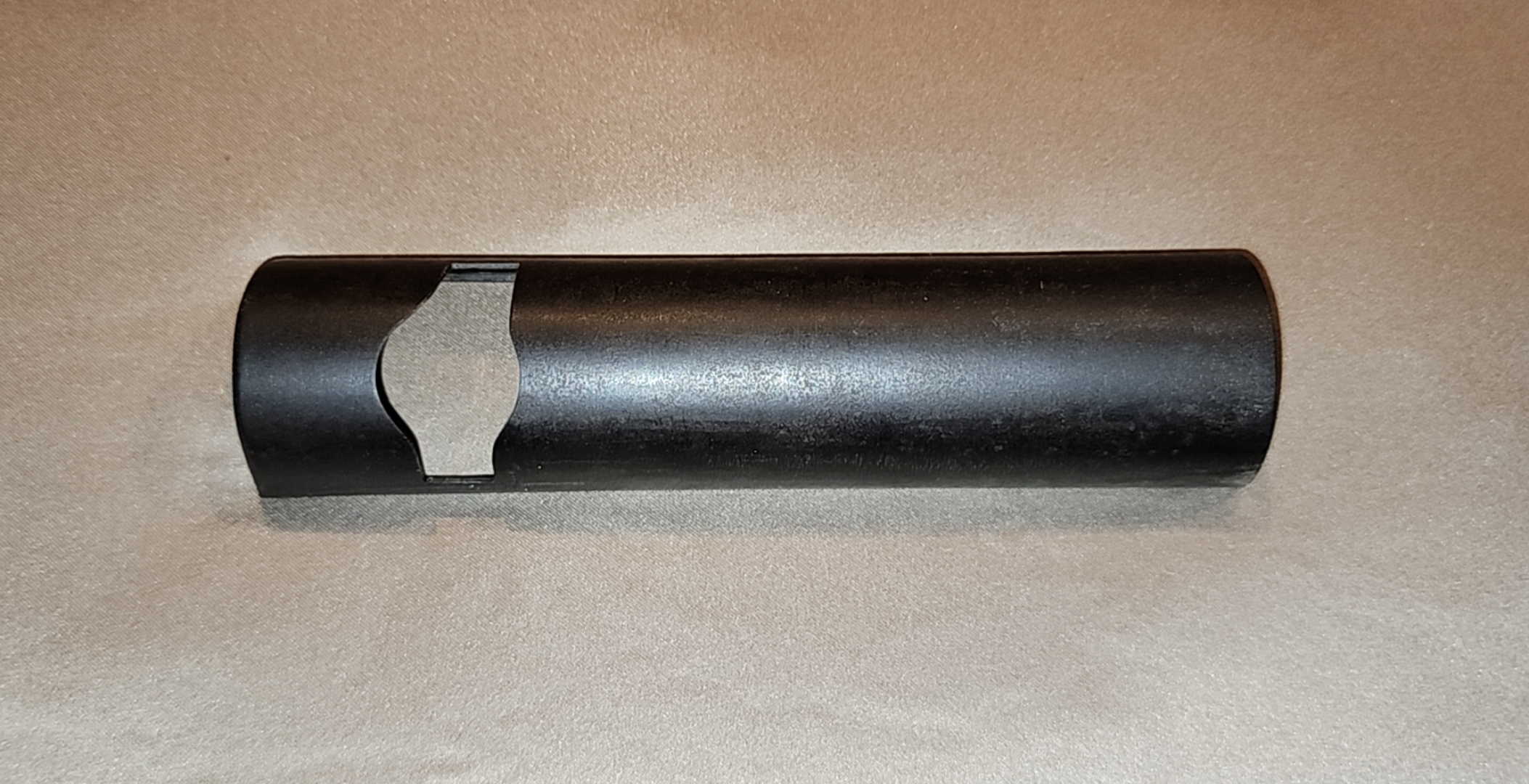
| Dust cover | 806? (present, stamp weak and not fully legible) |
| Bolt handle root | 000 |
| Firing pin | 176 |
| Monopod | No serial observed |
Historical Background and Context
Why Japan adopted the Type 99
Japan entered the 1930s still fielding the Type 38 rifle in 6.5×50mm. The Type 38 was accurate, reliable, and well liked, but combat in China highlighted limits that were hard to ignore. As the war expanded, Japanese planners wanted a heavier bullet for improved performance at longer ranges and for better effect against cover, field works, and light barriers.
The Type 99 was adopted in 1939 and chambered for the 7.7×58mm cartridge, bringing the standard infantry rifle closer to the performance of contemporary full-power service cartridges while retaining the strong Arisaka bolt action design. Early production focused on well finished rifles with chrome-lined bores, quality machining, and accessories intended to support field service in varied climates.
Design features and the early accessory set
Several early pattern Type 99 rifles were equipped with a sliding dust cover, a folding monopod, and rear sights fitted with folding anti-aircraft wings. In theory, the wings were meant to help estimate lead for engaging low flying aircraft, although in practice it was more of an aspirational feature than a consistently effective one. These early fittings are frequently missing today, either because they were removed in service due to rattle and snagging, or because they were separated from the rifle in surplus handling and later civilian ownership.
The rifle documented on this page displays the early accessory set: the dust cover is present, the reproduction monopod attached, and the rear sight includes the anti-aircraft wings.
Production pressure and wartime simplification
As World War II intensified, Japan faced shortages of raw materials, machine time, and skilled labor. Like many combatant nations, it responded by simplifying manufacturing operations, eliminating features that were not essential to function, and accepting rougher external finish. Late-war Type 99 rifles can show simplified sights, crude machining, omitted accessories, and changes to stock hardware. Even with these cost-saving measures, the basic action remained strong, and many late rifles still function reliably despite their plain appearance.
Kokura Arsenal, series marks, and practical dating
Japanese military rifles commonly use an arsenal symbol and a series mark alongside the serial number. The series system helps separate serial blocks so that numbers can repeat across different series without confusion at the arsenal level. This rifle is marked for Kokura Arsenal and shows the 22nd series mark. Collector reference tables commonly place Kokura 22nd series Type 99 production in the 1942 to 1943 timeframe, which aligns well with the continued presence of early pattern features.
The imperial chrysanthemum and why many were defaced
The chrysanthemum crest on the receiver ring was the imperial property mark. After Japan’s surrender, many rifles had the crest defaced as part of the formal process of turning arms over to occupying forces and removing the direct imperial association. In the collector world, an intact crest is often associated with rifles taken earlier in the war, but the reality is messier. Some rifles with intact crests entered the United States and Commonwealth countries through a range of pathways, and some defaced rifles were also captured in combat or acquired through authorized postwar channels.
On this example, the crest remains present but shows a distinct impact cross. That kind of marking can reflect field handling, intentional striking, or later damage, and it is best documented and described exactly as observed rather than over-interpreted.
Type 99 rifles in the Pacific War
The Type 99 served throughout the Pacific War in environments that punished metal and wood: salt air, tropical humidity, volcanic dust, and continuous field movement. Accounts from Allied troops commonly describe Japanese rifles as rugged and reliable, with strong receivers and good practical accuracy for battlefield ranges. Many Type 99 rifles were recovered from islands and jungle battlefields, while others were collected after the war from occupation stockpiles and battlefield clearance operations.
Today, a Type 99 rifle with early fittings intact provides a tangible snapshot of Japan’s attempt to modernize its infantry arm while fighting a global war under tightening industrial constraints. When paired with clear documentation of markings and configuration, it makes a strong educational artifact as well as a collectible rifle.
Collector Notes
This Kokura 22nd series rifle retains several accessories that are frequently removed or missing: anti-aircraft sight wings, a monopod, a dust cover, and a long cleaning rod. These features make it especially useful as a reference example when comparing mid-war Type 99 configuration to later simplifications.
The bayonet lug marking matches the receiver’s last three digits, while other small parts do not. That pattern is common in surviving Type 99 rifles. and does not, by itself, indicate anything wrong. Recording what is present, what is mismatched, and what is unclear is usually more valuable than chasing a perfect matching set that may never have existed after decades of service and storage.
Provenance
Photographed and documented for the Relics & Rifles archive.