Soviet Maxim M1910 250-Round Belt Ammunition Can
Pressed-steel belt can for the PM M1910 / M1910/30 Maxim machine gun, intended for a 250-round 7.62×54mmR belt load.
Images
Specifications
| General Information | |
|---|---|
| Type | Machine gun belt ammunition can (Maxim pattern) |
| Country | Soviet Union (USSR) |
| Service Branch | Primarily Red Army and allied users (storage and export also common) |
| Associated Weapon | PM M1910 / M1910/30 Maxim machine gun |
| Caliber | 7.62×54mmR |
| Capacity | 250-round belt |
| Material | Pressed steel body with hinged lid; canvas carry handle |
| Dimensions | Approx. 26.2 × 26 × 8.7 cm (about 10 × 10 × 3.25 in) |
Identification
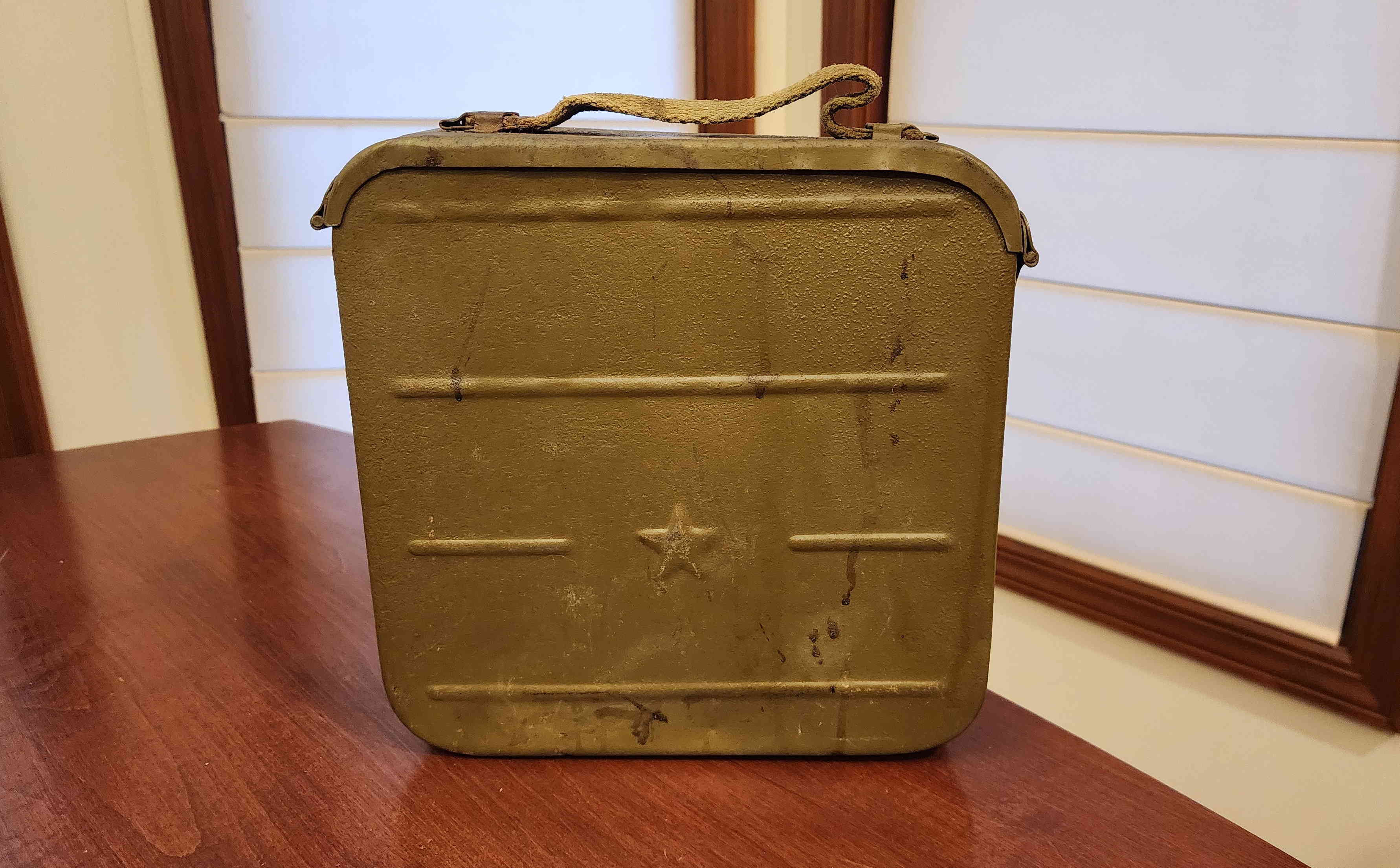
This can is identified as a Soviet belt ammunition can for the Maxim PM M1910 / M1910/30 machine gun (7.62×54mmR), with a 250-round belt capacity.
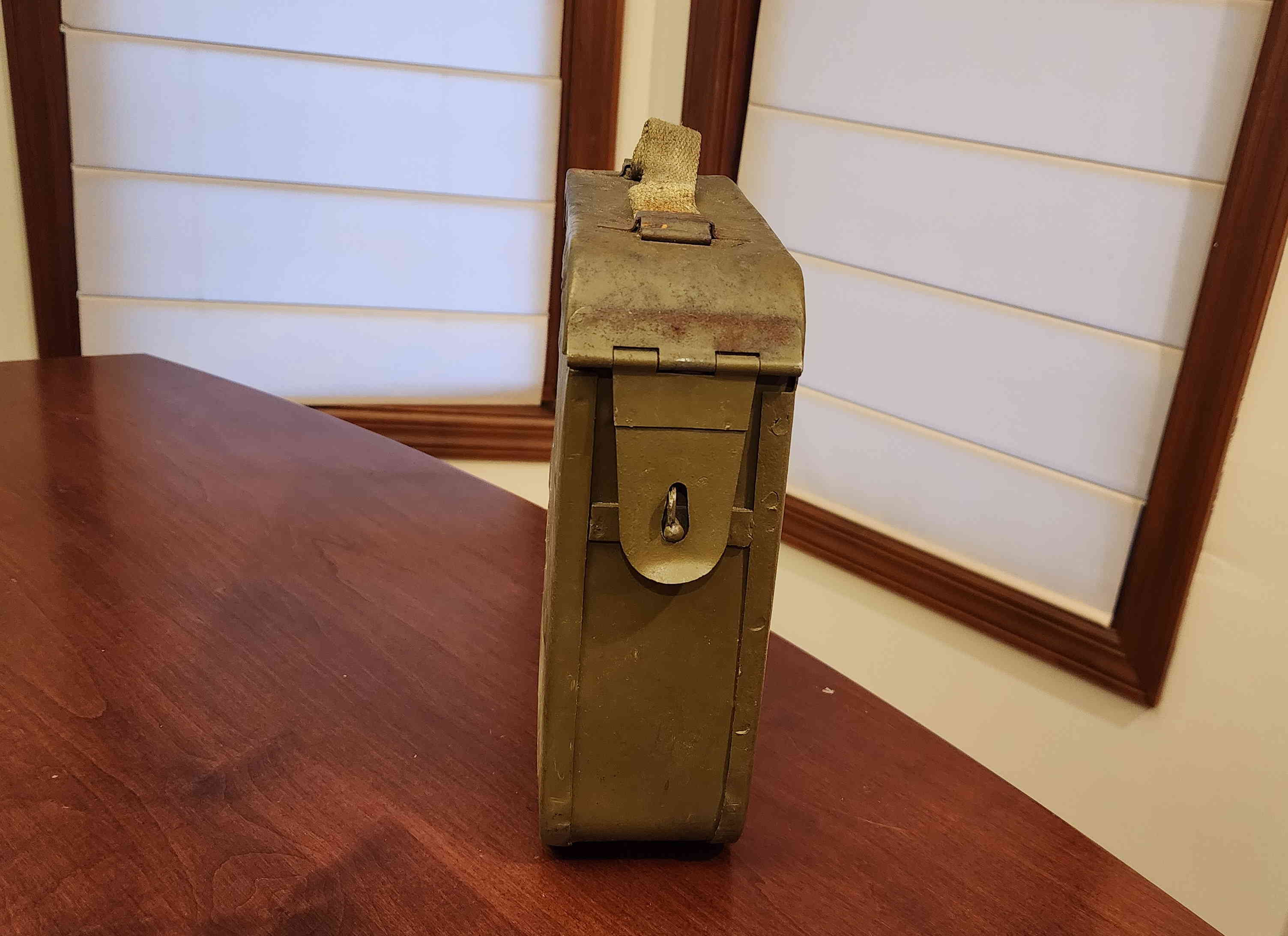
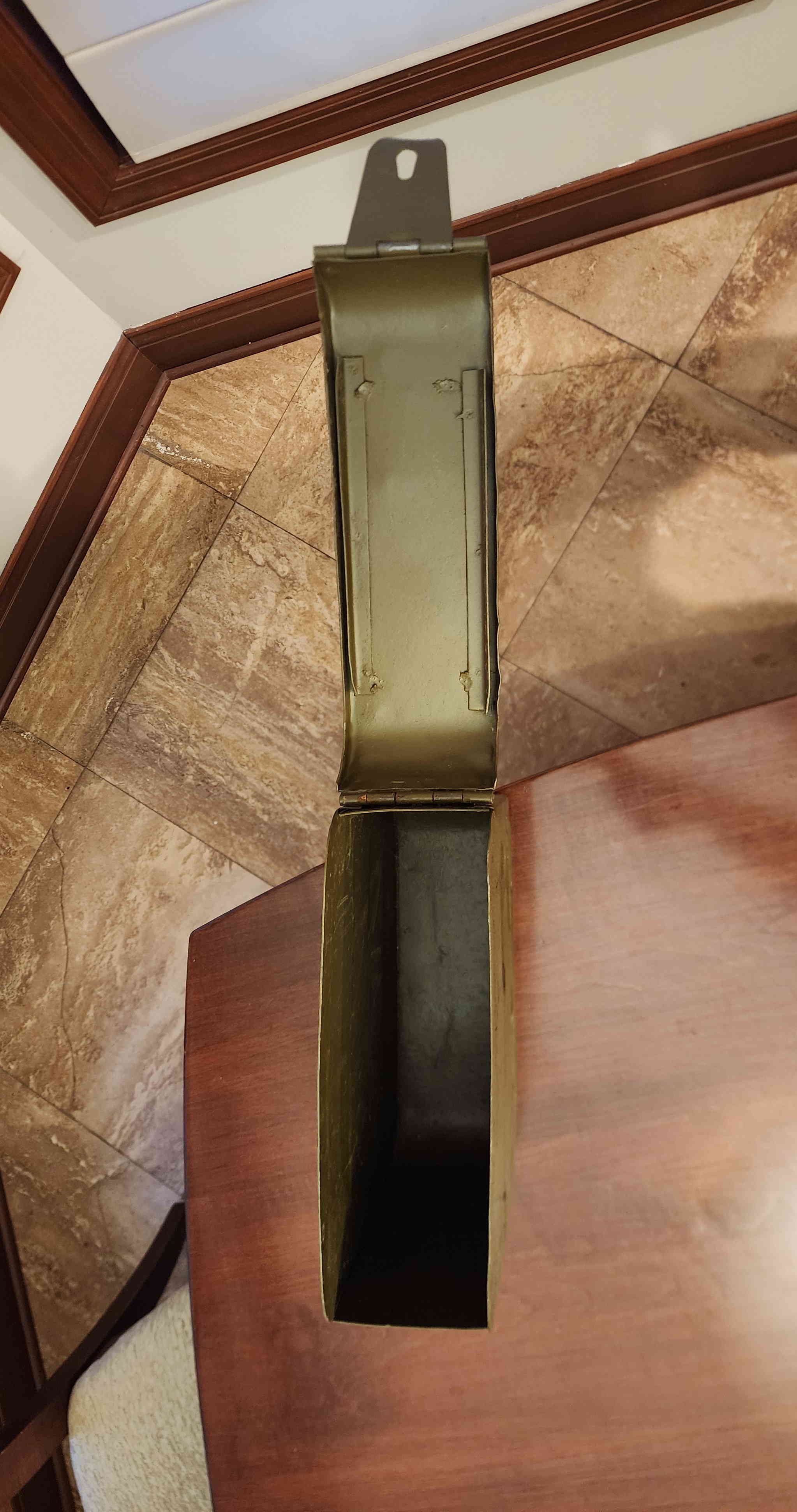
Key features supporting the identification include the square, shallow pressed-steel body, clamshell lid, canvas handle, latch style, stiffening ribs, and the embossed five-point Soviet star on the face. The provided dimensions also match common Maxim 250-round belt can listings.
Dating
Without factory markings or date stenciling, an exact year cannot be confirmed from the can alone. Based on the embossed-star, ribbed pressed-steel pattern, this style is consistent with mid-1930s pattern production and is widely encountered as WWII and post-war (Cold War) surplus. A conservative use window is WWII through post-war storage.
Historical Summary
The Maxim PM M1910 and the updated M1910/30 were long-serving Soviet water-cooled machine guns. Ammunition was carried in pre-loaded, non-disintegrating belts, commonly stored and transported in dedicated metal belt cans. Large numbers remained in storage after WWII and were issued, transferred, or exported in later decades.
Construction and Features Observed
- Pressed reinforcing ribs on the face and body to stiffen the steel shell.
- Embossed Soviet five-point star on the front panel.
- Clamshell hinged lid for quick access to the belt.
- Latch hardware and canvas carry handle for field transport.
Collector Notes
Some examples were originally paint-stenciled with factory, year, lot, or unit inventory data. On many, these markings have worn off, leaving the construction details and embossed star and rib pattern as the primary identifiers.
Light surface wear and paint loss are normal for these cans. They display well alongside 7.62×54mmR Maxim belts, Mosin-Nagant ammunition, or Soviet field gear, especially when paired with period photos or documentation.
Provenance
Acquired by the collector from Europe. No visible stamps or stenciled markings were observed.