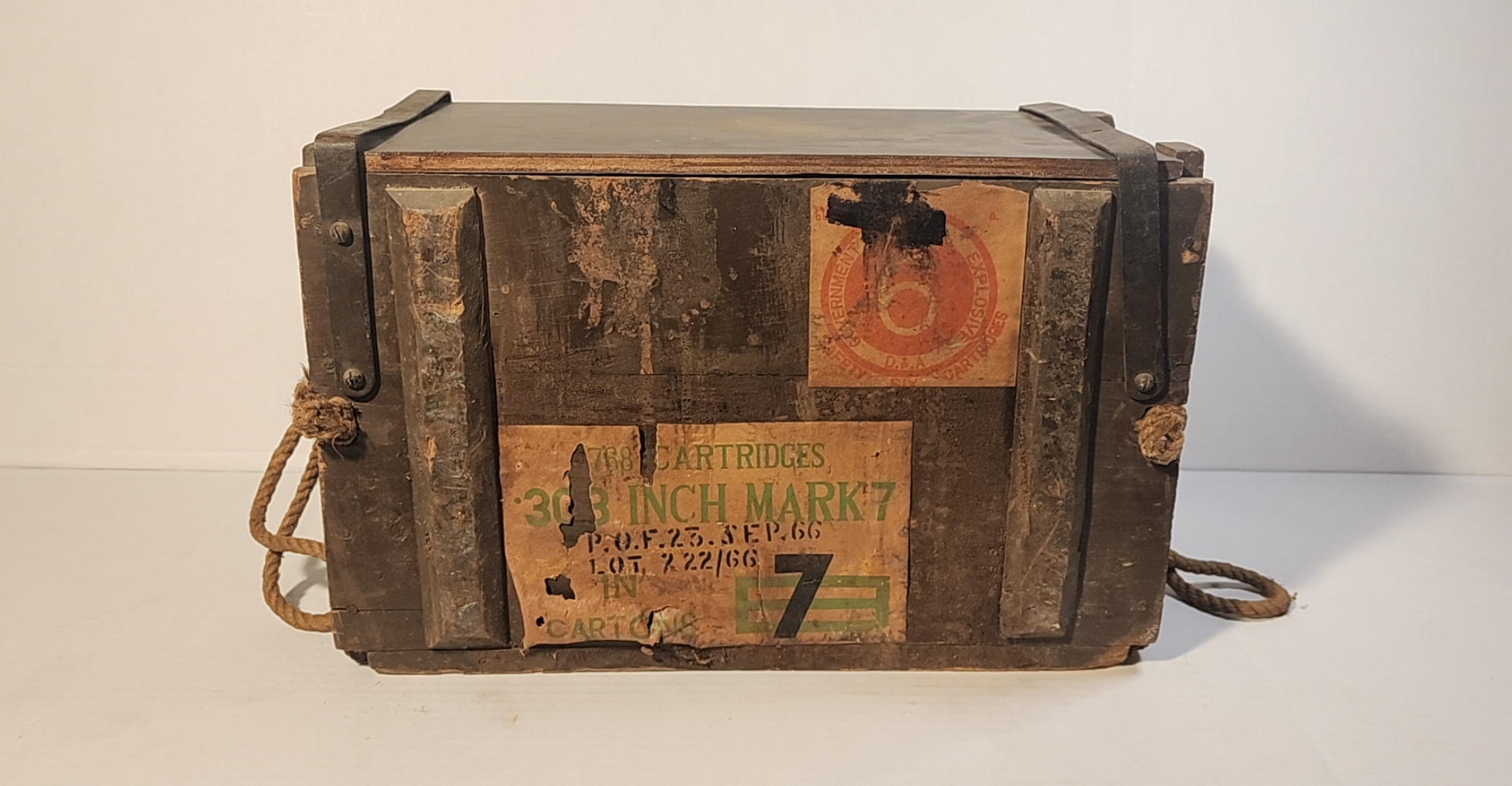
British/Commonwealth Wooden Ammunition Crate: .303 Inch Mk VII Ball (P.O.F., 1966)
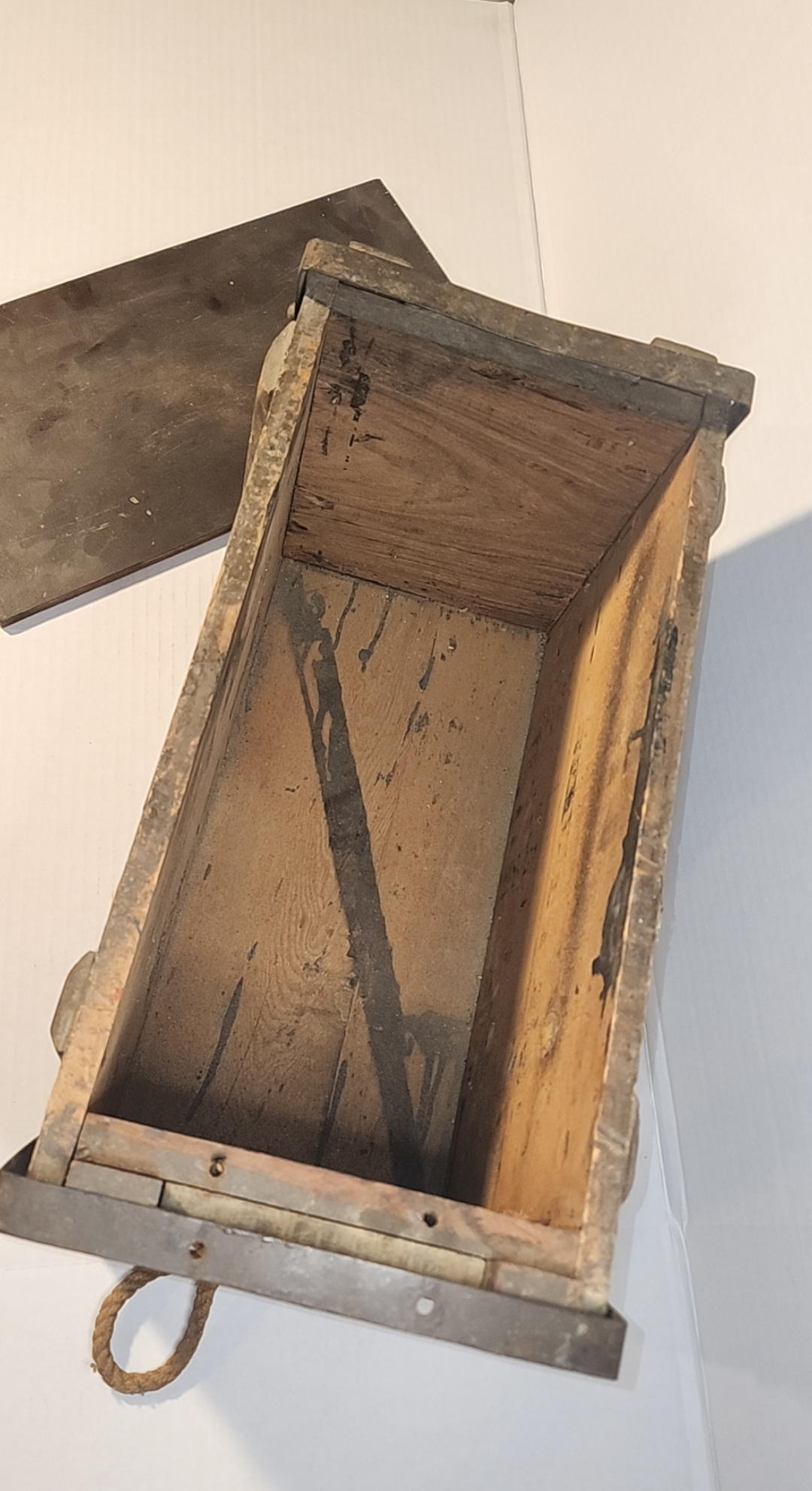
Wooden transit crate for .303 Inch Mk VII ball ammunition, labeled for 768 rounds in cartons and packed by Pakistan Ordnance Factories (P.O.F.) on 23 Aug 1966 (Lot 222/66). Although many surviving examples are now empty, the original packing standard was designed around cartons (commonly 32 rounds per carton) and often a sealed internal metal liner for moisture protection. This 1966 crate also shows a useful overlap of marking systems: Commonwealth-era safety labeling appears alongside the later UN transport hazard classification stenciled as 1.4 S.
Images
Specifications
| General Information | |
|---|---|
| Calibre | .303 Inch (7.7×56R) |
| Cartridge Type | Ball Mk VII ("Mark 7") |
| Quantity | 768 rounds (in cartons) |
| Manufacturer | Pakistan Ordnance Factories (P.O.F.), Wah Cantt |
| Date of Packing | 23 Aug 1966 |
| Lot | 222/66 |
| Hazard Marking | UN Division 1.4S (stenciled “1.4 S”) |
Markings
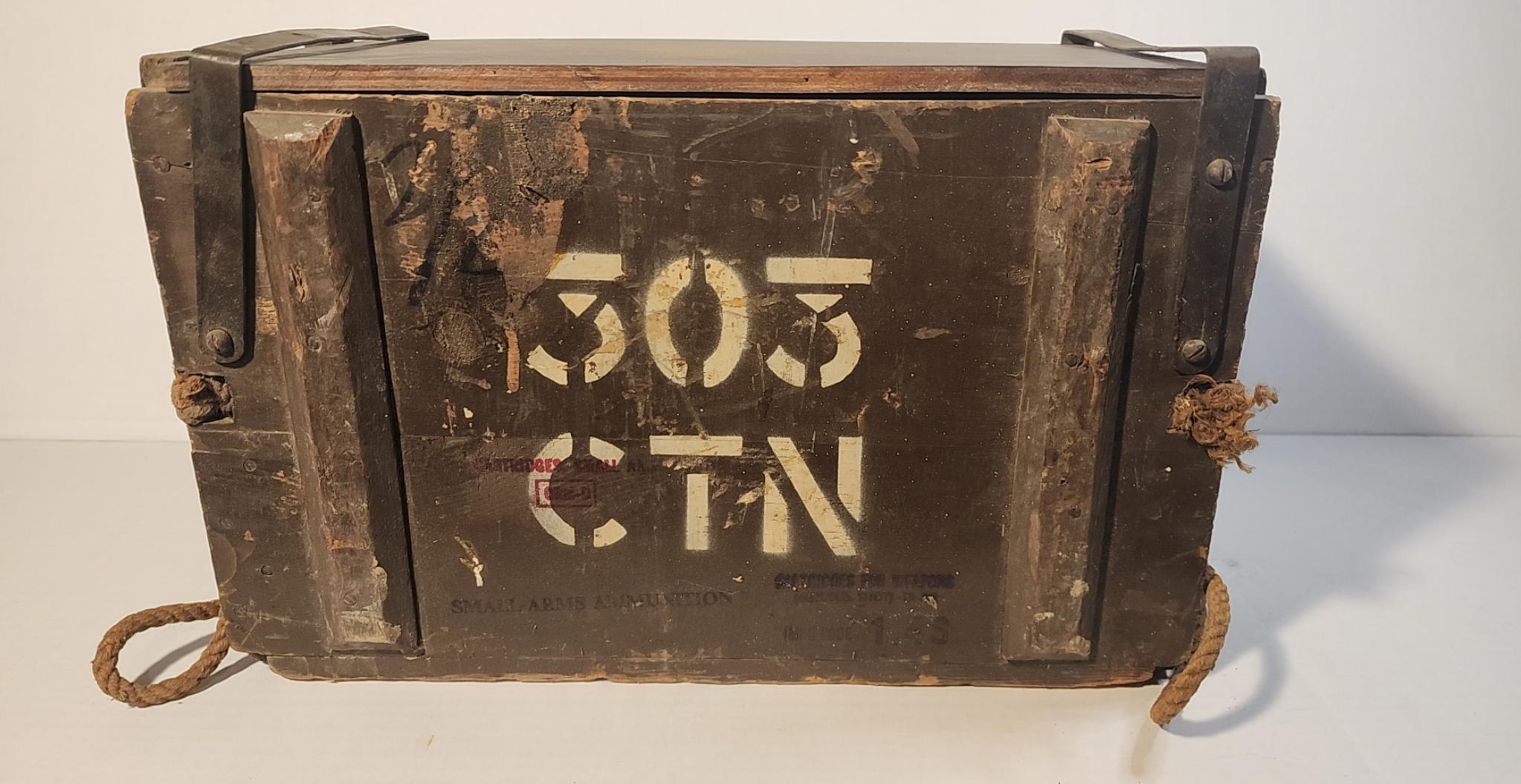
- “CARTRIDGES, SMALL ARMS” and “SMALL ARMS AMMUNITION”: standard Commonwealth shipping and category language for small arms cartridges. On many crates, “SMALL ARMS AMMUNITION” can be faint along the lower edge, but it reinforces that the contents are cartridges rather than pyrotechnics or larger explosive stores.
- “1.4 S”: UN hazard classification for packaged small arms ammunition. Division 1.4 indicates a low hazard in transport (no mass explosion in normal conditions), and compatibility group S is used when the hazard effects are largely confined within the package itself.
- “.303 CTN”: calibre and packing format. “.303” identifies the .303 British cartridge, while “CTN” indicates the ammunition is packed in cartons (small cardboard packets), not belted and not packed loose as individual rounds.
- “CARTRIDGES .303 INCH MARK 7” and “768”: contents designation and total round count. “Mark 7” corresponds to the Mk VII ball service cartridge, and “768” identifies the quantity packed within the crate (commonly arranged as cartons, often 24 cartons of 32 rounds).
- “P.O.F. 23.8.66 EP”: Pakistan Ordnance Factories identification with packing date (23 Aug 1966). The trailing letters (such as “EP”) are typically an internal factory or inspection code used to identify a packing line, inspector, or subdivision.
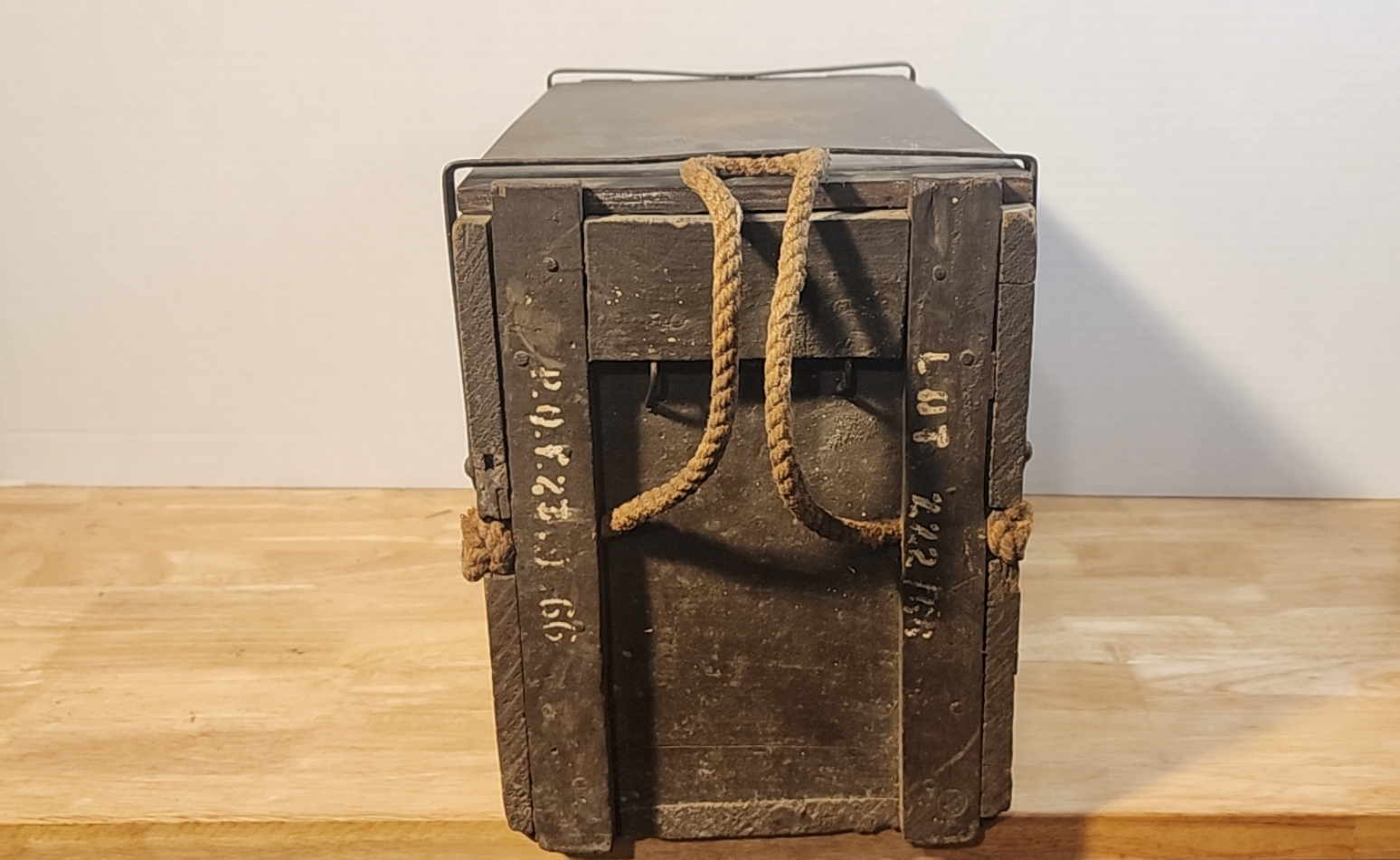
- “222/66”: lot identification used for batch tracking and quality control. Lot markings help tie packaging to a specific production run, which is useful for both ordnance accountability and later historical interpretation.
- Red Government Explosive disk with broad arrow: a legacy British and Commonwealth explosives safety label. Many examples show “Safety” language and a class number associated with small arms “safety cartridges,” and the broad arrow signifies government property. On mid-1960s crates, this older system often appears alongside the newer UN 1.4S stencil, creating a clear transitional snapshot in ammunition marking practice.
Historical Summary
The .303 Inch Mk VII ball cartridge was the standard British and Commonwealth rifle and machine gun round for much of the 20th century, used in platforms such as the Lee-Enfield family and the Bren gun. Britain began transitioning to 7.62×51 NATO and the L1A1 SLR in the late 1950s and declared .303 obsolete in 1960, but .303 weapons and ammunition remained in circulation across the wider Commonwealth, reserve stocks, and many allied or post-colonial forces for years afterward. As a result, .303 packaging from the 1960s often reflects both established British marking traditions and newer international transport conventions.
Pakistan inherited extensive .303-chambered inventories through the British Indian ordnance system and continued production at Pakistan Ordnance Factories into the mid-1960s to support domestic stocks and export or aid requirements. A 1966-dated crate like this is a strong example of that overlap period: it is stenciled in English in the Commonwealth style for broad logistical clarity, carries a modern UN hazard marking (1.4S), and may also retain a faded red Government Explosive label with a broad arrow property mark. In service, crates were moved from depots to unit armouries or forward supply points where cartons were distributed to riflemen, or where ammunition could be prepared for machine gun use. The wooden crate provided durable protection during long-distance transit, and many were built to accept an internal sealed metal liner to keep cartons dry until opened.
Collector Notes
- The paper labels and stencils are primary evidence for calibre, pack style, lot, and packing date. Avoid cleaning methods that can lift ink or paper fibers, and photograph markings in raking light to capture faint “ghost” stencils that may not show in flat lighting.
- The interior is commonly sized for cartons and, in many cases, an internal sealed metal liner (often called a “spam can”) that protected the ammunition from humidity. Many surviving crates are empty because the liner and cartons were removed when the ammunition was issued or surplused, but interior wear patterns and residue can still hint at how it was originally packed.
- Construction details are part of the story. Rope carry loops, reinforced end cleats, and strap-style lid hardware were intended for rough handling and two-person carry when full. Some crates used tamper-evident sealing on the latch hardware, and the combination of older Commonwealth safety labeling with later UN 1.4S stenciling is a useful mid-1960s dating cue.