WWII U.S. .30 Carbine M1 Ball Ammunition
WWII U.S. .30 Carbine M1 Ball Ammunition
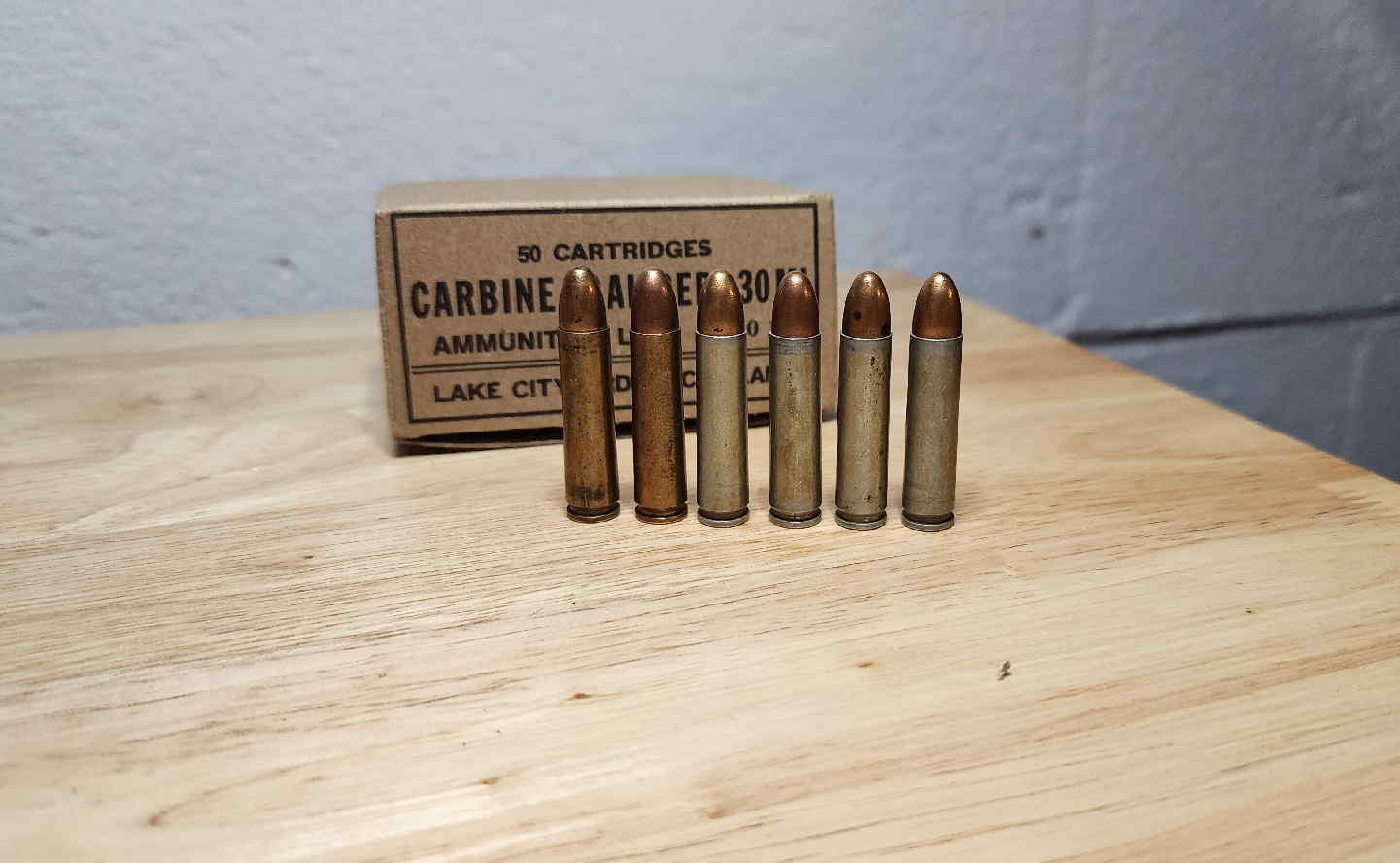
Lake City 1943, Western Cartridge Company 1944, and Evansville 1943-1944 examples, documenting wartime brass and steel cartridge-case production for the M1 Carbine.
Images
Specifications
| General Information | |
|---|---|
| Country | United States |
| Official Designation | Cartridge, Carbine, Caliber .30, Ball, M1 |
| Caliber / Type | .30 Carbine (7.62×33 mm), rimless straight-walled centerfire cartridge |
| Years Represented | 1943 and 1944 |
| Manufacturers | Lake City Ordnance Plant, Western Cartridge Company, and Evansville Ordnance Plant |
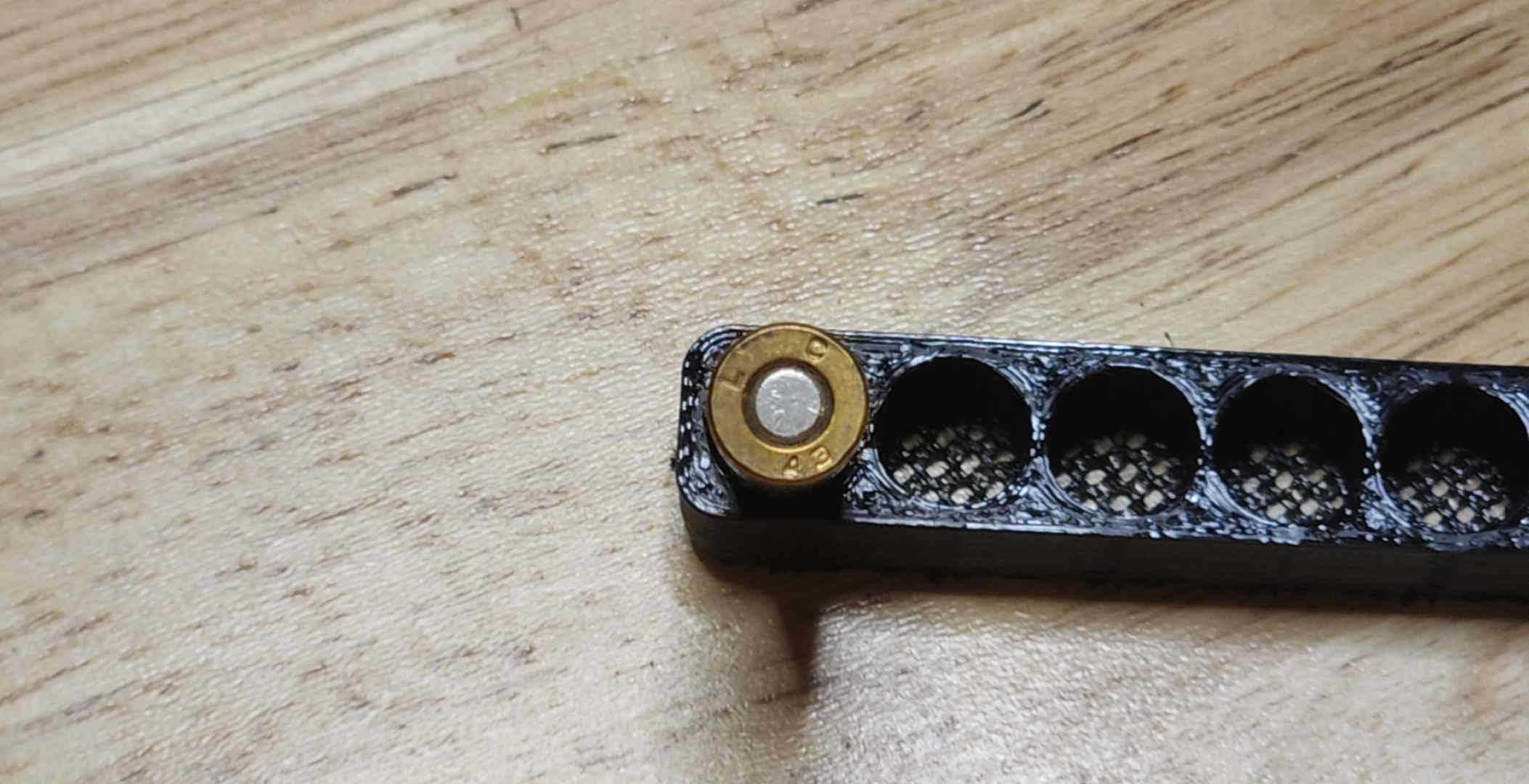
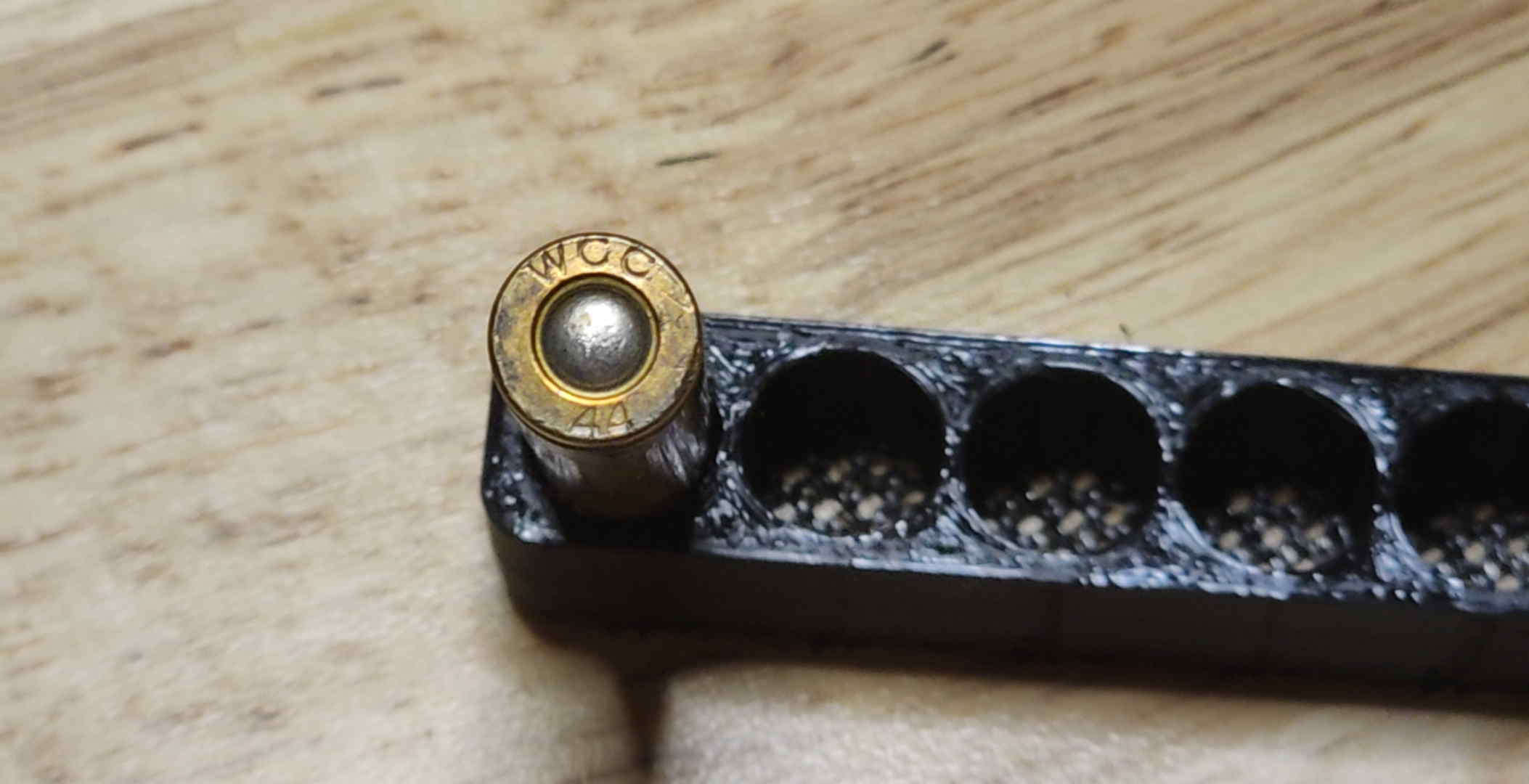
| Headstamps | LC 43, WCC 44, EC 43, and EC 44 |
| Bullet | Approximately 110-111 grains, full metal jacket, round nose, plain tip |
| Nominal Muzzle Velocity | Approximately 2,000 ft/s from the M1 Carbine's 18-inch barrel |
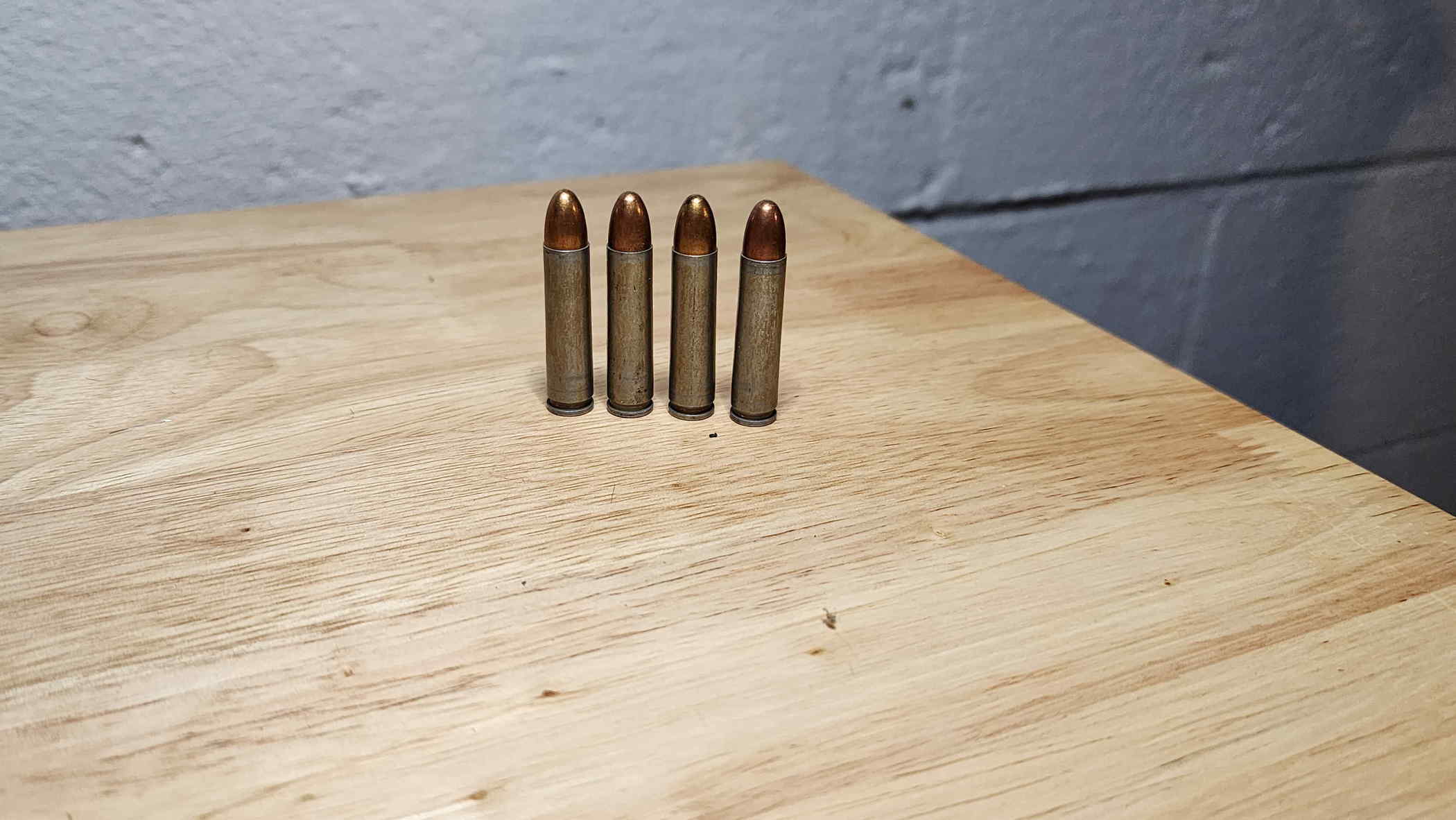
| Case Materials | Brass on the Lake City and Western rounds; gray-finished steel on the Evansville examples |
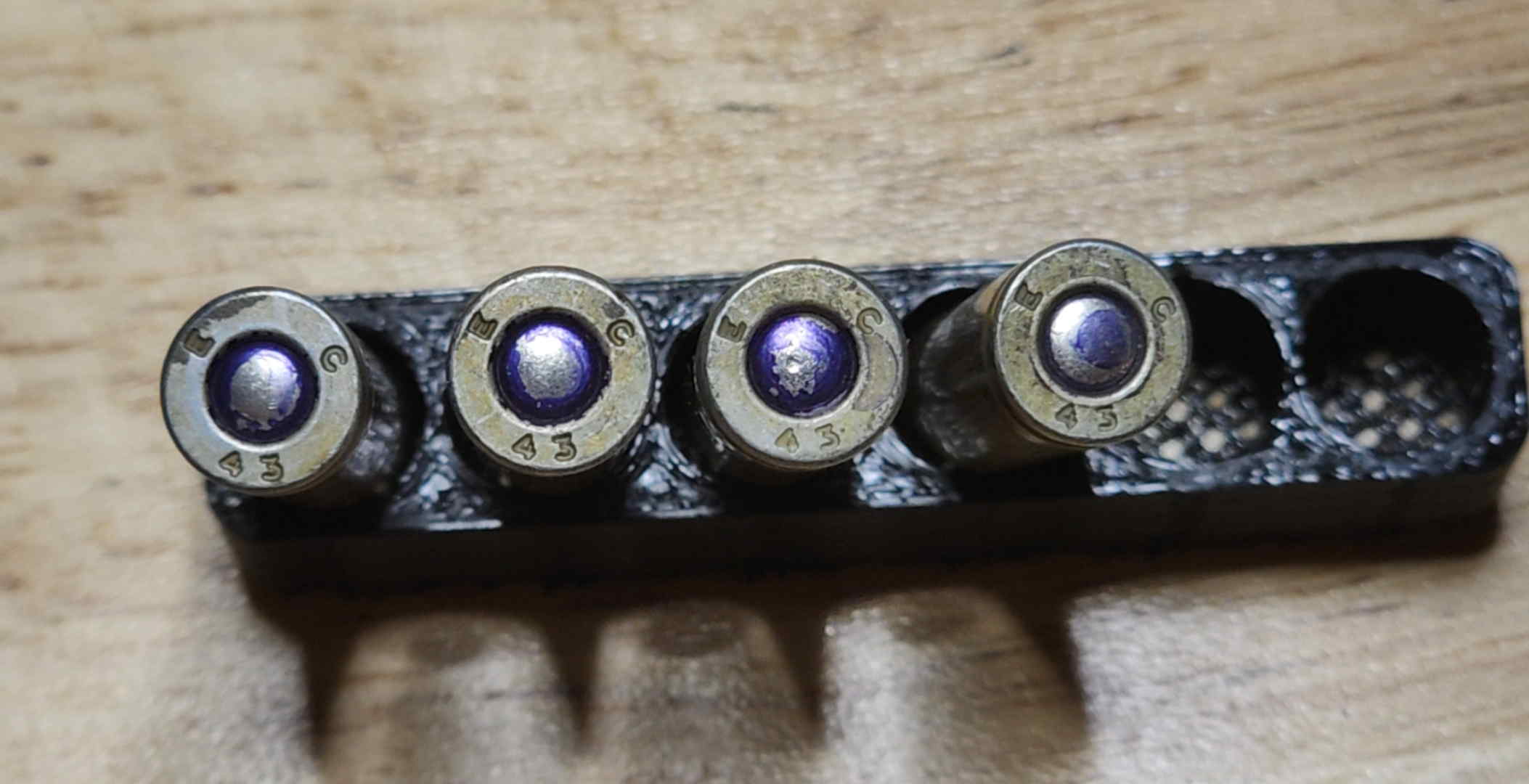
| Primer Detail | The Evansville rounds show purple lacquer around the primer annulus as a moisture-resistant seal |
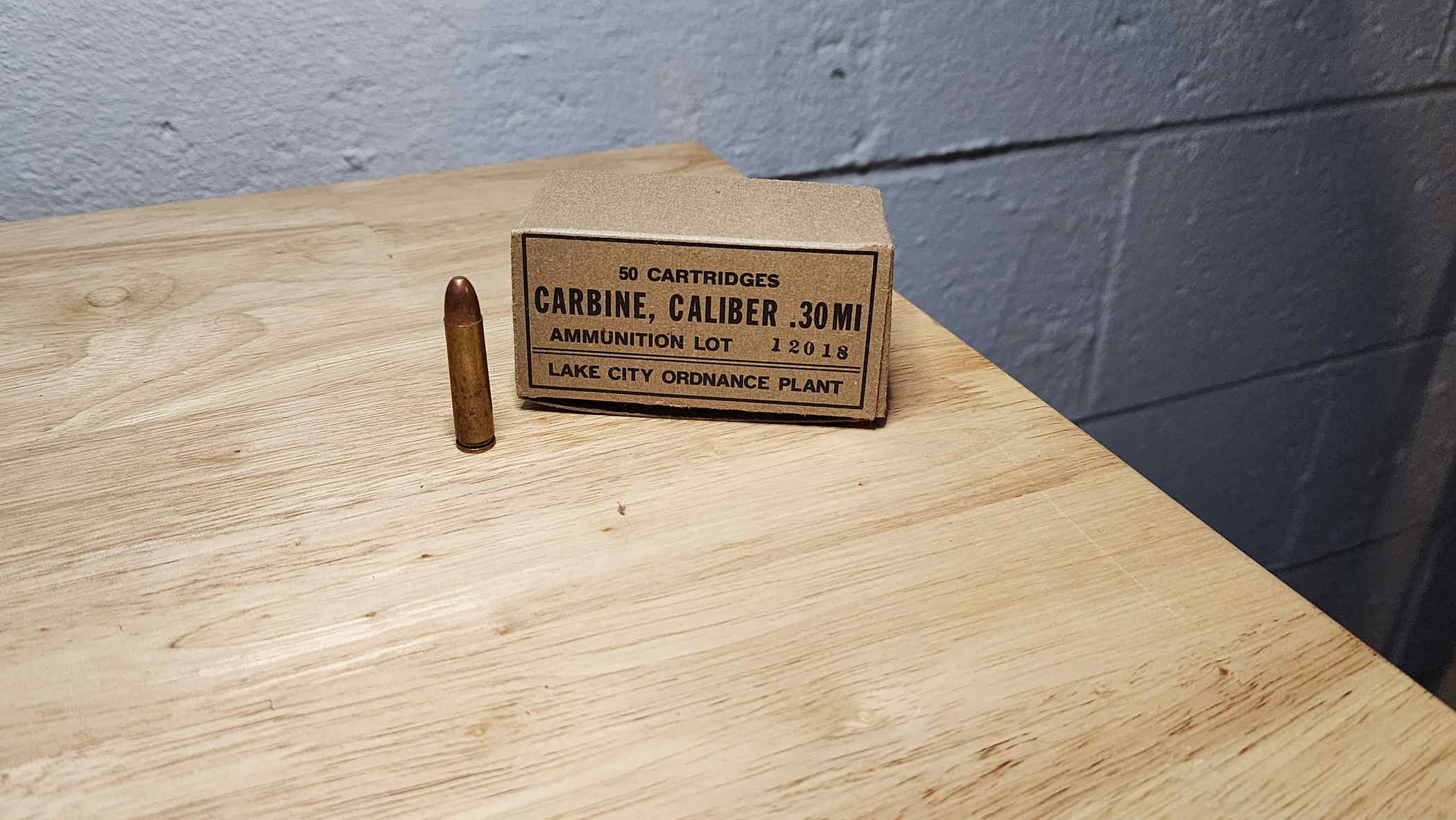
| Packaging | U.S. wartime ball ammunition was commonly packed in 50-round cartons. The Lake City carton shown is marked ammunition lot 12018 and is display context rather than a matched package for the loose rounds. |
| Serial Number | Not serialized |
Historical Summary
The .30 Carbine cartridge was developed for the U.S. Army's light-rifle program and was standardized with the M1 Carbine during the opening period of American wartime mobilization. Its compact rimless case and approximately 110-grain full metal jacket bullet produced much less recoil than the .30-06 service rifle cartridge while providing substantially greater range and power than the standard .45-caliber service pistol. A War Department technical manual lists an approximately 111-grain bullet, a nominal muzzle velocity of 2,000 feet per second, and an 18-inch carbine barrel.
The M1 Carbine was issued to officers, noncommissioned officers, vehicle crews, communications personnel, support troops, and others who needed a lighter weapon than the M1 Garand. It later saw broad frontline use because it was compact, easy to carry, and fed from detachable box magazines. The cartridge remained in U.S. service through World War II, Korea, and the early Vietnam period, and it was also supplied in large quantities to allied nations.
Wartime ammunition manufacture was distributed among government plants and commercial producers. The examples documented here show three recognizable headstamp systems and two cartridge-case materials. The Lake City and Western rounds use conventional brass cases. The Evansville cartridges use steel cases, reflecting the wartime effort to conserve copper and brass for other military requirements.
Manufacturer and Headstamp Notes
Lake City Ordnance Plant, LC 43
The LC 43 headstamp identifies Lake City Ordnance Plant production from 1943. Lake City was a government-owned, contractor-operated facility at Independence, Missouri. Remington Arms Company was selected to operate the plant, which began small-arms ammunition production in September 1941. A dedicated wartime production building manufactured .30 Carbine ammunition. The photographed Lake City example has a brass case and plain ball bullet.
The accompanying 50-round Kraft-board carton is marked Carbine, Caliber .30 M1, Ammunition Lot 12018, and Lake City Ordnance Plant. It is not documented as the original package for the loose cartridges and is presented as associated display material.
Western Cartridge Company, WCC 44
The WCC 44 headstamp identifies a 1944 cartridge made by Western Cartridge Company of East Alton, Illinois. Western was part of the Olin organization, which acquired Winchester Repeating Arms in 1931. This corporate relationship accounts for the close association of Western and Winchester branding on period ammunition and packaging. The round shown here is a standard brass-cased .30 Carbine ball cartridge with a plain bullet tip.
Evansville Ordnance Plant, EC 43 and EC 44
The EC headstamp identifies Evansville Ordnance Plant production in Evansville, Indiana. Chrysler Corporation operated the principal plant, while Sunbeam Electric Manufacturing Company operated a cartridge-case division. Evansville began production in June 1942 and closed in the spring of 1944. Its wartime output included .45 ACP and .30 Carbine ammunition.
The photographed Evansville rounds have gray-finished steel cases and visible purple lacquer around the primers. The headstamp close-up shows four EC 43 examples, while the broader grouping represents Evansville production from 1943 and 1944. The steel cases are a direct product of wartime material-conservation programs and make these cartridges visually distinct from the Lake City and Western brass-cased examples.
Collector Notes
Wartime .30 Carbine ammunition is commonly collected by headstamp, manufacturer, production year, case material, primer sealant, and packaging variation. The grouping shown here is useful because it places conventional brass-cased ammunition beside Evansville steel-cased production from the same wartime period.
The Lake City and Western headstamps are clearly legible, and the Evansville cartridges retain much of their gray case finish and purple primer seal. Collectors should distinguish the date numerals carefully. Evansville production ended in 1944, and the appropriate wartime date range for this grouping is EC 43 and EC 44.
Packaging should be documented separately from loose ammunition unless a direct lot or acquisition relationship is known. The Lake City lot 12018 carton adds useful visual and historical context, but it is not represented as the original box for the individual rounds pictured on this page.
Provenance
- Preserved as a comparative World War II ammunition grouping in the Relics & Rifles reference collection.
- The cartridges represent Lake City 1943, Western Cartridge Company 1944, and Evansville 1943-1944 production.
- The Lake City carton is marked ammunition lot 12018 and is associated display material rather than a documented matched package.
- No specific military unit or individual service history is known for the loose cartridges.