
WWII U.S. .30-06 Springfield Ammunition (DM 42 and LC 43)
WWII U.S. .30-06 Springfield Ammunition (DM 42 and LC 43)
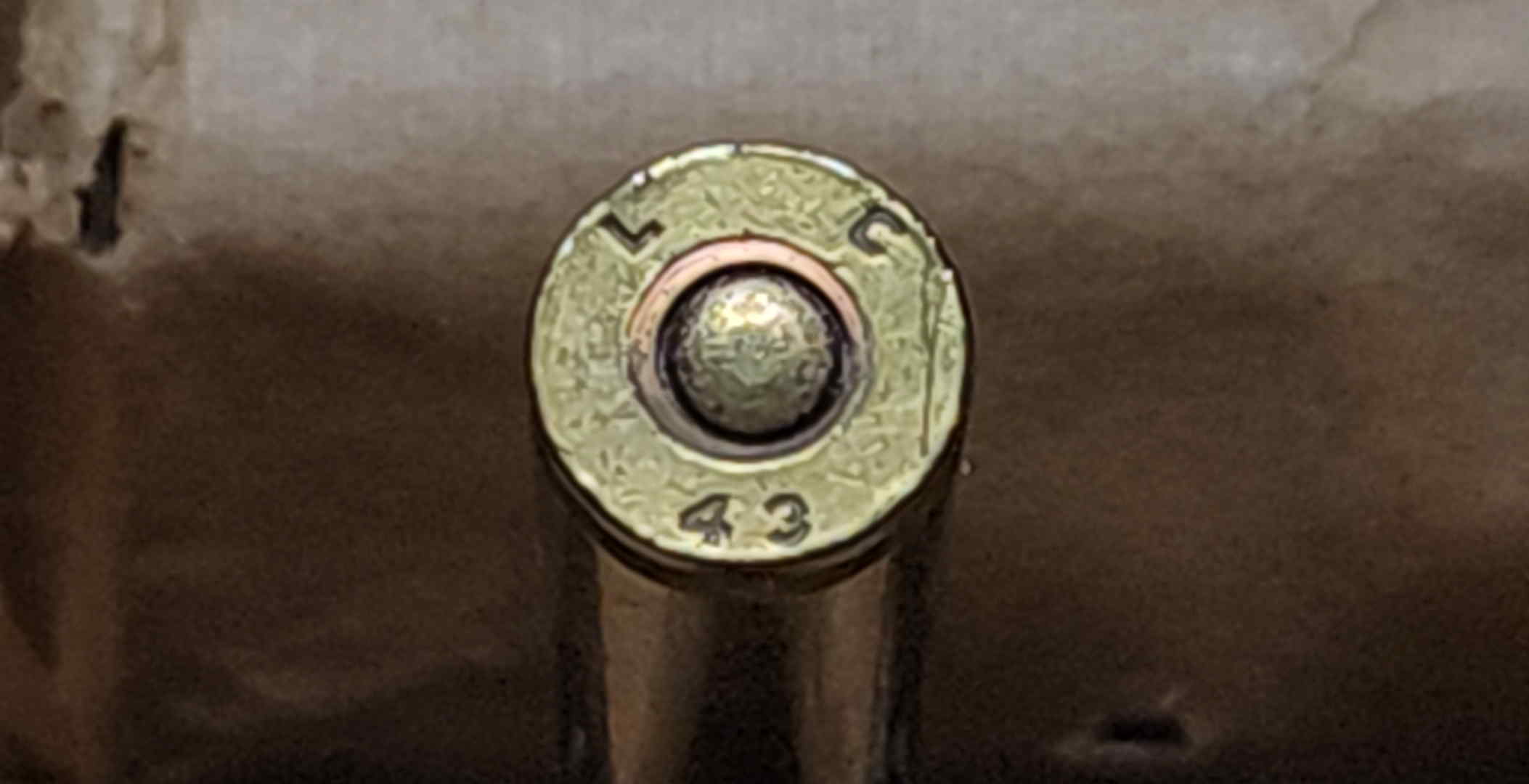
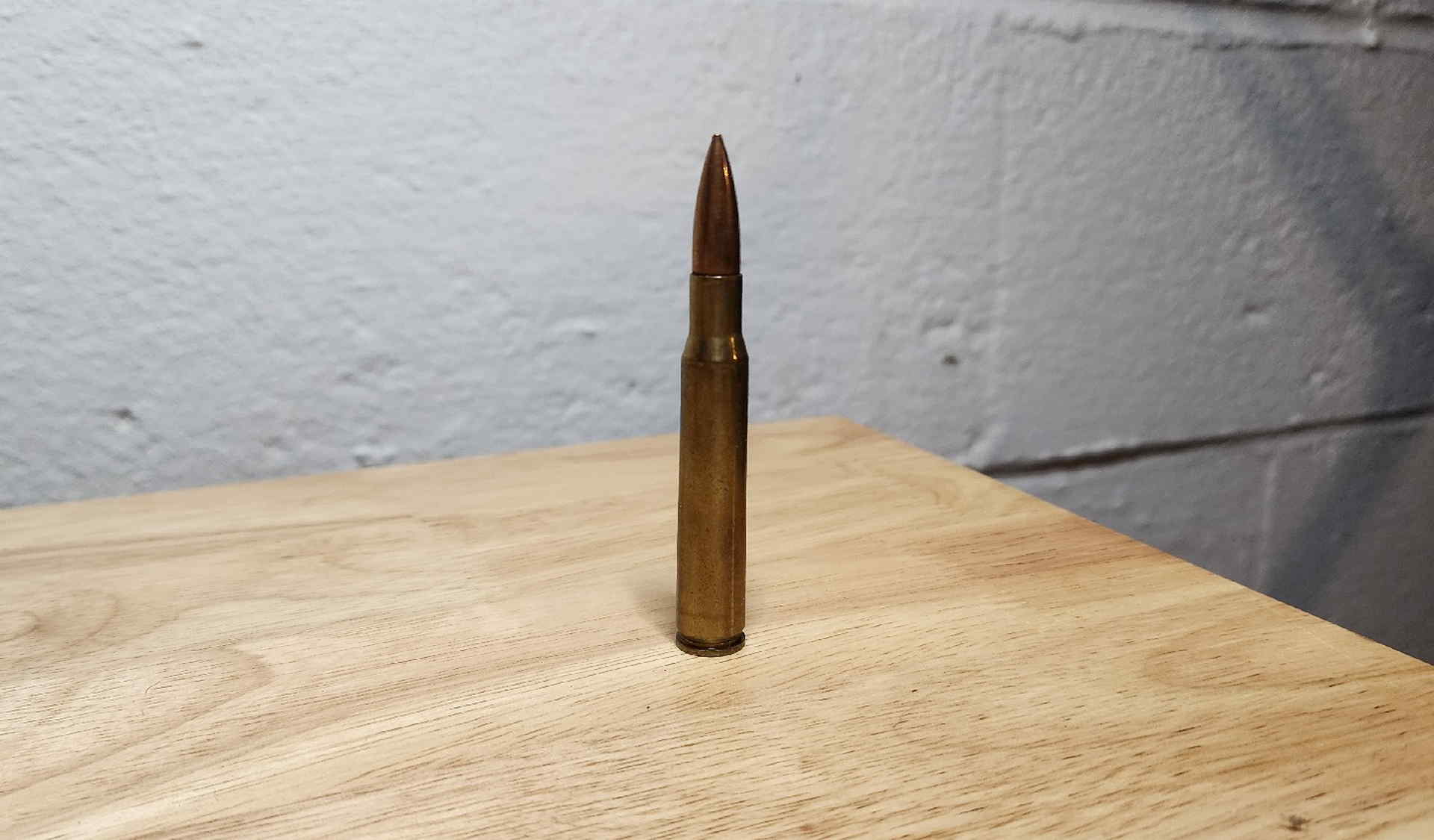
A World War II U.S. .30-06 grouping with 1942 Des Moines red-tip tracer and M2 Ball cartridges, a 1943 Lake City M2 Ball cartridge, and a Des Moines Ordnance Plant 20-round Ball M2 carton.
Images
Specifications
| General Information | |
|---|---|
| Country | United States |
| Era | World War II |
| Caliber | .30-06 Springfield (7.62×63mm) |
| Cartridge Types | M2 Ball and red-tip tracer |
| Collection Contents | Five Des Moines cartridges dated 1942, consisting of four red-tip tracer rounds and one plain-tip M2 Ball round; one Lake City M2 Ball cartridge dated 1943; and one Des Moines Ordnance Plant 20-round Ball M2 carton. |
| Associated Weapons | U.S. .30-caliber service rifles and automatic weapons, including the M1 Garand, M1903 Springfield, M1917 rifle, Browning Automatic Rifle, and Browning .30-caliber machine guns. |
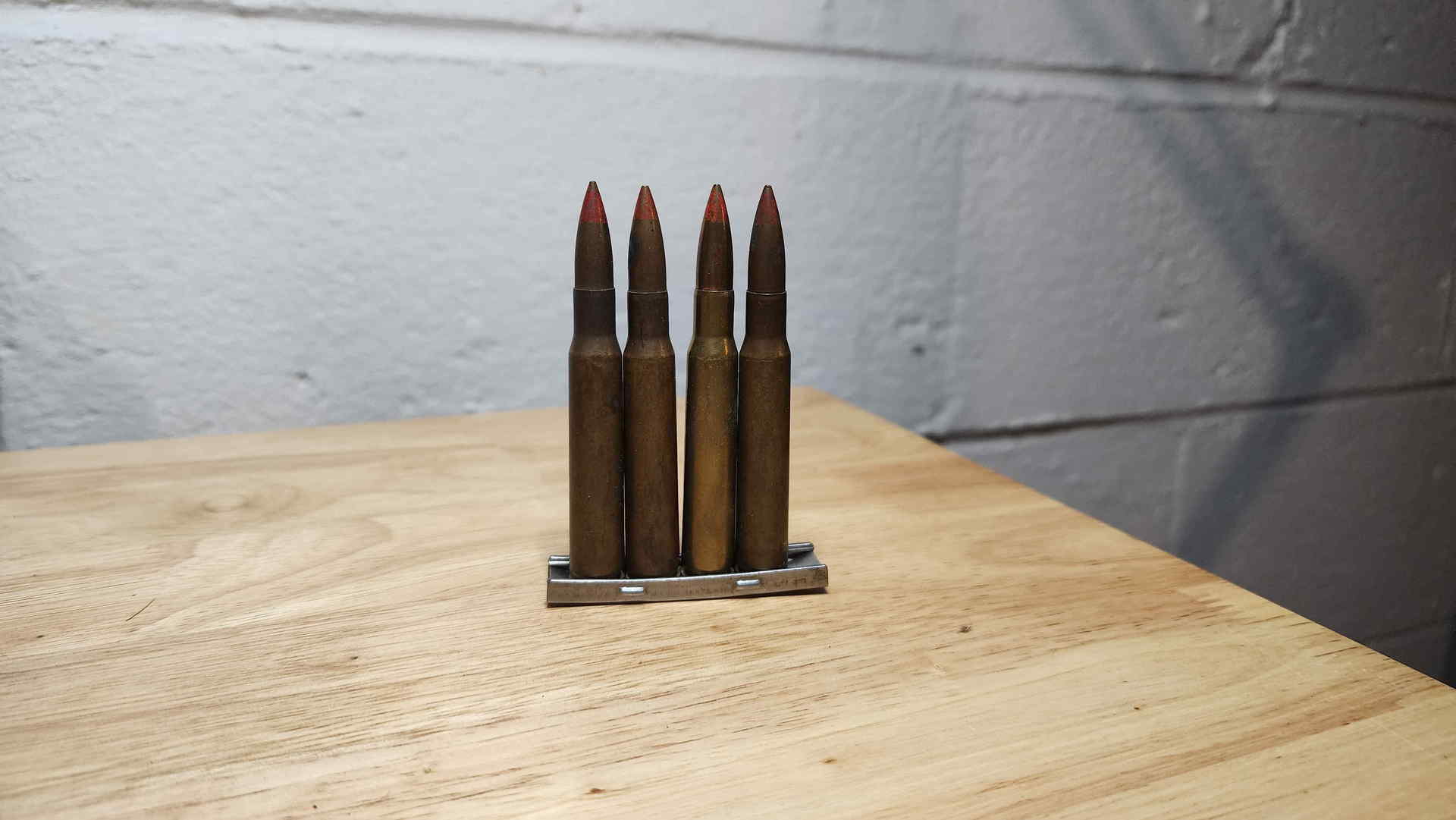
| Display Configuration | The four red-tip DM 42 cartridges are arranged in an M1 Garand en bloc clip for display. The carton and Lake City cartridge are photographed separately. |
| Serial Number | Not serialized |
| Condition | Legible wartime headstamps, retained red tracer-tip paint, visible red and purple primer-annulus sealant, age-toned brass, and a clearly readable carton label with moderate handling and edge wear. |
| Cartridge and Packaging Identification | |
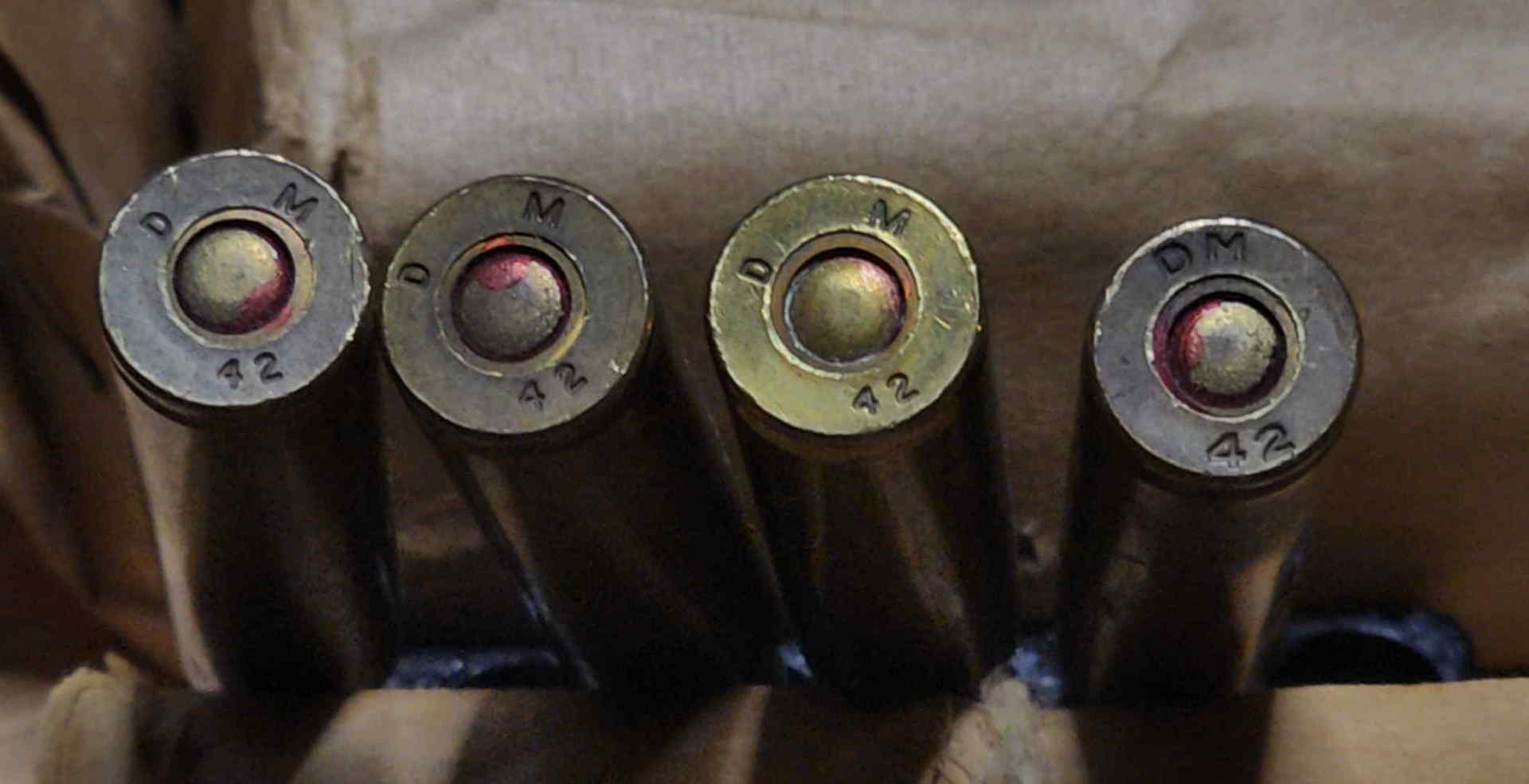
| DM 42 Tracer | Four cartridges marked DM 42, identifying Des Moines Ordnance Plant manufacture in 1942. Each has a red-painted bullet tip and red primer sealant. The red tip identifies the tracer loading used for observing the bullet path and assisting with fire direction and target designation. |
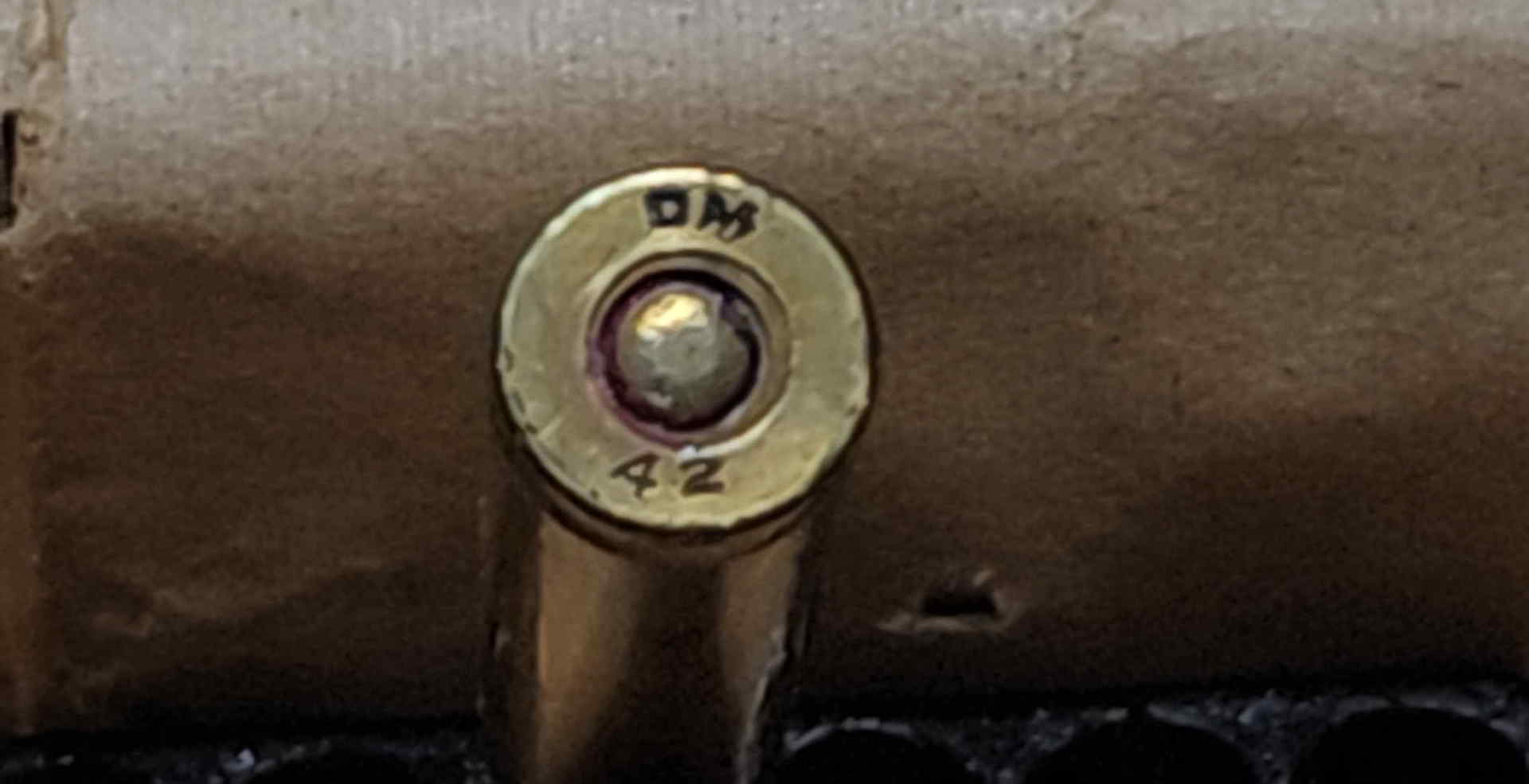
| DM 42 M2 Ball | One cartridge marked DM 42 with a plain bullet tip and purple primer-annulus sealant. It is a standard M2 Ball cartridge with an approximately 150-grain full metal jacket bullet. |
| LC 43 M2 Ball | One cartridge marked LC 43, identifying Lake City Ordnance Plant manufacture in 1943. It has a plain bullet tip and no clearly visible primer sealant. |
| Headstamp Variation | The DM 42 group shows both wider and tighter spacing between the letters D and M. This is a headstamp-die variation and does not change the plant or year identification. |
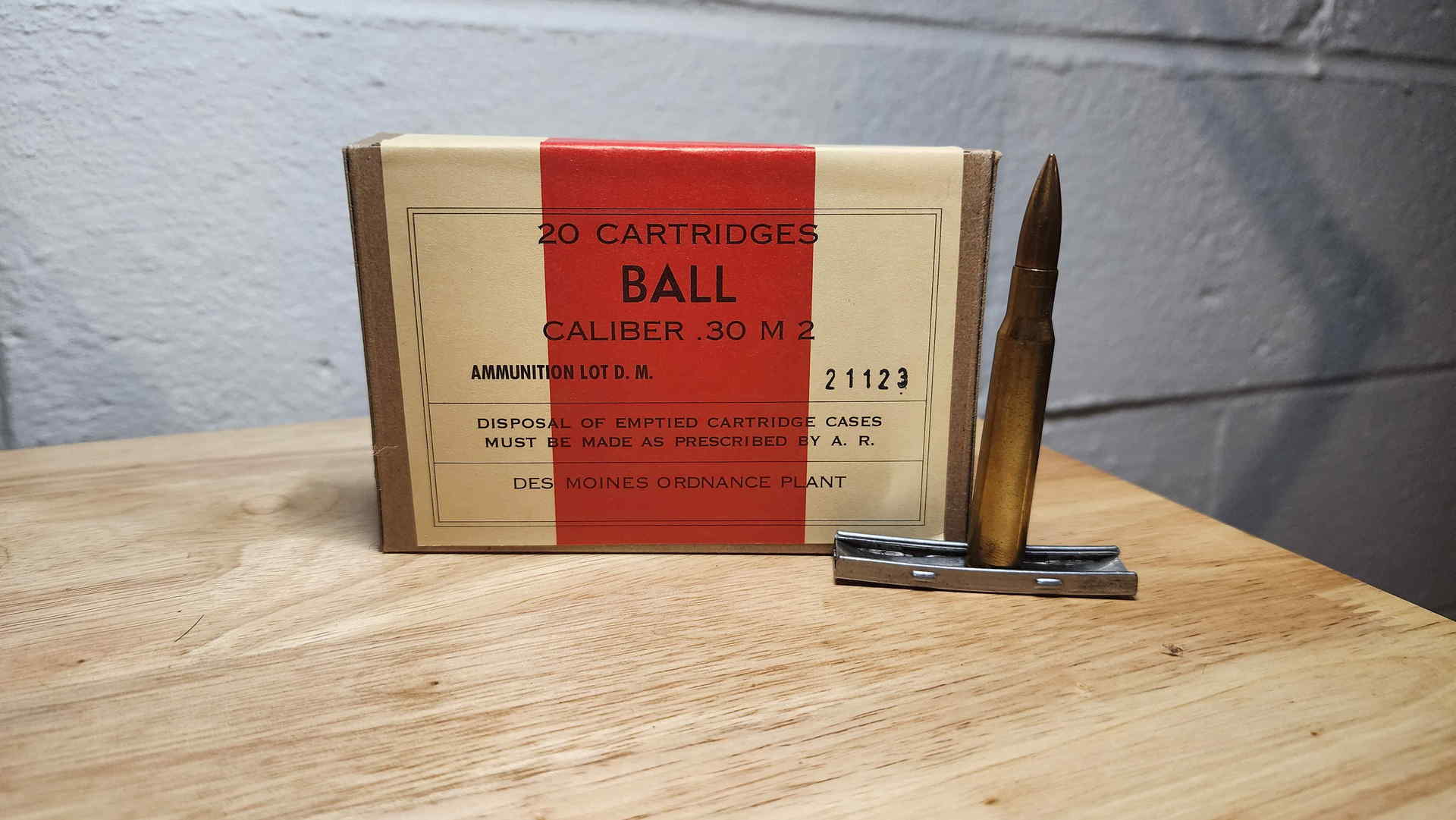
| Carton Markings | The carton reads 20 CARTRIDGES / BALL / CALIBER .30 M2 and is marked AMMUNITION LOT D.M. 21123 and DES MOINES ORDNANCE PLANT. The red vertical band is the period package identifier for ball ammunition. |
Historical Summary
The .30-06 Springfield cartridge was adopted by the United States in 1906 and remained the country's principal full-power rifle and machine-gun cartridge throughout World War II. It supplied the M1 Garand and M1903 Springfield rifles, the Browning Automatic Rifle, and the Browning medium-machine-gun family. Its broad use made .30-06 ammunition one of the central logistical commodities of the American war effort.
M2 Ball was the standard general-purpose service loading. It used a plain, unpainted bullet tip and an approximately 150-grain jacketed projectile intended for personnel and unarmored targets. Army ammunition data lists the loaded cartridge at 3.34 inches overall and a nominal velocity of 2,740 feet per second measured 78 feet from the muzzle. Ball cartridges were issued in cartons, clips, bandoleers, belts, and links according to the weapon and intended use.
The red-tipped DM 42 cartridges are tracer rounds. Wartime Army guidance identified tracer ammunition by red paint on the bullet nose, allowing the gunner to follow the visible path of fire. Tracers could be used for observation, signaling, target designation, and limited incendiary effect. The bullet-tip color is the principal visible load identifier in this grouping. The red and purple lacquer around the primers served as sealing material and reflects manufacturing or lot practice rather than a separate functional ammunition code.
Des Moines Ordnance Plant was constructed at Ankeny, Iowa, as part of the rapid wartime expansion of the U.S. ammunition industry. Operated for the government by the U.S. Rubber Company, the plant manufactured .30- and .50-caliber small-arms ammunition. The DM 42 headstamps place the four displayed cartridges in the plant's early 1942 output. Differences in the spacing of the DM initials are useful production details and represent variations in the headstamp dies used at the plant.
Lake City Ordnance Plant near Independence, Missouri, was established during the same mobilization program. Construction began in 1940 and ammunition production started in 1941. The LC 43 Ball cartridge represents Lake City's expanding 1943 production, when American ammunition plants were supplying combat operations and training programs on a global scale. Lake City remained an important U.S. small-arms ammunition facility long after the war.
The Des Moines Ball M2 carton adds the packaging and lot-control context that loose cartridges cannot provide. Its label identifies a 20-round carton and ammunition lot D.M. 21123. The carton accompanies the display as a separate artifact and is not documented as the original package for the loose cartridges shown on this page.
Collector Notes
Individual DM 42 and LC 43 cartridges are generally obtainable, but this grouping is more instructive than a single loose round because it compares two major wartime plants, two production years, ball and tracer loadings, primer-seal variations, and period carton markings. The Four DM tracer rounds also preserve noticeable headstamp-spacing differences within the same plant and year.
Important condition points include clear headstamps, retained tracer-tip paint, intact primers, visible sealant, stable brass, and freedom from active green corrosion. Aggressive polishing should be avoided because it can remove original oxidation, sealant, and bullet-tip paint. The carton should be supported so its old folds and edge wear are not placed under additional stress.
The M1 Garand clip is used here as a display support and contains four cartridges. The carton is also a separate display component. Neither item should be interpreted as proof that these exact cartridges were issued or stored together during military service.
Unless a cartridge has been professionally inerted and documented as such, it should be treated as live ammunition. Historic cartridges should be stored in a cool, dry location, protected from impact and heat, and handled in accordance with applicable law.
Provenance
- Preserved in the Relics & Rifles reference collection as a representative grouping of World War II U.S. .30-06 ammunition and packaging.
- The group contains four DM 42 cartridges, four tracer and one M2 Ball, plus one LC 43 M2 Ball cartridge.
- The Des Moines Ball M2 carton, lot D.M. 21123, accompanies the cartridges for display but is not documented as their original package.
- No specific military unit, issue location, or individual service history is known.