
7.62×54mmR Soviet Surplus Ammunition (Factory 188 – 1977)
Cold War era 7.62×54mmR LPS light ball ammunition produced in 1977 at Factory 188 (Novosibirsk). A typical Soviet surplus lot packed in 20-round paper packets for use in Mosin-Nagant rifles, Dragunov SVD, and PK/PKM machine guns.
Images
Specifications
| General Information | |
|---|---|
| Cartridge | 7.62×54mmR, rimmed rifle and machine-gun cartridge. |
| Country | USSR (Soviet Union) |
| Factory / Plant | Factory 188 – Novosibirsk Low Voltage Equipment Plant, Novosibirsk, USSR. |
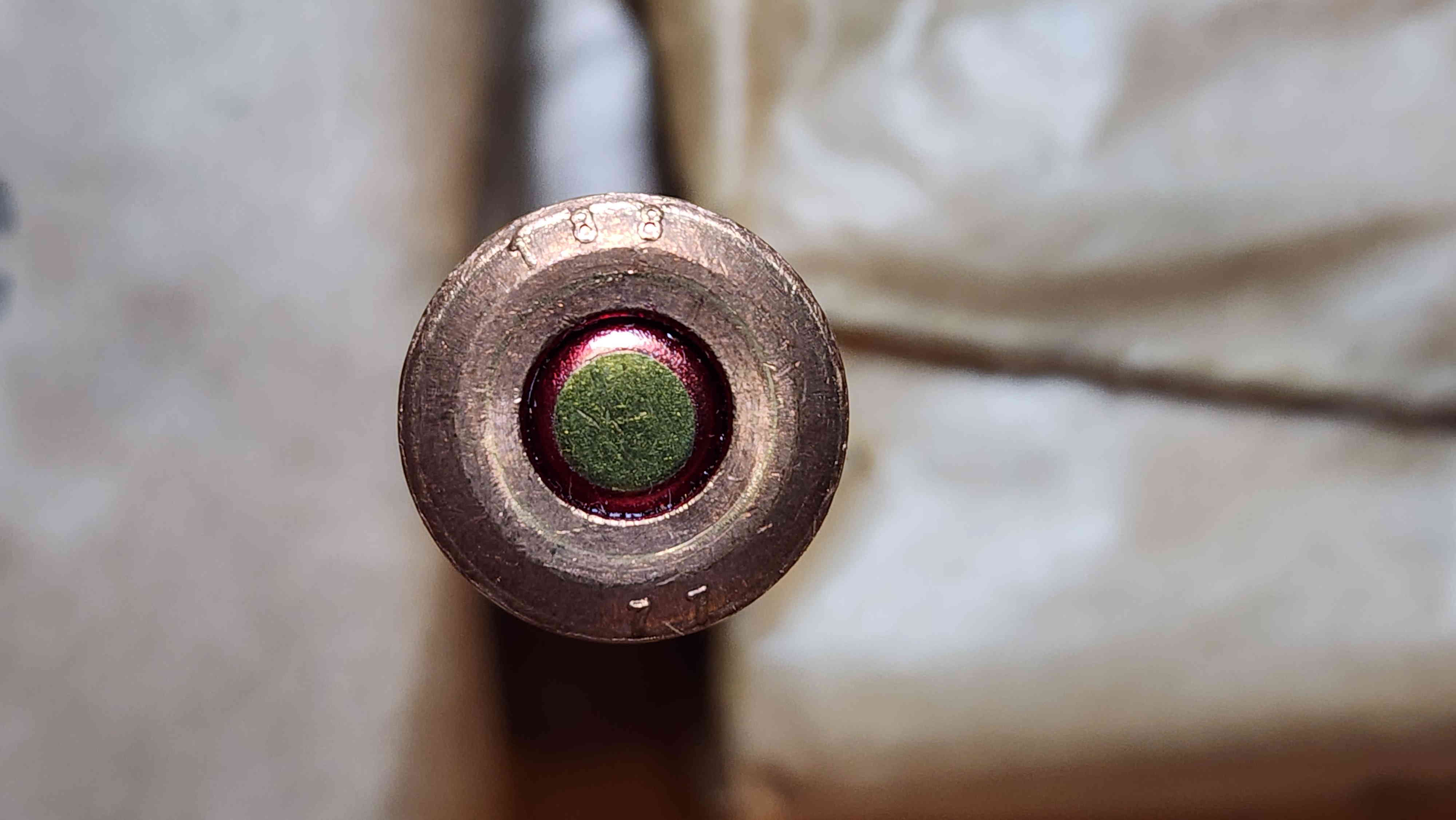
| Headstamp | “188 / 77” – factory code “188” over year “77” (1977). |
| Date of Manufacture | 1977 |
| Ballistics & Load Data | |
| Cartridge Type | LPS light ball with mild steel core and silver tip. Standard service load for rifles and machine guns. |
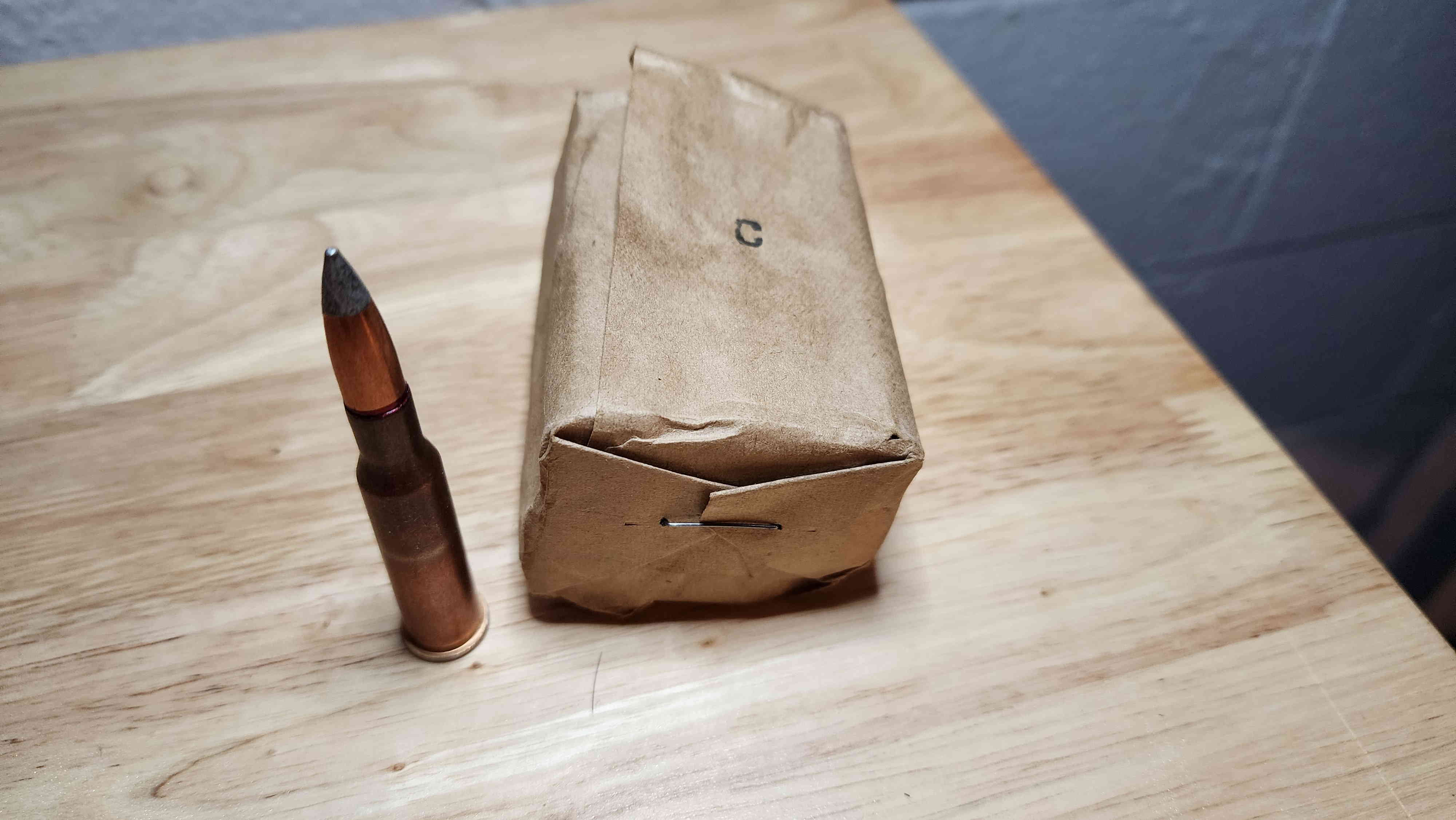
| Bullet | Light ball spitzer with steel core and lead filler, silver-painted tip indicating LPS type. |
| Case & Primer | Copper-washed steel case, Berdan primed, with red sealant at primer and case mouth. |
| Packaging & Markings | |
| Packet | 20-round brown paper packet, staple-sealed, with inner waxy paper liner and a “C” ink stamp marking on the outer wrapper. |
| Intended Use | Service ammunition for Mosin-Nagant rifles, Dragunov SVD designated marksman rifles, and PK / PKM general-purpose machine guns. |
| Condition & Context | |
| Condition | Typical Cold War surplus rounds and packet, preserved as an intact example of Soviet 1970s production and packaging. |
Historical Summary
By the 1970s the 7.62×54mmR cartridge was long established as the standard Russian and Soviet rifle and machine-gun round, serving in everything from Mosin-Nagant rifles to the Dragunov SVD and PKM machine guns. Factory 188 at Novosibirsk produced large quantities of this ammunition during the Cold War for both Soviet and Warsaw Pact forces. The headstamp “188 / 77” identifies Novosibirsk as the plant and 1977 as the year of manufacture.
The LPS light ball load represented the later evolution of Soviet ball ammunition, using a mild steel core with a silver-painted tip to distinguish it from earlier lead-core loads. Copper-washed steel cases with Berdan primers and red sealant were standard for this period, balancing economy with reliability in mass production.
Packaging followed the familiar Soviet pattern of 20-round paper packets, usually packed into larger tins and crates for long-term storage and distribution. This 1977 packet and cartridge are representative of the ammunition that began entering Western surplus channels in the 1990s and early 2000s as Soviet bloc stocks were sold off.
Ballistic Comparison: 1945 vs 1977 7.62×54mmR
| Parameter | 1945 – Factory 17 (Barnaul) | 1977 – Factory 188 (Novosibirsk) |
|---|---|---|
| Bullet Type | Л light ball (lead-core FMJ spitzer), standard WWII rifle load for Mosin-Nagant and light machine guns. | LPS light ball (mild steel core with lead filler and FMJ jacket), standard Cold War service load. |
| Tip Identification | Plain jacket with no color, typical for L light ball service ammunition. | Silver-painted bullet tip marking LPS steel-core ball. |
| Core Construction | Solid lead core inside a gilding metal or copper-plated jacket. | Mild steel core with lead around the core inside a copper-washed jacket. Increased penetration on hard targets. |
| Nominal Bullet Weight | About 9.6 g (148–150 gr class) L light ball. | Similar light-ball weight range, optimized for LPS steel-core construction. |
| Typical Muzzle Velocity* | Approx. mid-800 m/s range from standard infantry barrels, set up for WWII battle-zero distances. | Comparable velocity envelope, tuned for consistent operation in SVD and PKM and for use with optical sights and modern zeroing practices. |
| Case and Primer | Brass or copper-washed steel case, Berdan primed, corrosive, with sealant at case mouth and primer. | Copper-washed steel case, Berdan primed, corrosive surplus with heavy red sealant for long-term storage. |
| Intended Platforms | Mosin-Nagant rifles and carbines, DP / DP-28 and SG-43 machine guns in late WWII frontline and reserve use. | Mosin-Nagant rifles still in service, Dragunov SVD designated marksman rifles, and PK / PKM general-purpose machine guns. |
| Trajectory / Zeroing Character | Traditional L-ball trajectory, often zeroed high at mid-range for simple battle sights and volley fire doctrine. | Similar flat mid-range trajectory but integrated into later sighting systems, including PSO-1 style optics and PKM iron-sight graduations. |
| Terminal / Penetration Behavior | Lead-core ball designed for general infantry use. Good soft-target performance and moderate penetration on light cover. | Steel-core LPS ball gives noticeably better penetration on helmets, mild steel, and structural materials while retaining typical ball behavior on soft targets. |
| Surplus Shooting Impression** | Feels like classic wartime ball ammunition. Recoil and report are in the expected full-power rifle class, with lots varying by crate and storage history. | Typical “spam-can surplus” experience for many modern shooters. Slightly different point of impact than WWII ball in the same rifle, with lots often regarded as consistent enough for service-grade accuracy. |
* Exact velocity and pressure depend on lot, barrel length, and test method. ** Observations are descriptive only and not a substitute for formal ballistic testing.
Collector Notes
For many collectors and shooters, 1970s Soviet surplus like this was once viewed mainly as inexpensive range ammunition. As imports have dried up, intact packets and clearly dated examples from specific factories have become more interesting as Cold War artifacts in their own right.
Factory 188 material with the “188 / 77” headstamp is typical of the era and helps illustrate the continuity between late Soviet production and later Russian commercial offerings that kept the 7.62×54mmR cartridge in service well into the twenty first century. Unopened packets, especially with legible factory and date context, make useful companion pieces to Mosin-Nagant rifles, SVD-style rifles, and PKM-related displays.
Provenance
This packet and cartridge are retained in the Relics & Rifles reference collection as an example of Soviet 7.62×54mmR production from the late 1970s, complementing earlier World War II era ammunition and rifle profiles within the archive.