1951 Czechoslovak 7.92×57mm Mauser Ammunition (PS Headstamp)
1951 Czechoslovak 7.92×57mm Mauser Ammunition (PS Headstamp)
Postwar Czechoslovak military surplus 7.92×57mm Mauser ball ammunition manufactured in 1951 by Považské Strojárne, identified by the PS headstamp and black primer-annulus sealant.
Images
Specifications
| General Information | |
|---|---|
| Country | Czechoslovakia |
| Era | Postwar / Early Cold War, 1951 |
| Caliber | 7.92×57mm Mauser (8mm Mauser) |
| Manufacturer | Považské Strojárne, Považská Bystrica, Czechoslovakia |
| Cartridge Type | Standard military ball, full metal jacket |
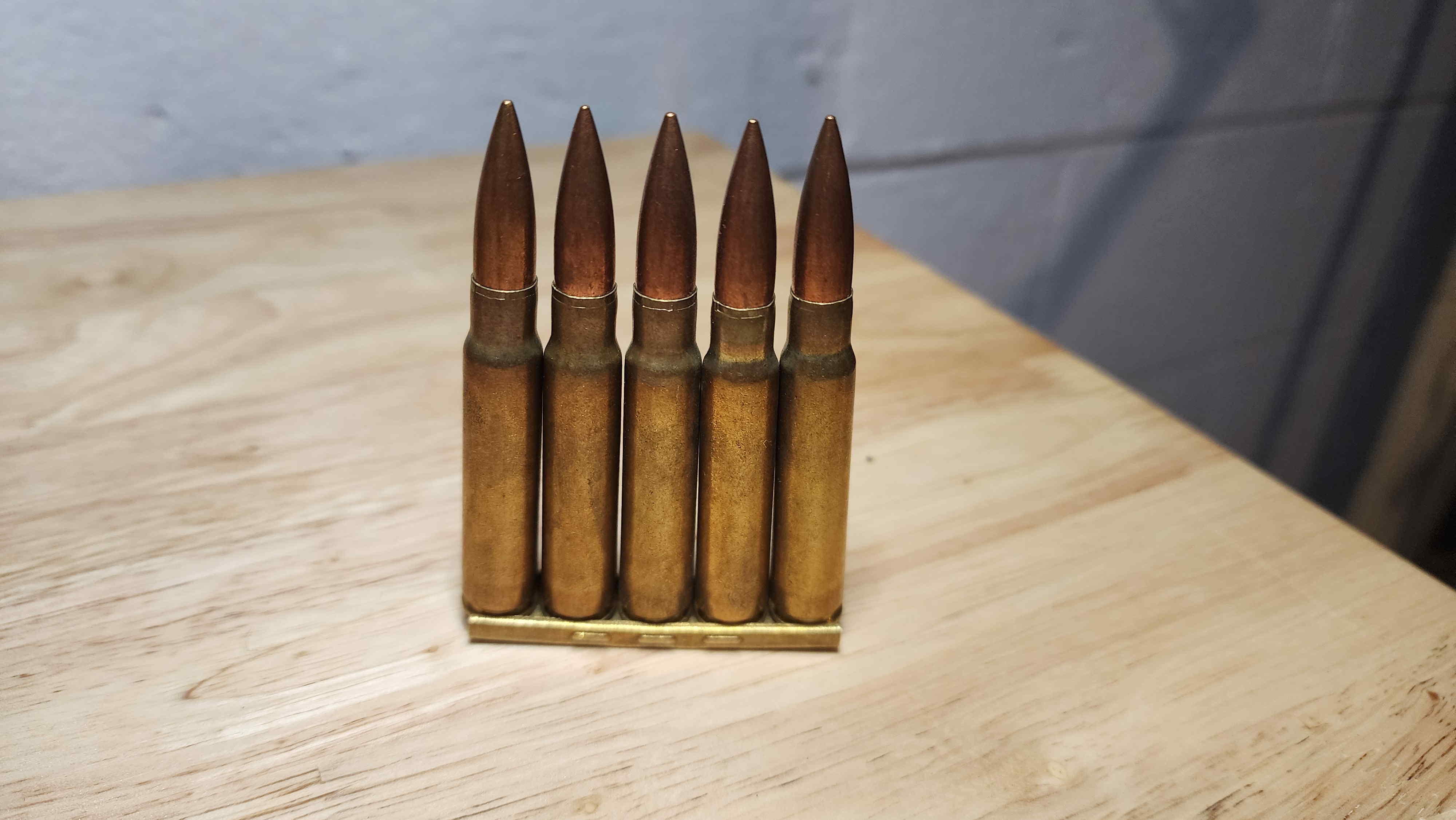
| Collection Contents | Five 1951 Czechoslovak 7.92×57mm cartridges displayed together in a five-round clip. |
| Associated Weapons | 7.92×57mm military rifles and machine guns, including the Kar98k, MG34, and MG42. |
| Display Configuration | The five cartridges are arranged in a clip for display. |
| Serial Number | Not serialized |
| Condition | Clear headstamp markings, intact black primer-annulus sealant, age-toned brass cases, and copper-colored full metal jacket bullets with normal storage and handling wear. |
| Headstamp and Load Identification | |
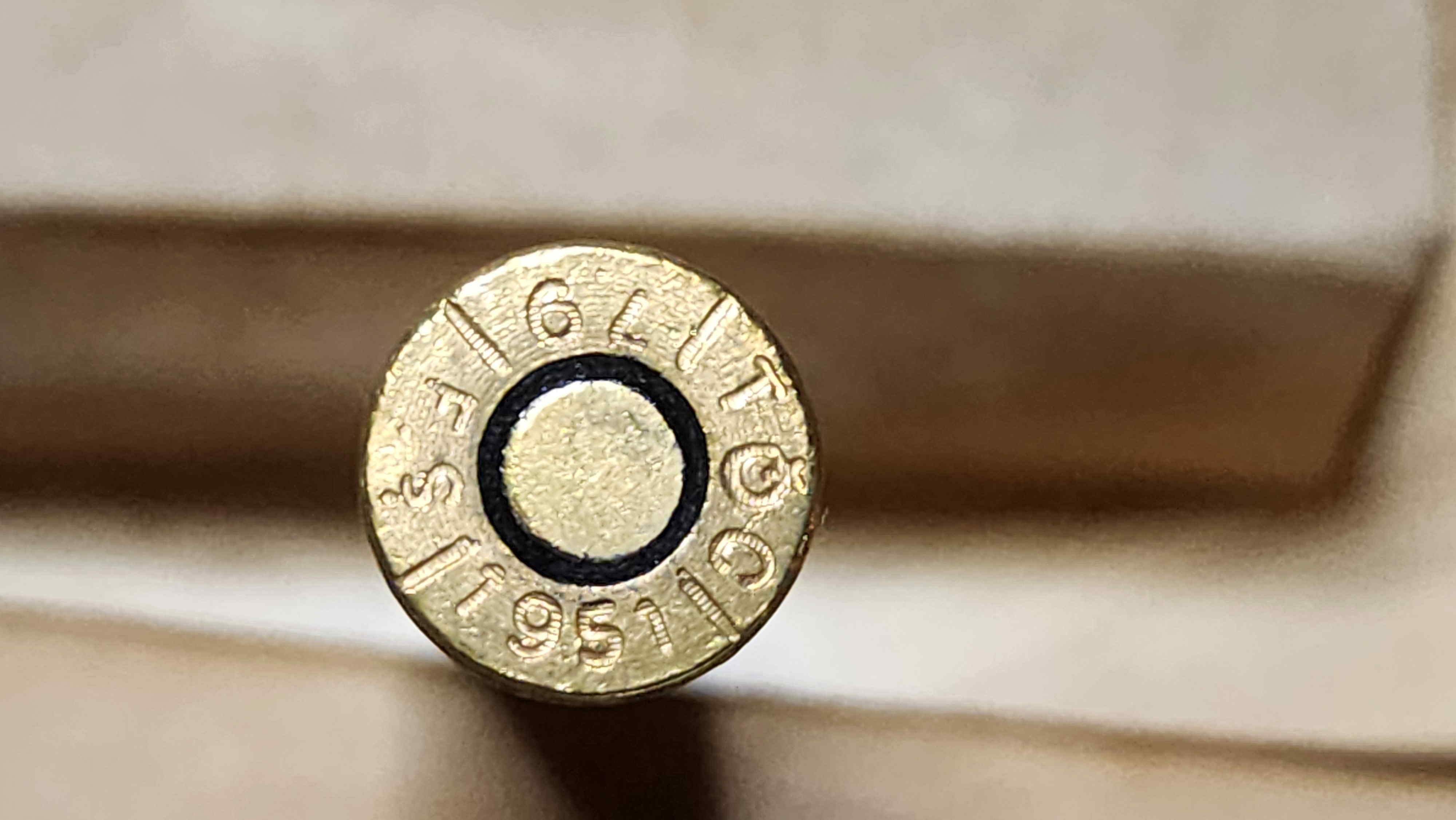
| PS Marking | PS identifies Považské Strojárne, the Czechoslovak manufacturer located at Považská Bystrica. |
| Year Marking | The case head is marked 1951, identifying the year of manufacture. |
| Star Symbol | The star marking is identified as the brass-case designation. |
| 6, L, T Markings | The additional 6, L, and T characters are recorded as internal lot or projectile codes. Their exact individual functions are not established here. |
| Primer Annulus | A black sealant ring surrounds the primer. On Czechoslovak military ammunition of this period, the black annulus is consistent with standard ball ammunition. |
Historical Summary
This cartridge was manufactured in Czechoslovakia in 1951 by Považské Strojárne at Považská Bystrica. It represents the continuation of 7.92×57mm Mauser military ammunition production into the early Cold War period, when large numbers of Mauser-pattern rifles and German-designed machine guns remained in service or reserve use across Europe and abroad.
The 7.92×57mm cartridge had been one of Europe's principal military rifle and machine-gun rounds through the first half of the twentieth century. Postwar Czechoslovak manufacture supported existing stocks of compatible weapons and also supplied military-surplus and export markets. The supplied profile notes that ammunition of this type is frequently associated with postwar export to Israel and other Middle Eastern clients, although no such destination is documented for the cartridges shown here.
The headstamp is the main identifying feature of this group. The photographed case head carries the PS manufacturer mark, the year 1951, a star symbol, and the additional 6, L, and T characters. Together these markings identify the cartridge as Czechoslovak military production rather than commercial sporting ammunition.
The black primer-annulus sealant is also a noticeable production feature. On Czechoslovak military ammunition of this period, a black annulus is consistent with standard ball ammunition.The cartridges shown here have the conventional appearance and firing characteristics of standard military ball ammunition.
Collector Notes
Postwar Czechoslovak 7.92×57mm ammunition is widely encountered as military surplus, but clearly marked examples remain useful reference pieces because the headstamp preserves the manufacturer, production year, and factory coding system. The 1951 date places this group firmly in the early Cold War period rather than wartime German production.
Collector interest is strongest where the headstamp remains legible, the primer sealant is intact, and the brass and bullet jackets have not been aggressively polished. Original oxidation and sealant are part of the cartridge's production and storage history and should generally be preserved.
The five-round clip shown in the photographs is used for display and is not documented as original packaging or as having been issued with these exact cartridges.
Unless a cartridge has been professionally inerted and documented as such, it should be treated as live ammunition. Historic cartridges should be stored in a cool, dry location, protected from impact and heat, and handled in accordance with applicable law.
Provenance
- Preserved in the Relics & Rifles reference collection as an example of postwar Czechoslovak 7.92×57mm military-surplus ammunition.
- The group consists of five cartridges manufactured in 1951 by Považské Strojárne.
- The five-round clip is a display component and is not documented as original packaging.
- No specific military unit, issue location, export destination, or individual service history is documented for these cartridges.