
7.62×54mmR Ammunition (Factory 17, Barnaul – May 1945)
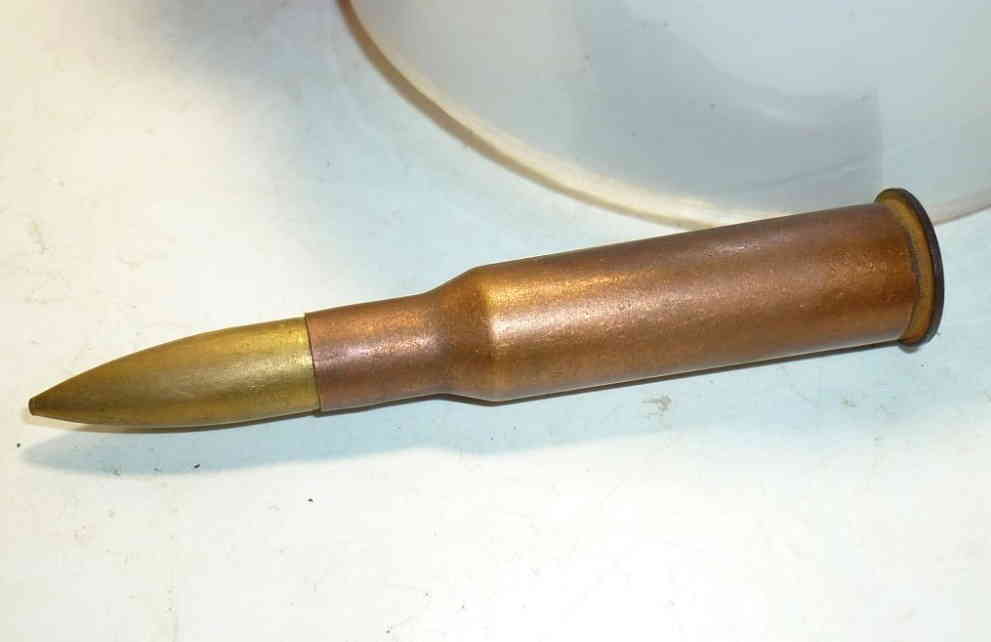
Late–World War II Soviet 7.62×54mmR “Л” light-ball rifle cartridge and original packaging from Factory No. 17 (Barnaul), produced in May 1945 and issued in standard Red Army crate and spam-can configuration.
Images
Specifications
| General Information | |
|---|---|
| Cartridge | 7.62×54mmR, rimmed rifle cartridge adopted by the Russian Empire in 1891. |
| Country | USSR (Soviet Union) |
| Factory / Plant | Factory No. 17 – Barnaul Cartridge Plant (formerly Podolsk Cartridge Plant No. 17, relocated to Barnaul during WWII). |
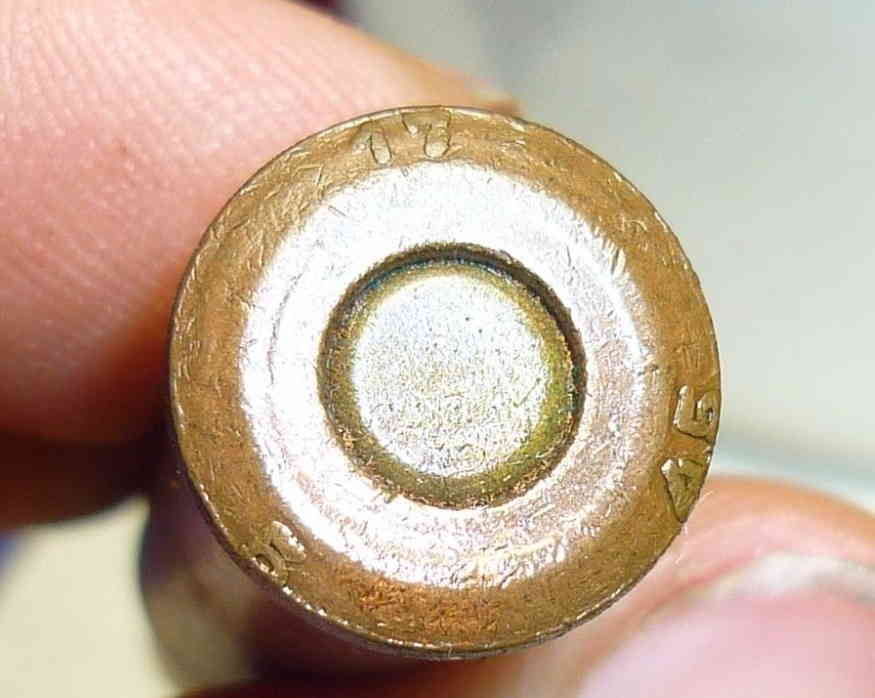
| Headstamp | “17 5 45” – factory code 17 (Barnaul) over month “5” (May) and year “45” (1945). |
| Date of Manufacture | May 1945 |
| Ballistics & Load Data | |
| Load Type | Л (“L”) light-ball standard rifle load, adopted 1908 and used throughout WWII. |
| Bullet | Approx. 9.6 g spitzer FMJ, lead-core, nominal muzzle velocity ~855 m/s in service rifles. |
| Case & Primer | Brass or copper-washed steel case with Berdan primer, corrosive, typical of Soviet WWII production. |
| Packaging & Markings | |
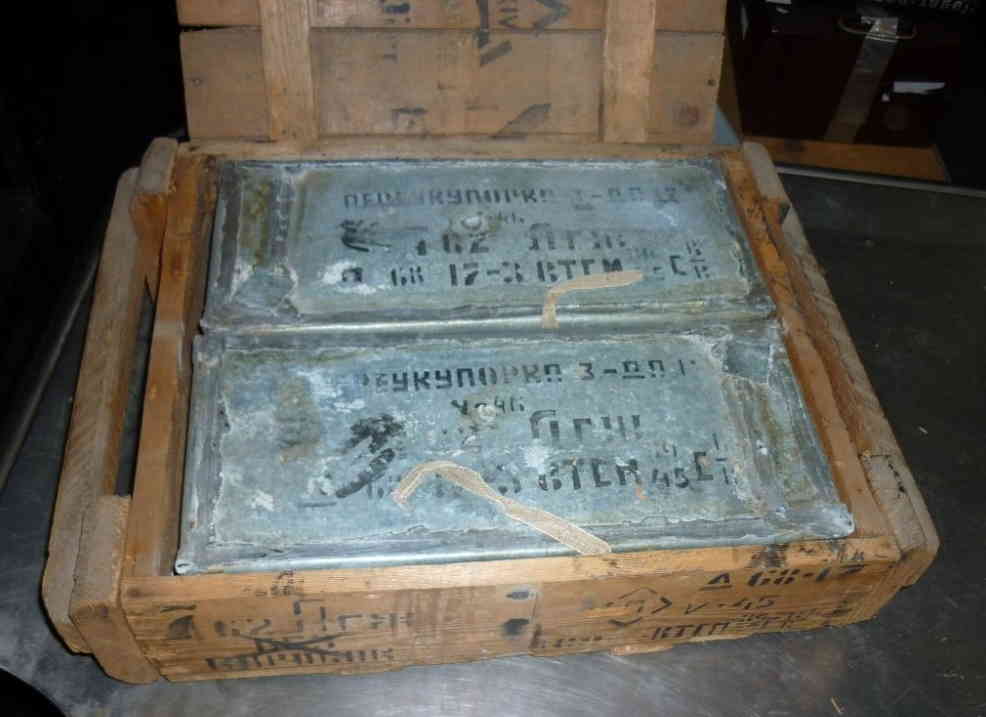
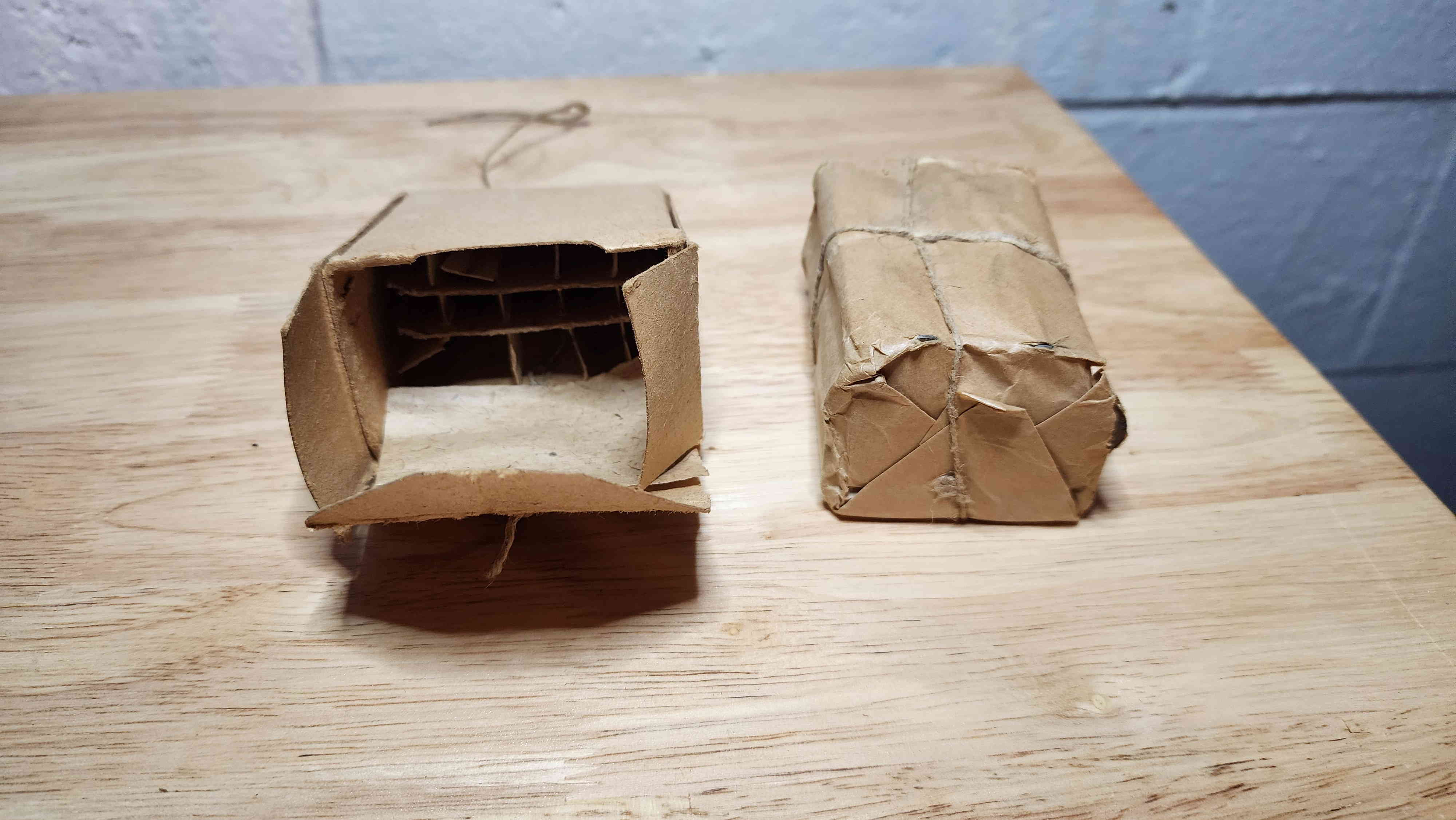
| Packaging | 20-round paper packets tied with string, loose rounds “без обойм” (without clips); 22 packets per 440-round hermetically sealed steel tin; 2 tins per wooden crate for a total of 880 rounds. |
| Cyrillic Markings | Typical crate / can stenciling includes винтовочные патроны (“rifle cartridges”), герм. укупорка (“hermetically sealed”), and без обойм (“without stripper clips”), along with plant code “17 ППЗ” and date notations such as “45 г.” for 1945. |
| Condition & Context | |
| Condition | Live cartridge(s) retaining original wartime finish, shown with matching WWII-issue crate, spam cans and unopened 20-round packet as preserved reference examples. |
Historical Summary
The 7.62×54mmR cartridge was adopted by the Russian Empire in 1891 alongside the original Mosin-Nagant rifle and remained the standard rifle and machine-gun round for the Soviet Union throughout the Second World War. Early loads used a heavy round-nose bullet, but in 1908 the Red Army introduced the Л (“L”) light-ball spitzer, a 9.6 g lead-core FMJ that offered flatter trajectory and better long-range performance. This “L” light-ball load became the default “rifle cartridge” issue for Mosin-Nagant rifles and light machine guns in WWII.
The headstamp “17 5 45” on this example identifies Factory No. 17, the Barnaul Cartridge Plant, and a production date of May 1945. During the war the former Podolsk plant was evacuated east and re-established at Barnaul, where it turned out enormous quantities of 7.62×54mmR for frontline and reserve units. Barnaul’s code “17” appears both on case heads and on the stenciled markings of tins and wooden crates.
Standard Red Army packaging placed loose cartridges (without clips) in waxed paper 20-round bundles tied with string. These were stacked inside hermetically sealed steel “spam” tins to protect them from moisture and long-term storage damage, and the tins were in turn packed two to a wooden crate. The crate and tin stenciling specified cartridge type, caliber, plant and date codes, and often the notation “герм. укупорка винтовочных патронов 7,62 мм” – “hermetically sealed rifle cartridges, 7.62 mm.” This system allowed ammunition to survive harsh transport and decades of depot storage with minimal degradation.
With a May 1945 date, this Barnaul lot represents ammunition produced in the final weeks of the European war. Surviving, intact examples of crate, spam cans, and unopened packets provide a valuable snapshot of how Soviet rifle ammunition actually appeared as it left the factory at the close of WWII.
Collector Notes
For collectors of Soviet small-arms material, complete packaging runs of 7.62×54mmR from a known factory and date are now much harder to obtain than they were in the heyday of surplus imports. Intact paper packets, original spam cans with legible stenciling, and especially crates with matching factory/date markings are increasingly appreciated as historical artifacts in their own right, not just as sources of “shooting ammo.”
Factory 17 (Barnaul) material is common in reference works and photographs, but physical examples that still preserve the full chain – crate, tins, and sealed packets – give researchers and collectors a rare chance to study original markings, fonts, and layout in three dimensions. As surplus flows from Eastern Europe have declined due to political and regulatory changes, surviving wartime Barnaul ammunition like this has seen steadily rising interest among collectors of WWII Soviet gear and Mosin-Nagant rifles.
Individual 7.62×54mmR specimens from such crates make excellent companion displays for Mosin-Nagant rifles, DP / DP-28 and SG-43 machine guns, and other Soviet weapons in collections, especially when accompanied by documentation showing factory code and date.
Provenance
This cartridge and associated packaging are preserved as part of the Relics & Rifles reference collection, documented for use alongside a 1938 Tula Mosin-Nagant M1891/30 and other Soviet-era artifacts. The photo set records the headstamp, overall cartridge profile, crate/tin configuration, and an unopened 20-round packet for future comparison and research.